
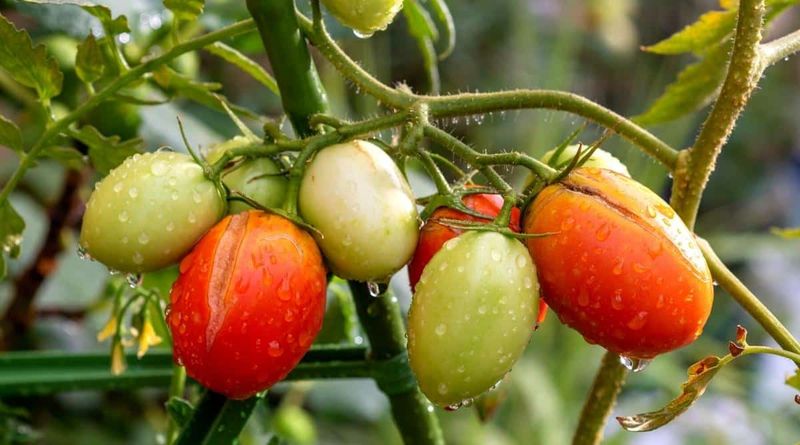
You walk out to pick one of your last fall tomatoes and find a split running right across the shoulder. It stings when you have waited months for that fruit.
Typical growth cracks often show up after the soil goes from dry to wet, and a rainy cold front may just happen to deliver that water. Knowing what you are looking at helps you protect the fruit still on the vine.
Tell growth cracks from sunken lesions
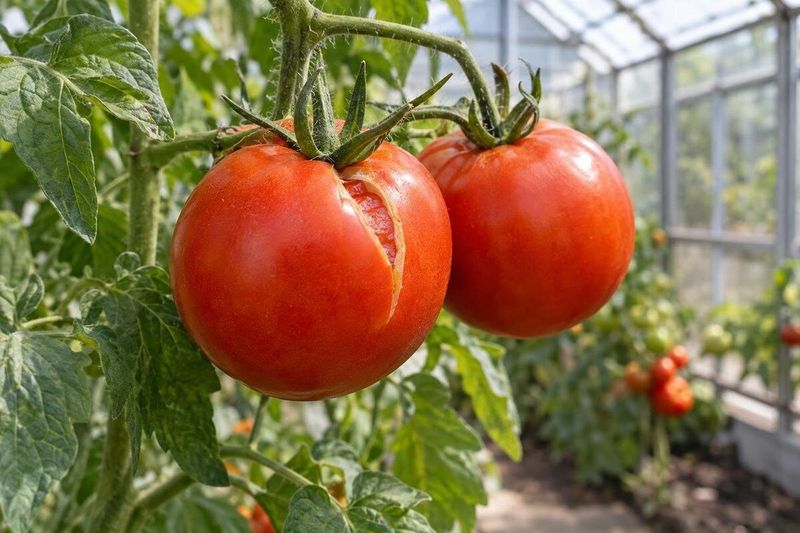
Take a close look before you change anything. Typical growth cracks are splits that radiate out from the stem end like spokes, or rings that circle the fruit, and they often show up as the tomato nears maturity, according to University of Minnesota Extension fruit-crack guidance.
A sunken spot is a different story. A tan-to-black sunken patch on the bottom of the fruit may be blossom-end rot, and round sunken spots on ripe fruit can point to anthracnose.
Other fruit rots also leave sunken lesions, as described in this tomato rot diagnosis page.
So do not diagnose from the word sunken alone. A clean split with healed edges is one thing.
A crack with spreading decay, mold, or other symptoms on the leaves or stems calls for a separate diagnosis, and the fix for one problem will not solve the other.
Why a dry-to-wet swing can crack fruit
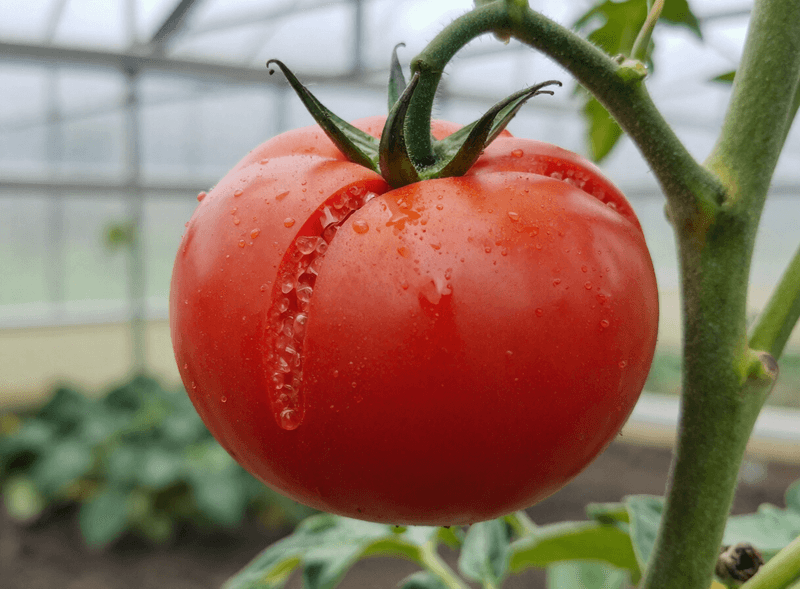
Picture a tomato skin as a balloon that has stopped stretching. When soil stays dry for a while and then gets soaked by rain or irrigation, a fruit near maturity can take up water and swell faster than its skin can keep up.
The skin splits, as explained in Texas A&M AgriLife guidance on radial cracking.
Cold fronts often bring rain, so the two can arrive together. But the support is for the moisture change, not for the cold front itself.
Moisture swings are a contributor, not the only one. Some varieties crack more easily, including many large-fruited types.
Utah State University Extension also lists rapid growth, extra nitrogen, and sudden fruit exposure after pruning as other possible factors.
Adjust watering to rain and root-zone moisture
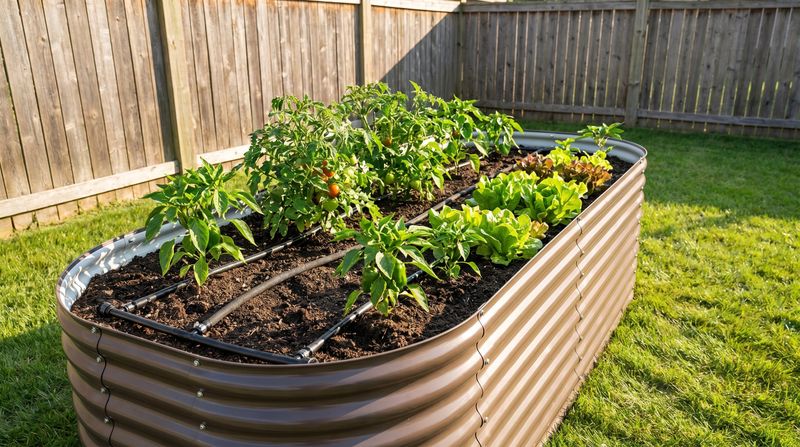
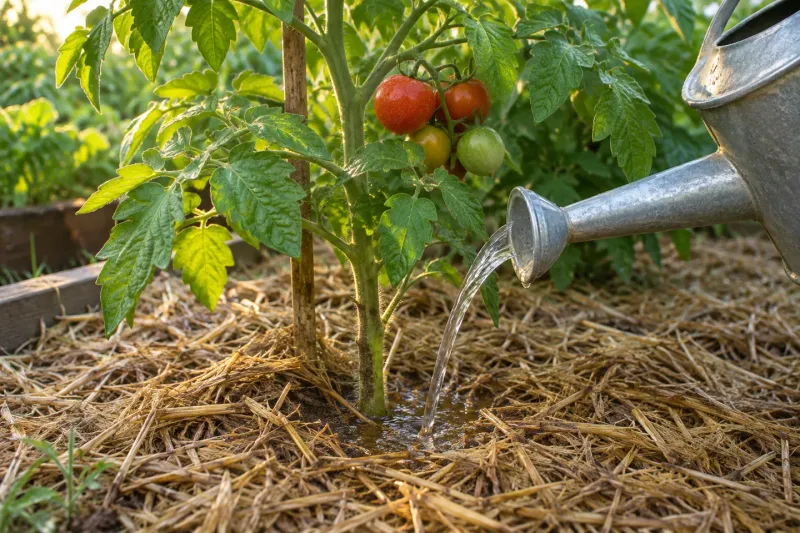
Rain gauge first, hose second. Check what fell recently, then poke a finger or trowel a few inches into the soil near the plants.
If the root zone is still damp, wait. If it is dry, water, aiming for steady moisture instead of long drought followed by a big soak.
Drip lines and soaker hoses deliver water right at the soil, which helps you control how much goes on. UF/IFAS notes that edible garden needs vary with crop, season, and soil, and suggests tracking rain and checking the soil.
Texas A&M gives about 1 inch every 5 to 7 days as a fall guideline, but it is a starting point to adjust, not a calendar. Cooler weather and more rain mean more time between waterings.
Soggy soil can harm roots, so deep watering only makes sense when the soil actually needs it.
Use mulch as a moisture buffer
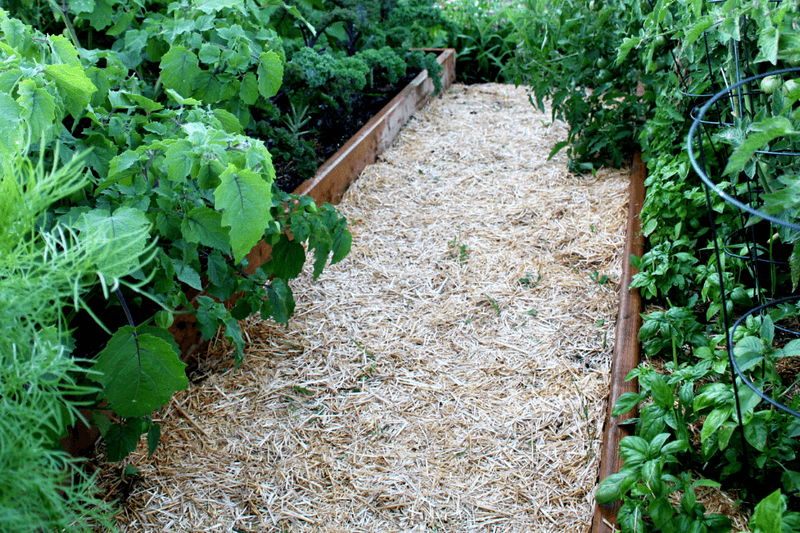
Mulch works like a blanket on the soil. It slows evaporation, so the bed dries out more gradually between waterings and the ups and downs in moisture are smaller.
University of Minnesota Extension lists mulch among the steps that help limit growth cracks.
For Florida vegetable beds, UF/IFAS recommends a light layer for small vegetables and cautions against piling it against stems. Leave a little gap around each plant.
Expect mulch to lower the risk, not erase it. Variety, fruit maturity, and fast growth still play a part, and mulch will not fix blossom-end rot, anthracnose, or other disorders.
Harvest and handle cracked tomatoes carefully
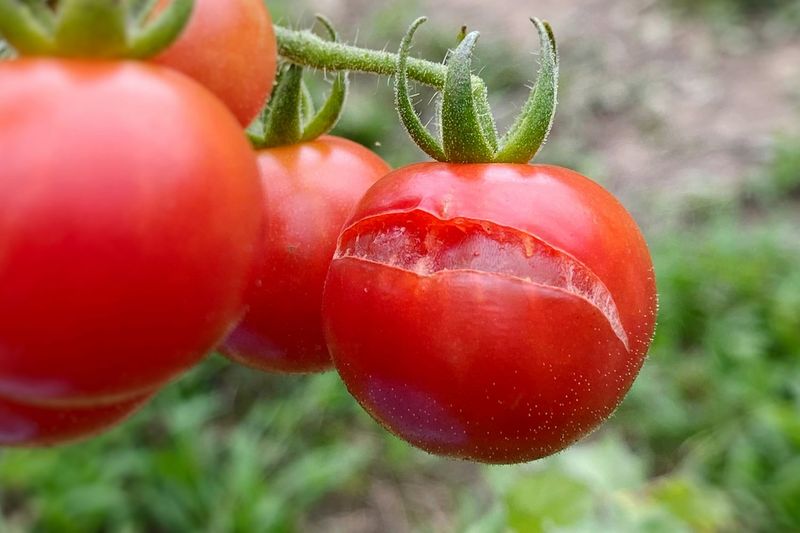
Split fruit invites trouble, so pick it promptly and look it over. Bacteria can thrive in damaged areas, and the FDA advises washing produce under running water and cutting away damaged areas.
If a tomato is moldy or decaying, toss it. A fresh, clean crack that is otherwise firm may be fine after trimming, but not every cracked tomato is safe to eat, so judge each one.
USDA guidance on tomato handling covers safe practices for consumers.
Skip canning for visibly damaged fruit. Use the split ones soon in sauces or salads and save the sound tomatoes for preserving, following tested home-canning guidance.
Adapt fall care to your region and conditions
Start with a quick routine. Look at the damage and decide whether it is a growth crack or something else.
Check recent rain and root-zone moisture, water only if needed, and keep mulch in place without crowding stems, as UF/IFAS suggests.
Timing differs by place. Texas A&M lists July to August planting and an October-to-first-frost harvest for Central Texas, but that is one local example, not a schedule for every Texas or Florida garden.
These steps can cut down on moisture swings, but they will not stop every crack or cure a different fruit disorder. Your soil is the best forecast you have.