
That pile of fallen palm fronds may be hiding more than yard work. Florida’s warm fall weather keeps snakes, stinging insects, and other venomous animals active while you trim, plant, and clean up.
Most would rather avoid you, but a hand slipped under a pot or into thick leaves can bring you too close. Meet ten critters worth watching for, plus simple ways to garden more safely without treating every animal as an enemy.
1. Eastern Diamondback Rattlesnake
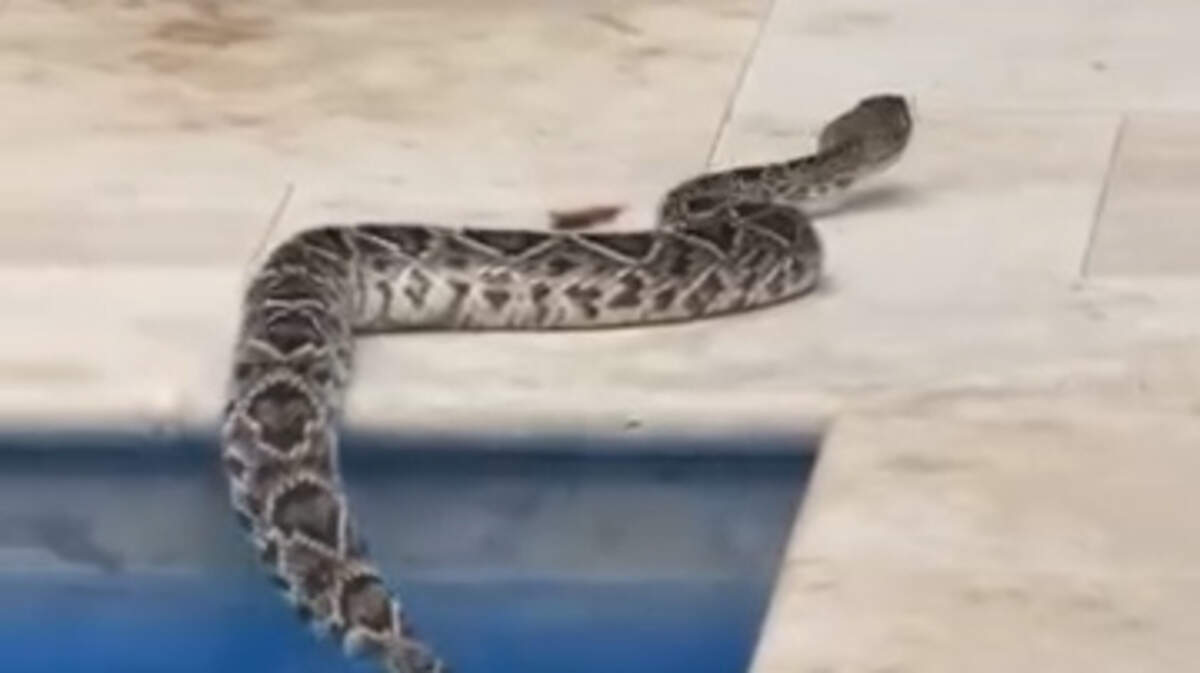
A fallen palm frond can hide a surprisingly large neighbor. Eastern diamondback rattlesnakes blend into dry leaves and patchy shade, especially around Florida yards near pine flatwoods, scrub, and undeveloped land.
Look for dark diamonds outlined in lighter scales, but never approach to confirm the pattern. A rattlesnake may remain silent, so the lack of a warning buzz does not mean a brush pile is clear.
Before fall cleanup, inspect the work area from a distance and use long-handled tools instead of reaching beneath debris. Wear sturdy boots and keep several feet away from any snake you notice, giving it a clear escape route.
Rodents can draw these snakes toward sheds and stored materials. Secure birdseed, clean up spilled feed, and keep lumber organized rather than scattered beside the house.
If one stays near a doorway or busy path, keep children and pets away and contact a qualified wildlife removal professional. Never try to catch or kill it, since close contact greatly increases bite risk.
2. Dusky Pygmy Rattlesnake

Small enough to overlook beside a garden hose, a dusky pygmy rattlesnake deserves plenty of room. Its gray, blotched body disappears against mulch, pine needles, and fallen oak leaves in many parts of Florida.
The tiny rattle is a poor safety alarm. It can sound like a faint insect buzz and may be difficult to hear over a mower, traffic, or ordinary backyard noise.
Garden borders, damp ground cover, and brushy edges can offer shelter and access to small prey. During fall bed cleanup, scan the ground before kneeling and avoid pulling handfuls of leaves from places you cannot see.
Use a rake to gather loose material while keeping your hands away from hidden spaces. Gloves help with thorns and rough debris, but ordinary gardening gloves are not reliable protection against snake fangs.
If you spot this snake, stop working and back away. A bite needs immediate emergency medical care, even when the snake is small or the wound initially seems minor; do not wait for swelling to become severe.
3. Florida Cottonmouth

Waterfront gardening comes with a reason to watch your footing. Florida cottonmouths use wetlands, pond margins, ditches, and nearby land, which can bring them close to yards bordering water.
Not every snake swimming past the lawn is a cottonmouth. Harmless watersnakes are often mistaken for them, and head shape or swimming posture alone cannot give a homeowner a dependable identification.
Focus on distance rather than a close inspection. Check pond-side planting beds, drainage outlets, and low spots before moving branches or reaching behind containers, particularly after heavy rain has changed the usual hiding places.
Maintain a visible walking strip along frequently used waterfront areas without stripping the entire shoreline of useful habitat. Keep pets leashed near brushy banks and avoid letting dogs investigate a resting snake.
A cottonmouth may stand its ground or display the pale inside of its mouth when threatened. Treat that as a warning to retreat, not an invitation for a photograph, and leave removal near occupied spaces to an experienced professional.
4. Eastern Coral Snake
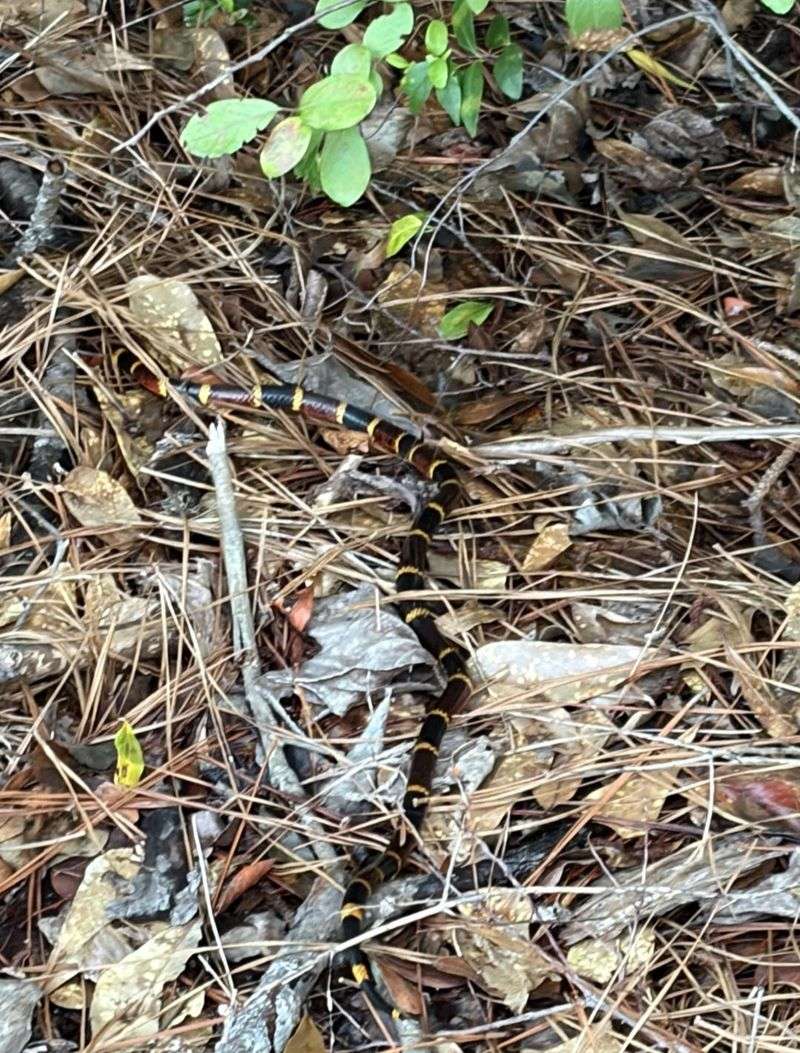
Bright bands can flash through pine straw and vanish before you get a second look. Eastern coral snakes spend much of their time concealed beneath leaf litter, logs, or other cover, so gardeners may encounter one while disturbing sheltered ground.
They occur across Florida, though seeing one is far from an everyday event. Their secretive habits make barehanded digging through debris a greater concern than simply sharing a neighborhood with them.
Skip the color rhymes used to separate coral snakes from harmless look-alikes. Poor lighting, an incomplete view, and unusual patterns can lead to mistakes, and no identification shortcut makes handling safe.
Wear closed shoes when moving mulch, and inspect the underside of landscape materials without putting fingers underneath. If a snake appears, set tools down and allow it to move away without being cornered.
Any suspected coral snake bite is an emergency, even if pain and swelling seem slight. Call 911 immediately because serious effects can be delayed; never cut the wound, suck out venom, apply ice, or use a tourniquet.
5. Southern Black Widow
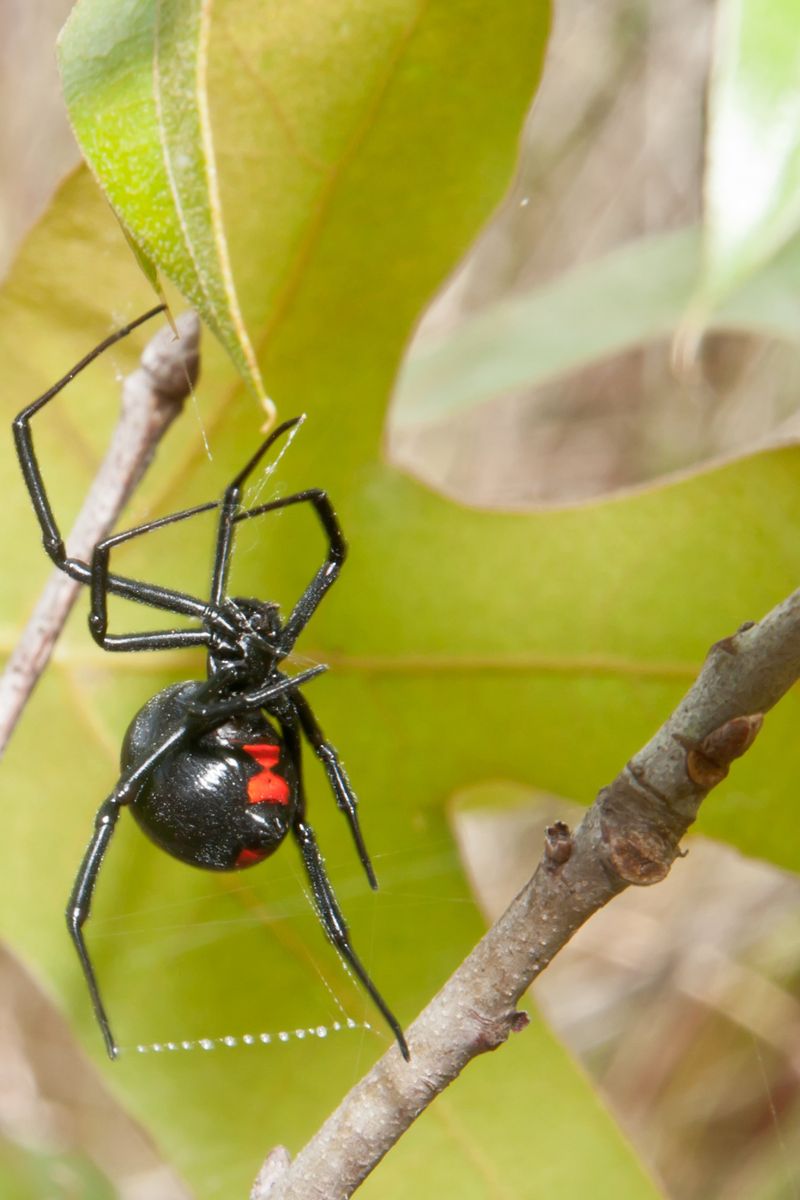
The dark space under a forgotten nursery pot can make an ideal spider retreat. Southern black widows favor protected spots where an irregular web can stay undisturbed, including cluttered sheds, stacked materials, and sheltered outdoor fixtures.
Adult females are typically glossy black with a red hourglass on the underside of the abdomen. You should never turn a spider over or move close enough to inspect that marking.
Before reopening a shed or rearranging patio storage this fall, shine a flashlight into corners and beneath shelves. Wear work gloves, lift containers by visible edges, and avoid sliding fingers into recessed handles without checking them.
Bites usually happen when a spider is pressed against skin rather than from an animal pursuing someone. Reducing clutter and keeping gloves and shoes indoors removes hiding spots where accidental contact is more likely.
A suspected widow bite deserves prompt advice from Poison Control at 1-800-222-1222. Severe pain, muscle cramps, breathing problems, or other serious symptoms require urgent medical care, with extra caution for children and older adults.
6. Brown Widow
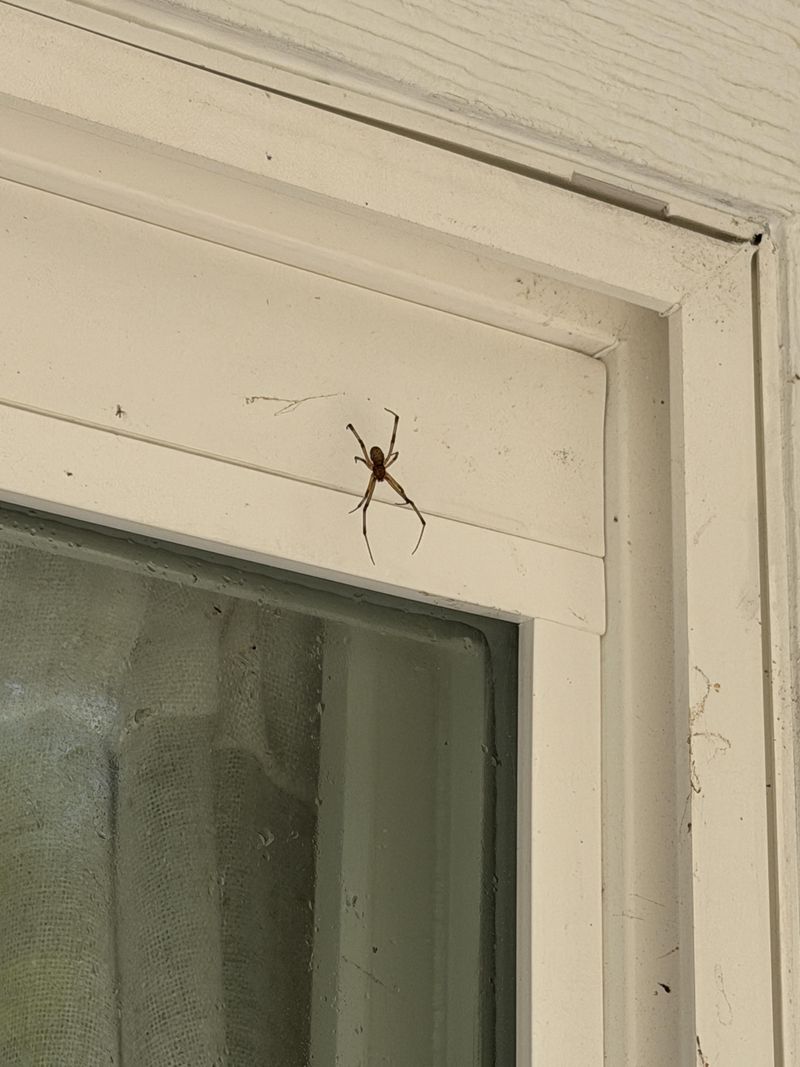
Patio furniture deserves a quick underside check before your next fall gathering. Brown widows often build webs around human-made objects, including outdoor chairs, fence fittings, trash-bin handles, and the rims of plant containers.
Their mottled brown bodies and banded legs can be less striking than a black widow’s glossy shape. Spiky, ball-shaped egg sacs are a helpful clue, although homeowners should still avoid handling either spiders or sacs.
Unlike a spider hidden deep in a woodpile, this one may settle exactly where a hand naturally grips. Tilt lightweight furniture using an inspected surface, then look beneath seats and around hollow supports before carrying it.
Regular cleaning with a long-handled brush can discourage webs in high-contact areas. Wear gloves and keep your hands away from occupied retreats; a local pest professional can address repeated activity near play equipment or busy entrances.
Brown widow bites often cause more localized effects than black widow bites, but they should not be dismissed. Wash a suspected bite, apply a wrapped cold pack, and contact Poison Control for advice.
7. Red Imported Fire Ant
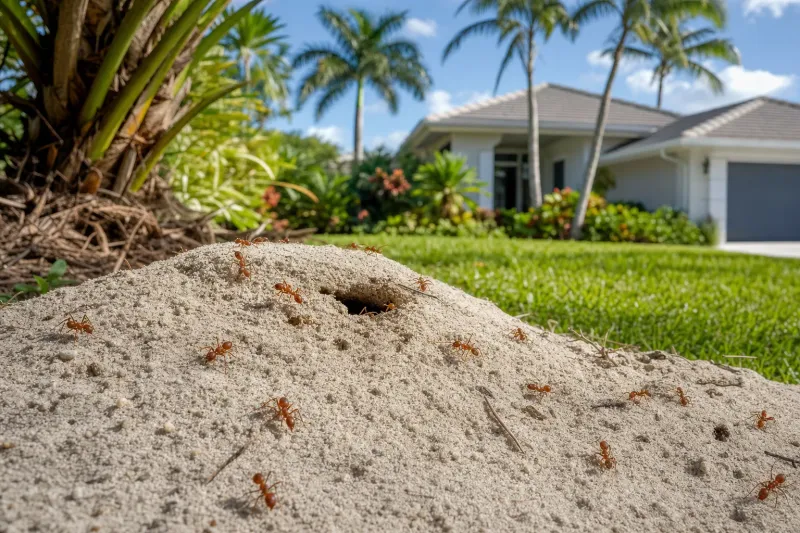
One step beside an unnoticed mound can turn a quiet garden job into a painful scramble. Red imported fire ants defend their nests quickly, gripping skin with their jaws before delivering venom through repeated stings.
Florida’s warm fall days allow colonies to remain active. Mounds may become easier to notice after rain, but nests can also hide along edging, beneath objects, or around irrigation equipment without an obvious loose-soil dome.
Survey the lawn before kneeling, placing a garden cushion, or setting children’s toys on the grass. Closed shoes and socks help limit exposed skin, though they cannot guarantee protection when a colony is disturbed.
For control, follow UF/IFAS guidance on properly labeled fire-ant baits and mound treatments. Baits work best under the conditions listed on the label; spreading them just before rain or onto wet ground can waste the treatment.
Brush ants off quickly if they swarm onto you, then wash affected skin and avoid breaking the small pustules that may develop. Trouble breathing, faintness, or swelling of the tongue or throat requires 911 immediately.
8. Puss Caterpillar
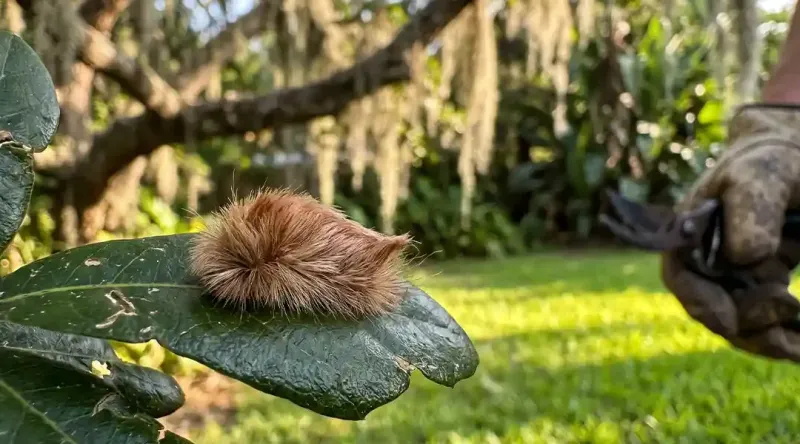
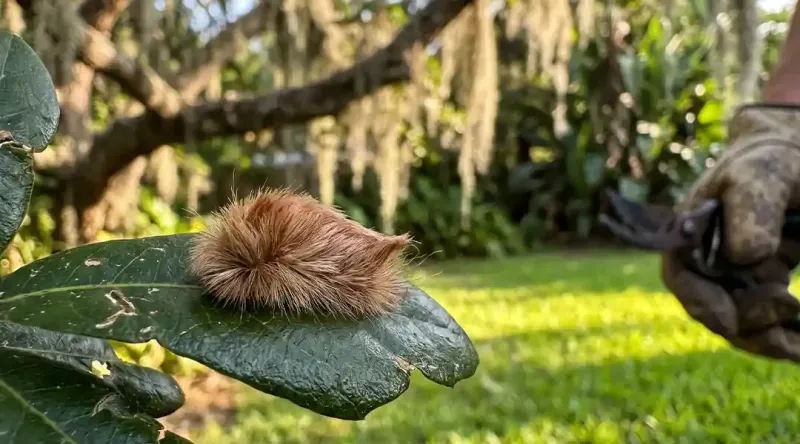
Soft-looking fur is a terrible reason to pet a caterpillar. The puss caterpillar, the larva of the southern flannel moth, hides venomous spines beneath its thick coat and can deliver an intensely painful sting.
In Florida, gardeners may find it on trees and shrubs, including oaks and elms. It can also turn up on nearby objects, so brushing against a railing or reaching through foliage may cause contact without anyone deliberately touching it.
Fall pruning is a good time to slow down and inspect branches at eye level and below. Wear long sleeves, avoid leaning bare forearms into leaves, and teach children that unfamiliar fuzzy caterpillars are for looking at only.
If one sits in a high-contact spot, keep people away and seek guidance from your county Extension office on safe management. Do not squeeze it through a glove or try to sweep it away with your hand.
After contact, gently use adhesive tape to lift remaining spines, wash the skin, and apply a wrapped cold pack. Call Poison Control for treatment advice, especially for severe pain or spreading symptoms.
9. Saddleback Caterpillar
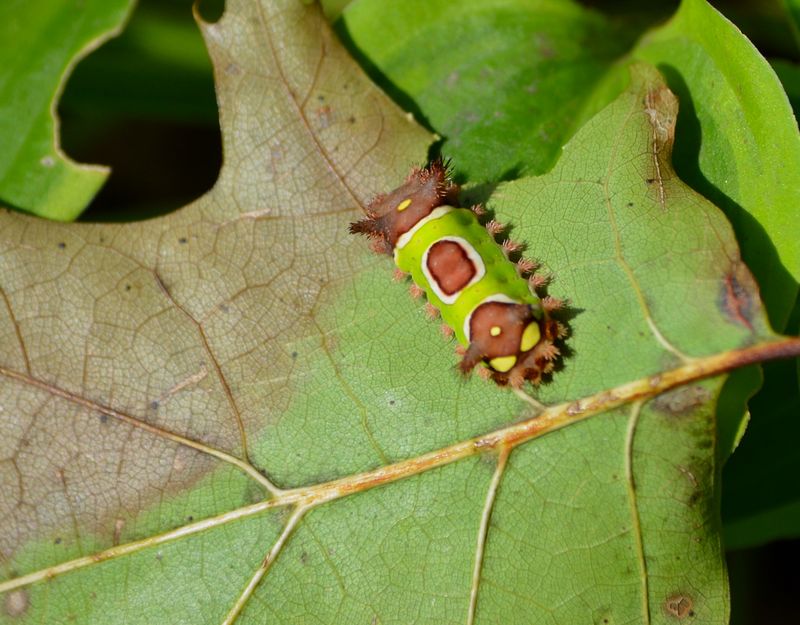
A tiny green saddle makes this caterpillar look almost decorated. That bright patch, usually centered by a brown spot with a pale border, belongs to an animal armed with venomous spines.
Saddleback caterpillars feed on many kinds of plants and may rest where leaves partly conceal them. Their branched spines can sting when an arm brushes past, making them a concern during close trimming and hand-weeding around leafy plants.
Look along both sides of a leaf before reaching through a dense planting. Long sleeves and gloves reduce exposed skin, but avoiding the spines is more dependable than assuming fabric will block them.
Keep an eye out for additional caterpillars nearby without treating every chewed leaf as a reason to spray. If removal is necessary, ask your county Extension office about targeted options that limit harm to other insects.
For a sting, stop working before rubbing the area or touching your face. Lift loose spines with adhesive tape, wash gently, use a wrapped cold pack, and contact Poison Control if pain is strong or symptoms continue.
10. Paper Wasps
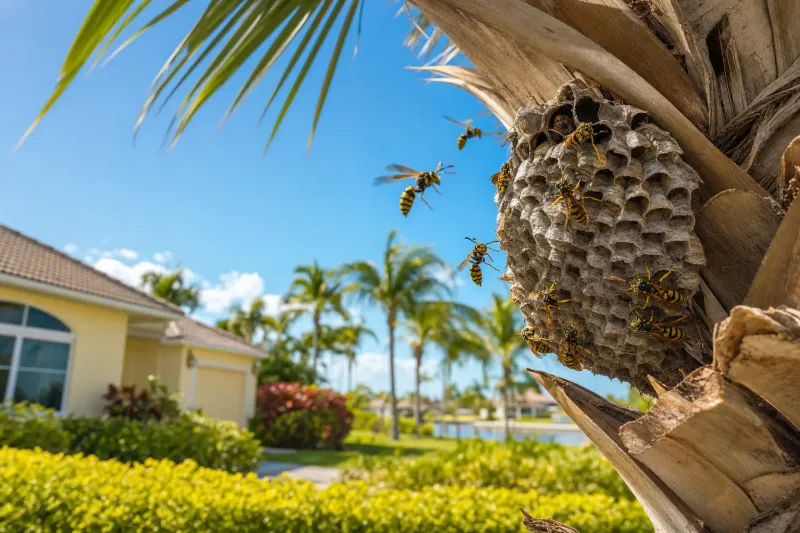
Before squeezing the hedge trimmer’s trigger, take a quiet look inside the shrub. Paper wasps sometimes attach their open, umbrella-shaped nests to woody stems, porch ceilings, shed eaves, and other sheltered spots around Florida homes.
They hunt caterpillars and provide useful pest control, so a nest well away from people may not need removal. Trouble starts when pruning, moving furniture, or opening stored equipment shakes a colony close to your hands or face.
On warm fall days, workers can still be active, especially in South Florida. Watch for repeated flights into one small area, and postpone the job if you discover a nest in your work zone.
Never knock down an occupied nest or attempt removal from a ladder. For nests beside doors, children’s play areas, or essential garden access, a licensed pest professional is the safer choice.
Move away promptly if wasps become defensive, heading into a building or vehicle if possible. Multiple stings or signs of an allergic reaction need urgent attention; use prescribed epinephrine as directed and call 911 for a severe reaction.