
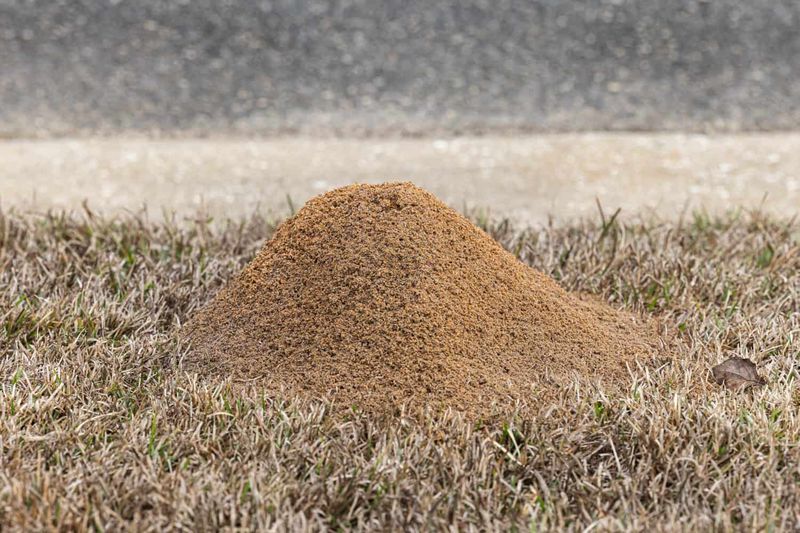
Your dog bolts across the yard, then starts yelping and snapping at their own legs. Ants may be swarming up their fur, and every second counts.
Knowing the right order of steps can keep a bad moment from getting worse. Here is what to do right away, and what to watch for afterward.
Leave the mound and remove ants safely
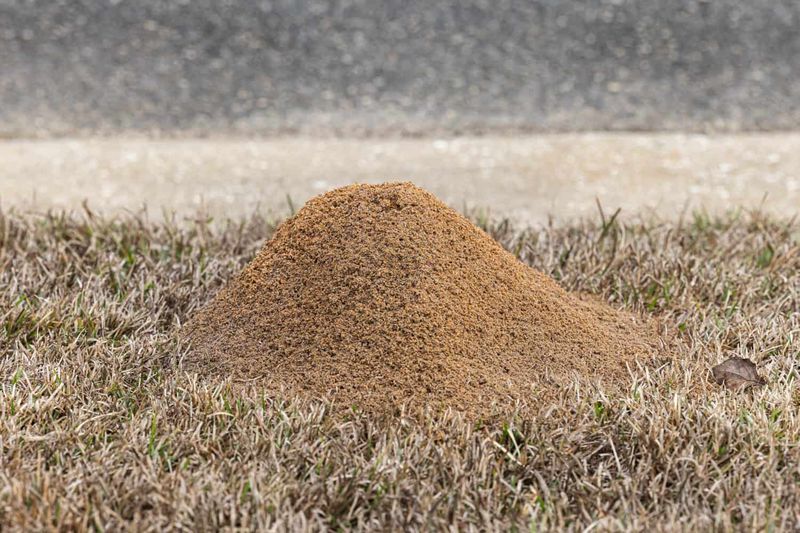
Get your dog away from the mound first. Call them, carry them, or lead them several yards onto clean ground, such as a driveway or patio.
Do this before you stop to figure out what kind of ants they are or how many stings there may be.
Next, protect your own hands. Pull on work gloves or any sturdy gloves if you can grab them in a second or two.
Ants that land on you will sting too, so keep your sleeves and ankles clear as you work.
Now brush and pick the ants off, and do it fast. Use quick sweeping strokes with your gloved hand, moving from the feet and legs upward along the belly, chest, and tail.
Pluck off any ants that stay put.
Skip the garden hose. Texas A&M AgriLife Extension warns that fire ants can keep holding on with their jaws and keep stinging, so water can leave them attached while your dog gets more stings.
Dry, fast brushing works better in the moment.
Keep your voice steady. A frightened dog may twist, bite at the ants, or try to run back toward the yard.
Calm handling helps you finish the job faster, and a second person can hold the dog while you work.
If your dog is panicking too much to hold still, keep brushing from a safe distance from the mound. Move to a new spot if you notice more ants crawling up your own shoes.
Check the places ants can hide
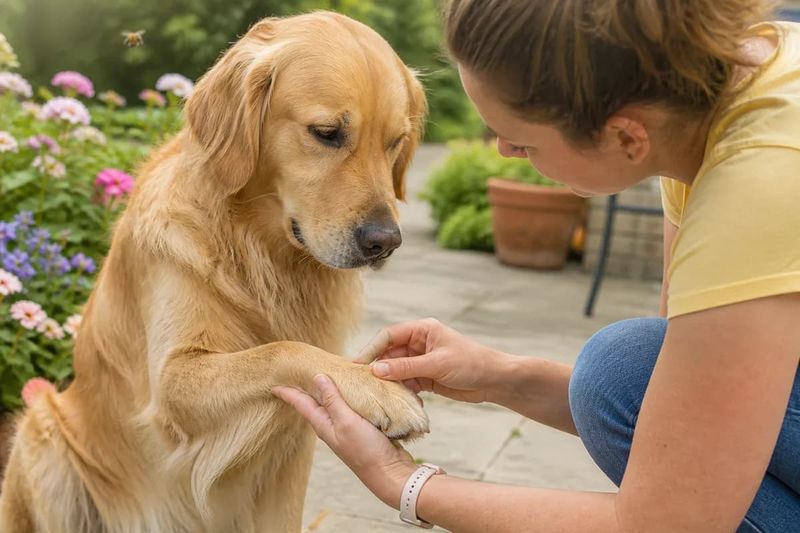
Once the visible ants are gone, slow down and look the dog over. Ants love tucked-away spots, so run your fingers gently through the fur and check each area with your eyes as well.
Start with the paws. Spread the toes and look between the pads, since ants often cling there after a run through the grass.
Then check the belly, the groin, the armpits, and under the tail.
The head needs a careful look too. Lift the ear flaps, check inside the ear folds, and look around the eyes, lips, and muzzle.
Texas A&M AgriLife Extension advises removing ants quickly, and these hidden areas are where stragglers tend to be missed.
Notice any red spots, bumps, or spots your dog keeps licking or chewing. PetMD’s guide to ant bites in dogs describes similar signs of irritation, which can help you spot where stings landed.
A clean-looking coat does not mean the danger has passed. Reactions can show up later, so keep your eyes on your dog and plan to talk with your veterinarian.
The next sections explain which signs to watch for.
Know which signs need emergency veterinary care
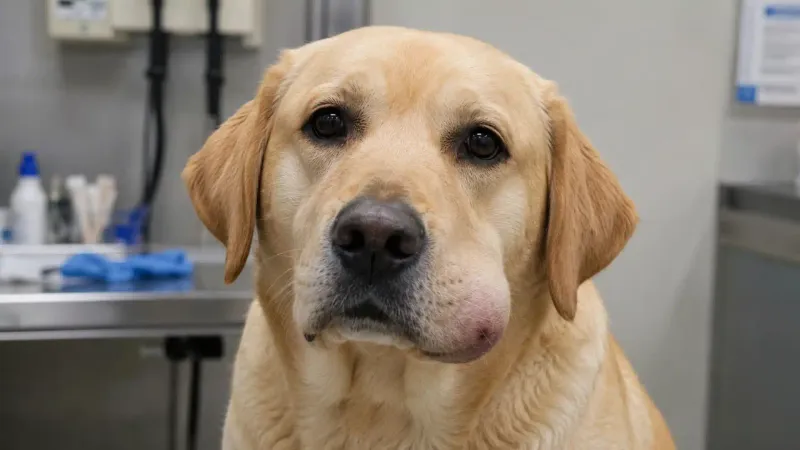
Some signs mean you should head to an emergency veterinary clinic right away. Call ahead while you get ready to go, so the team can prepare for your arrival.
VCA Animal Hospitals lists these warning signs after insect stings:
- Trouble breathing or wheezing
- Collapse
- Weakness, stumbling, or disorientation
- Vomiting or diarrhea
- Widespread hives
- Major swelling of the head, face, or neck
- Excessive drooling
- Seizures
Any one of these is enough to act on. Do not wait to see whether the sign passes on its own, and do not wait for several to show up together.
UC Davis veterinary experts also advise urgent care for severe sting reactions that involve vomiting, breathing trouble, distress, or lethargy. A dog that suddenly seems dull, sluggish, or unlike themselves deserves attention.
Serious whole-body reactions are possible, especially after many stings, though they are not the usual outcome. That is exactly why these signs matter.
Drive safely, keep your dog as calm and still as you can, and let the clinic guide you from there.
A local sting mark is not the whole picture
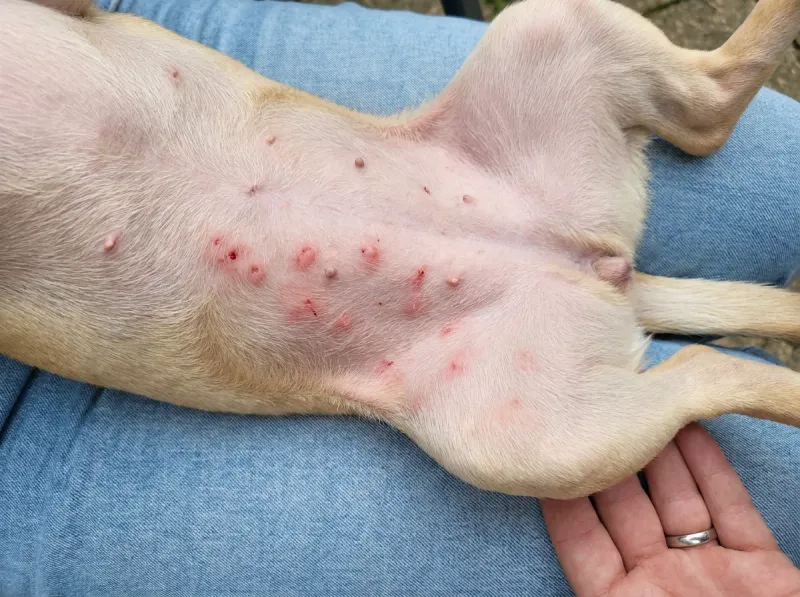
Fire ant stings often leave small, itchy, red bumps on the skin. Your dog may lick or scratch at them.
These local marks are different from a reaction that affects the whole body.
According to the Merck Veterinary Manual, local signs like these commonly go away within 24 hours in dogs. The same source notes that multiple stings can lead to more severe effects throughout the body, and that animals who were badly affected often received many stings.
So the bumps alone do not tell you how your dog is doing. Look at the whole dog.
Is your dog breathing easily, walking normally, and acting like themselves? Or are they drooling, vomiting, wobbly, or unusually quiet?
There is no safe number of stings you can count on at home. Merck says treatment depends on the nature of the exposure, so counting bumps will not give you a reliable answer.
After a swarm, contact your veterinarian for advice. Make the call sooner if your dog could not get away from the ants quickly, or if symptoms get worse.
Not every swarm is an automatic emergency, but your vet can help you decide what is needed.
Keep watching your dog closely in the hours that follow. No fixed waiting period guarantees that problems will not appear, so rely on your dog’s behavior and your vet’s guidance.
Do not give human medication without veterinary direction
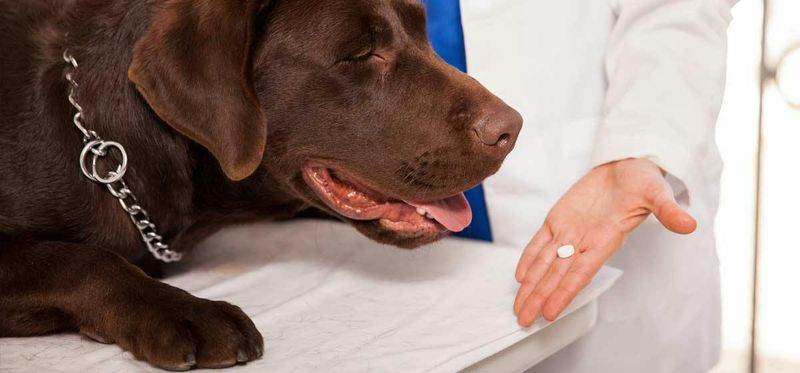
Many owners reach for the medicine cabinet when a dog is stung. Hold off.
Give an antihistamine or any other human medicine only if a veterinarian tells you to and names the exact product and dose.
Dosing for pets is not the same as dosing for people. The ASPCA explains that pet doses differ from human ones, so a guess based on a person’s label can be wrong for your dog.
Product ingredients matter too. Some allergy and cold medicines are combination products, and the ASPCA warns that ingredients such as pseudoephedrine can be dangerous for pets.
A box that looks harmless may contain something that harms your dog.
If you want to ask about medication, call your veterinarian or an emergency clinic and have the box or bottle in hand. Be ready to share your dog’s weight, what happened, and any signs you have noticed.
The vet can then tell you whether a medicine is right and exactly how much.
Do not swap in another remedy while you wait. Let your veterinary team set the plan, and spend your time watching your dog and keeping them calm.
Keep the response focused on the next step
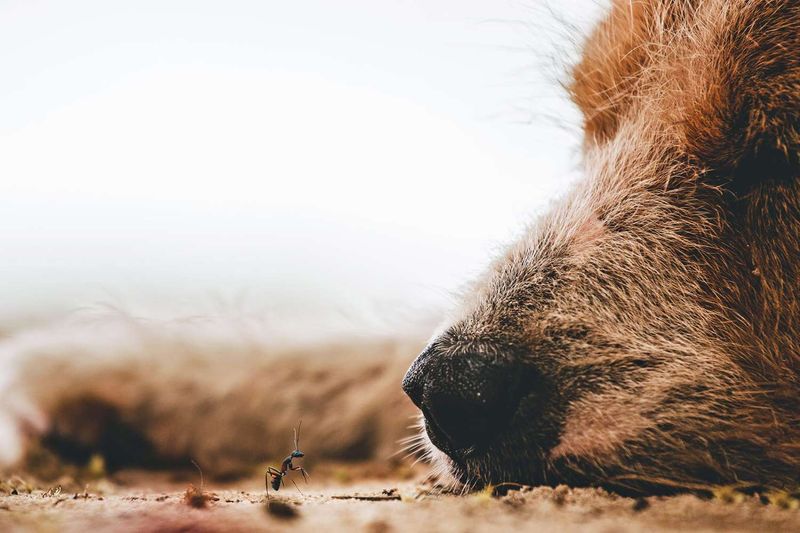
Think of the sequence as four moves. Leave the mound, brush off the ants, as Texas A&M AgriLife Extension advises, check the hiding spots, then call your veterinarian.
If you see any of the emergency signs VCA lists, go to emergency care instead.
A dog who is safe, ant-free, and in good hands has the best footing for what comes next.