
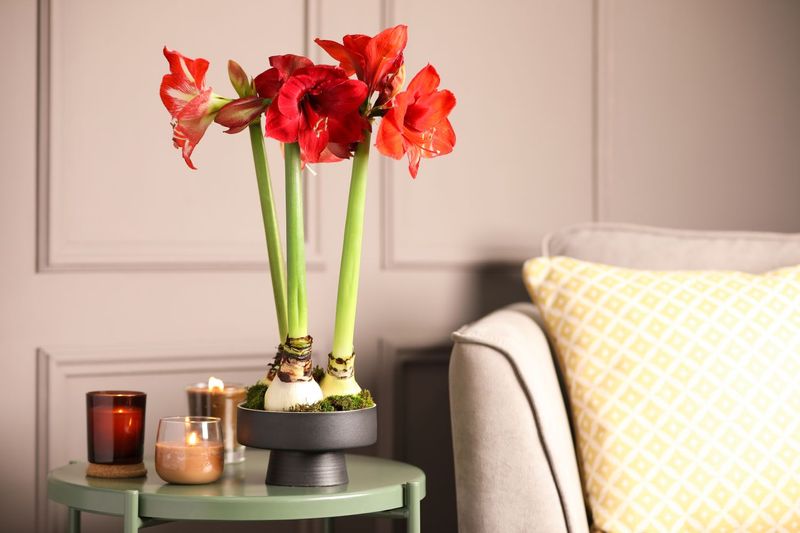
Nothing says holiday like a tall red amaryllis in full bloom on the table. But the calendar is tight, and a plain bulb from the store may not flower in time.
Here is a realistic plan that gives you the best shot, plus a few things to avoid so you do not hurt the plant.
Christmas Eve is a tight deadline for an unstarted bulb
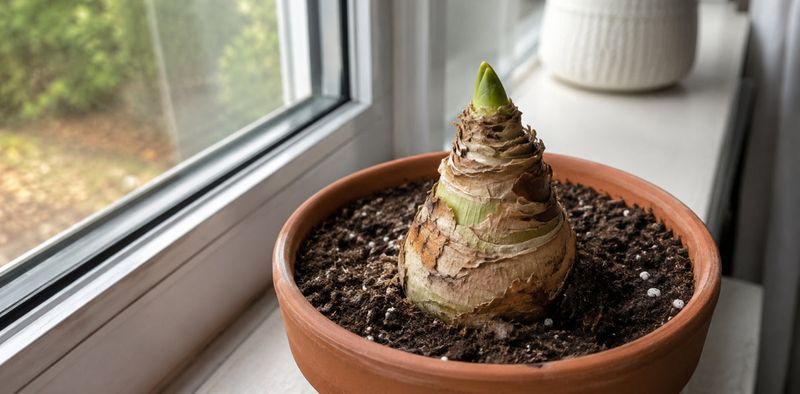
As of November 17, 2026, Christmas Eve is 37 days away. That is shorter than the typical 6 to 8 weeks from planting to bloom that Wisconsin Extension reports for a newly planted bulb.
Counting forward from today, that usual window lands roughly between December 29 and January 12.
Other timelines exist, but they describe different starting points. Illinois Extension gives 4 to 6 weeks for a bulb that has been brought out of dormancy and restarted.
That range could reach Christmas Eve, but it does not describe a fresh bulb straight out of a box.
Then there is the slow end. A Georgia Extension answer says some bulbs may take as long as 12 weeks.
So a brand-new bulb might flower by December 24, but you cannot count on it, and these ranges are not interchangeable.
Choose a bulb that has already started growing
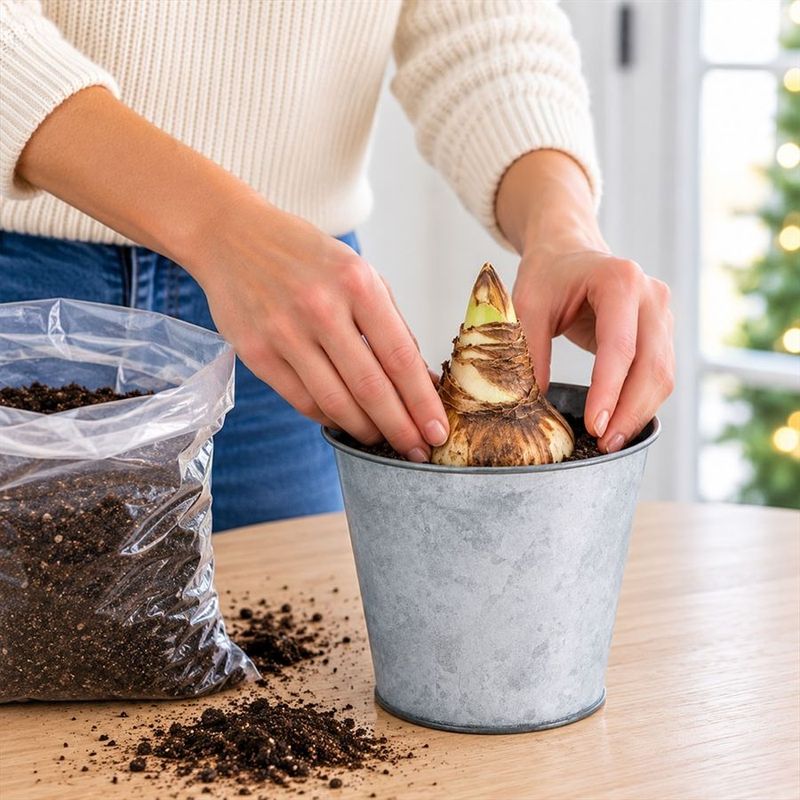
Time is short, so your best move is to buy a head start. Look for a bulb that is already sprouting, or a pre-potted plant that is already growing.
Neither one guarantees flowers by December 24, but both skip some of the waiting.
A bulb that has begun to sprout is ready for potting, according to Georgia Extension guidance, which also notes that bulbs can be forced starting in November for blooms around Christmas. That makes this week a sensible time to start.
If you want deep red flowers, ‘Red Lion’ is a dark red cultivar listed by Wisconsin Extension. Keep in mind that color is the only thing it promises.
Red Lion is not known to bloom faster or more reliably than other varieties, so choose it for looks and judge readiness by the growth you can see.
Pot a firm bulb in a container that drains
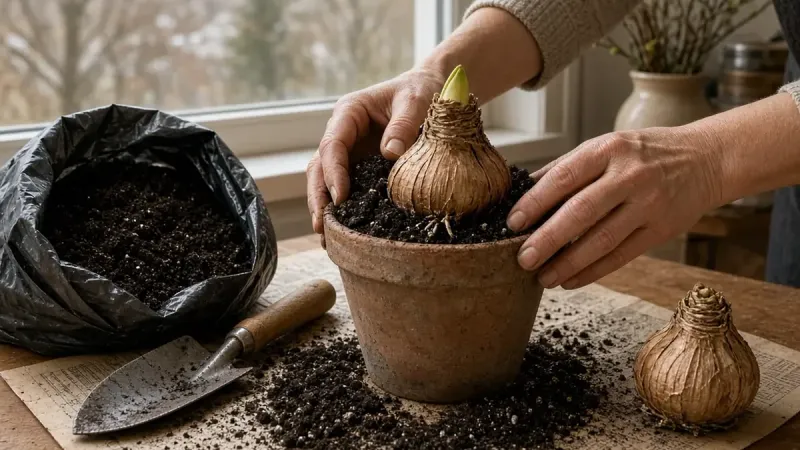
Start by squeezing the bulb gently. A good one feels firm, and Illinois Extension advises skipping any with mold, decay, or injury.
Larger bulbs generally store more energy and may make more flowers, though results vary and no count is promised.
Pick a pot with drainage holes that is about 1 inch wider than the bulb. Fill it with well-draining potting mix, since soggy soil is a common route to rot.
A snug pot is fine for this plant.
Set the bulb so at least the top third sits above the mix. Georgia Extension leaves about half of the bulb exposed, so either approach works.
Firm the mix lightly around the sides, and you are ready for the first watering.
Use steady care instead of forcing shortcuts
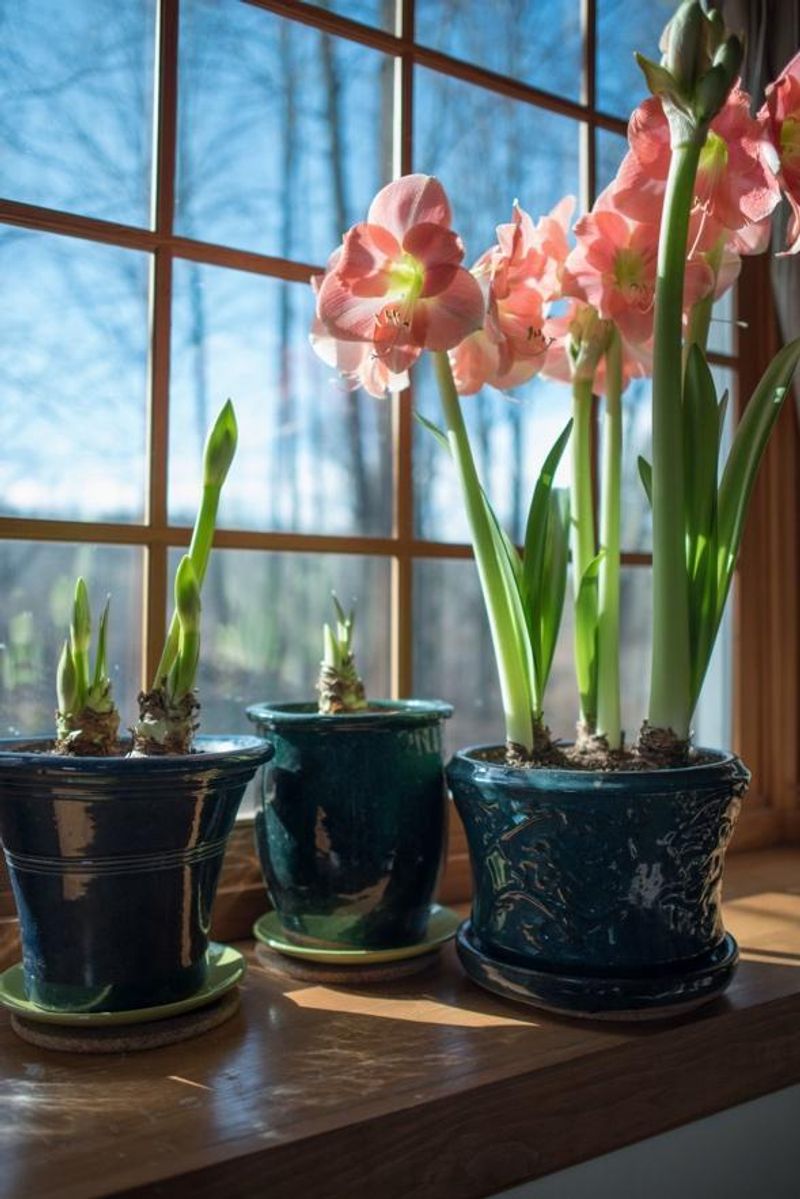
Water the pot thoroughly once after planting, then let the extra drain away. After that, keep the mix barely moist rather than soggy.
Georgia Extension suggests a warm spot while growth starts, and then a sunny window once green shoots appear.
Resist the urge to crank up the heat. Warmth helps growth begin, but Wisconsin Extension cautions that higher temperatures can produce weak stalks and smaller flowers.
A room that is comfortable for you is a safer target.
Skip the refrigerator, too. Unlike many spring bulbs, amaryllis do not need cold pre-chilling, as Utah State Extension explains, and a Georgia Master Gardener answer agrees.
If a stalk looks slow, a little patience beats a gimmick.
Protect the flowers as buds develop
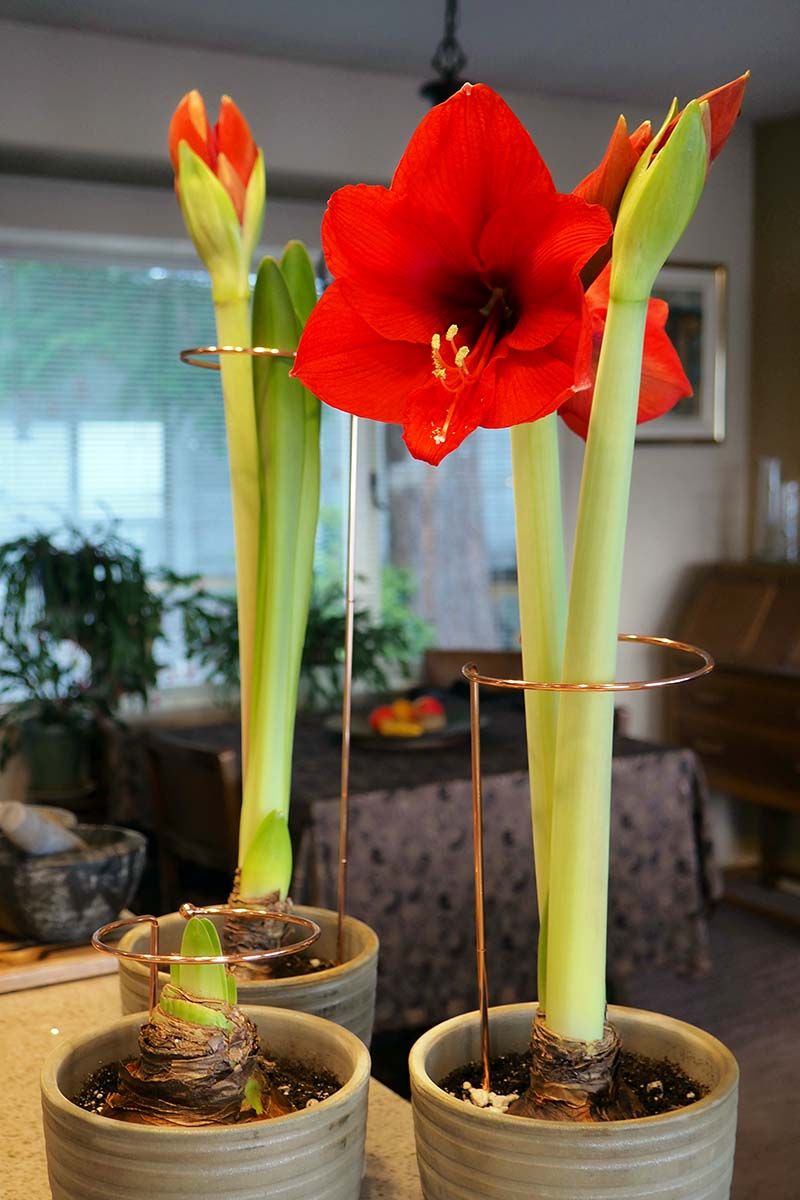
When the buds begin to show color, the plant is close to its big moment. Move it to a cooler spot out of direct sun, which Georgia Extension says can help prolong the display.
How long the flowers last will vary, so treat any number of days as a rough guess.
Turn the pot a quarter turn every so often as the stalk grows. Amaryllis stretch toward light, and a stalk left alone tends to lean.
Rotating keeps it upright.
If it does lean anyway, add a stake and tie the stalk loosely so it is not pinched. Illinois Extension also recommends staking when needed.
Stalk and flower counts differ from bulb to bulb, so enjoy whatever opens.
Treat waxed bulbs and pets differently
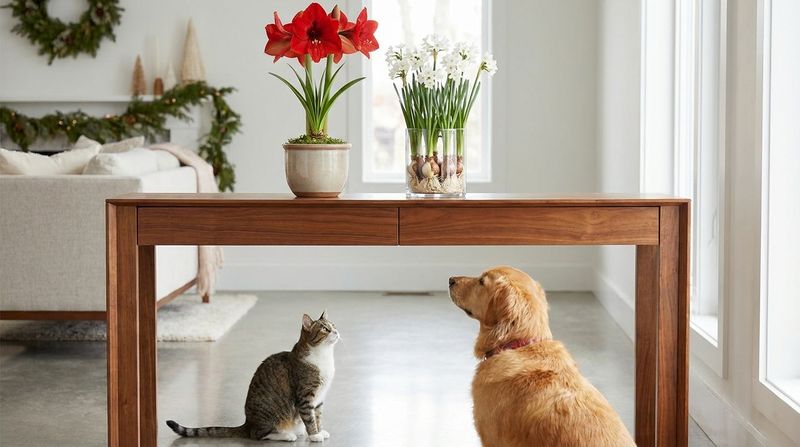
Waxed bulbs play by different rules. They are sealed and generally sold to flower without soil or watering, so the potting steps above do not apply.
Illinois Extension describes them as usually meant to be discarded after flowering.
Pets need a thought as well. The ASPCA lists Hippeastrum as toxic to cats and dogs, names lycorine and other alkaloids as the culprits, and says the bulb is the most poisonous part.
Keep bulbs, leaves, and any trimmings out of reach.
Most holiday plants sold as amaryllis are actually Hippeastrum, so that listing applies to the ones in stores. For the best chance at a red centerpiece, start with a plant that is already growing and give it steady care.
The calendar still has the final say.