
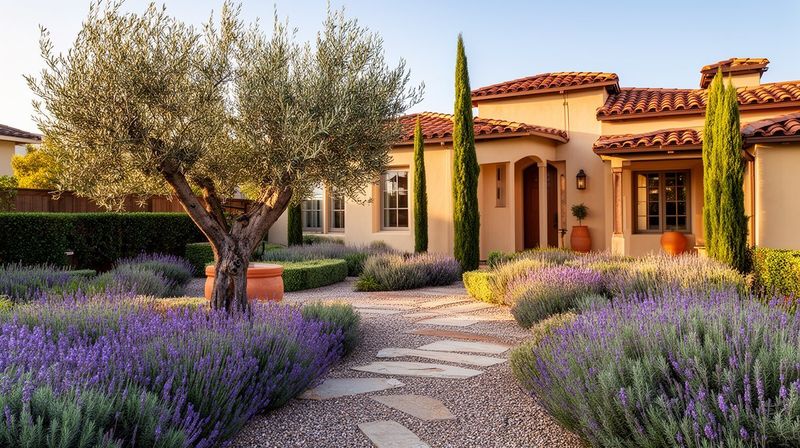
California’s wet season is the best time all year to put a new tree in the ground. Rain soaks the soil, cool air eases stress, and young roots can spread out before the long dry summer shows up.
Homeowners who planted the right trees last fall are now enjoying shade, birds, and lower water bills. Here are ten tough trees that earn their spot in a water-wise California yard.
1. Coast Live Oak
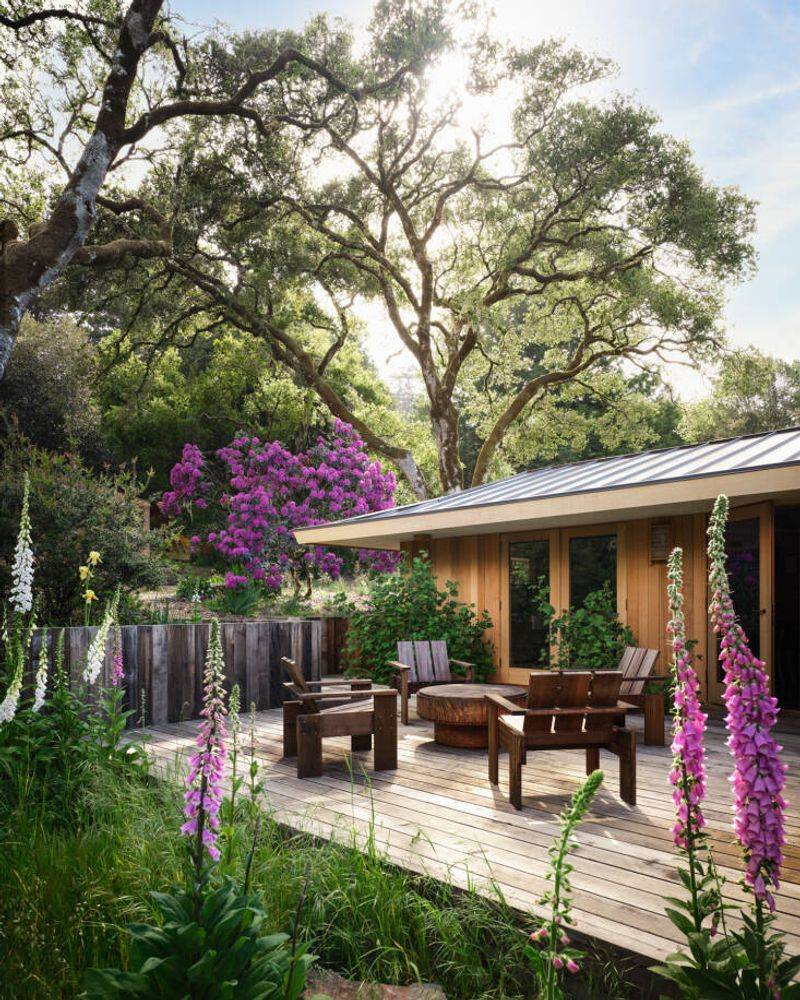
One coast live oak can host hundreds of kinds of insects, which in turn feed birds, bats, and lizards. Few backyard choices do more for local wildlife.
Plant one and you are basically opening a nature preserve.
Once established, this evergreen can get by on natural rainfall in much of coastal and inland California. The catch is patience, since growth is slow in the first few years.
Planting in fall or winter gives roots a head start while the soil is moist.
Give it plenty of room, at least 30 feet from the house. Avoid summer watering near the trunk after the first few years, because wet soil there can invite oak root fungus.
2. Western Redbud
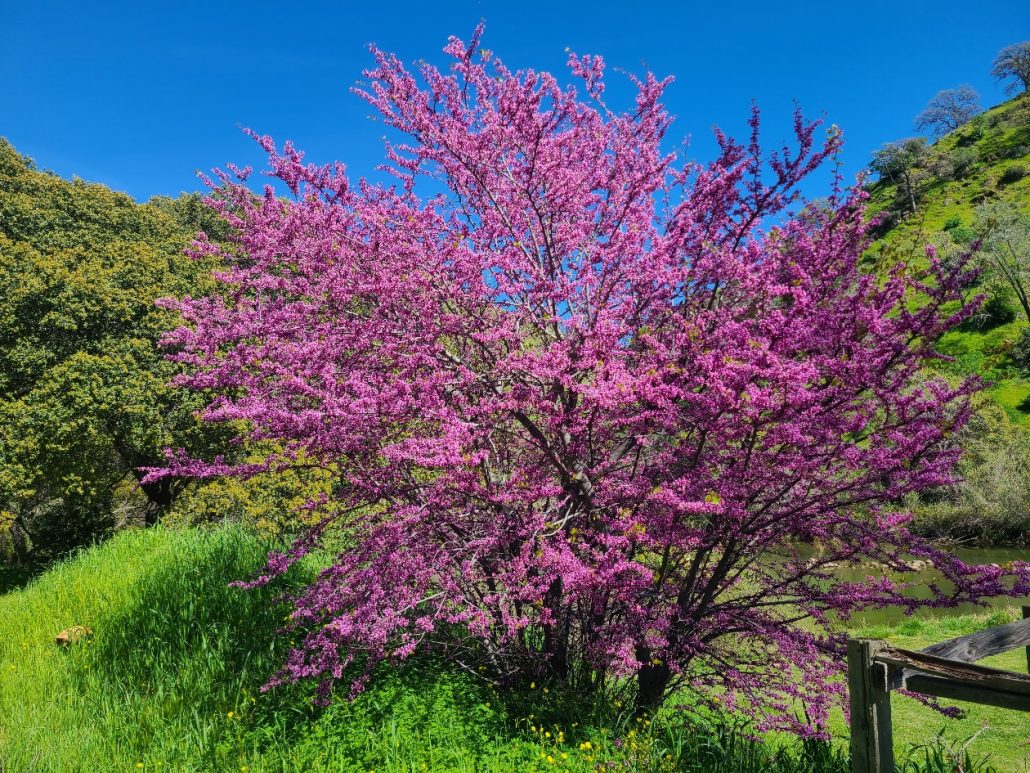
Picture bare branches suddenly covered in hot pink blossoms in early spring. That is the western redbud’s party trick, and neighbors always stop to ask about it.
Native bees love those early flowers, which open when little else is blooming. Later come heart-shaped leaves and purple seed pods that hang on into fall.
Redbud stays small, usually 10 to 20 feet, so it fits tidy suburban lots.
It likes good drainage and handles inland heat well. Some winter chill can improve flowering, so it may bloom best in foothill and valley yards.
3. Desert Willow
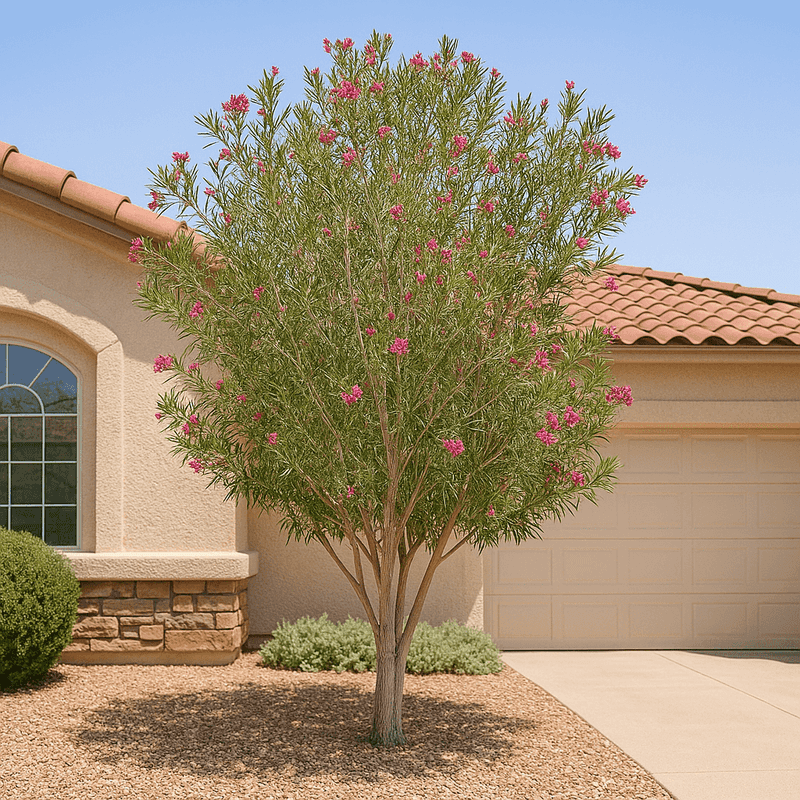
Hummingbird fans, this one is for you. Desert willow pumps out orchid-like trumpet flowers from late spring through summer, right when the rest of the yard is looking tired.
Despite the name, it is not a true willow. It comes from desert washes, so it shrugs off triple-digit heat and very little water once rooted.
Expect a loose, airy shape around 15 to 25 feet. It drops leaves in winter, which lets sun warm your patio during the cool months.
Varieties like Bubba or Timeless Beauty offer bigger blooms with fewer seed pods.
4. Palo Verde
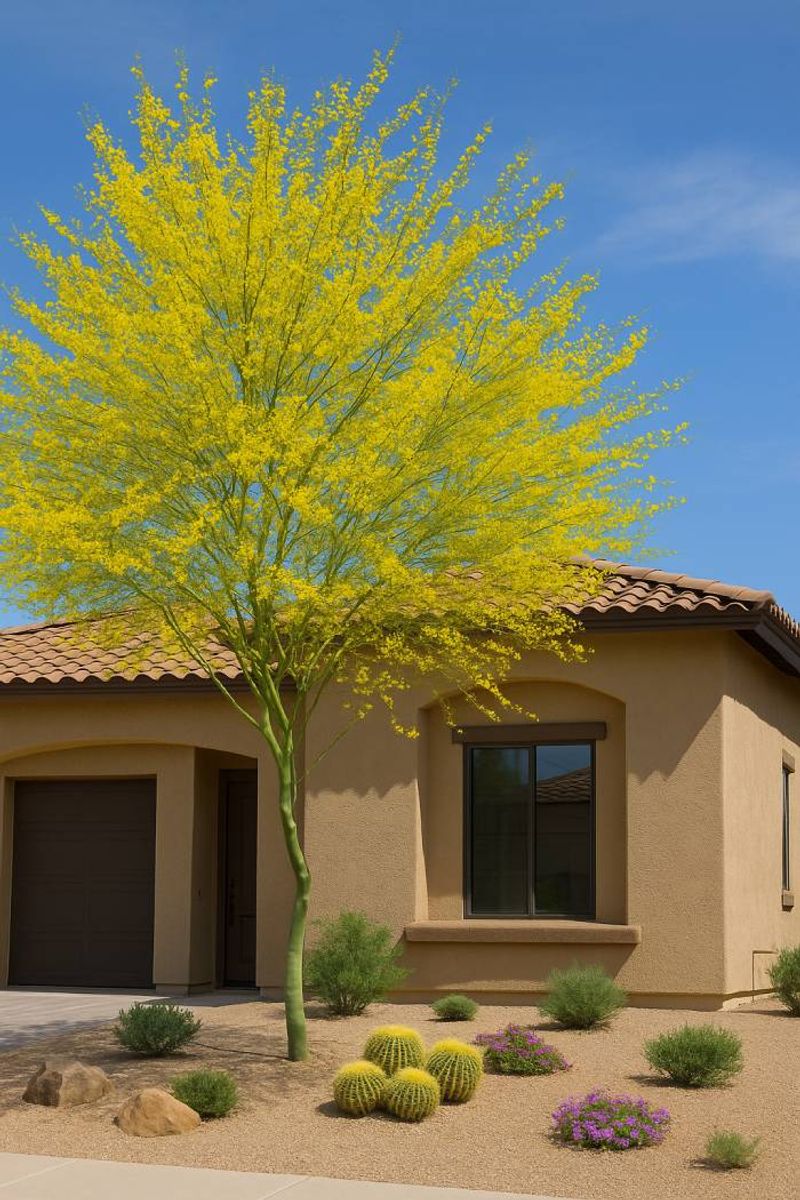
Green bark is the first thing people notice. Palo verde can photosynthesize through its trunk and branches, which helps it survive dry spells with tiny leaves.
In spring, the whole canopy turns bright yellow with blooms that carpenter bees and other pollinators adore. The hybrid called Desert Museum is the favorite pick for home yards because it is thornless and tidy.
It casts light, filtered shade that lets plants grow underneath. Best fit is inland Southern California and desert communities with full sun and fast-draining soil.
Water deeply but rarely once established.
5. Catalina Ironwood
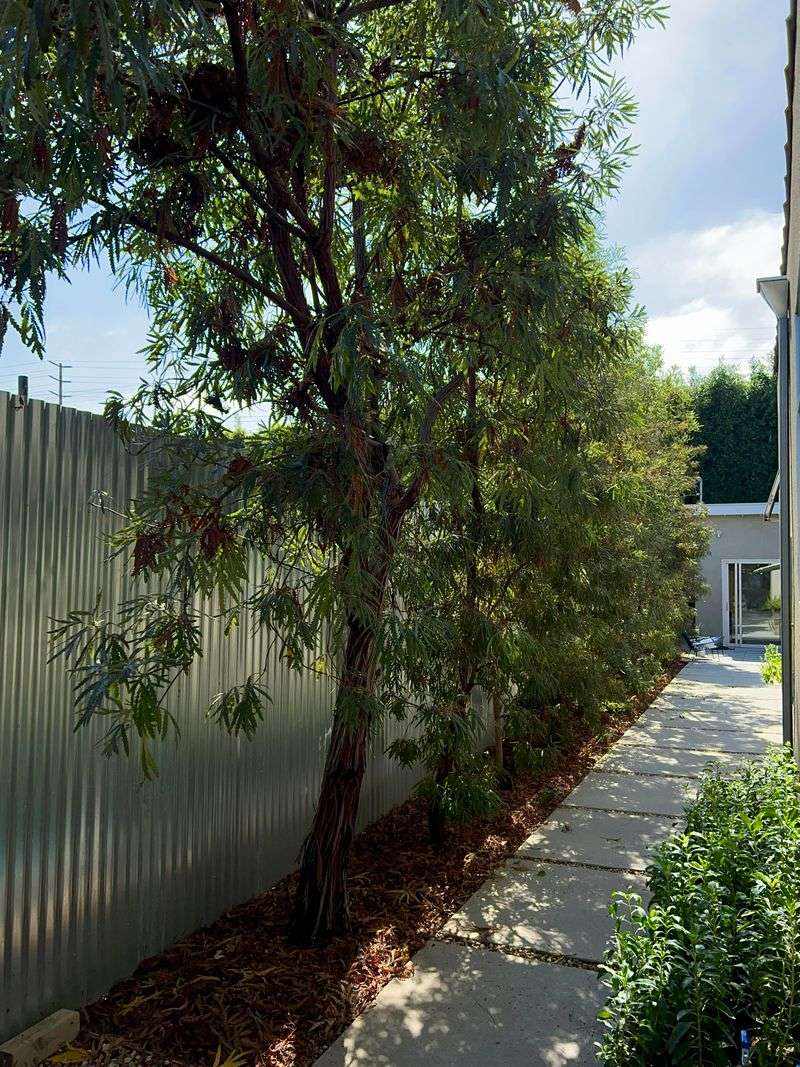
Only a few wild groves exist on the Channel Islands, which makes this tree a bit of a living rarity. Growing one feels like caring for a piece of California history.
Fern-like leaves and peeling reddish bark give it a lush look that hides how tough it really is. It grows tall and narrow, so it can work as a screen along a side yard.
It does best near the coast with mild temperatures. Inland heat and frost can stress it, so check your zone before buying.
6. Toyon
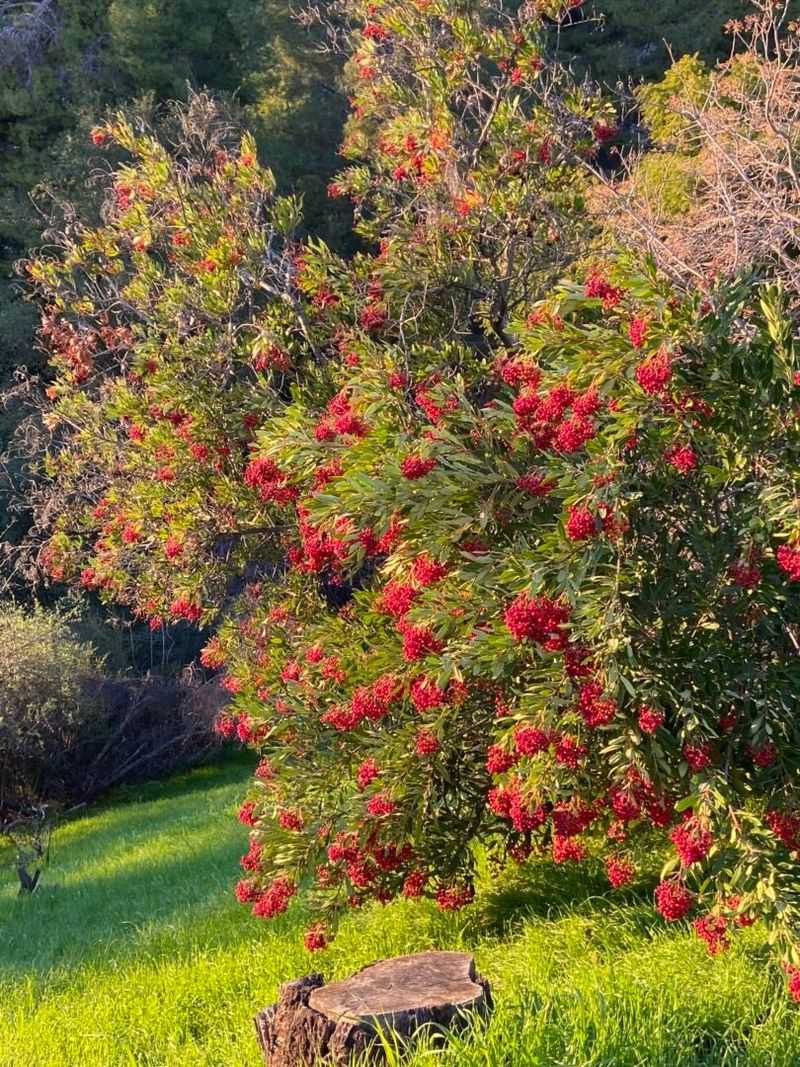
Ever wonder where Hollywood got its name? Toyon is often called California holly, and its red berries are linked to the story.
Usually grown as a big shrub, toyon trains easily into a small multi-trunk tree. White summer flowers draw bees, and winter berries feed robins, cedar waxwings, and mockingbirds.
It handles drought, clay, and coastal or inland conditions with very little fuss. Hillside homeowners like it too, though no plant is fireproof, so keep it pruned and spaced according to your local defensible space rules.
7. Olive
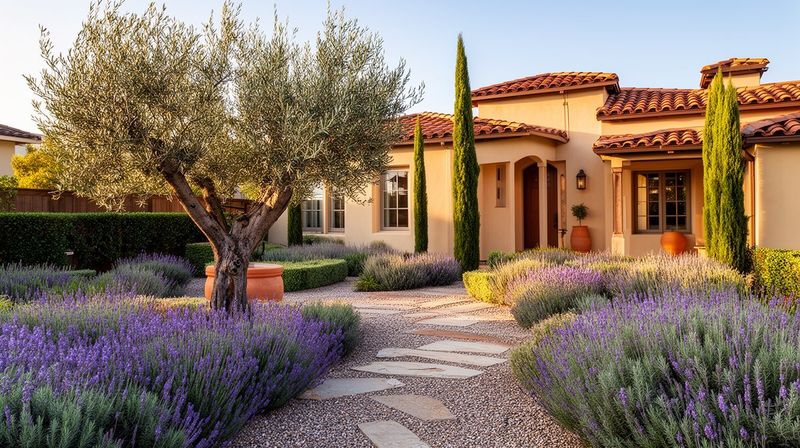
Some trees just look like California. With its gnarled trunk and silvery leaves, an olive brings instant Mediterranean charm to a courtyard or front walk.
Olives evolved in a climate a lot like ours, with wet winters and dry summers. Once settled, they need little extra water.
Many can live for centuries.
Choose a fruitless variety like Swan Hill or Wilsonii if you want to skip messy fruit stains and reduce pollen. Avoid planting fruiting types near wildlands, since birds can spread seeds into native areas.
8. Blue Elderberry
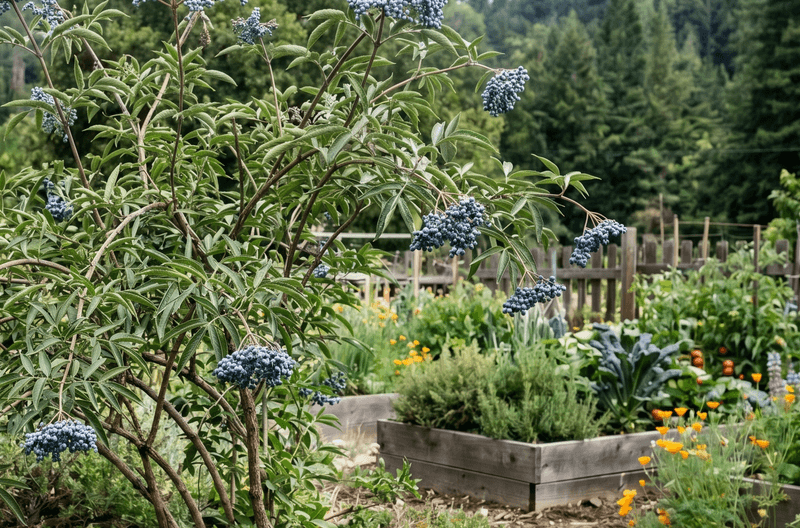
Birds might beat you to the berries, and honestly, that is the point. Blue elderberry is a buffet for over 40 species of birds in California.
Flat clusters of creamy flowers appear in spring and summer, buzzing with native bees. Dusty blue berries follow.
It grows fast, which helps if you want quick habitat.
It takes drought well but looks fuller with an occasional deep summer soak. Raw berries, stems, and leaves should not be eaten, so cook berries before using them in the kitchen.
9. Chitalpa
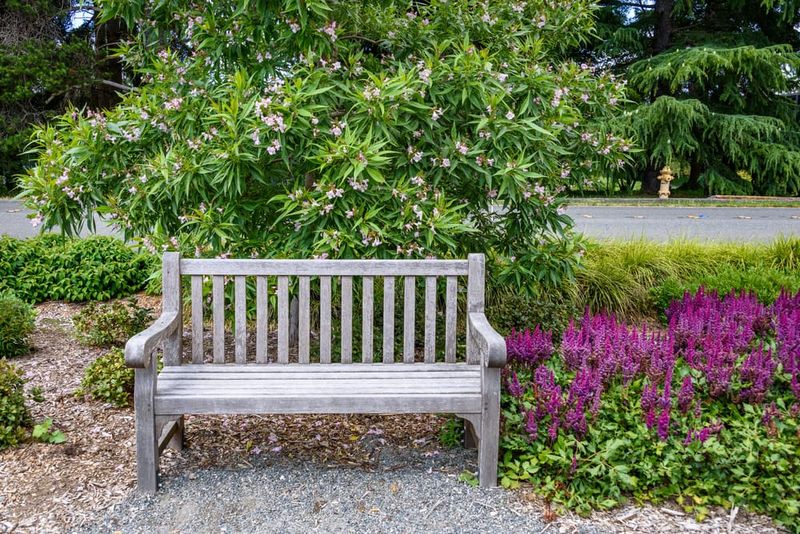
Take a desert willow, cross it with a catalpa, and you get chitalpa. The result is a fast-growing shade tree with frilly pink or white flowers all summer.
It handles heat, wind, and poor soil better than many traditional shade trees. That makes it a solid pick for Central Valley and Inland Empire yards where summers are brutal.
Growth can be quick, often reaching 20 to 30 feet. Some trees get powdery mildew in humid spots, so give it full sun and good airflow.
10. Strawberry Tree
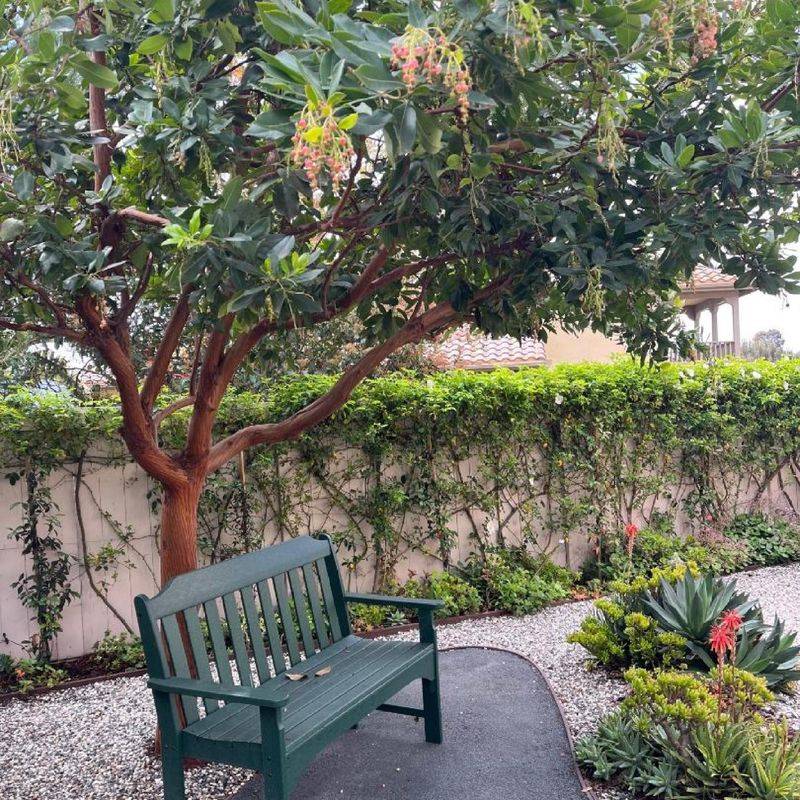
Red fruit, pink bell flowers, and cinnamon bark all at once? The strawberry tree packs a lot of show into a compact size.
The Marina variety is a favorite in California, with smooth mahogany bark that peels to reveal new color. Flowers in fall and winter feed hummingbirds when food is scarce.
It tolerates drought, coastal wind, and clay fairly well. At around 20 to 25 feet, it works near entries and patios without overwhelming the house.