
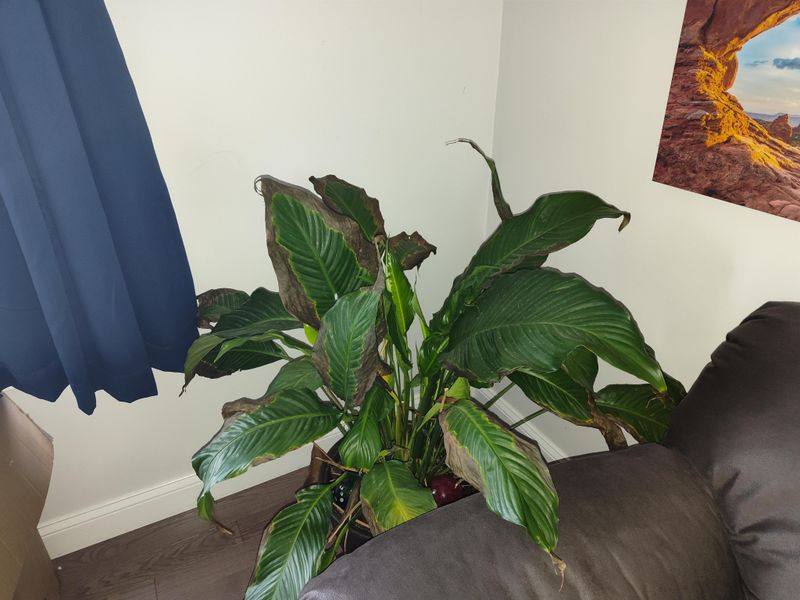
A peace lily leaf that turns black can make your stomach drop. It might point to cold, soggy roots, or something else entirely, and the color alone will not say which.
Learning to read the clues around the leaf, like where the damage started and how wet the soil feels, helps you pick a fix that fits. Here is how to sort it out before you reach for the watering can or the scissors.
Black leaves are a clue, not a diagnosis
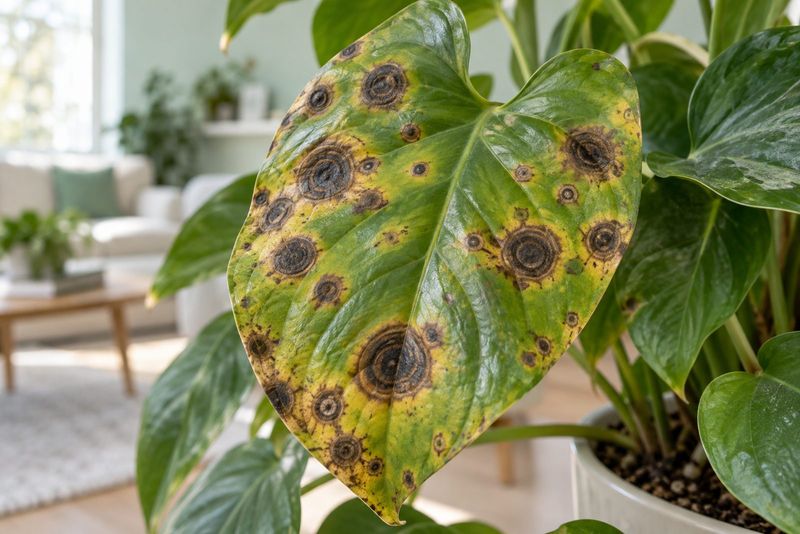
Blackening deserves a close look, but it does not name its own cause. A peace lily with black leaves is not automatically in more danger than one with brown tips, and either symptom can show up alongside serious trouble.
Several problems can darken leaf tissue, including cold injury, root rot, and leaf spot diseases. University of Maryland Extension’s indoor plant guide treats symptoms like these as starting points for investigation, and UC IPM’s houseplant problem page likewise ties dark spots to more than one cause.
So gather evidence first. Note where the damage began, whether the plant sat near cold glass or a draft, how the potting mix feels, and whether water drains freely.
If rot looks plausible, the roots will give a better answer than the leaves can.
Could cold have reached the leaves?
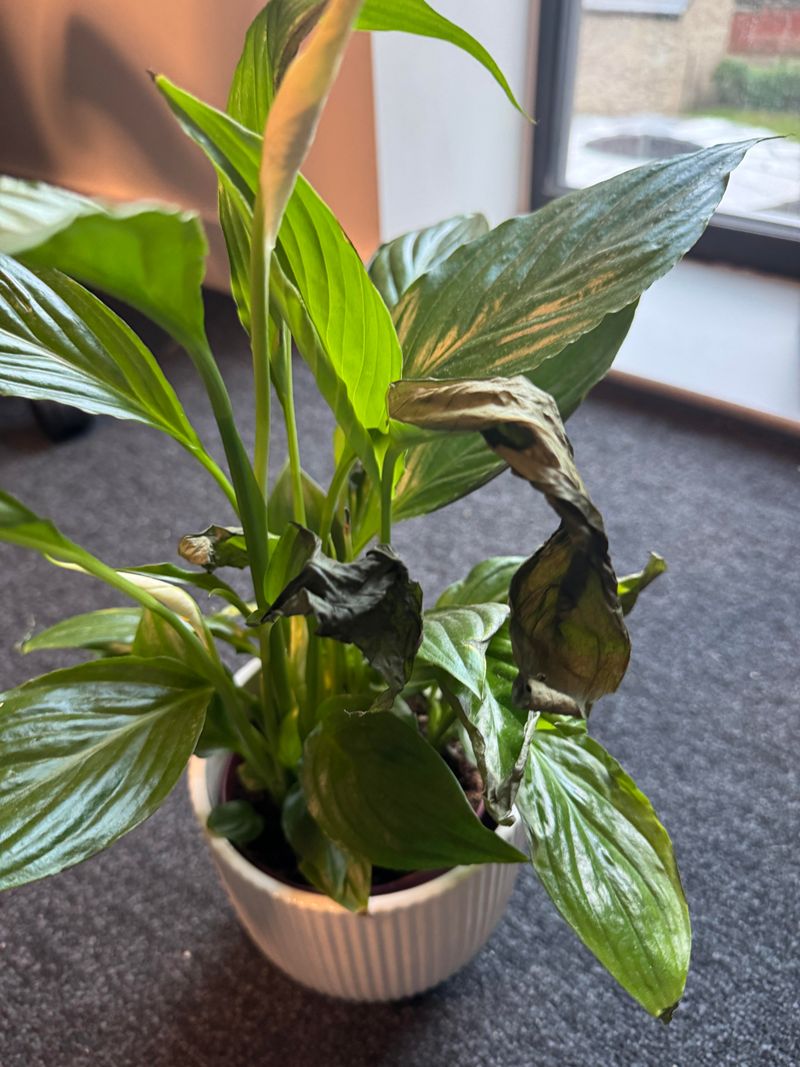
Picture where your plant actually sits. A leaf pressed against cold window glass, a spot beside a drafty door, or a stretch near a vent that blasts cool air can all expose foliage to chilling.
Cold injury often shows up as blackening that starts at the leaf tips or edges.
UF/IFAS chilling research on peace lilies found damaged tips and edges turned black and then dried. In tested cultivars exposed to 38°F, symptoms appeared from within 24 hours to five days, and susceptibility differed by cultivar.
Clemson Extension suggests warm daytime conditions of 68 to 85°F and avoiding temperatures below 60°F. Neither number is a universal cutoff.
Exposure time and cultivar both matter.
A thermometer placed at leaf level for a night or two can tell you more than a guess about the room.
Does the wet soil point to root rot?
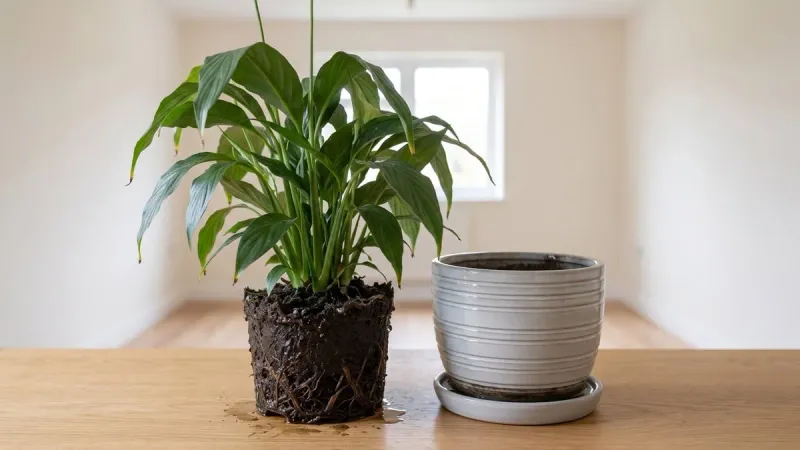
Root rot becomes more plausible when several clues line up. The mix stays soggy for days, the plant wilts even though the soil is wet, and growth may look yellowed or stunted.
Black leaves alone do not confirm rot.
University of Wisconsin Extension describes rotted roots as soft and brown or dark, and notes that affected plants can wilt despite moist soil.
When those clues fit, slide the plant out of its pot and look. Maryland Extension says healthy roots are light-colored and firm, while diseased roots are dark and soft.
Check that the drainage holes are open too, since standing water at the bottom of a pot can keep the root zone wet. If the roots look firm and pale, rot is probably not your answer, and it is time to look back at cold exposure or other causes.
Brown tips are not automatically harmless
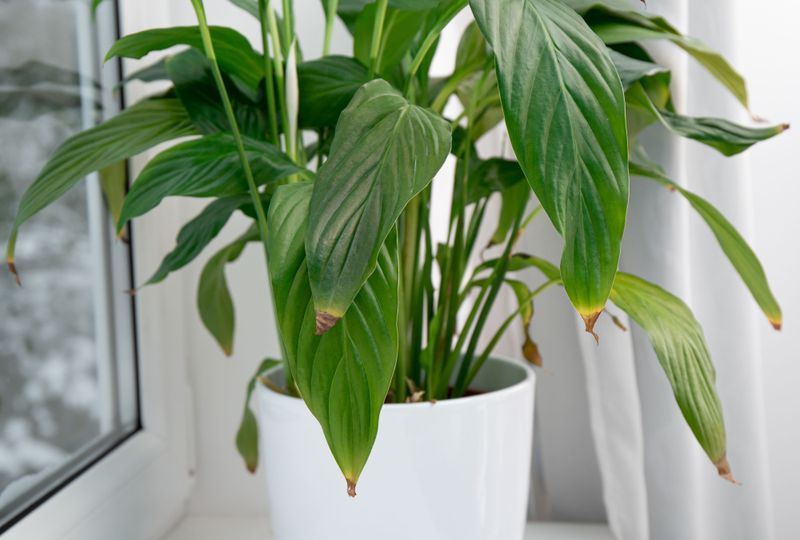
Brown tips are easy to shrug off, but they are no guarantee of a healthy plant. On peace lilies, tip browning can come from watering problems, low humidity, too much fertilizer, direct sun, salt buildup, or the quality of your water, as noted in an Ask Extension answer on browning lily leaves.
Black spots have their own list of suspects. UC IPM points to causes beyond cold, including fungal or bacterial problems, so a dark spot in the middle of a leaf may need a different explanation than a blackened edge.
Neither color settles the question. Ask what else is going on: crusty white residue on the soil, a recent fertilizer dose, a sunny afternoon window, or a pot that never seems to dry out.
Supporting evidence is what turns a guess into a diagnosis.
Warm cold-damaged plants and avoid rushed pruning
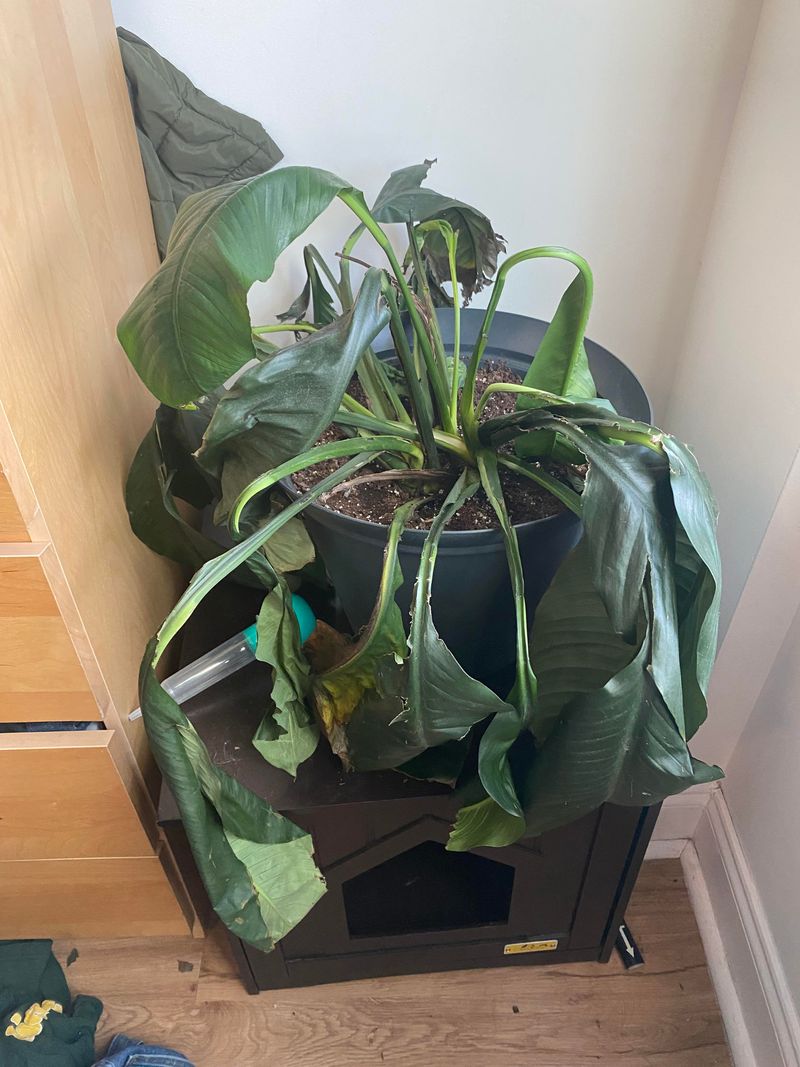
If your plant’s history fits cold exposure, start by moving it somewhere consistently warm and away from drafts, cold glass, and vents. Steady conditions give the plant its best chance to put out healthy new growth, though no step can promise recovery.
Tissue that is fully damaged will not turn green again. The question is how much of the plant is affected, and that can take time to show.
Holding off on heavy pruning and fertilizing while the damage is unclear is a sensible approach. UF/IFAS advice on cold-damaged plants suggests waiting for new growth to show what is still alive.
That advice is aimed at landscape plants, so applying it to a houseplant is cautious general care, not peace-lily-specific trial guidance.
Meanwhile, keep the mix moist but not soggy, following Clemson’s care guidance. Once a leaf is clearly dead, you can trim it away.
Treat root rot by fixing the root zone
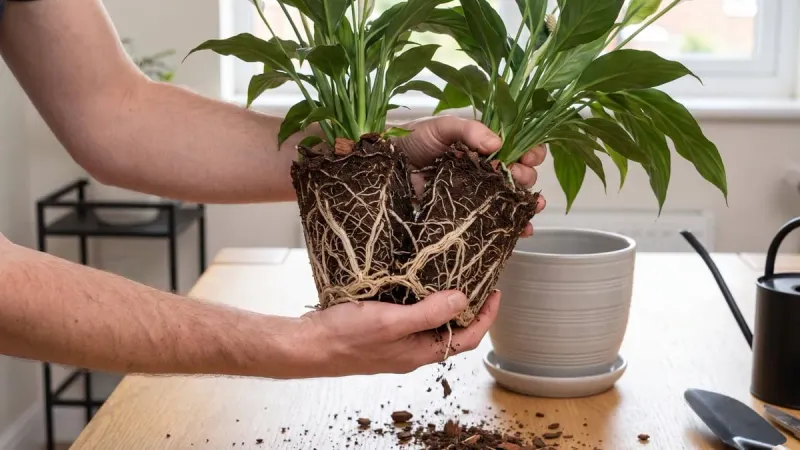
When you find rotten roots, the job is to remove the bad and keep the good. Maryland Extension advises cutting away rotted portions and replanting healthy sections in sterile potting mix.
Use a clean pot with drainage holes and clean tools.
Afterward, let the plant’s soil tell you when to water, not the calendar. Clemson Extension says peace lilies like moist, not soggy, mix.
Let it dry slightly between waterings, use room-temperature water, and empty any excess from the saucer.
Texas A&M AgriLife likewise recommends checking soil moisture, watering thoroughly when needed, and emptying standing water.
Resist the urge to add water to a plant that looks droopy if the mix is already wet. That can worsen the problem.
Recovery is not guaranteed, but a drier, better-draining root zone gives new roots a fair chance.
Let the evidence guide your next move
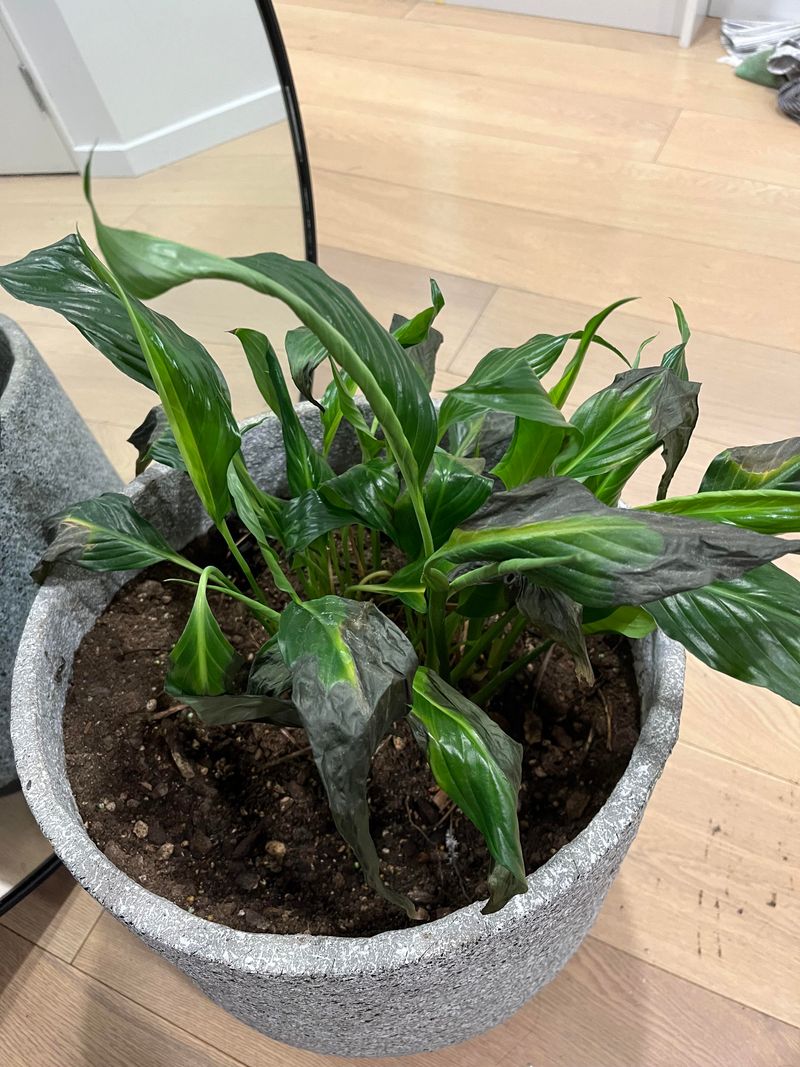
Match the response to what you actually find. A plant with a believable cold history, such as a leaf against chilly glass, needs warmth and protection, while soggy mix and dark, soft roots call for fixing the root zone, as Wisconsin Extension describes.
The leaf is only the messenger, and it rarely gives the whole story.