
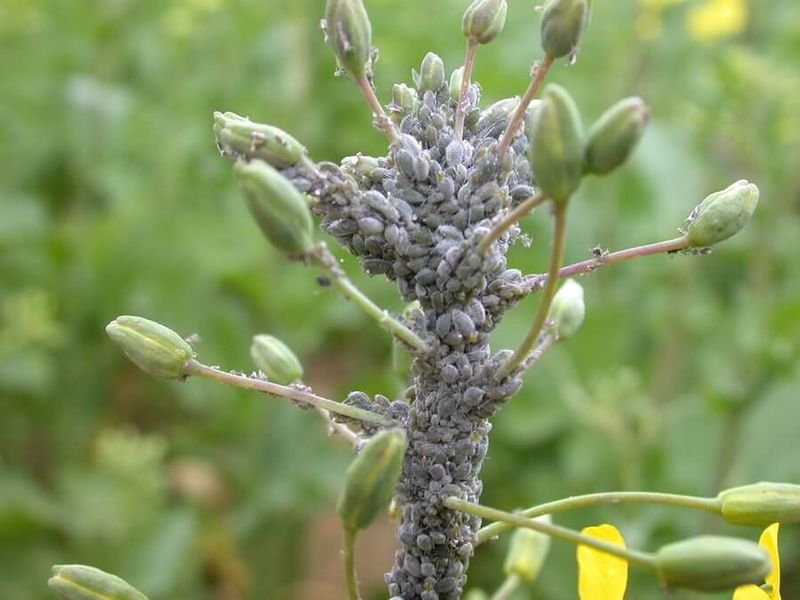
Gray-white, fuzzy-looking patches on cabbage leaves can make any Central Texas gardener look twice. Sometimes those patches are cabbage aphids, and sometimes they are not.
A close look at the plant tells you far more than the weather or the look of the leaf alone. Here is how to check, what to try first, and how to avoid hurting the good bugs in your garden.
A fuzzy patch is a clue, not proof
Seeing a hairy-looking spot on a cabbage leaf is a good reason to go look closer. It is not proof that aphids have moved in.
Plenty of things can make a leaf look odd, so the patch is a clue and the insects are the confirmation.
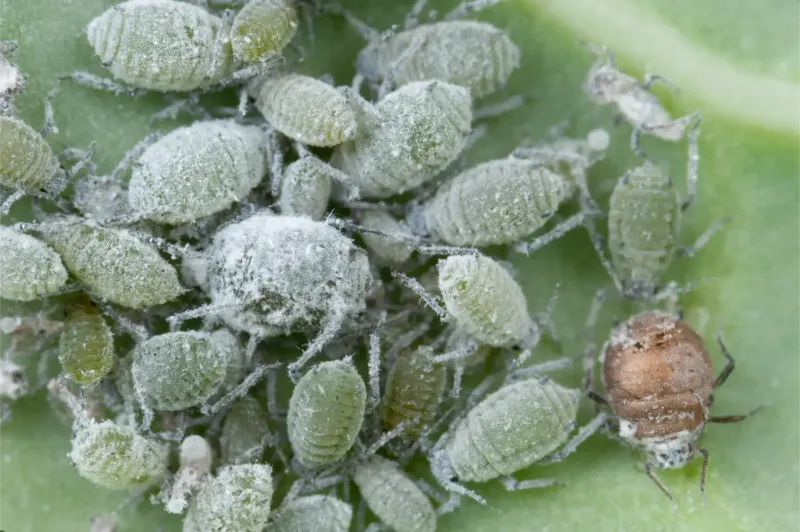
Cabbage aphids are small, soft-bodied insects covered in a white, waxy coating. According to UC integrated pest management guidance, they often gather in dense colonies, and that crowding is what can give a grayish, fuzzy look from a distance.
Up close, you should see many tiny bodies packed together, and some may move when you nudge them.
Before you treat anything, make sure you can actually see insects in a cluster. A smooth patch with no bugs, or a single dusty-looking spot, calls for more checking rather than a spray.
University of Minnesota Extension describes aphids as small, pear-shaped, soft-bodied insects that feed in groups, which is a helpful picture to keep in mind while you look.
Feeding damage is a separate matter. Yellowing, curled leaves, or slow growth can come from aphids, but they do not prove it.
Several aphid species can feed on cabbage, and Utah State University Extension notes that telling them apart can be tricky. The look of a colony alone will not name the species, so treat what you see as a lead and keep inspecting.
Where to inspect the plant
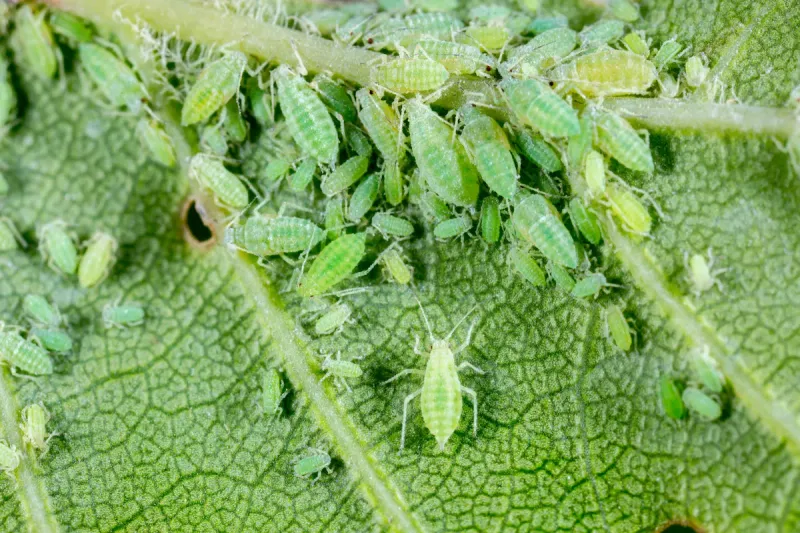
Walk the row with a slow, planned route. Aphids like to tuck themselves away, so a quick glance at the outer leaves can miss them completely.
Start by turning leaves over and checking the undersides, where colonies often settle.
Next, look at the youngest leaves near the center of the plant. New growth is tender, and UC integrated pest management reports that cabbage aphids gather on young leaves as well as older ones.
Pay special attention to any curled or puckered spots, since those folds make good hiding places.
Then check the head itself. Cabbage aphids can occur deep within heads, so a clean-looking outside does not guarantee a clean inside.
Gently peel back a loose wrapper leaf or two and look between the layers, using a flashlight if the light is dim.
Gardeners who want general growing tips can also read Utah State University’s cabbage garden guide for what healthy plants should look like. Knowing a normal leaf makes odd patches easier to spot.
Make a habit of checking a few plants each time you water. Looking at several spots on each plant gives you a much better picture than judging one leaf.
Cool, dry weather can favor aphids, but it does not confirm a local outbreak
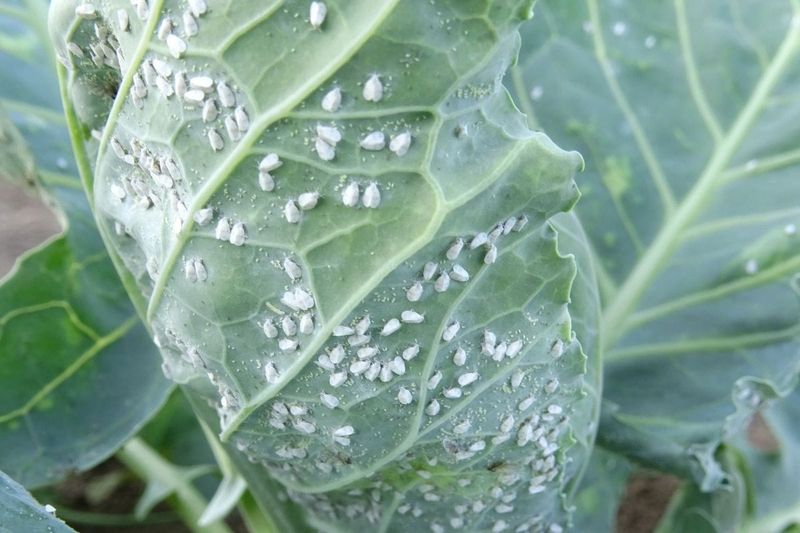
November in Central Texas often brings crisp mornings and dry stretches, and many gardeners wonder if that weather sets off aphids. There is a bit of support for a connection, but it is limited.
A University of Georgia Extension publication reports that cool, dry spring or fall conditions can favor high aphid populations in southeastern vegetable crops.
That statement is about a different region and about crops in general. It does not show that cool nights trigger cabbage aphid outbreaks in Central Texas.
It also cannot tell you whether the plant in front of you has aphids today.
Think of the weather as a reason to check a little more often, not as a diagnosis. A cool, dry week is a fine time to walk out with a flashlight and look under leaves.
If you find no insects, there is nothing to treat, no matter how the forecast looks.
If you do find a colony, that is a fact about your plant, and the next steps depend on what you see. The weather only helps explain why you might look sooner.
Start small colonies with water and selective leaf removal
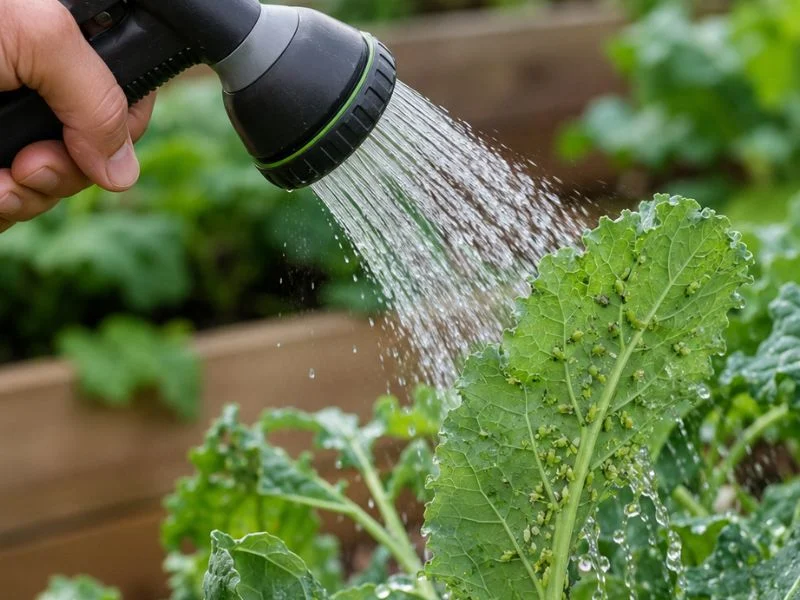
When you find a small group of aphids, the gentlest tools come first. A firm stream of water from a hose can knock many of them off the plant.
Aim it at leaf undersides and along the stems, and keep the pressure strong enough to dislodge insects without tearing the leaves.
If a single outer leaf is crowded with aphids, removing it can be even simpler. Pick off heavily infested leaves when that is practical, and drop them into a sealed bag or the trash rather than the compost pile.
This works best when the plant has plenty of healthy leaves left and the head is not yet tight.
Utah State University Extension lists dislodging aphids with water and removing infested leaves among the options for cabbage in home gardens. These steps are low-risk for the plant and for helpful insects nearby.
Do not expect one rinse to finish the job. Some aphids may remain, especially in tight folds, so recheck the plant in a day or two and look at the same hiding places again.
If the numbers are dropping, keep watching. If a colony keeps rebuilding, you can move on to other options, but the recheck tells you what is really happening.
Contact sprays work only when they reach the aphids
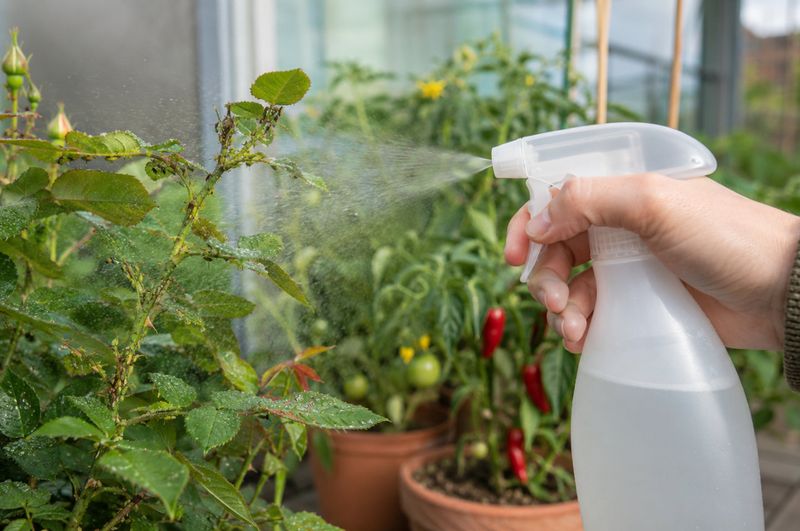
Insecticidal soap and horticultural oil kill by touching the insect. That means they only help when the spray lands directly on the aphids.
If rinsing and leaf removal have not settled things, a contact product may be a reasonable next step, but only after you have inspected the plant and confirmed visible insects.
Start with the label. Choose a product that lists cabbage and aphids, and follow every direction, including application timing and any harvest interval.
UC integrated pest management advises coverage of the aphids themselves, so plan to reach leaf undersides where colonies sit.
Hidden aphids are the weak spot. Contact treatments may miss aphids tucked into curled leaves or the head, and those survivors can rebuild a colony.
Recheck the plant afterward rather than assuming the job is done.
Plant safety matters too. Utah State University Extension notes that soap sprays can injure cabbage at some concentrations, so follow the label’s precautions and test on a small area if it directs you to.
Skip homemade mixes, since the strength is hard to judge. And an organic label does not make a product automatically harmless to cabbage or to beneficial insects, so read the directions the same way you would for any other spray.
Protect aphids’ natural enemies
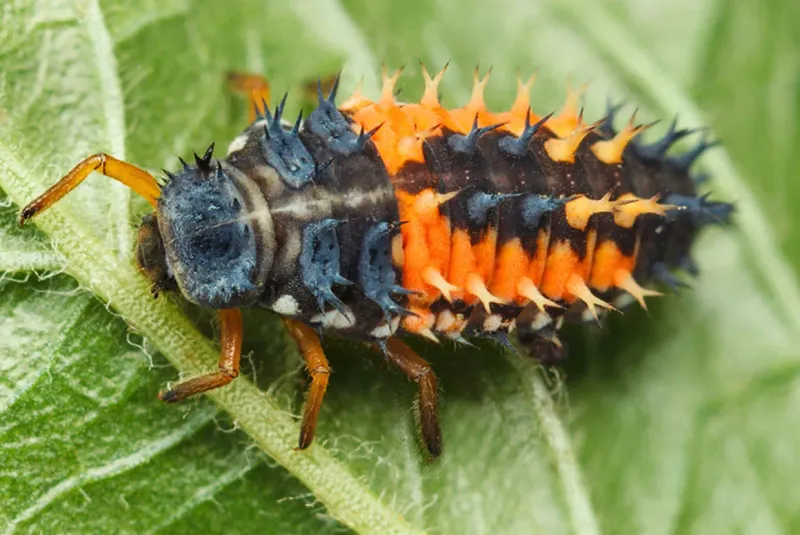
Aphids have enemies of their own. Predators such as lady beetles and lacewings, along with tiny parasitic wasps, feed on them.
Texas A&M Extension identifies predators and parasites that attack aphids, and they are worth keeping around.
Routine broad-spectrum spraying can harm those helpers, as UC integrated pest management explains. Natural enemies will not always clear a colony, but wiping them out makes the job harder.
Here is a simple path. Confirm you can see insects, check the usual hiding places, and start with water or leaf removal for small groups.
Reach for a properly labeled contact product only when you still need it.
A cabbage patch with a few ladybug larvae in it is a good sign, and a spray can that stays on the shelf is often its best companion.