
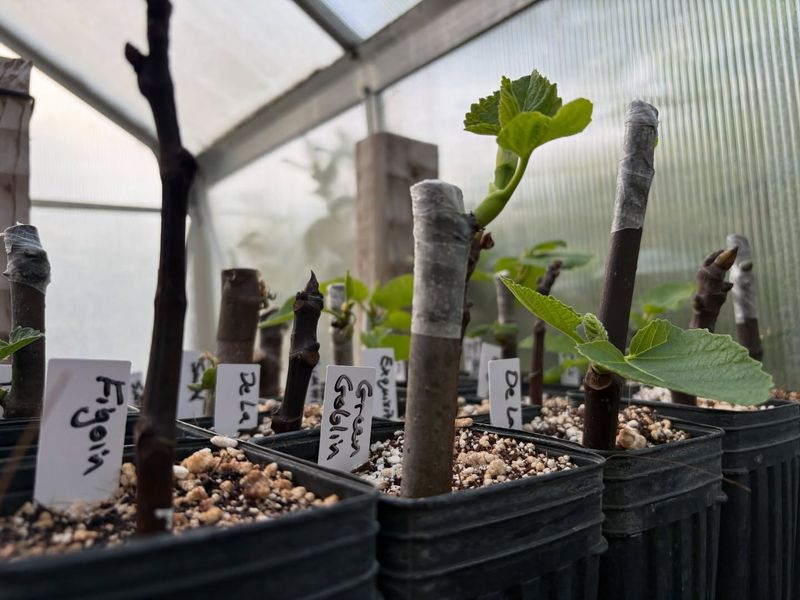
One healthy fig tree in your yard can become several new plants if you try dormant cuttings. Winter is when many Southern gardeners start thinking about it.
The method works for many people, but the timeline is less certain than the popular promise of roots in a jar by spring. This guide shows how to try it carefully and how to tell what your cuttings are really doing.
Dormant wood matters more than the season on the calendar
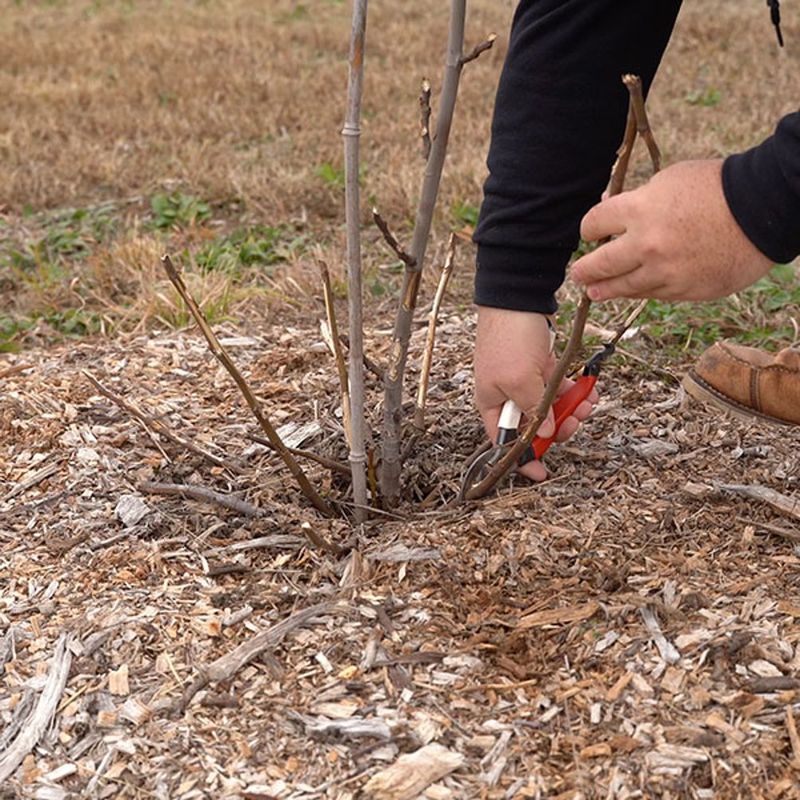
Figs are usually propagated from dormant wood, and both UF/IFAS and Texas A&M AgriLife support taking hardwood cuttings. Neither guide sets one Southern calendar for collecting them, so a date on the wall is not the thing to follow.
You may see Florida’s December through late February window mentioned. That window applies to planting bare-root fig plants, not to collecting cuttings from your tree.
Leaf drop alone does not prove a fig is dormant. Florida figs may not get the same cold conditioning that Texas figs do, so trees in Miami, Houston, and Pensacola can behave differently.
Look at the wood itself. Choose firm, mature branches with tight buds that are not pushing new growth, and let your local weather guide you rather than the month.
Choose a healthy donor tree and handle cuttings carefully
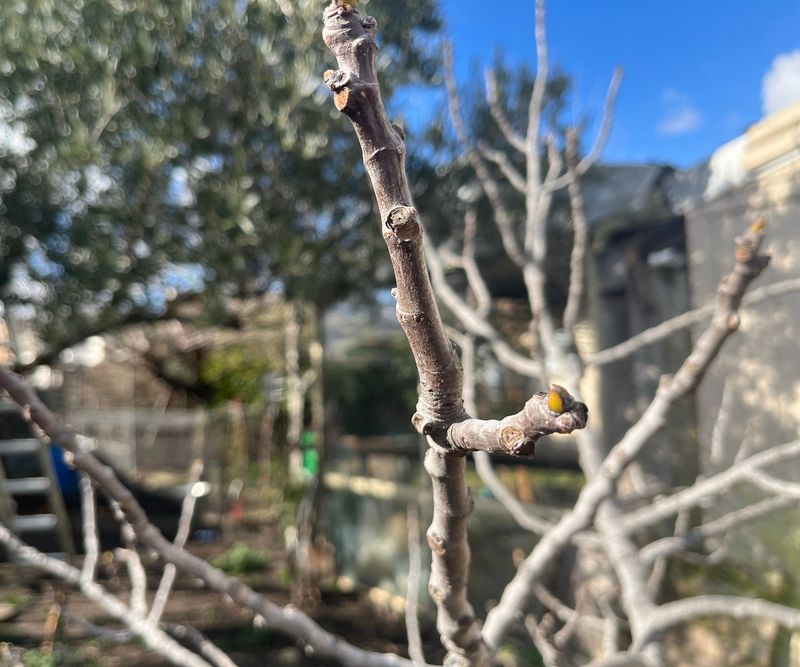
Pick a fig you actually want more of, one that fruits well and looks vigorous. Branches should be firm, free of cracks, dark spots, or dieback.
Skip any tree that looks diseased. Fig mosaic can spread through cuttings from infected trees, and UC IPM advises against propagating symptomatic plants.
Mottled, distorted leaves from last season are a warning sign.
Fresh cuts also leak milky latex, which UF/IFAS says can irritate skin. Wear gloves if you can, and wash any sap off promptly.
Prepare a cutting with a clean basal cut
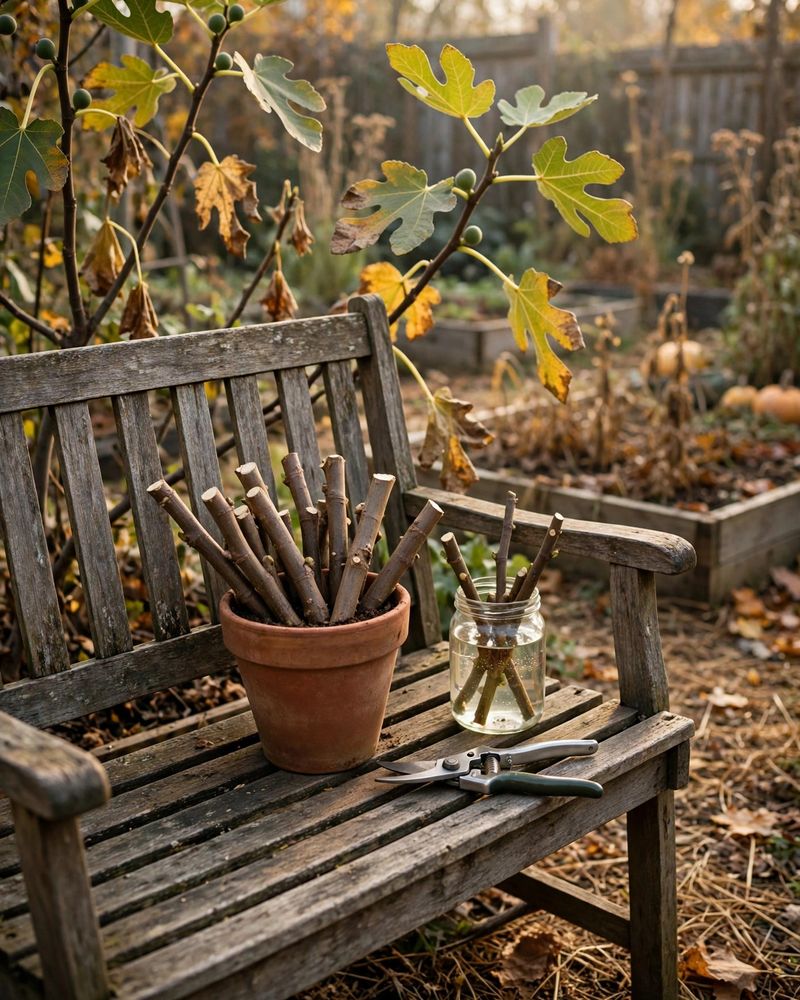
Size guidance varies a little, and the two sources fit together. Texas A&M recommends cuttings of 6 to 10 inches that are about half an inch to 1 inch thick.
UF/IFAS describes cuttings about 6 inches long and less than 1 inch thick. Treat these as a range, not one exact rule.
Use clean, sharp pruners. UF/IFAS says to make the bottom cut just below a node, the bump where a bud or leaf grew.
Rooting hormone may improve rooting efficiency, but it is optional. You can skip it and still give the cutting a fair try.
Use a moist, porous medium—not a guaranteed jar method
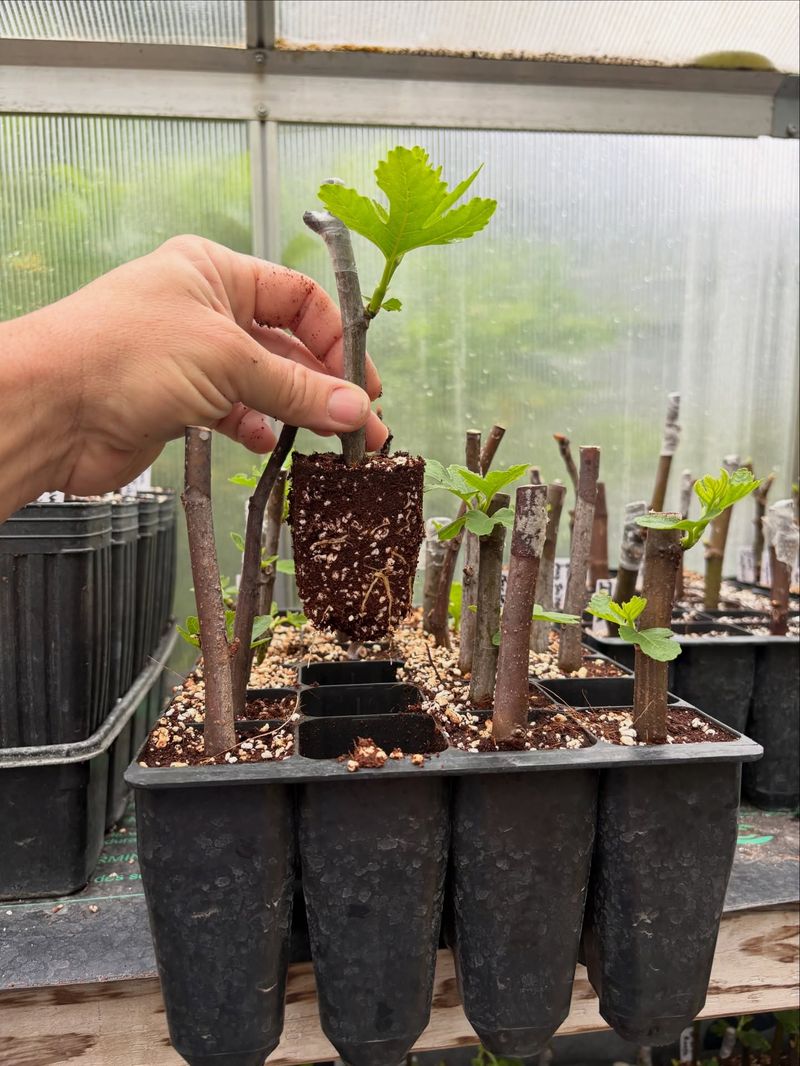
A jar of damp soil sounds simple, but the guidance does not name a jar as the best vessel or promise a timeline. What it supports is a moist, porous medium.
UF/IFAS names perlite or a similar medium, says to keep it moist but not wet, and says at least half the cutting should sit below the surface.
A closed jar with no drainage can leave the medium soggy, which goes against that advice. If you use a container, choose one that drains.
Another approach comes from Texas A&M. Cuttings can be callused in a damp paper towel inside a plastic bag, then planted in commercial potting medium.
That is an option, not a required step.
Callusing is not the same as rooting
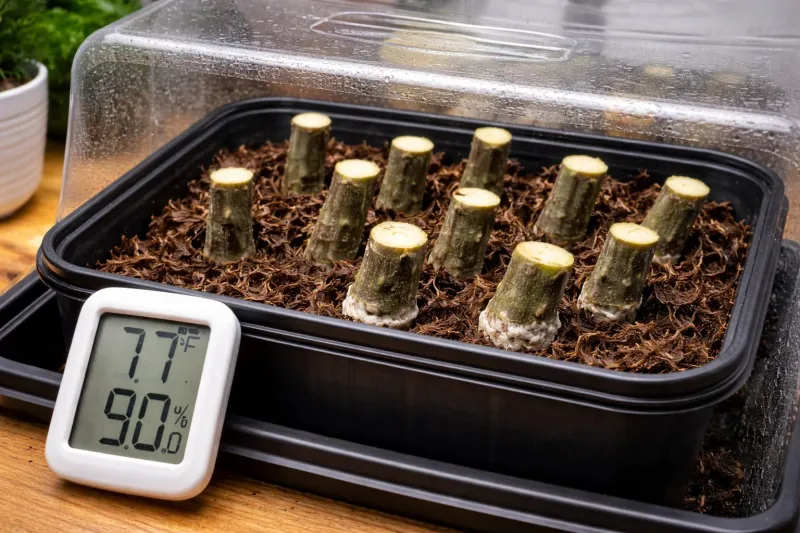
Callus is a pale, bumpy layer of tissue that forms over the cut end. It is an early stage, and it does not prove roots exist.
UF/IFAS reports callus in two to three weeks, but only under 50 to 60°F conditions.
Methods differ. Texas A&M describes holding cuttings around 80°F until callus forms, then potting them.
Timelines also stretch. In one Georgia example, cuttings go into a nursery row in late February or March and rooted plants are dug the following winter.
That is a different setting, but it shows why no single spring deadline is supported.
Wait for roots before deciding what comes next
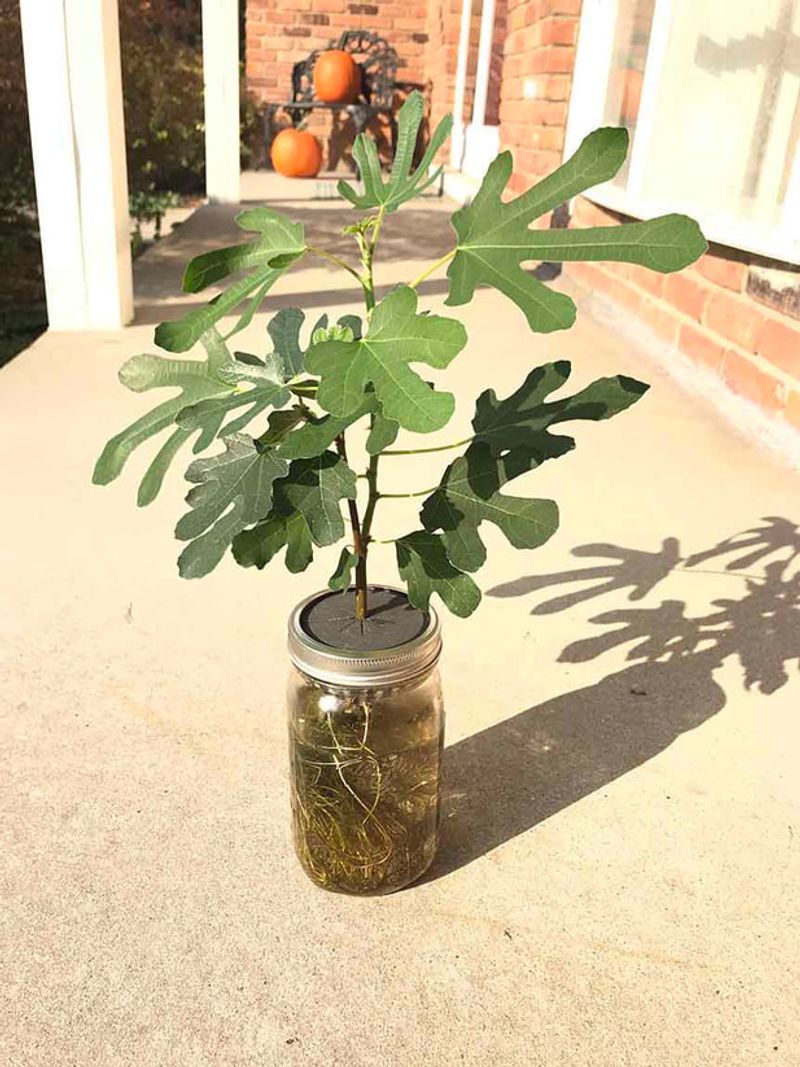
The usual order is callus first, then potting, then planting an established fig later. Texas A&M’s method pots cuttings once callus has formed.
Planting windows can confuse things. Texas guidance says figs are traditionally planted as dormant rooted cuttings in late winter or early spring, and Florida’s December to late February window is for bare-root plants.
Those dates describe plants that already have roots.
Judge your cutting, not the calendar. Signs of real progress include new growth backed by roots filling the pot, which you may see at the drainage holes.
Until then, keep it potted and protected.
Treat dormant cuttings as an experiment, not a spring guarantee
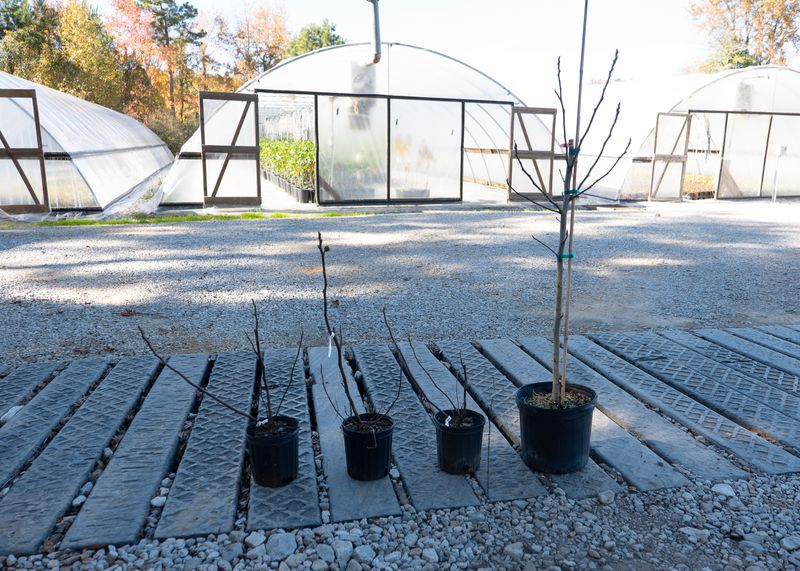
Trying a few cuttings from a healthy fig is a reasonable winter project. Texas A&M says dormant cuttings readily root, and UF/IFAS says figs are usually propagated this way.
Still, nothing in the guidance promises a jar method, a set success rate, or roots by spring. Make extra cuttings, label them, and check for real roots.
A fig cutting keeps its own schedule, and patience is the cheapest tool you own.