
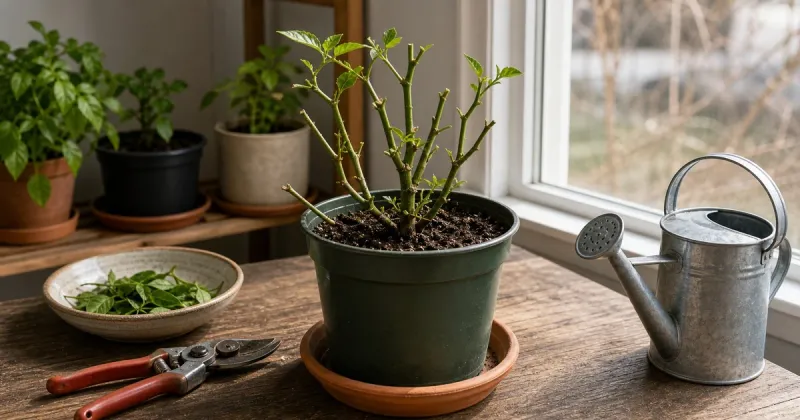
A pepper plant that gave you a good summer harvest feels like a waste to toss when cold weather shows up. Many Texas and Florida gardeners wonder if they can bring that same plant through winter and use it again next year.
It is sometimes possible, but it takes more than one quick prune. Here is how to give your plant a fair chance and what to expect when spring comes.
A potted pepper may survive winter, but survival is not assured
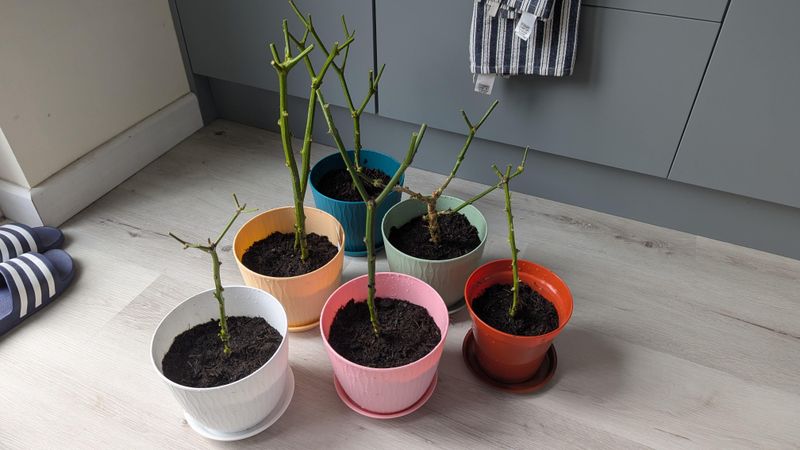
In places with no frost, peppers can live for years as tender perennials. Frost changes that story fast, because it can injure or kill the plant.
A pot on your patio is not protected from a cold snap just because it is in a container.
So can you carry a pepper through winter? Maryland Extension’s answer to an indoor pepper question is a qualified yes.
That wording fits well. A strong, healthy plant has a real chance, while a weak or pest-ridden one may not make it no matter what you do.
The reward is a plant you already own that may grow again when warm weather returns. Extension guidance on home pepper growing treats peppers as warm-season plants that need protection from cold.
Pruning by itself will not protect a plant, and an earlier harvest is a hope rather than a promise. The next sections cover timing, trimming, and care so you can decide if the effort suits you.
Move the pot inside ahead of local cold
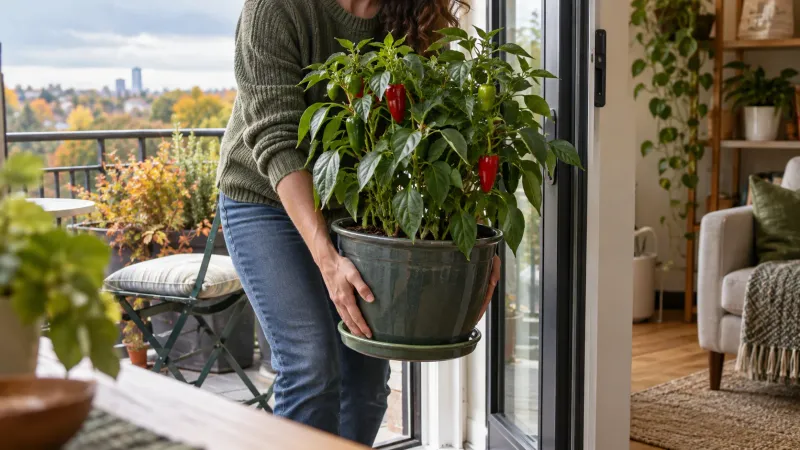
Waiting for the first freeze is a gamble you do not need to take. Illinois Extension notes that peppers cannot tolerate frost and grow poorly in cool conditions.
A plant can stall and look unhappy well before ice ever forms.
Instead, watch your local overnight forecast and bring the pot in when cold is on the way. Use a calendar only as a reminder to start checking, not as a deadline.
Texas is a big state, and Texas A&M’s fall gardening guide splits it into five gardening regions with very different winter lows. A gardener near the Panhandle faces a different season than one near the Gulf Coast.
Florida varies too. Some gardeners there may never need to move a pepper at all, since UF/IFAS pepper guidance focuses on local varieties and growing seasons.
Judge your own yard, your own forecast, and how your plant handled the last chilly night.
Treat cutback as one option, not a survival trick
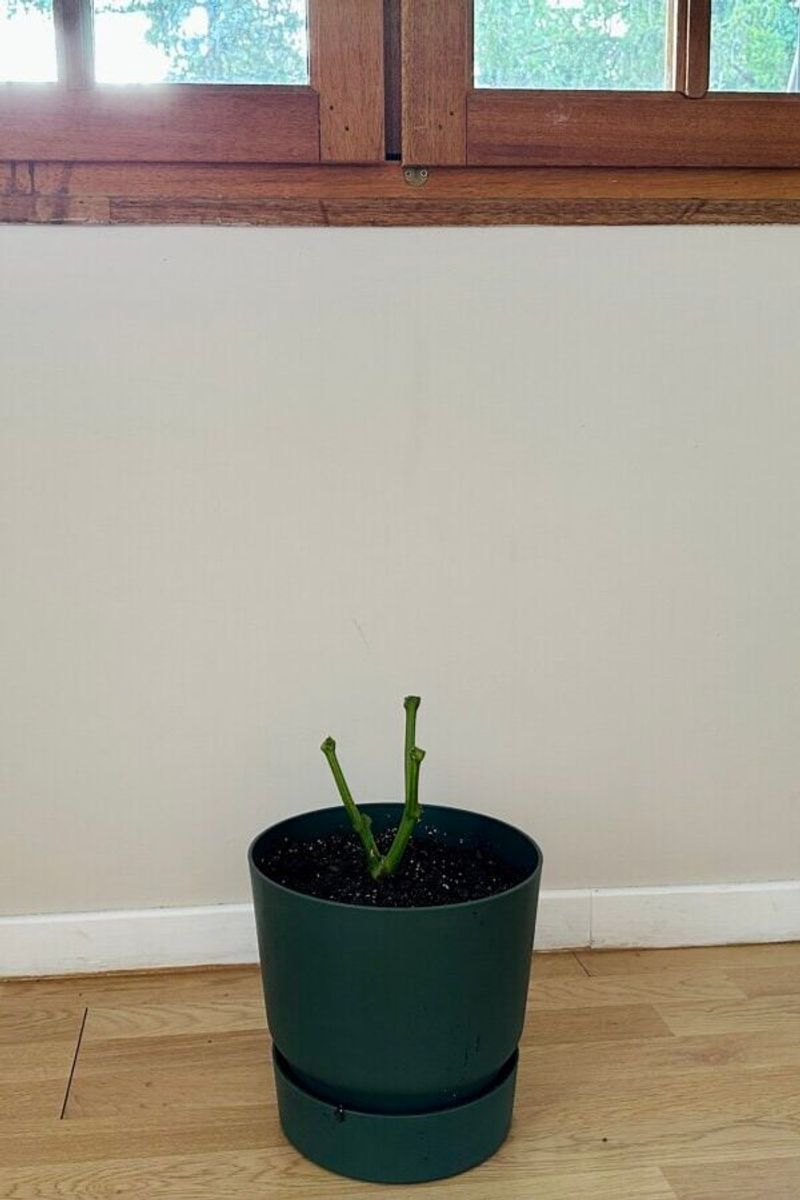
Cutting a pepper back is a real technique, but it is only one piece of a larger plan. Oregon State Extension describes container-grown peppers that were cut back and kept in a garage under a grow light.
The trimming went along with a protected spot and light, not in place of them.
That detail matters. A trimmed plant left in a cold, dark corner can still fail, and a plant with a hard haircut is not safer by default.
Treat the cutback as a way to shrink the plant so it is easier to house, not as a shield.
You may also see directions for digging up a garden pepper. Maryland Extension’s method covers trimming the roots and potting that plant in soilless mix.
If your pepper has lived in its container all season, you do not need to copy those steps. Those directions fit a different situation.
Choose between a resting plant and active indoor growth
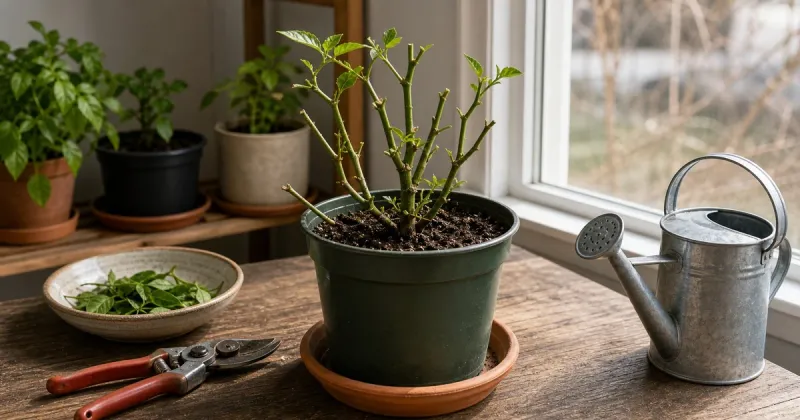
Before you carry the pot in, decide what you want from it. You can keep the plant alive and mostly asleep, or you can try to keep it growing and fruiting.
These are two different jobs with two different setups.
An Extension expert advises that the resting route means trimming the plant, keeping it cool, and limiting water. A plant handled this way is not a winter fruit producer.
Expect bare stems, few leaves, and patience.
Active growth asks for much more. Fruiting indoors needs warmth and artificial light, so you would be running a small indoor garden through the cold months.
A sunny window in a Texas or Florida winter is often not enough on its own.
Be honest about your space. If you have a cool spot and little time, resting is the easier path.
If you have a grow light and a warm room, active growth may be worth trying. Mixing the two setups usually gives you a plant that does neither well.
Check for pests and water according to soil moisture
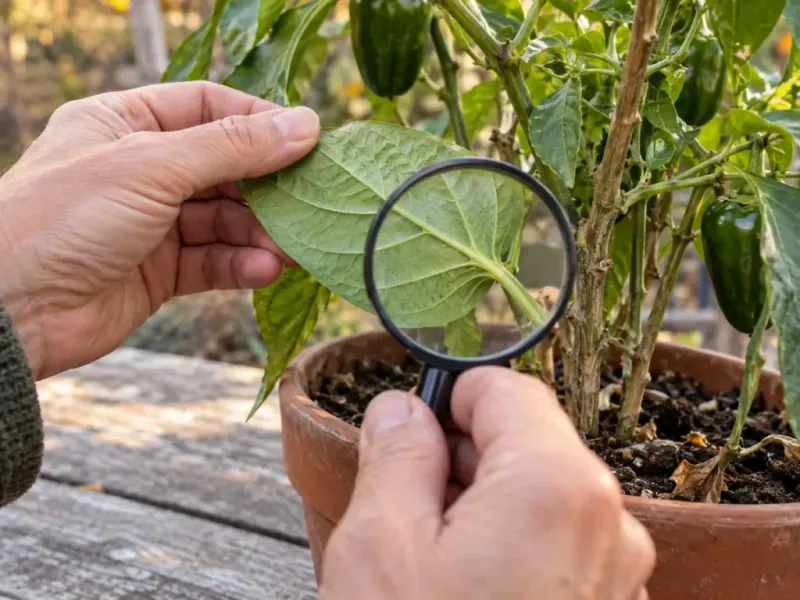
Hitchhikers are the quiet danger of bringing a plant indoors. University of Minnesota Extension suggests checking leaves, stems, and soil for pests, cleaning the pot, and dealing with problems before the plant comes inside.
Pests that ride in can spread to other houseplants.
Look under leaves and along stem joints, and tilt the pot to see the drainage holes. If you spot insects, rinse the plant and treat it outdoors first.
Once it is inside, keep checking every week or so.
Water habits shift too. Penn State Extension explains that lower winter light slows growth, so plants use less water.
Push a finger into the soil and water only when it feels dry a little way down.
A pot that stays soggy invites root problems, especially on a plant with few leaves. Light, careful watering is the safer habit.
Consider next spring a possible head start, not a promise
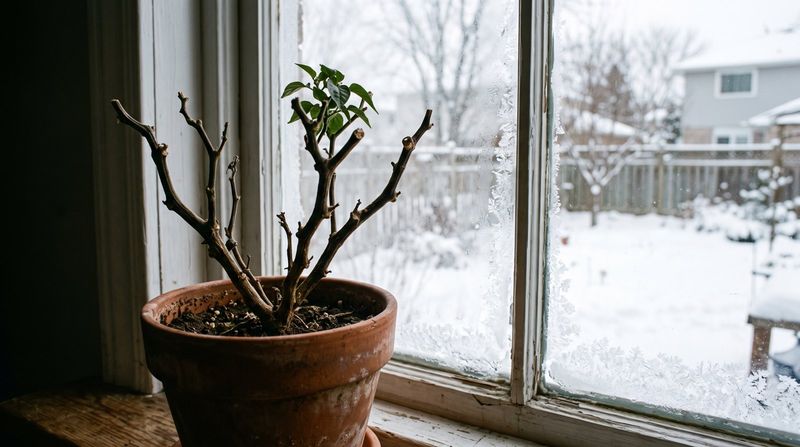
When warm weather returns, an overwintered pepper may wake up and grow again. That is the real payoff.
You keep a plant with an established root system instead of starting over.
What nobody can promise is an earlier harvest. The Extension advice found supports keeping a plant alive for another year, but it does not show how often overwintered peppers beat new transplants.
Some may fruit sooner, and some may not.
So weigh the effort. Ask whether you have a cool spot or a grow light, how cold your area really gets, and how much you value this particular plant.
A favorite variety may be worth the trouble.
In much of Florida, you may not need to do any of this. UF/IFAS guidance centers on choosing varieties for your area and growing by season.
Overwintering is an option, not a rule.
Either way, a pepper in a pot makes the experiment cheap, so give it a try.