
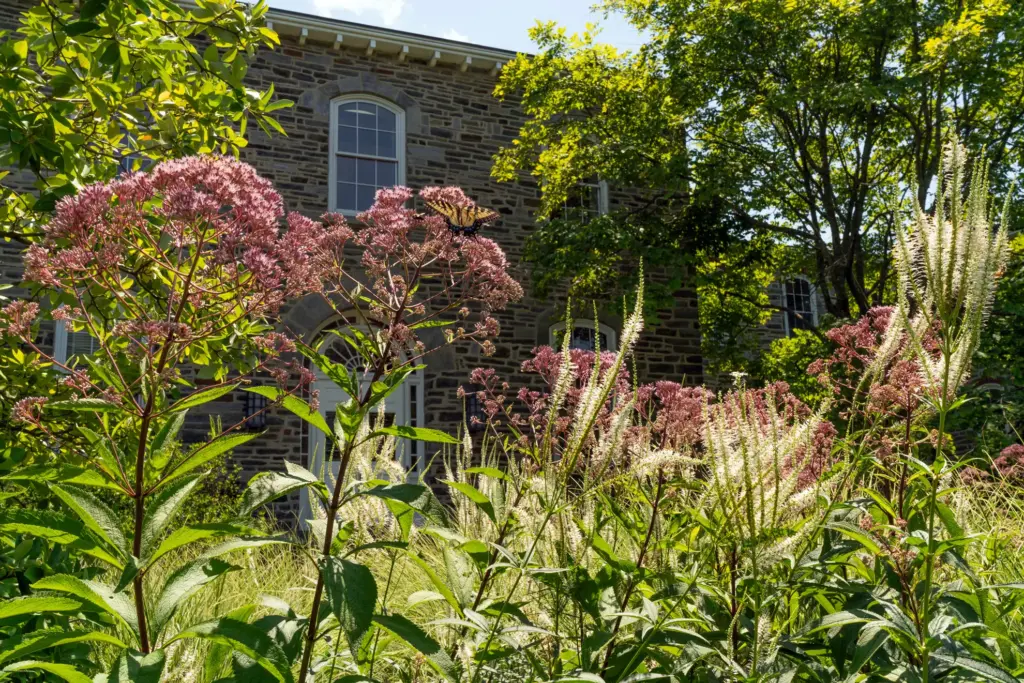
North Carolina red clay holds water like a sponge after every storm, and many popular flowers simply drown in it. The good news is that a group of tough plants, most of them native to our state, actually like wet feet.
They bloom through soggy springs, humid summers, and early fall rains while feeding bees, butterflies, and hummingbirds. Here are ten bloomers that can turn your worst puddle spot into the best-looking bed on the block.
1. Cardinal Flower
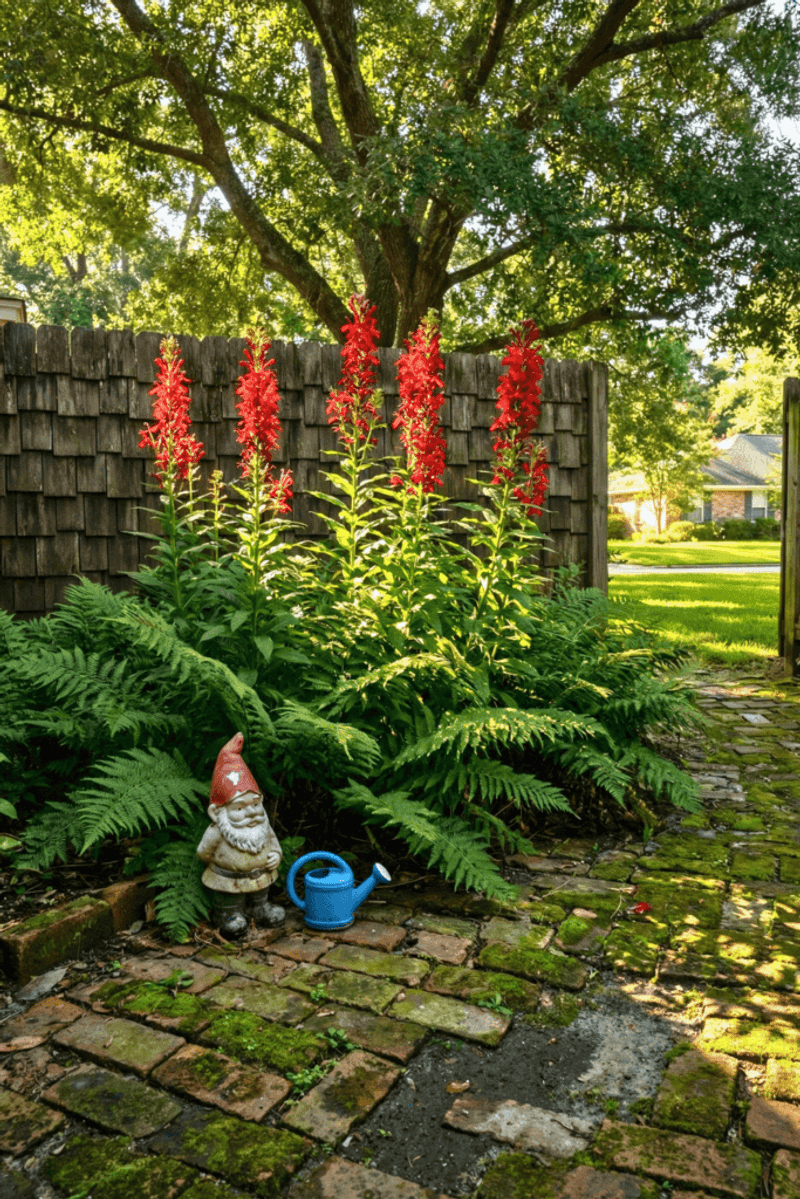
Picture a hummingbird zipping straight to a spike of red so bright it almost glows. Cardinal flower (Lobelia cardinalis) grows wild along NC creek banks, so a soggy low spot feels like home to it.
Blooms run from late summer into early fall, which makes it a key fuel stop for hummingbirds heading south in September. Plants stay around two to four feet tall and like part sun, especially in the Piedmont and coastal plain heat.
One quirk: it can be short-lived. Leave a few flower stalks standing so seeds drop, and new rosettes usually pop up nearby to keep the patch going.
2. Swamp Milkweed
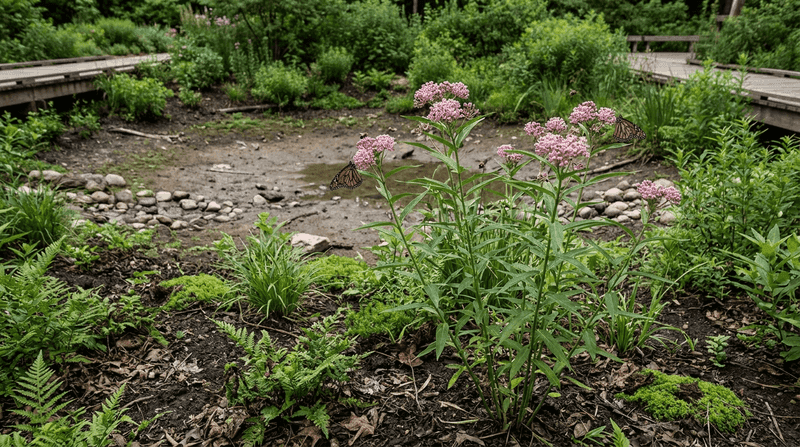
Monarch fans, this one is for you. Swamp milkweed (Asclepias incarnata) is the milkweed that actually wants wet ground, unlike its drought-loving cousin butterfly weed.
Its pink, vanilla-scented flower clusters show up in summer, and the leaves serve as food for monarch caterpillars. Fall migrants passing through North Carolina may also stop for nectar on late blooms.
Give it full sun and let it be. It tolerates heavy clay, standing water after rain, and very little attention, though aphids may show up and are usually best left to ladybugs.
3. Blue Flag Iris
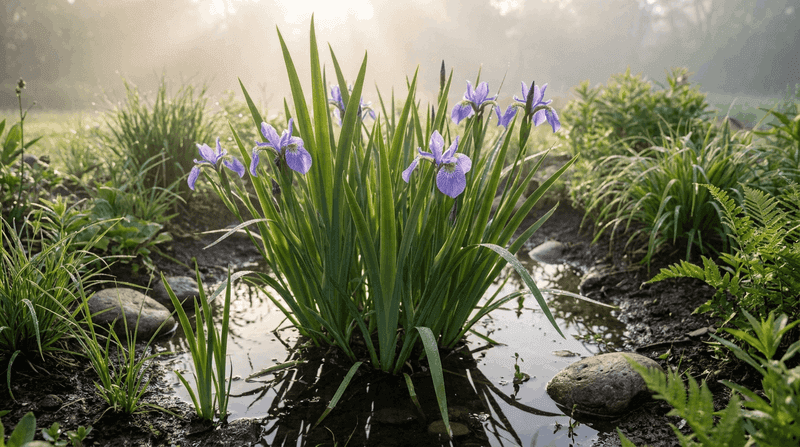
Spring in a soggy yard can look pretty grim until blue flag iris opens up. Native Iris virginica blooms in violet-blue with yellow-striped falls, usually from April into May across NC.
It handles standing water better than almost anything else on this list. You can tuck it right into a downspout outlet, pond edge, or ditch line.
After bloom, the upright leaves keep a clean, grassy look through summer. Choose it over the yellow flag iris sold in some garden centers, since that European species is invasive in wetlands.
4. Swamp Sunflower
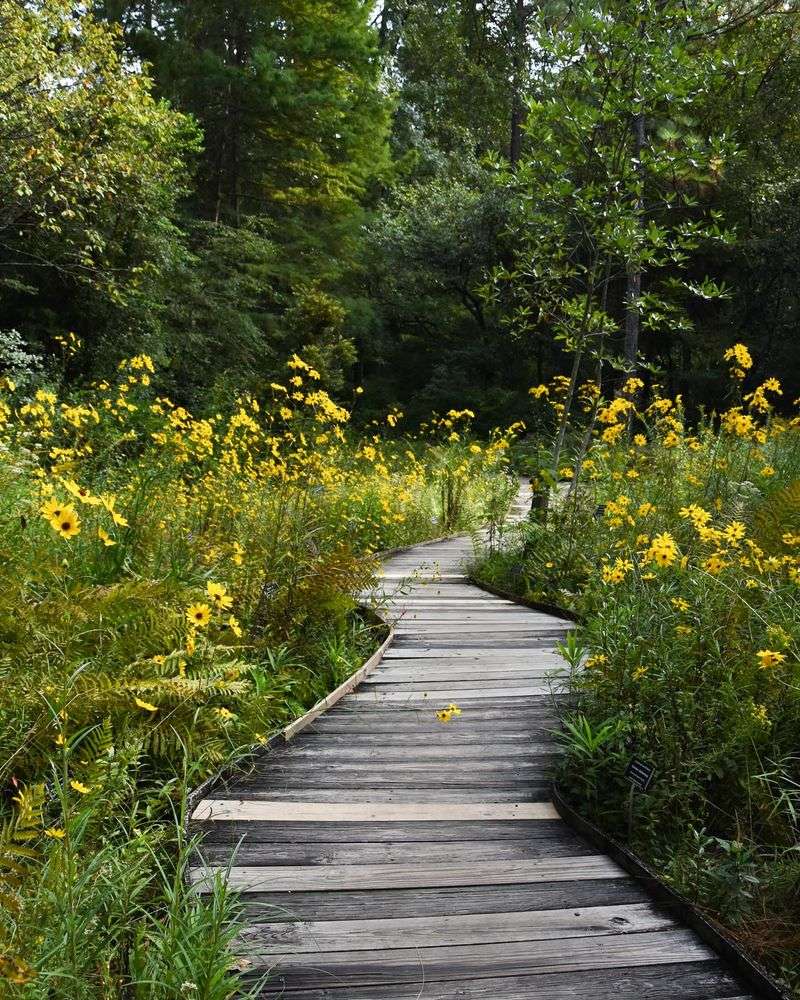
October in North Carolina gets a lot more cheerful with a six-foot wall of gold. Swamp sunflower (Helianthus angustifolius) waits all summer, then explodes into hundreds of small yellow flowers just as other plants fade.
Wet clay suits it fine. Sun is the bigger need, since shade makes it flop.
Here is a tip worth saving: cut the stems back by about half in early June. You get a shorter, bushier plant that holds its bloom better, and bees will thank you for the late-season nectar.
5. Joe Pye Weed
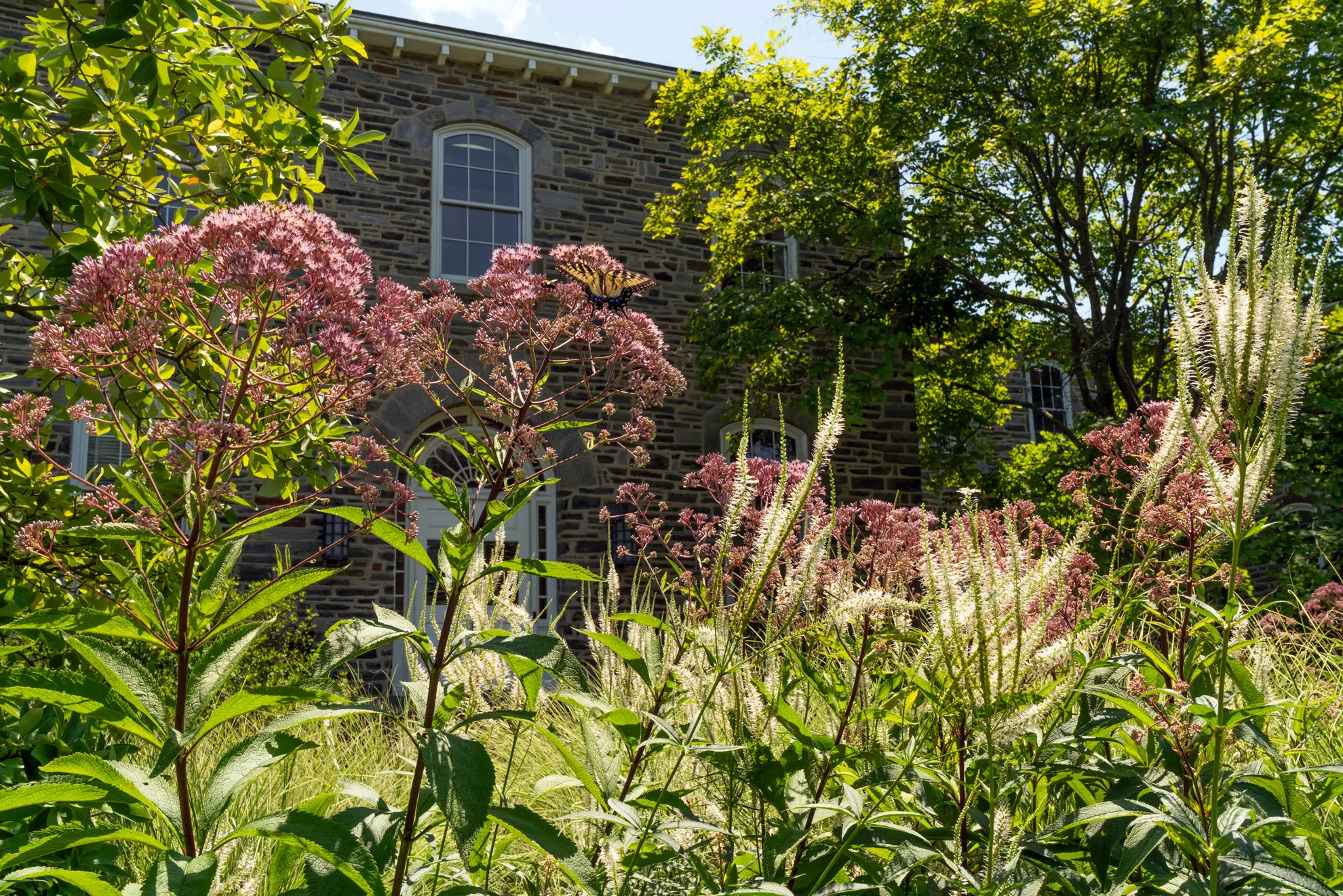
Ever seen a plant wearing a crowd of butterflies like a hat? Joe Pye weed (Eutrochium) does that every late summer, with big mauve flower domes that tiger swallowtails can’t resist.
Native from the mountains to the coast, it grows in moist meadows and stream edges, so heavy clay doesn’t bother it. Standard types reach five to seven feet, while compact picks like Little Joe stay closer to four.
Plant it at the back of a bed or along a fence. Leave the seed heads up in fall, since finches may pick at them and the stems offer winter shelter for some insects.
6. Rose Mallow Hibiscus
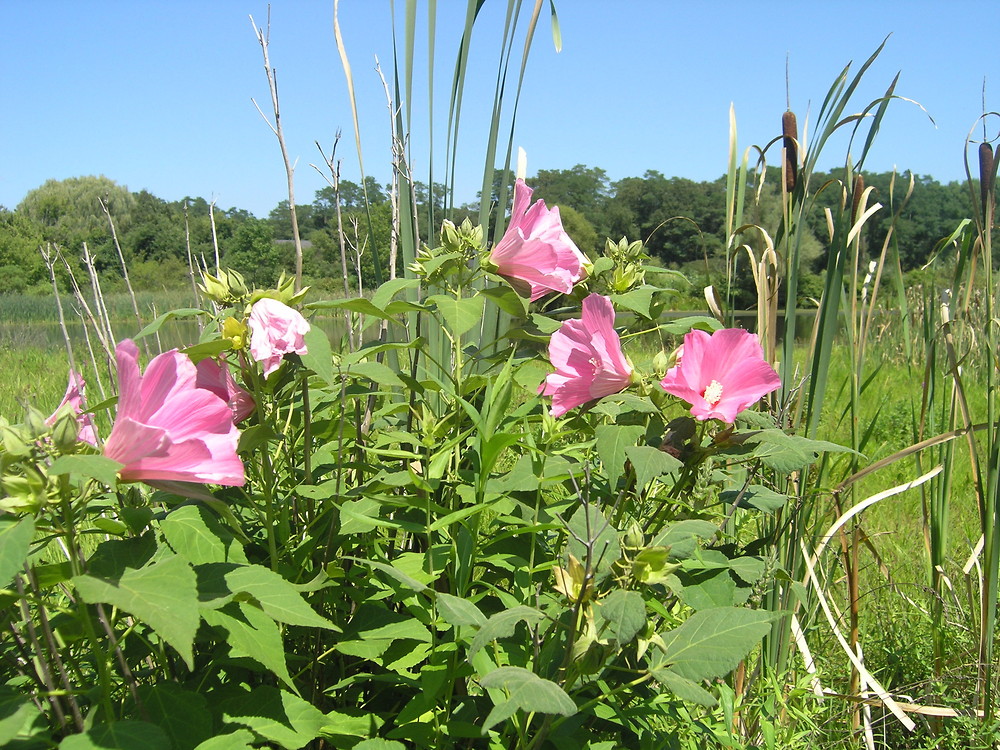
Dinner-plate flowers in a swampy corner sound too good to be true, yet native rose mallow (Hibiscus moscheutos) pulls it off. Blooms reach six to eight inches wide in white, pink, or red, all summer long.
In the wild, it lives in coastal marshes. That means clay, humidity, and puddles are basically a spa day.
It dies back to the ground in winter and returns late in spring, so mark the spot and be patient. Many gardeners panic in April, but it usually wakes up once soil warms in May.
7. Great Blue Lobelia
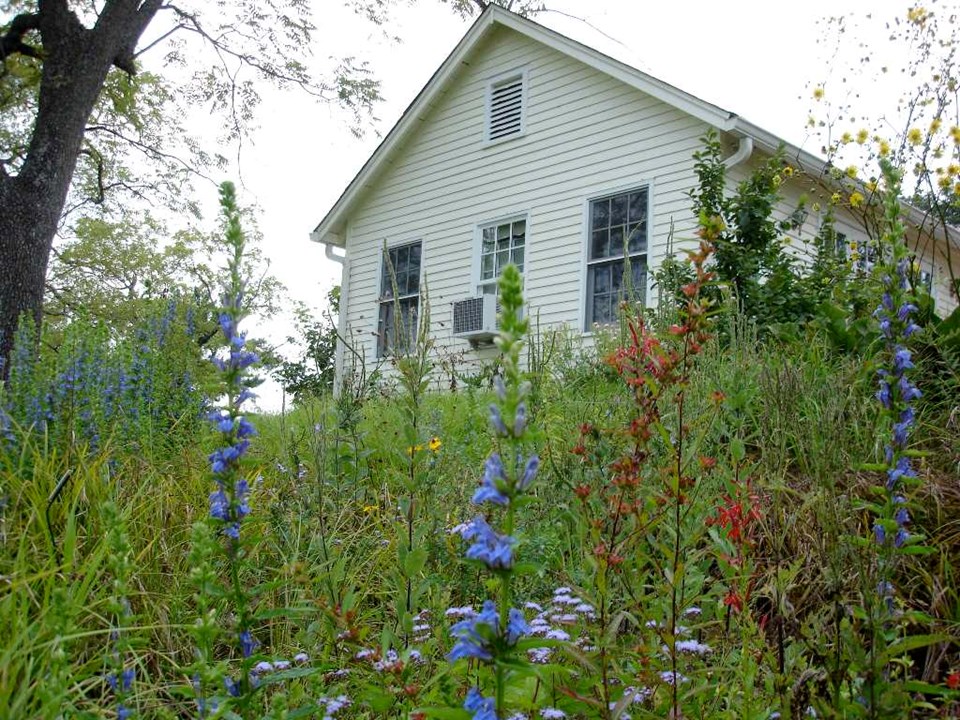
Shade plus soggy soil is a tough combo. Great blue lobelia (Lobelia siphilitica) handles both, and it brings true blue flowers in late summer and September.
Bumblebees are the main visitors because they’re strong enough to push into the blooms. Plants stay a tidy two to three feet, so they fit in smaller beds near a patio or under tall trees.
Like its red cousin, it reseeds gently rather than living forever. Plant the two together in a damp spot for a red-and-blue show that hummingbirds and bees will share.
8. Virginia Sweetspire
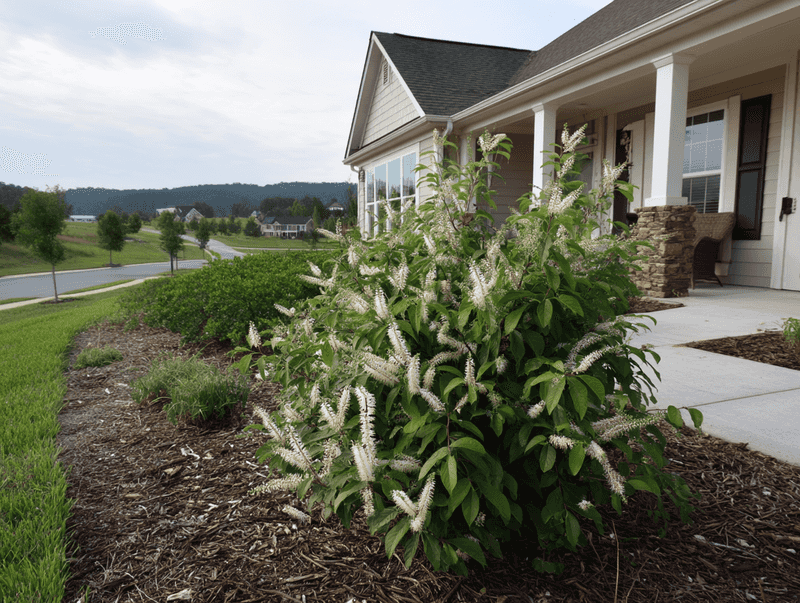
Need a shrub, not just a flower? Virginia sweetspire (Itea virginica) gives you fragrant white drooping spikes in late spring, then leaves that turn wine red in fall.
It handles wet clay, part shade, and even seasonal flooding. Varieties like Little Henry stay about three feet tall, which works well along a foundation where downspouts dump water.
Plant it now in late September and roots get months of mild NC weather to settle in. It’s also a smart native swap for burning bush, which is invasive here.
9. Blue Mistflower
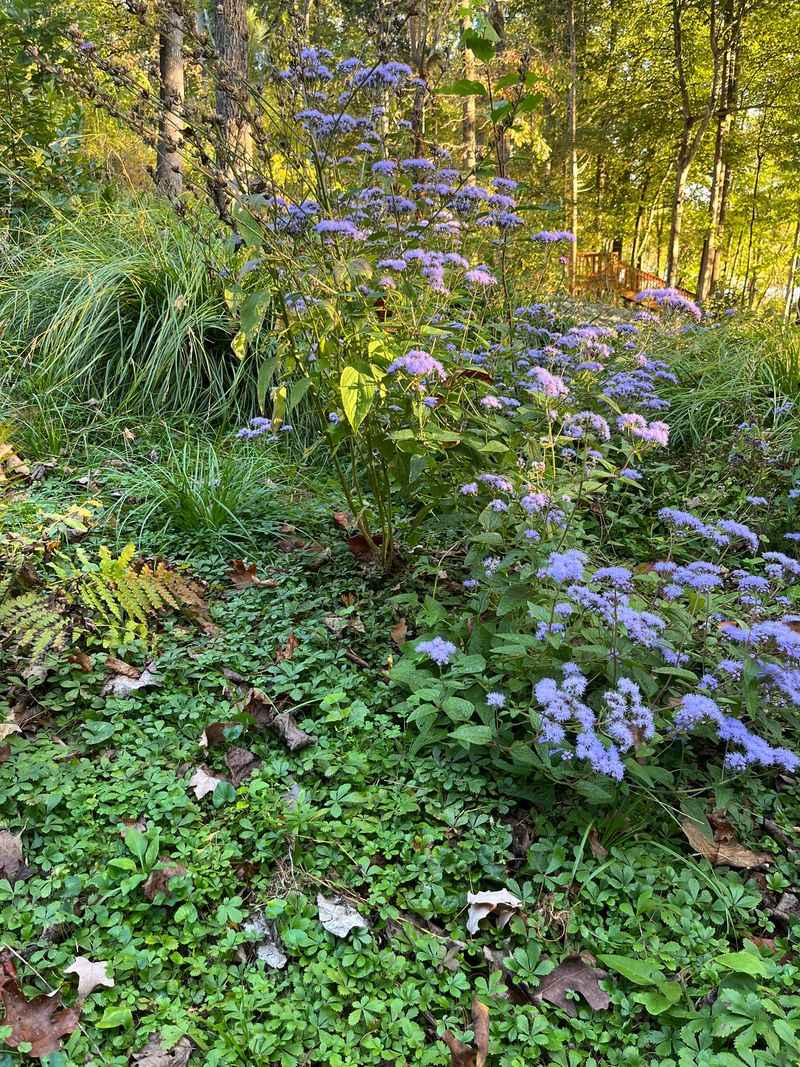
Some plants charm you slowly. Blue mistflower (Conoclinium coelestinum) stays quiet most of the year, then smothers itself in fuzzy lavender puffs from late summer into October.
Skippers, bees, and late monarchs crowd onto it, making it one of the busiest pollinator plants in a fall NC yard. Damp clay is just fine.
Fair warning: it spreads by underground runners. That makes it great for filling a wet slope or ditch, but give it room or edge it each spring.
10. Buttonbush
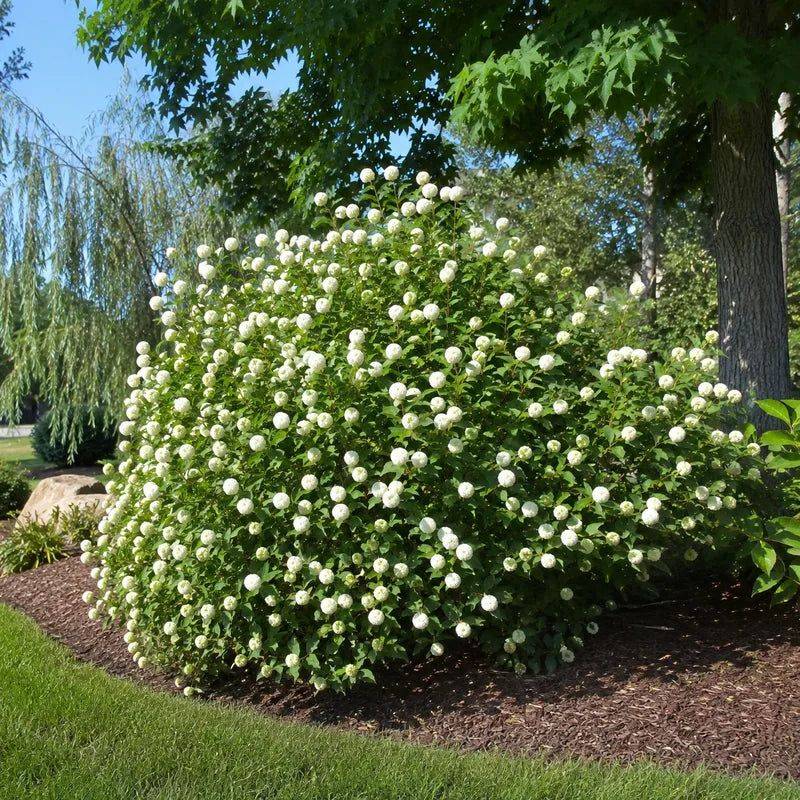
Kids call the blooms tiny space satellites, and honestly they’re not wrong. Buttonbush (Cephalanthus occidentalis) makes round white pincushion flowers in summer that pull in butterflies, bees, and hummingbirds.
This native shrub can grow right in shallow standing water, so it’s a fix for that one yard spot that never dries out. It typically reaches six to twelve feet, making a loose screen or wildlife hedge.
Ducks and other birds may eat the seeds later in the year. For the soggiest corner of a North Carolina yard, few plants work harder with so little care.
Start with one or two picks from this list in your wettest spot this fall, and you may find your problem area becomes the busiest, brightest part of the garden next year.