
A hydrangea can look thirsty again just hours after you water it in Florida sand. Many common garden hydrangeas struggle with fast drainage, strong sun, and soil that holds little moisture.
Florida native shrubs offer other ways to get a bold spring flower show, from snowy clusters to bright pink trumpets. These seven choices suit different parts of the state, so match the plant to your region, sunlight, and soil moisture before you buy.
1. Walter’s Viburnum
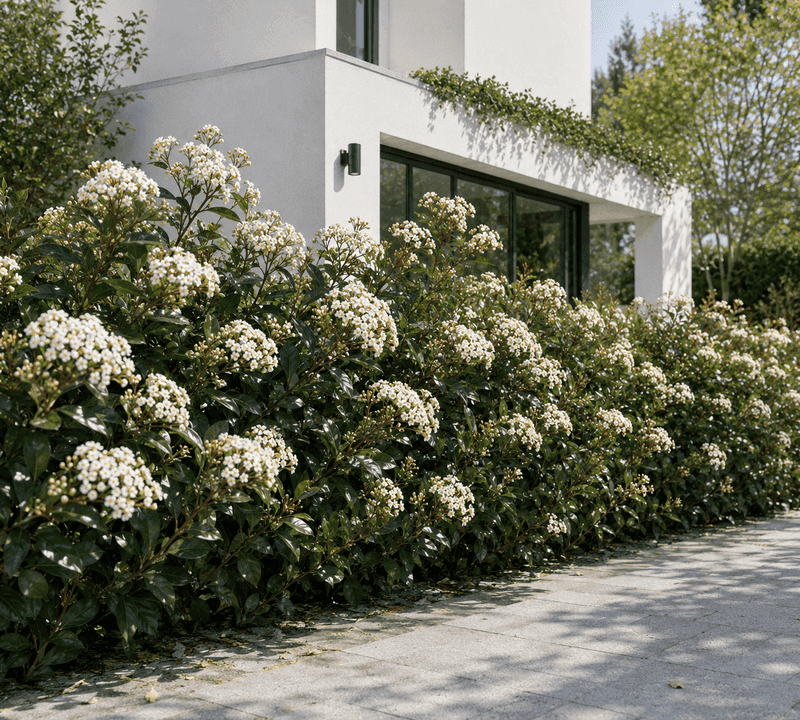
From the sidewalk, a flowering Walter’s viburnum can look as though someone sprinkled snow across the hedge. Its small white flowers gather in thick clusters in late winter or spring, making this one of the strongest choices for a broad sweep of bloom.
Native to Florida, Viburnum obovatum works especially well in North and Central Florida landscapes. It grows in sun or partial shade and accepts sandy soil, although plants usually look fuller when their roots have steady moisture during establishment.
Check the label carefully before choosing a spot. The straight species can reach roughly 12 to 20 feet, while named compact selections stay much smaller and make more sense near windows or along a walkway.
Give it room to keep its natural shape rather than clipping it into a tight box. Frequent shearing removes flowering wood and reduces the spring display.
Flowers attract pollinating insects, and the dense branches offer birds shelter. If shaping is needed, prune just after flowering, then maintain a mulch layer without piling it against the stems.
2. Chickasaw Plum
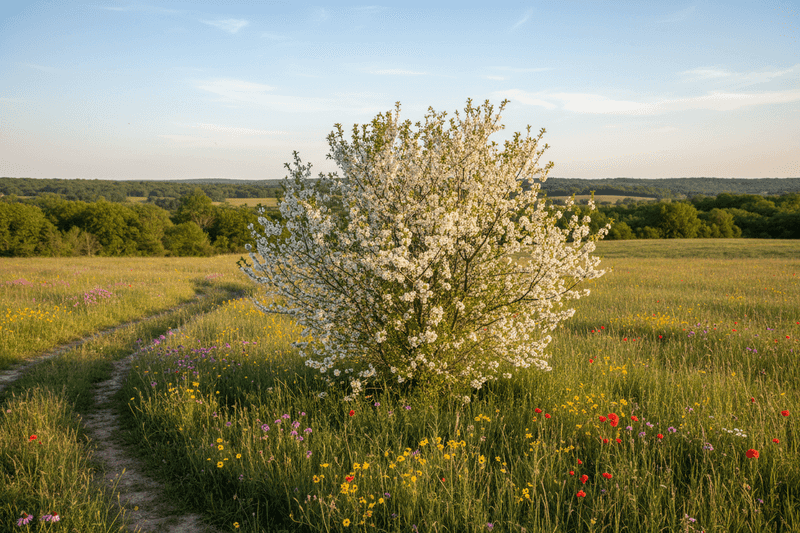
Before most of the yard wakes up, white blossoms can already be lining the bare branches of Chickasaw plum. The flowers arrive before or alongside the new leaves, giving an open, sunny corner a bright early-season lift.
Prunus angustifolia is a Florida native best suited to North and Central Florida. It handles well-drained sandy ground and, once established, tolerates dry spells better than moisture-loving hydrangeas.
Think of it as a large, spreading shrub or small tree rather than a tidy foundation plant. It commonly grows about 12 to 20 feet tall and sends up root shoots that can form a thicket.
That spreading habit is useful along a roomy property edge, where flowers feed early pollinators and the branches provide wildlife cover. Small plums may follow, attracting birds and other animals, though fruit production varies.
Keep it away from narrow paths because the branches can be thorny. Plant in full sun for the strongest flowering, water through establishment, and remove unwanted suckers if you want a more defined outline.
3. White Fringetree
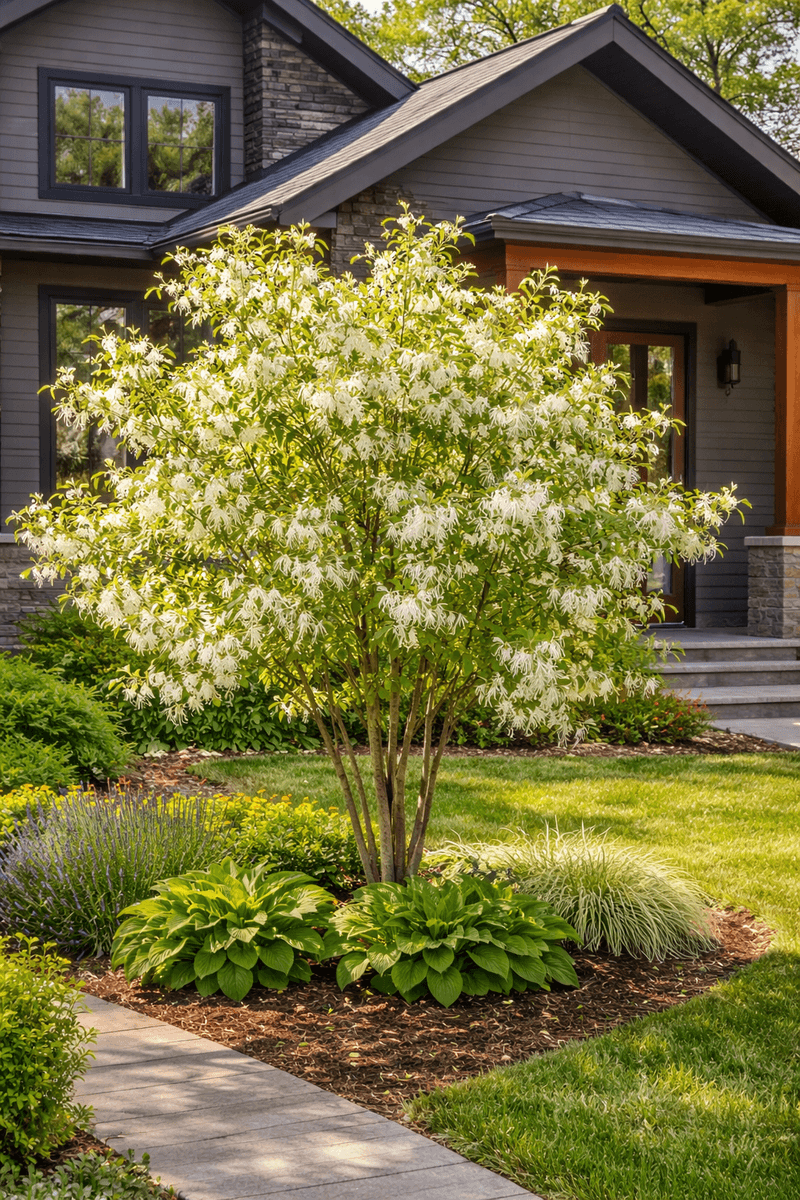
Loose white ribbons hanging from the branches give this native a look that no mophead hydrangea can copy. In spring, white fringetree produces airy flower clusters that soften the whole plant, especially against a dark evergreen background.
Chionanthus virginicus can grow as a multistemmed large shrub or small tree, often reaching 12 to 20 feet in landscapes. It is a better choice for North and Central Florida than for the tropical southern end of the state.
Choose sun to partial shade and acidic, well-drained soil that does not stay bone-dry. Sandy ground can work, but a hot, unirrigated strip beside pavement is not its best setting.
Use it as a spring focal point near a patio or at the edge of a woodland garden. Leave enough space to enjoy its spreading form without yearly size-control pruning.
Female plants can bear dark fruits when pollination occurs, providing food for birds. Ask the nursery for the native species, since Chinese fringetree is also sold and is a different plant.
4. Pinxter Azalea
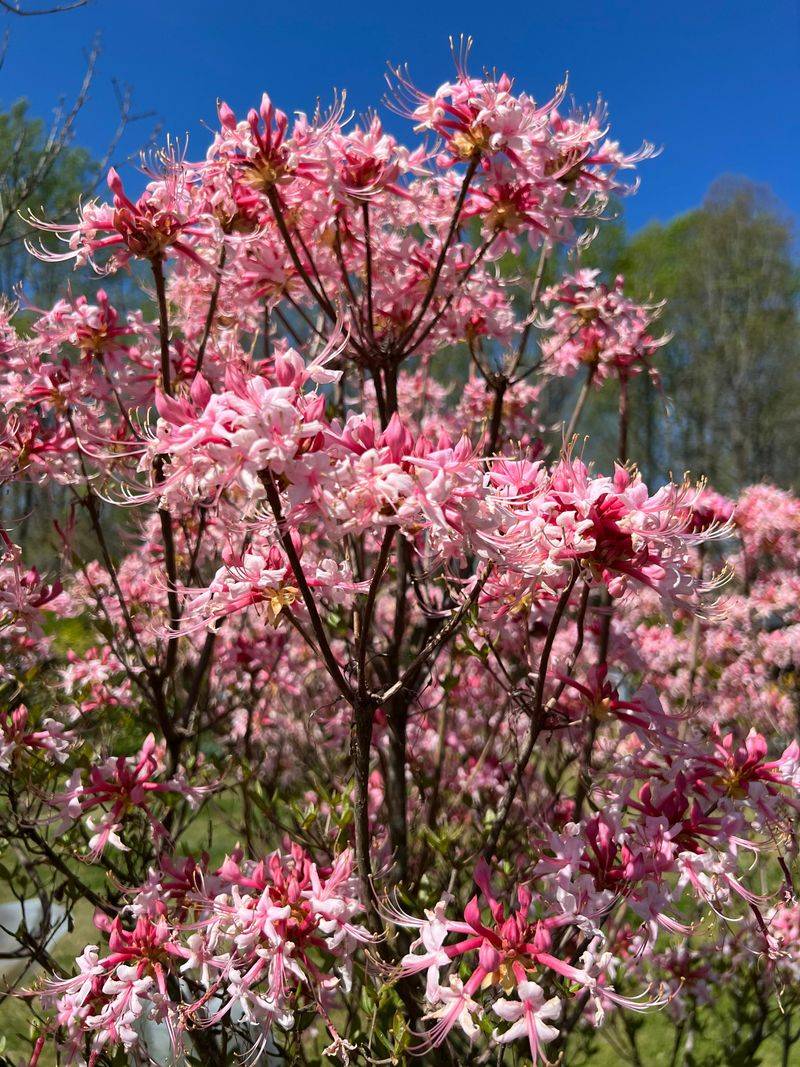
Pink trumpets with long, graceful stamens bring the brightest color in this group. Pinxter azalea flowers in spring, often before its leaves fully open, so the blossoms stand out instead of hiding inside a leafy mound.
Rhododendron canescens is a deciduous native azalea for suitable North and Central Florida sites. Expect a loose, upright shrub, often around 6 to 15 feet tall, rather than the dense outline of a clipped evergreen azalea.
Here is the catch: native does not mean happy in every patch of sand. Pinxter azalea needs acidic soil, reliable moisture, and good drainage, making it a better choice for a moist woodland edge than a dry roadside bed.
Morning sun with afternoon shade is a useful starting point. A broad mulch layer helps protect its shallow roots, but watering will still be needed when rainfall falls short.
Plant where you can see the flowers from a window or porch. Buy nursery-grown stock, avoid digging wild plants, and prune only when needed soon after bloom to protect the next spring’s buds.
5. Florida Anise
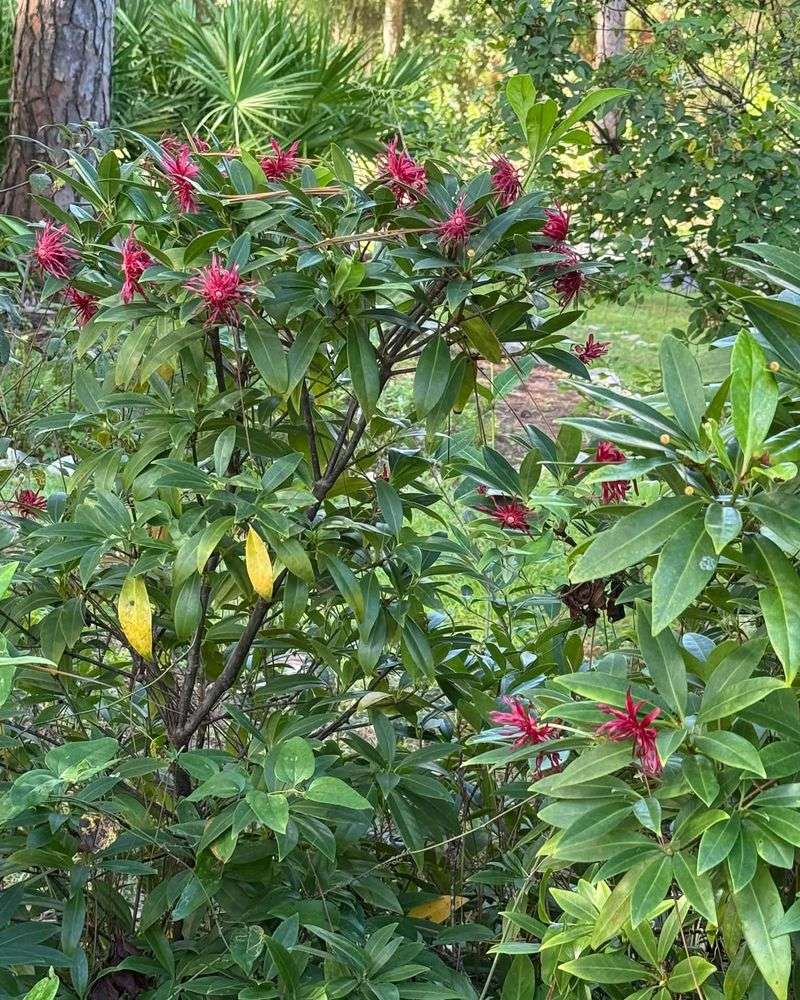
A shady corner does not have to settle for green leaves alone. Florida anise adds unusual dark red, star-shaped flowers in spring, giving a sheltered planting bed a rich color accent rather than a cloud of white.
Illicium floridanum is native to the Florida Panhandle and is most dependable in North Florida and suitable Central Florida gardens. Its evergreen foliage makes it useful as a loose screen, with many plants reaching roughly 6 to 10 feet tall and sometimes more.
Unlike the driest-site choices on this list, it prefers moist, acidic soil and partial to full shade. Fast-draining sand will need dependable irrigation, so save this shrub for a naturally damp, shaded area rather than forcing it into a sunny xeric bed.
Place it where its flowers can be seen up close, but not right beside a favorite seat if you dislike their sometimes unpleasant scent. The leaves are aromatic when crushed.
Despite the name, this is not the culinary star anise used in cooking. Do not eat any part of the plant, and keep trimmings out of kitchen herb baskets.
6. Fetterbush
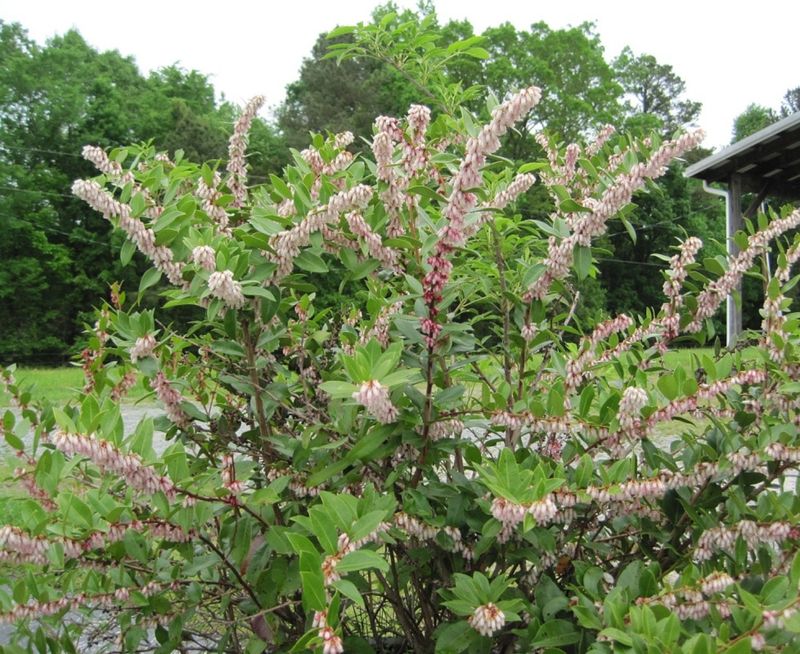
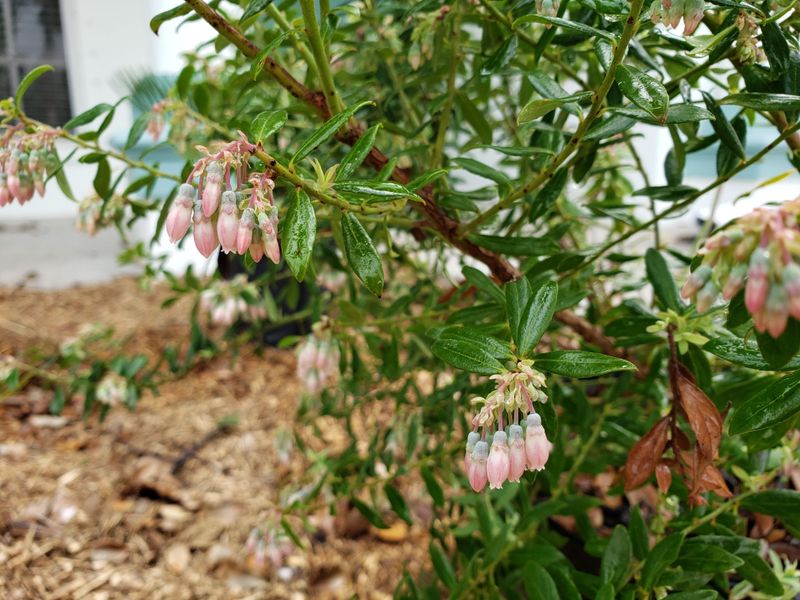
Look underneath the arching stems and you will find rows of little pink bells. Fetterbush delivers its spring show through masses of small flowers, not oversized individual blooms, and its glossy foliage keeps the bed attractive afterward.
Lyonia lucida is native across much of Florida and fits acidic flatwoods-style gardens. It often grows about 3 to 6 feet tall, though favorable sites can produce larger plants.
The key distinction is moisture. Fetterbush naturally occurs in places such as wet flatwoods and swamp margins, so sandy soil is suitable only when the root zone stays reasonably moist.
Use it along a damp woodland border or in the moist transition around a rain garden, allowing for the site’s actual flooding pattern. It is not the shrub to drop into dry builder’s sand and forget.
Partial shade works well, while sunnier locations need enough water to prevent stress. Keep its arching branches intact so the hanging flower clusters remain visible.
Ask for the botanical name at the nursery because common names can overlap. All parts are considered poisonous if eaten, so place it thoughtfully around pets and young children.
7. Darrow’s Blueberry
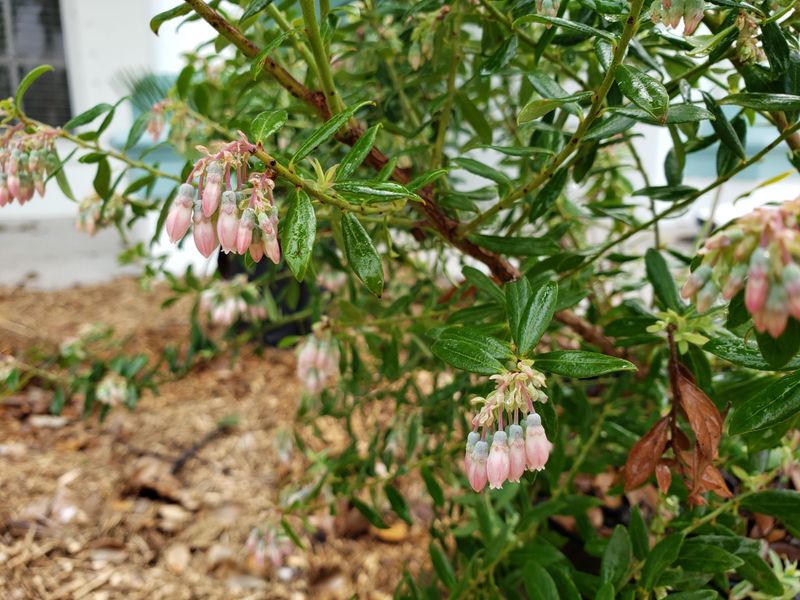
For the front of the bed, a compact blueberry can do a job the taller shrubs cannot. Darrow’s blueberry pairs blue-green foliage with clusters of tiny white to pale pink flowers, bringing spring detail to a low border.
Vaccinium darrowii is native to Florida and well matched to acidic, well-drained sandy soils. Many plants stay around 1 to 3 feet tall, although size varies with the plant and growing conditions.
Its flowers are modest up close, so plant several together if you want a noticeable sweep from the driveway. Bees visit the blooms, and small edible blueberries may follow for birds and people.
Choose full sun to light shade and test the soil before planting. Alkaline fill, limestone influence, or irrigation water that raises soil pH can make this a poor choice even when the ground looks sandy.
Water regularly while roots become established, then adjust to rainfall and soil moisture. Avoid heavy feeding, and keep mulch clear of the crown.
This is the low-growing option for gardeners who want a layered native bed without blocking windows. It offers a softer floral display than hydrangeas, with less bulk and added wildlife value.