
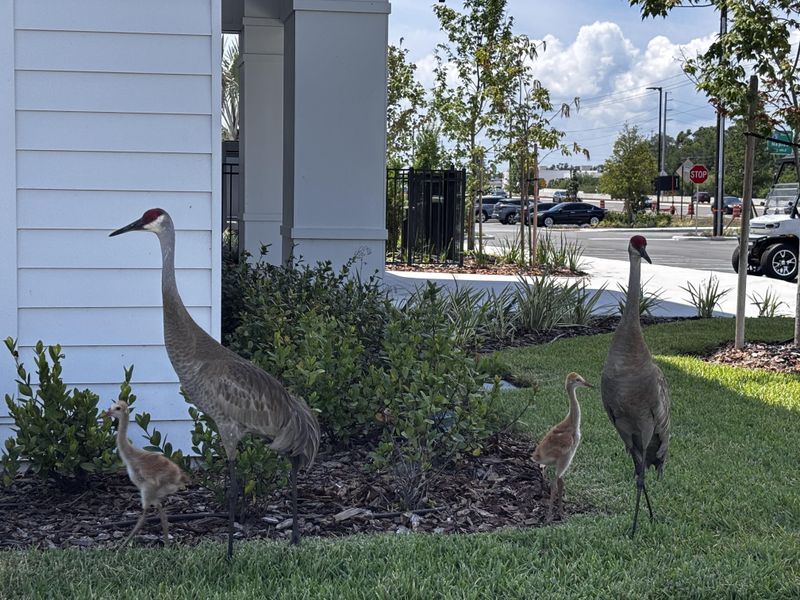
A pair of tall gray birds strolling across your front yard can make you stop and stare. Sandhill cranes poke at Florida lawns all year, and more of them show up when winter arrives.
Many people hear that grubs are the draw, but the real story has more pieces. Here is what the birds may be after, how to check your grass, and how to share your yard safely.
Resident cranes stay while migratory flocks arrive
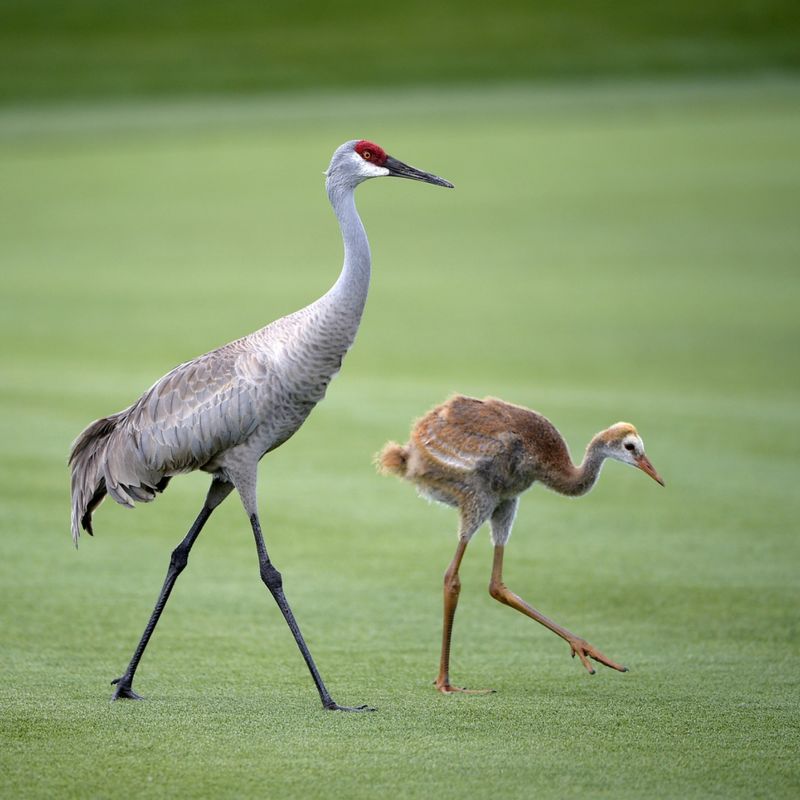
Florida has its own year-round resident sandhill cranes, so a bird in your yard in July is not a mystery visitor from up north. These residents nest, raise colts, and spend their lives in Florida pastures, wetlands, and neighborhoods.
Winter adds more birds to the mix. According to the FWC sandhill crane profile, migratory greater sandhill cranes arrive in large northern flocks in November and December, then head back north in March and April.
That means a crane on your lawn in January could be a local resident, a winter arrival, or either one. Telling them apart by eye is tough for most homeowners, and you do not need to.
What matters is that Florida’s resident birds stay put while the migratory birds join them for the cool months.
So the phrase that cranes come back every winter is only half right. Some do travel, but many never left.
If you see the same pair strolling your street across the seasons, they are probably neighbors rather than seasonal tourists.
This also explains why winter can feel so crane-heavy. Resident birds and migratory flocks share the same open ground, which makes lawns, ball fields, and pastures busier from late fall into early spring.
Lawns offer cranes more than grubs
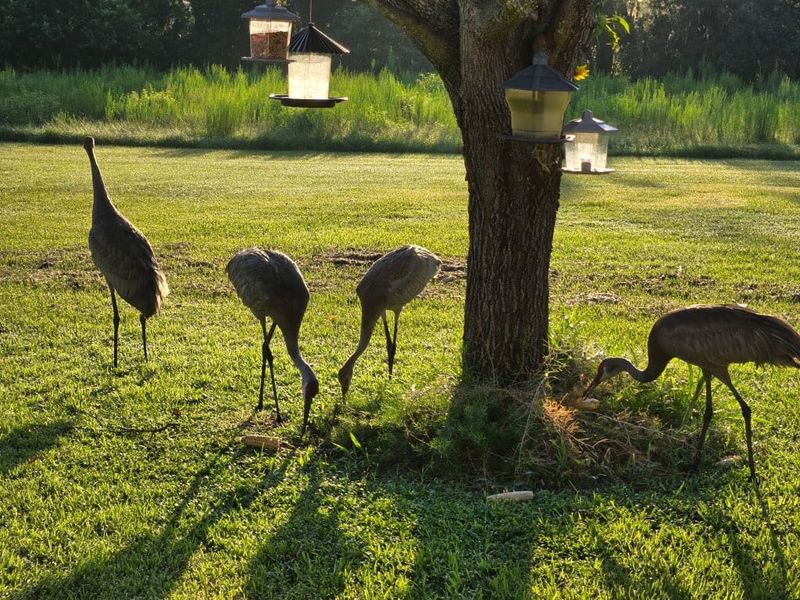
A freshly mowed lawn works like an open dining table for a crane. Short grass lets the bird see food and walk easily, and nobody can say for sure why one particular crane chose your yard on one particular day.
Sandhill cranes are omnivores. The FWC species profile lists seeds, grain, berries, insects, earthworms, and small animals among their foods.
Grubs can be part of that menu, but they are just one item on it.
FWC’s guidance on cranes and golf courses names several things that attract them: mowed grass, water features, acorns, nutsedge, earthworms, mole crickets, and turf grubs. Notice how many of those are common in an ordinary Florida yard.
A retention pond, an oak that drops acorns, or a patch of nutsedge could be the real reason.
Cranes can also leave marks. FWC notes that they may sometimes damage lawns while searching for food, usually by probing or pulling at the turf.
Small holes or torn patches can come from the birds themselves rather than from a pest underneath.
If your yard has several of these features, expect regular visitors. If it has only one or two, the birds may simply be passing through on their daily route.
A crane visit cannot diagnose grub damage
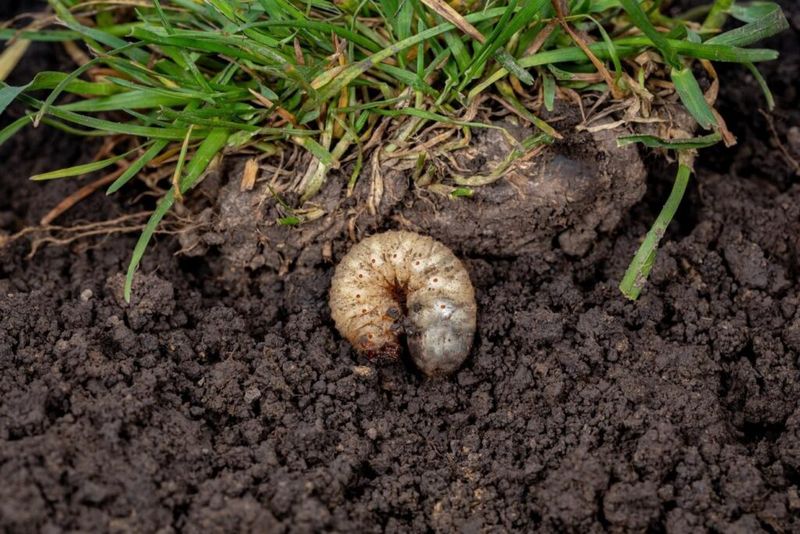
Seeing cranes on your grass does not prove you have grubs, and it does not prove your turf is damaged. The birds eat many foods and respond to other lawn features, so their presence tells you very little about what is underground.
White grubs are the larvae of scarab beetles. UF/IFAS Gardening Solutions explains that they feed on turf roots, that species differ in how much harm they can do, and that grubs are a sporadic problem in Florida lawns.
Finding a few in the soil is not the same as having an infestation.
Yellow grass adds to the confusion. Many problems can turn turf off-color, including drought, disease, nutrient issues, and compacted soil, so yellowing alone is hard to diagnose.
Timing matters too. UF/IFAS says noticeable grub damage often appears in late summer to early fall, especially when grass is stressed.
Cranes you spot in January are not reporting on damage that would have shown up months earlier.
Think of the birds as a prompt to look at your lawn, not as a test result. If your grass looks healthy, a crane walking across it needs no action from you.
Lift a turf sample before considering treatment
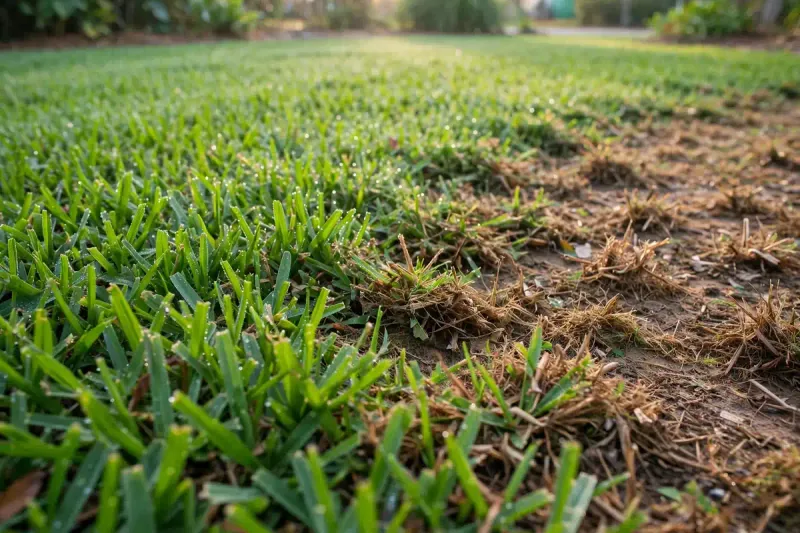
If you have a patch that looks thin or off-color, a quick check will tell you more than any bird sighting. UF/IFAS describes a simple method in its white grub guidance.
Start at the edge of the off-color area. Cut about 2 inches into the turf, free three sides of a piece of sod roughly 1 foot square, and then lift it like a flap.
Now look at what you find. If the turf lifts easily, it has few or no roots holding it down, which can point to root feeding.
If grubs are sitting on the exposed soil, they may be responsible for the damage.
Neither clue is a final answer on its own. Loose turf can have other causes, and grubs in the soil may be a harmless species or too few to matter.
Treat what you see as information to share, not a verdict.
Take a few photos of the patch, the lifted sod, and any grubs, and note how many you see. Then contact your county Extension office, since UF/IFAS advises asking them about treatment.
Replace the sod flap, water it lightly, and wait for their advice before reaching for anything from the garden store.
Avoid overwatering and treatment by guesswork
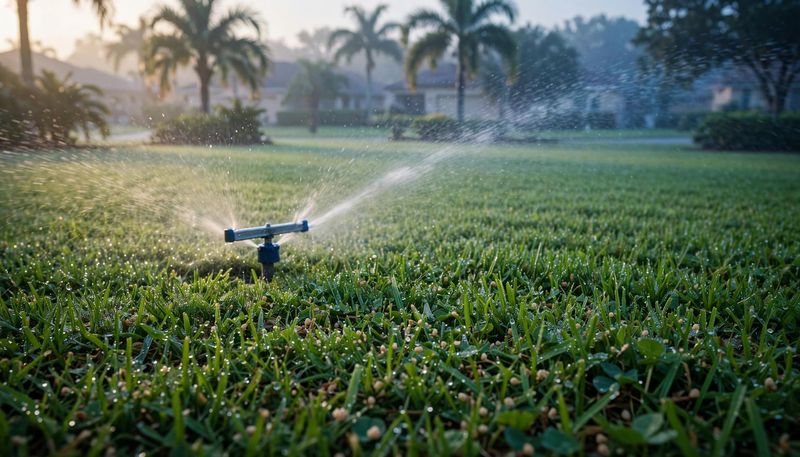
Water is one lawn habit you can adjust today. UF/IFAS says moist soil helps grub eggs hatch and larvae survive, and that over-irrigation may attract egg-laying beetles.
FWC also advises watering lawns only as much as necessary when managing crane conflicts, in its crane management guidance.
Cutting back will not wipe out grubs or keep cranes away, so think of it as good lawn care rather than a cure. Check your irrigation timer, turn off sprinklers after rain, and give the lawn only what it needs.
Resist the urge to treat on a hunch. A crane visit or a few larvae in the soil is not a reason to apply grub killer.
Ask your county Extension office first, since they can help identify the pest and decide whether treatment makes sense.
If a pesticide does come up, read the specific product label before buying or applying it. Labels can carry strict limits for wildlife, water, and residential use, as shown in this sample EPA product label.
Those limits apply to that product and are not universal lawn advice.
Share the yard without feeding or harming cranes
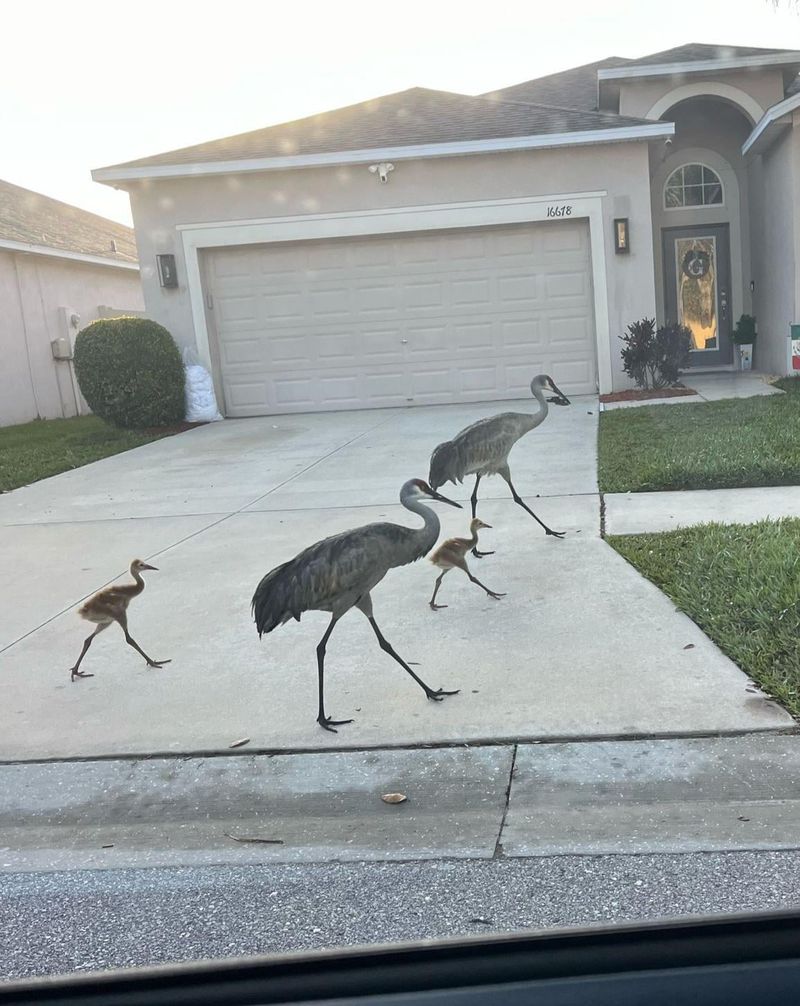
Cranes can be a joy to watch, and the best way to keep them wild is to leave the menu to nature. FWC says feeding cranes is illegal in Florida, and it can make them linger near people and lose their natural fear, according to its crane guidance.
Skip the bread, corn, and handouts.
Do not chase, handle, or try to harm the birds. If they are causing a real problem, such as damaged turf or a nest too close to a doorway, turn to FWC rather than improvising.
The FWC sandhill crane guidelines explain that approved hazing methods come with restrictions, including around active nests.
Everyday habits help. Keep a respectful distance, keep pets and children from approaching, and drive slowly where cranes cross the road.
Florida’s resident cranes are state-designated Threatened, so they deserve some patience. Most visits are short, and the birds move along on their own.
A crane on your lawn is a good reason to look closely at your turf, but it can never tell you grubs are there.