
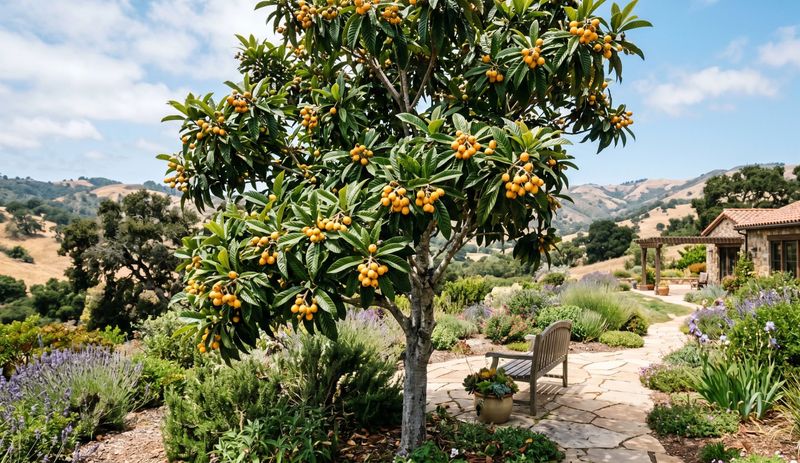
Walk past a loquat tree in late fall and you may catch a sweet scent and a buzz of insects around its fuzzy flower clusters. While many yards go quiet for winter, this evergreen tree often puts on its show.
The fruit that follows rarely shows up as early as people hope, though. Here is what to expect from bloom to harvest, and how to help your tree along.
Loquats flower during California’s cool season
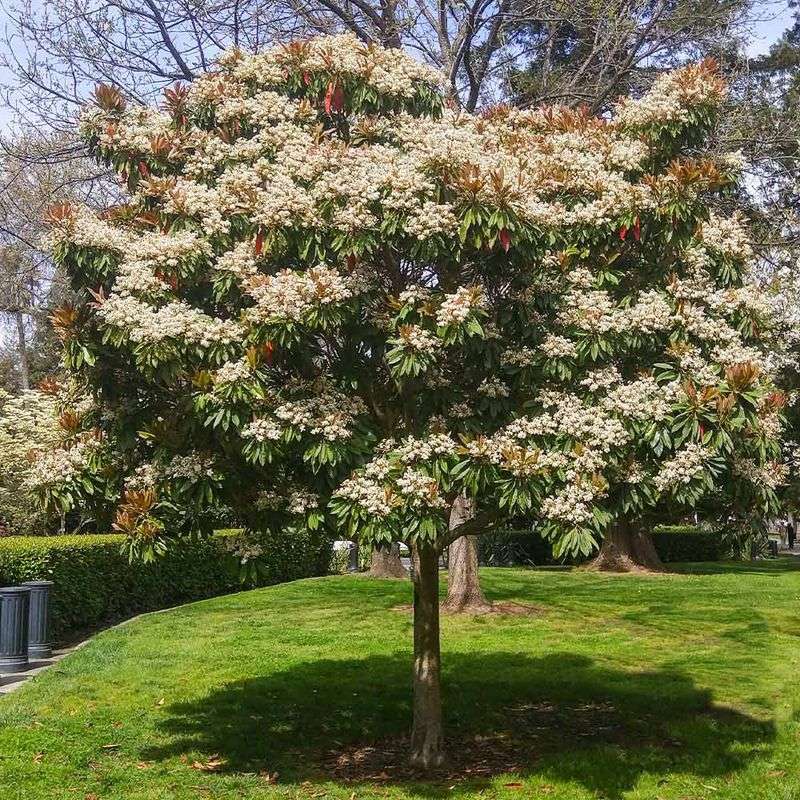
Most fruit trees nap through winter, but the loquat (Eriobotrya japonica) keeps its leaves year-round and flowers when the weather cools. UC Davis reports that California loquats blossom and set fruit from October through February.
That is a broad window, and it describes a general pattern rather than a calendar date.
Your own tree may open its first blooms in November or hold off until January. Local bloom timing differs from place to place, as shown in a UC Master Gardener column from San Luis Obispo County.
Coastal fog, inland chill, a sheltered wall, and the cultivar all play a part, so a quiet tree in early November is not a sign that something is wrong.
The flowers are small, woolly, and clustered at the branch tips, so they are easy to miss from a distance. Walk up and look closely, and you will often notice a light, sweet fragrance too.
Here is the key point for planning your year. Bloom time and ripening time are two different things.
Seeing flowers in the cool season tells you the tree is on track, but it does not tell you when you will be picking fruit. The next sections cover what the flowers do for visitors and why the harvest comes later than many people expect.
Bees and other insects visit loquat flowers
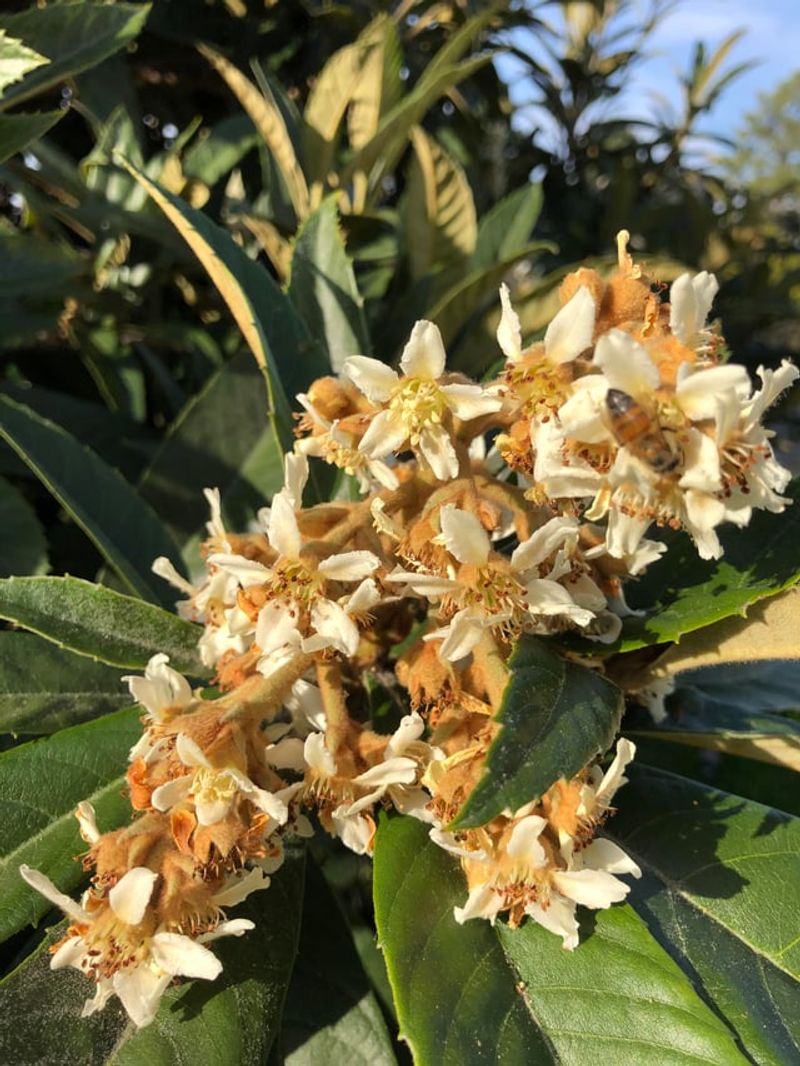
A sunny winter afternoon is the best time to stand beside a blooming loquat and listen. Bees and other insects stop by the flowers, which can offer nectar and pollen when many plants are not in bloom.
UF/IFAS Extension lists several insect pollinators for loquat, including bees.
That makes the tree a possible source of forage for visiting insects. It does not mean one backyard loquat will transform local bee numbers.
Think of it as a pleasant bonus you can watch from the patio, not a conservation project on its own.
Cool days limit insect activity, so you may see more visitors when the sun is out and temperatures rise a bit. Fewer visitors on a cloudy morning is normal.
Pollination matters for the fruit, too. Loquats are self-compatible, which means a single tree can set fruit with its own pollen.
Cross-pollination can still improve fruit set, size, and production, so a neighbor’s loquat nearby may help. You do not need to plant a second tree to get a crop.
Flowers do not promise early-spring fruit
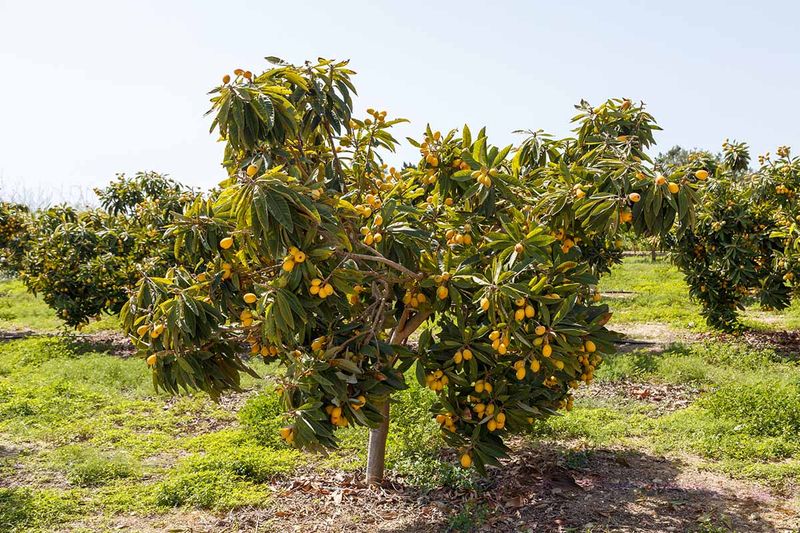
Here is the reality check on the title’s timing. Loquat fruit typically ripens about 90 days after bloom, and UC Master Gardeners of Sonoma County give the usual season as late May through July.
Fruit develops slowly through the cool months, so most trees do not deliver by early spring.
Cultivar changes the calendar. UC Davis lists ‘Early Red’ for February fruit, ‘Champagne’ and ‘Thales’ for March to April, ‘Advance’ for April to June, and ‘Victor’ for May to July.
Those are examples, not guarantees for every yard.
Climate matters just as much. Loquats need heat to mature a good crop, and UC Davis notes that fruit along the central California coast may lack good color, flavor, and sweetness.
A warm inland yard and a foggy coastal one can give very different results from the same variety.
Frost is the other wildcard. UF/IFAS reports damage below 27°F.
Treat that as a practical warning, not an exact line for every cultivar or microclimate. Frost can harm flowers and young fruit without necessarily killing the tree, so a cold snap may cost you a crop while the tree itself bounces back.
If frost threatens, a spot near a south-facing wall or under an eave can offer a little shelter. Plan on picking in late spring and treat an earlier harvest as a happy surprise.
Give an established tree some basic care
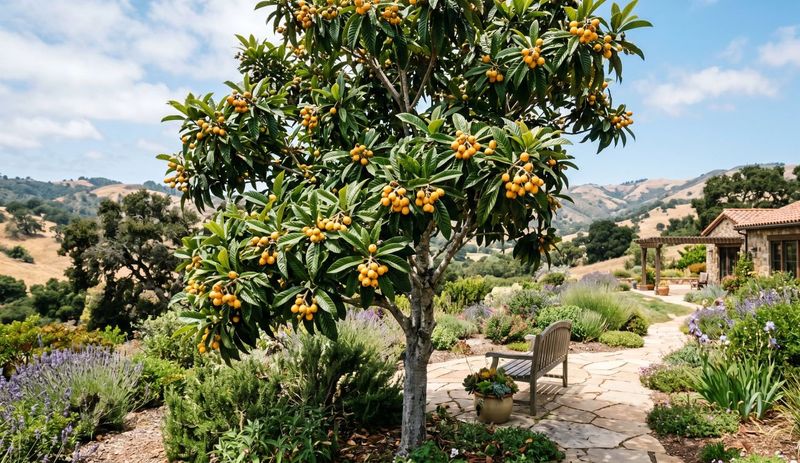
Once it is settled in, a loquat can be fairly easygoing, but it is not a no-care tree. Start with location: UC Statewide IPM guidance points to well-drained soil and a spot with full sun or partial shade.
Soggy soil is a bigger problem than a little dryness.
Water is where expectations often slip. Established trees tolerate some drought, which suits California summers.
Even so, moderate water supports better fruit production, so a deep soak during dry spells while fruit is developing is a smart habit that still fits a water-wise yard.
Timing your pruning protects the harvest. Prune after the fruit is picked, not before winter bloom, because cutting in fall can remove the flower clusters that will become next year’s crop.
UC Master Gardeners of Sonoma County recommend this approach and also suggest thinning heavy fruit clusters.
Thinning helps when a branch is loaded with tightly packed fruit. Removing some fruit can make the remaining ones larger and lower the risk of limbs breaking under the weight.
Keep an eye out for fire blight, a bacterial disease that can make shoot tips look scorched. It is a concern to watch for, not something every tree gets.
If you see blackened, bent tips, check UC IPM advice on pruning out affected growth.
Choose a grafted variety for more predictable fruit
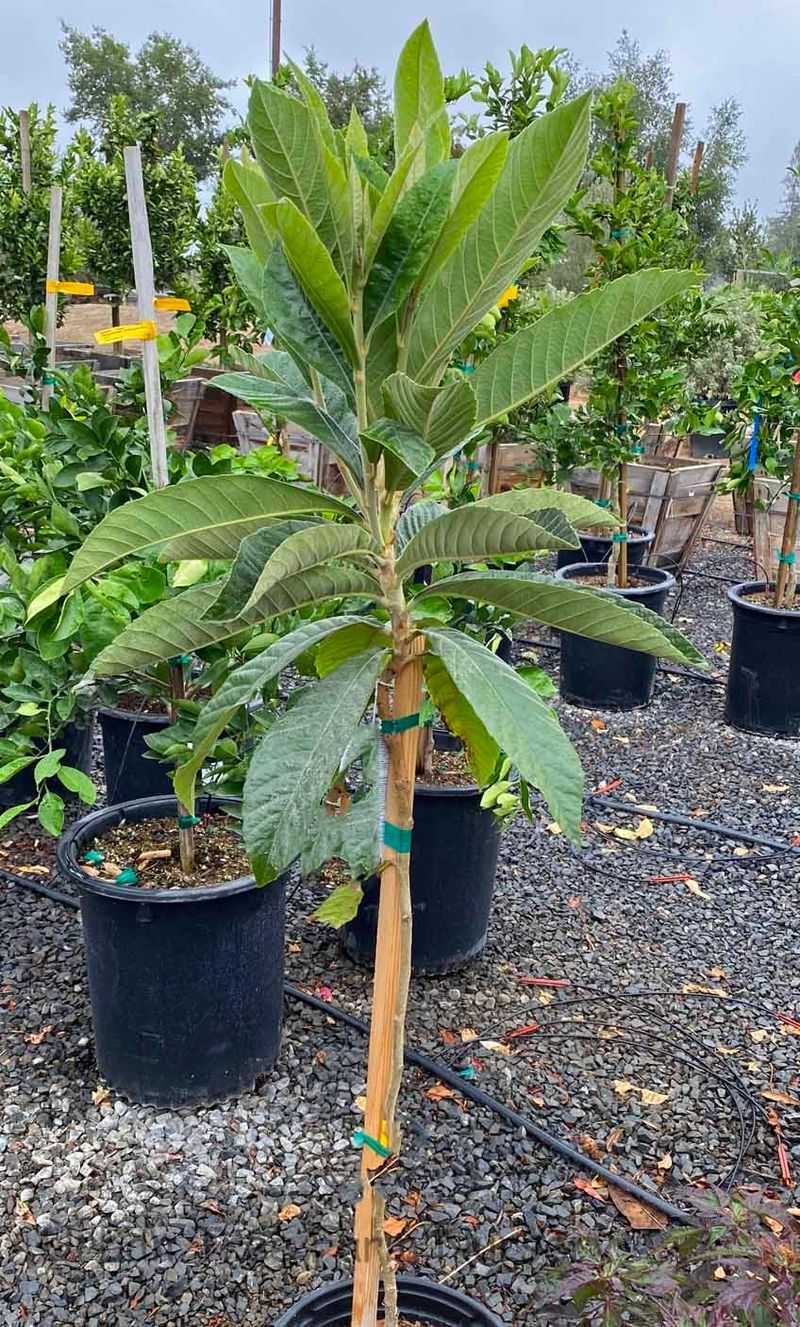
Many loquats in yards began as a tossed seed, and some of those trees are lovely. For fruit, though, seedlings are a gamble.
They can take years to bear, and the fruit may not be true to type, meaning it can differ from the parent. UC Davis says seedlings are generally better suited to ornamental use than quality fruit production.
A grafted named variety takes out much of the guesswork. Growers choose these for fruit quality, so you know more about what you are planting.
UF/IFAS Extension makes the same point about seed-grown trees.
Variety also lets you shape your harvest calendar. If you want fruit sooner, an early type such as ‘Early Red’ is worth a look.
For later fruit, ‘Victor’ ripens in the May to July range. Ask your nursery which varieties do well in your area.
Even a good variety is not a promise. Heat, coastal fog, and exposure can shift timing and flavor from one yard to the next.
Choosing a grafted tree simply gives you better odds of edible, tasty fruit.
Eat the ripe flesh, not the seeds
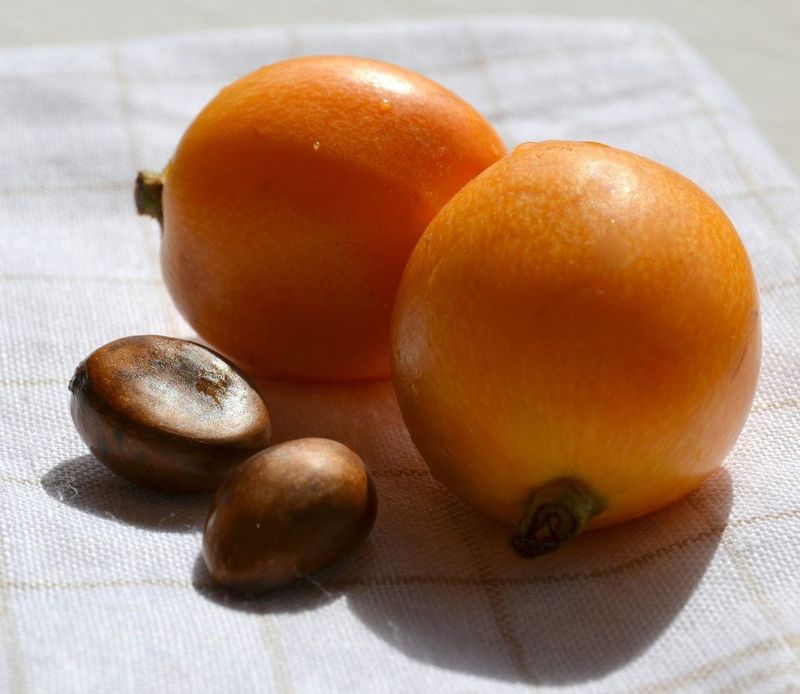
A ripe loquat is a treat, with juicy, sweet-tart flesh you can eat fresh. The seeds are a different story.
Japan’s Ministry of Agriculture, Forestry and Fisheries reports that loquat seeds contain cyanogenic glycosides, including amygdalin, which can release cyanide.
So the rule is simple. Do not eat the seeds, do not grind them, and do not use seed products as remedies.
The warning applies to the seeds only, not to the ripe flesh.
In the kitchen, cut the fruit in half, pop out the large brown seeds, and compost them. If kids are helping with the harvest, show them how to spit out or remove the seeds before eating.
Loquats are a gift of late spring, and the blossoms keep the winter garden interesting long before then.