
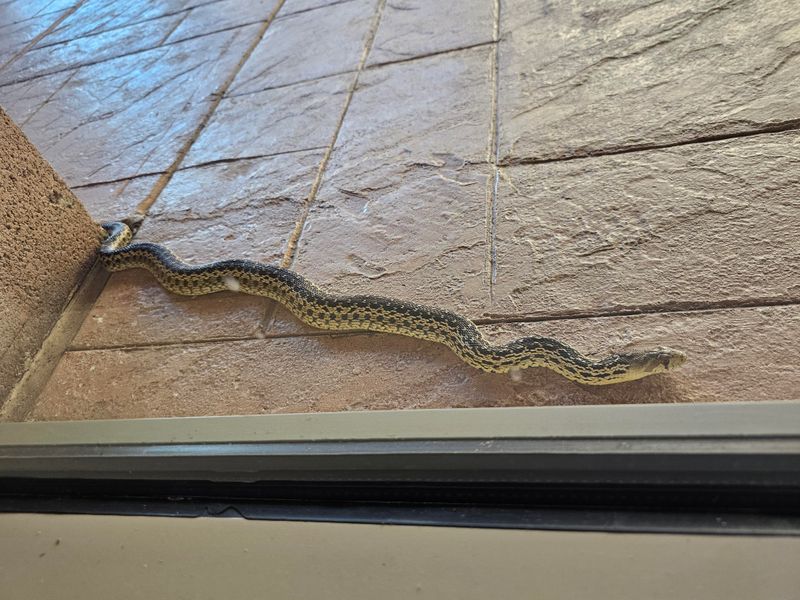
A long, patterned snake slides across your California yard, and your first thought might be to grab a shovel. Hold that thought, because it could be a gopher snake, a predator that hunts the same rodents chewing on your plant roots.
Mistaken identity is a big reason these snakes get hurt. Here is how to read the situation calmly, stay safe, and still protect your garden.
A gopher snake is a predator, not a pest-control guarantee
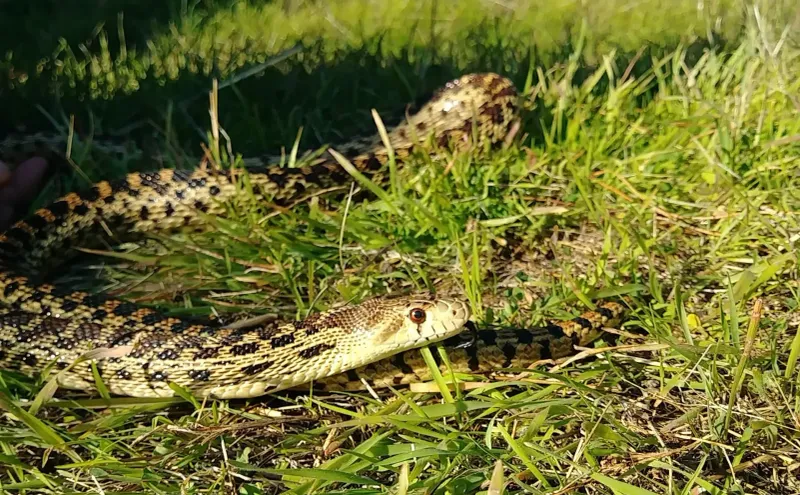
Gopher snakes earn their name honestly. According to the National Park Service, they are nonvenomous and can slip into rodent burrows to hunt, and rodents make up a big part of their diet.
The Los Angeles Zoo specifically lists gophers among their prey.
That makes a gopher snake a potential ally in a yard with gopher trouble. A snake that wanders through may eat a gopher or two, and that is a real benefit for the local ecosystem.
Eating gophers, though, is different from controlling them. One snake passing through does not tell you how many gophers live under your lawn, how fast they reproduce, or whether that snake will stick around.
A single sighting is a pleasant surprise, not a pest-management plan.
UC guidance backs this up. UC IPM says snakes and other predators do eat pocket gophers, but predators alone may not keep them at the level a homeowner wants.
So the promise that spotting a gopher snake means fewer gophers chewing your roots is not something a sighting can deliver.
Think of the snake as a bonus, not a bodyguard for your plants. If you value wildlife in your yard, that bonus is worth appreciating from a distance.
Will one snake protect roots this winter?

Pocket gophers do not take the winter off. They feed on plant roots, bulbs, and other plant parts, and UC Agriculture and Natural Resources notes they stay active year-round in California.
Fresh mounds can pop up in January just as easily as in July.
Snakes are a different story. A single snake you saw on a warm afternoon tells you very little about the months ahead.
You cannot know whether it lives in your yard or was just passing through, and you cannot know whether it will be out hunting when the weather turns cold and wet.
The National Park Service notes that gopher snakes in colder climates may overwinter without feeding. That detail is not a prediction for every California yard, since conditions vary from the coast to the inland valleys to the foothills.
It simply shows that a snake’s winter habits are uncertain.
A sighting also says nothing about the size of your gopher population. A yard with one gopher and a yard with a dozen can look the same from the patio.
The practical move is to keep watching your own plants. Wilting shrubs, mounds of fresh soil, and plants that tug loose from the ground are better clues about root damage than any snake sighting.
Look-alikes make distance the safest choice
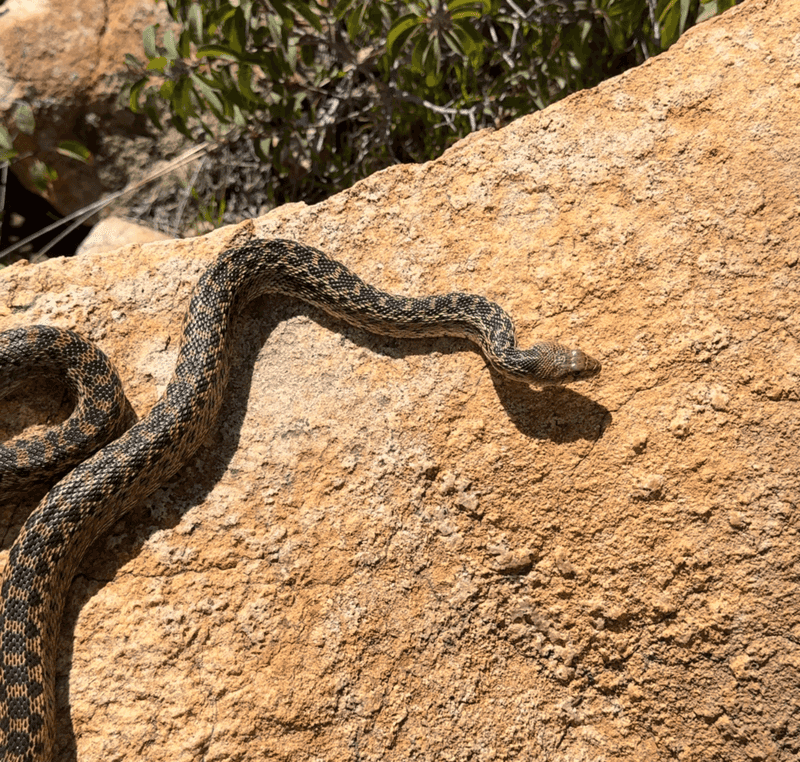
Gopher snakes have a few tricks that make people think rattlesnake. The National Park Service says they may hiss, flatten their heads, and vibrate their tails when they feel threatened.
In dry leaves, that tail buzz can even make a rattling sound.
Those behaviors do not prove what kind of snake you are looking at. A rattlesnake can also coil, hiss, and flatten its head, so none of these actions works as a reliable identity test.
A rattle is a useful clue when you can see one. But UC IPM explains that rattles can break off, so a snake with no visible rattle is not automatically harmless.
Head shape and body pattern can also mislead, because a gopher snake can flatten its head into a triangular look.
The California Department of Fish and Wildlife offers rattlesnake information that can help you learn the differences ahead of time, from a safe place like your couch.
Never step closer to check a tail, head, or eyes. If you want to confirm a snake’s identity, take a photo from far away with a zoom lens, or just let it move along.
Give every unidentified snake room
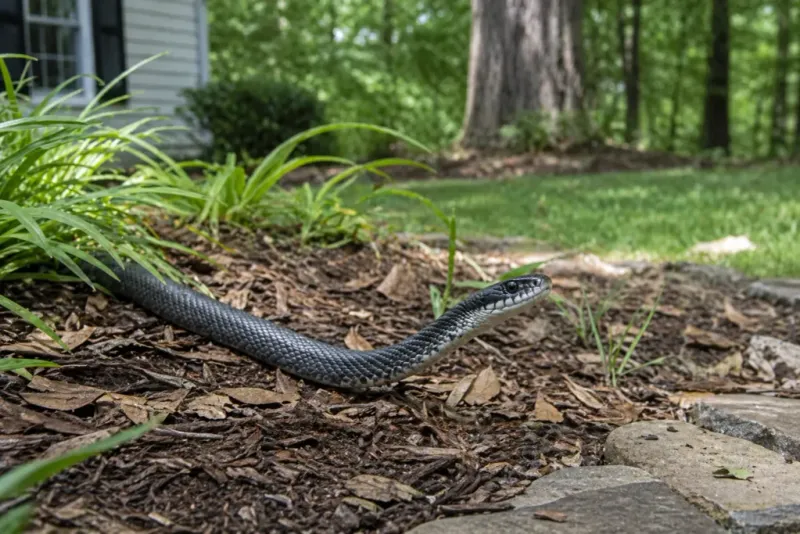
When you cannot be sure what a snake is, treat it as if it could be dangerous. Calmly move children and pets indoors or well away from it, and keep your own distance too.
Most snakes want to leave, and they usually will if you give them space and time.
Do not approach it, handle it, kill it, or try to relocate it. UC IPM notes that many rattlesnake bites happen when people try to pick up, move, or kill a snake.
A moment of bravado is how a yard visit turns into an emergency room trip.
If the snake stays near a door, a play area, or a spot where your family spends time, call a qualified local wildlife professional. They can identify it safely and decide what to do.
Keeping dogs leashed and kids inside until the snake is gone is a simple, sensible habit.
If someone is bitten, call 911 right away. The California Poison Control System offers rattlesnake guidance, but a bite is an emergency that needs medical help first.
Staying back protects your family and the snake. A harmless gopher snake gets to keep hunting, and you avoid the risk if it turns out to be something else.
Use a control plan for confirmed gopher damage
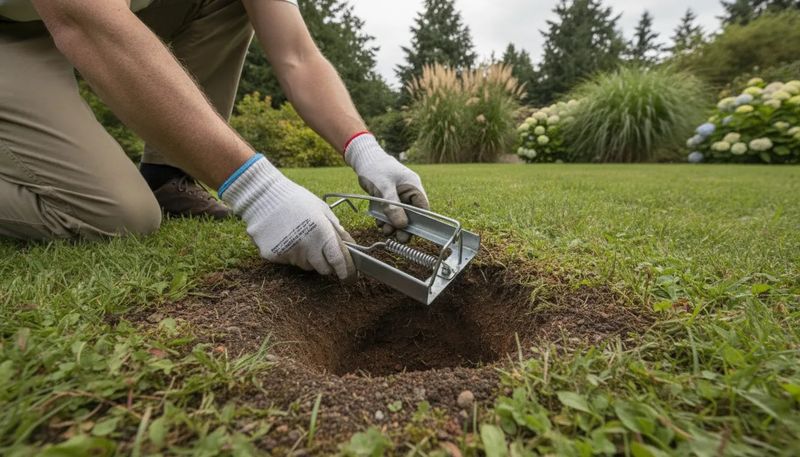
A snake sighting and gopher damage are two separate things. Before you do anything about gophers, confirm they are the problem.
Look for fan-shaped mounds of loose soil, plugged burrow openings, and plants that wilt or pull right out of the ground with roots gnawed away.
The UC IPM home and landscape guide says snakes and other predators eat pocket gophers, but they may not hold them at a level you can live with. If you are losing plants, waiting for a snake to fix it is a risky bet.
For confirmed damage, UC guidance describes trapping as an effective control option. Effective does not mean it solves every case, and some yards need follow-up traps or a change in approach.
Monitoring helps. Flatten fresh mounds and check a day or two later to see where new ones appear, which shows you where gophers are active.
The UC ANR gopher article covers management basics you can use at home.
Protect valuable plants too. Wire baskets around roots of new trees and shrubs are a common way to shield them while you work on control.
Leave any snakes that visit alone, and let them add whatever help they can.
Keep the potential ally in perspective
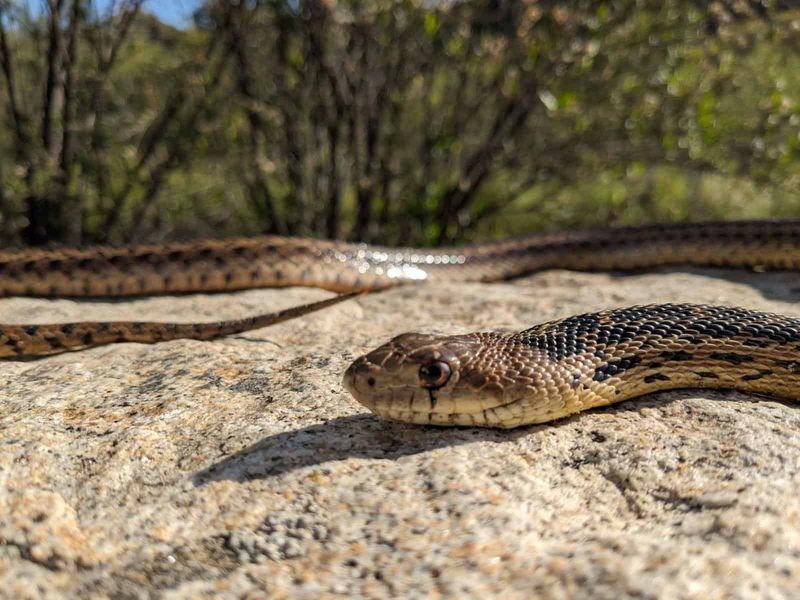
A gopher snake can be part of the natural predation in your yard, and that is worth appreciating. Its presence, though, does not promise fewer gophers or protected roots this winter, so keep checking your plants as usual.
Give any unidentified snake space, and if you confirm gopher damage, follow the UC IPM control options. For snake safety basics, see UC IPM rattlesnake advice.
A snake is a welcome neighbor, but your trowel and your traps still do the heavy lifting.