
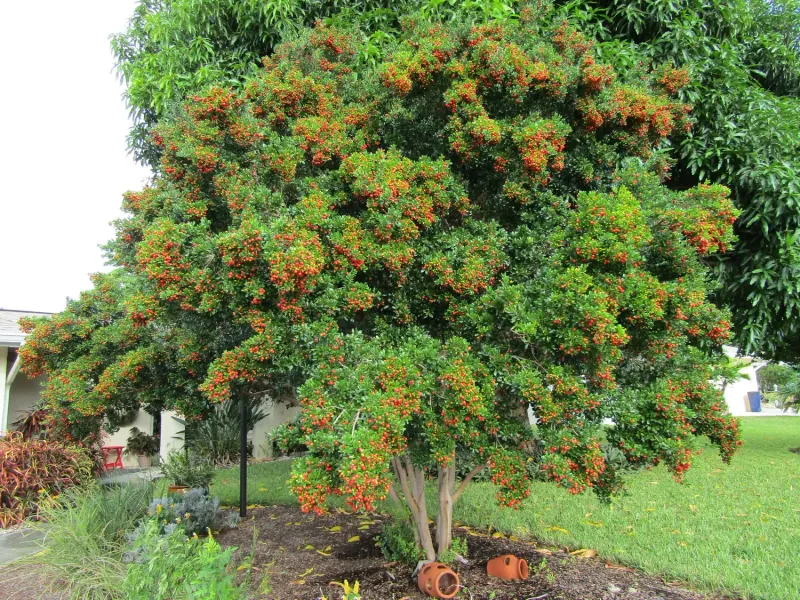
A neat green hedge can look tidy and still offer birds very little food. Podocarpus can feed birds when it fruits, but frequent clipping often keeps yard hedges from producing much.
Florida native shrubs can add colorful fruit, leafy shelter, and more bird activity right outside your window. These seven choices cover different parts of Florida, though fruit timing and hungry visitors mean no shrub is guaranteed to hold berries all winter.
1. Yaupon Holly
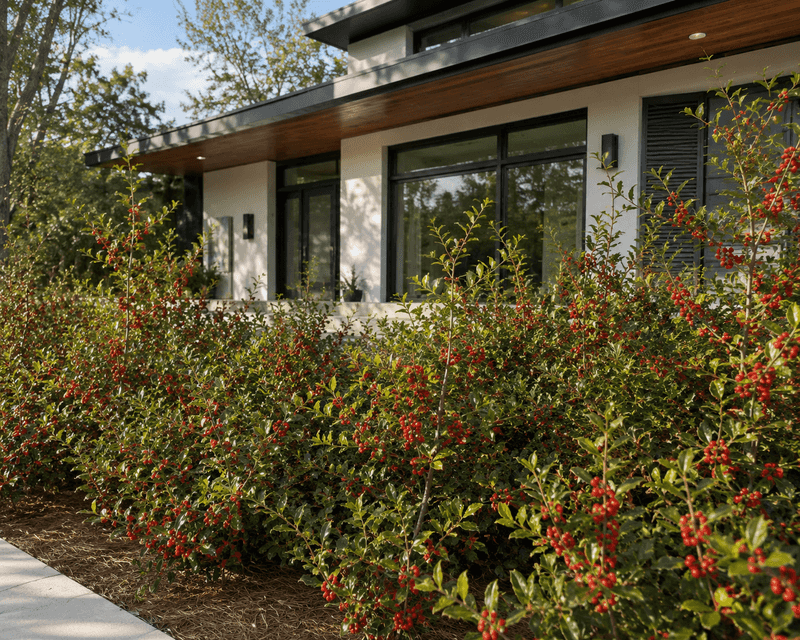
Red berries against deep green leaves give a winter yard the kind of color that needs no holiday lights. Yaupon holly, Ilex vomitoria, is a dependable native choice for much of Florida, especially North and Central Florida, where its fruit often lasts into winter.
For berries, buy a female plant and make sure a male yaupon grows nearby for pollination. Male plants and many dwarf landscape selections will not provide the fruit display you want, so ask the nursery about both sex and mature size.
Standard yaupon can become a large shrub or small tree, often reaching 15 to 25 feet. Give it sun or partial shade and room to branch instead of forcing it into a narrow foundation bed.
Once established, it handles sandy soil and dry spells well, although new plants still need regular watering. Use selective pruning rather than repeated shearing, which removes flowering and fruiting growth.
Birds gain food and evergreen cover, while homeowners get a durable screen. The berries are for wildlife, not people, so place fruiting branches away from spots where young children might snack.
2. Wax Myrtle
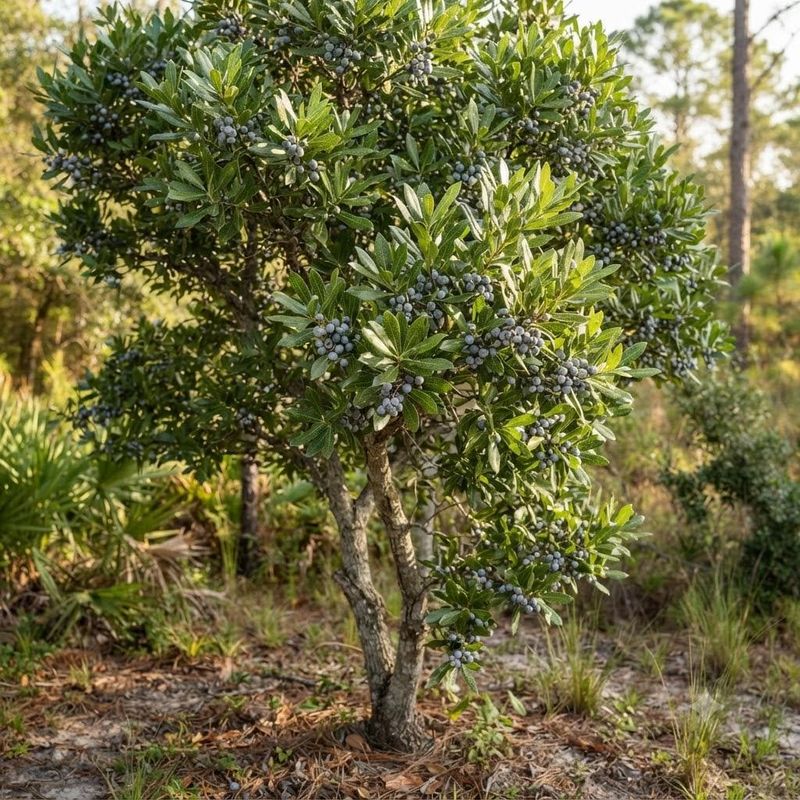
Not every useful winter fruit announces itself in bright red. The small, waxy, blue-gray fruits of wax myrtle, Morella cerifera, are easy for people to overlook, but they help feed birds such as yellow-rumped warblers.
For a homeowner replacing a tall, rigid hedge, this native offers a softer screen with fine-textured evergreen leaves. It grows across Florida and commonly reaches 10 to 20 feet, sometimes taller, so it belongs along a roomy property edge rather than beneath low windows.
Female plants produce fruit when a male is available for pollination. Ask for nursery-grown plants with known sex if berries are your main goal, and leave the fruit-bearing branches intact through winter.
Wax myrtle accepts sun or partial shade and a wide range of soils, including moist sites. Established plants also tolerate drought, but that does not mean newly planted shrubs can skip irrigation.
Its fast growth is useful when privacy cannot wait years. Allow a broad, natural outline, keep plants clear of buildings, and remove weak or crowded branches as needed instead of maintaining a tightly clipped wall.
3. Dahoon Holly
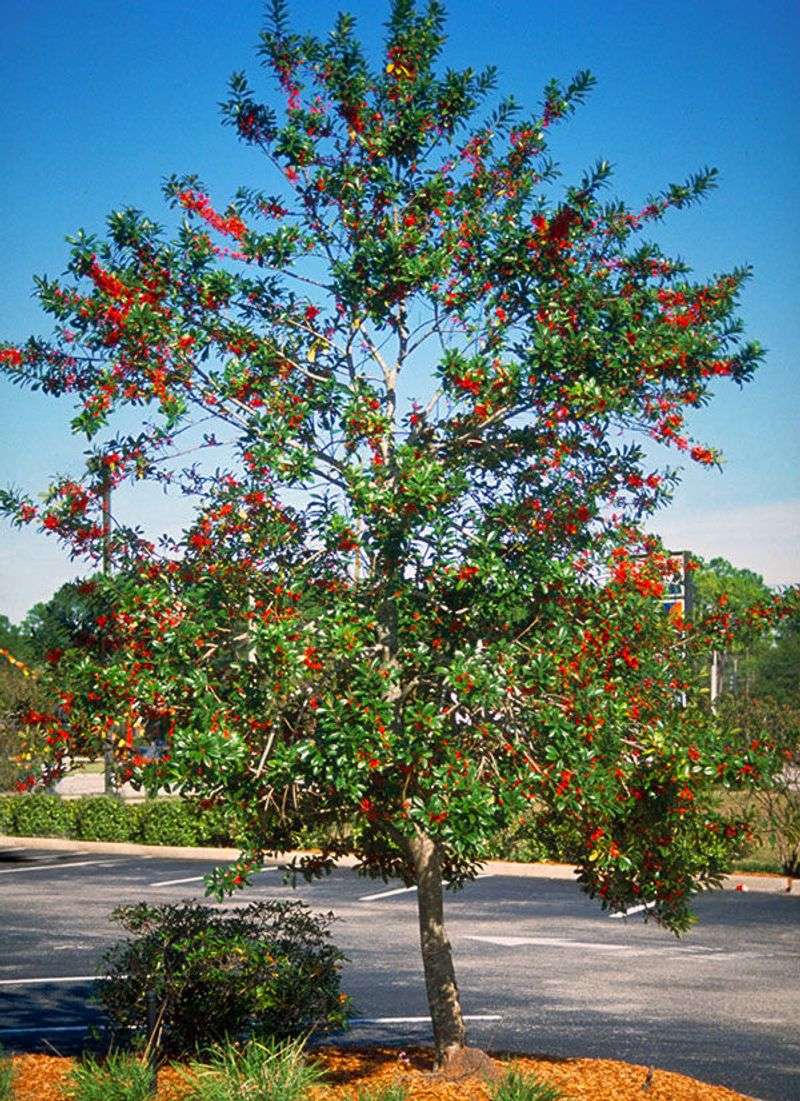
A low spot in the yard calls for a different plant than a hot, dry strip beside the driveway. Dahoon holly, Ilex cassine, earns its place where soil stays moist and a larger evergreen screen has room to grow.
This Florida native is often sold as a tree, but its branching habit also suits a tall, informal boundary planting. Expect roughly 20 to 30 feet at maturity under favorable conditions, and avoid squeezing it into a bed meant for compact shrubs.
Female plants carry red fruit that can remain into winter and attract visiting birds. As with yaupon, a compatible male plant nearby is needed for reliable pollination, so one attractive female does not tell the whole planting story.
Choose sun or partial shade and a moisture-holding location, such as the edge of a suitable rain garden. Dahoon is less forgiving of prolonged dryness than yaupon, especially in Florida’s rapidly draining sand.
The payoff is height, glossy foliage, and a winter food source without constant hedge trimming. Before buying, check the site’s drainage and available space with your county Extension office or a knowledgeable native nursery.
4. American Beautyberry
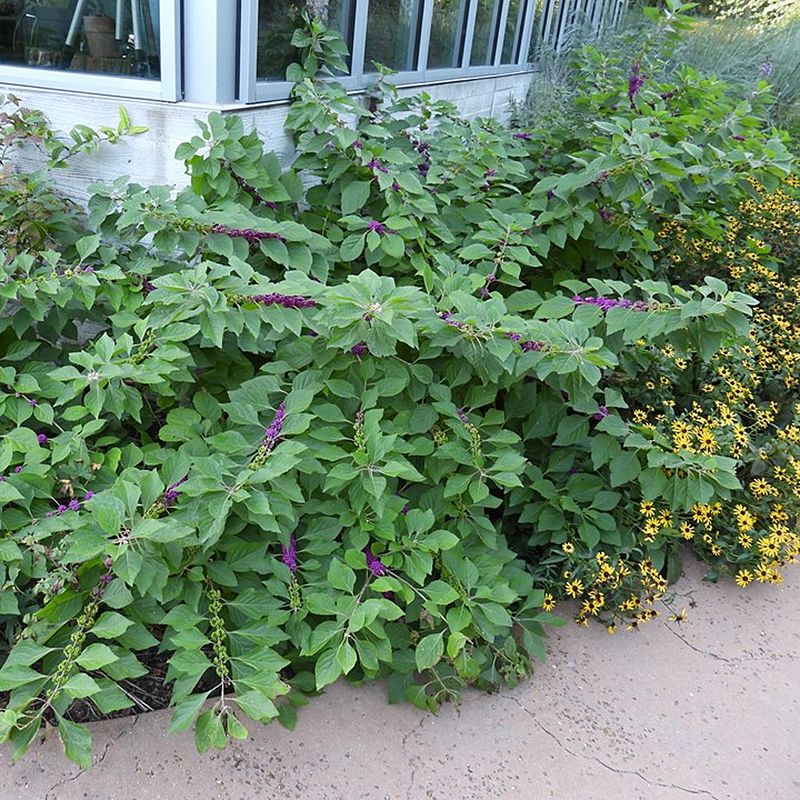
Purple fruit wrapped around arching stems makes this shrub look almost handmade. American beautyberry, Callicarpa americana, brings a loose, woodland feel to Florida yards and offers a very different look from an evergreen hedge.
Its berries ripen from late summer into fall and may remain into early winter if birds do not take them first. That makes beautyberry a seasonal bridge, not a dependable all-winter pantry, and its leaves often drop during cooler weather.
Plant it where that open winter shape will look intentional, such as behind lower evergreens or along a partly shaded fence. A typical shrub reaches about 4 to 8 feet tall and wide, with a relaxed outline that does not suit formal clipping.
Sun to partial shade works well, and established plants tolerate dry periods. Water during establishment and keep a modest mulch layer over the root zone without piling it against the stems.
Mockingbirds and other fruit-eating birds use the crop. If shaping is needed, prune in late winter before spring growth, after enjoying whatever fruit remains, rather than shearing away the fall display.
5. Wild Coffee
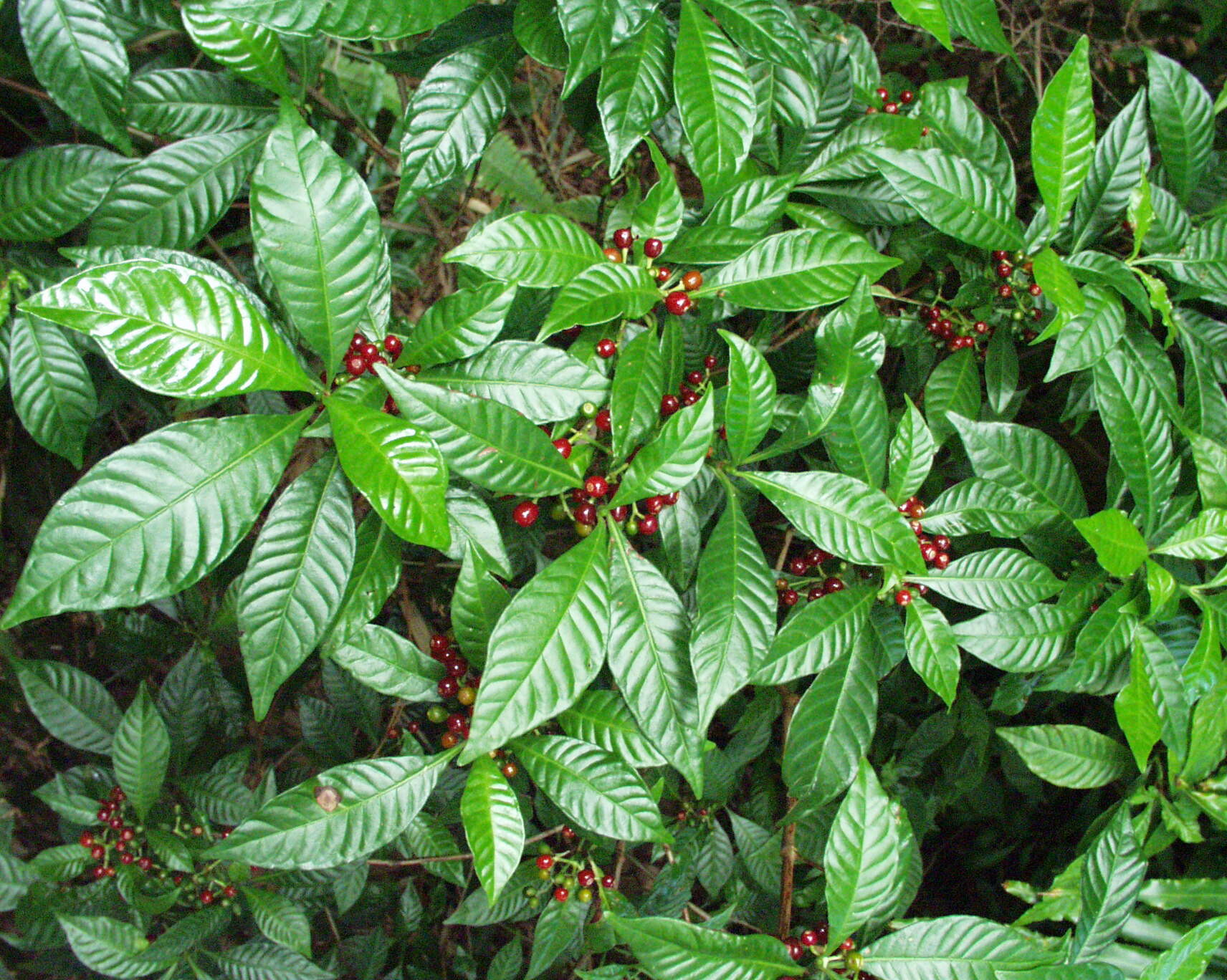
Under a high tree canopy, glossy leaves can do as much for curb appeal as flowers. Wild coffee, Psychotria nervosa, adds that rich green texture while producing small red fruits that birds eat.
Despite its name, it is not the coffee plant used for your morning drink. Choose it as a wildlife shrub for warm, sheltered parts of Central and South Florida, not as a crop or a cold-hardy hedge for the Panhandle.
Most home landscapes can accommodate its usual size of about 4 to 10 feet, depending on growing conditions. Partial shade is especially useful, although plants can handle more sun when moisture is adequate.
Small white flowers attract pollinators, followed by fruit that can extend into the cooler season in warm locations. Freezes, drought, and feeding birds can interrupt that display, so winter fruit should be treated as a local benefit rather than a fixed schedule.
Use several plants along a shaded patio or beneath taller trees, leaving space for their natural form. Avoid frequent shearing, and keep lawn sprinklers from being the only water source while new roots become established.
6. Marlberry
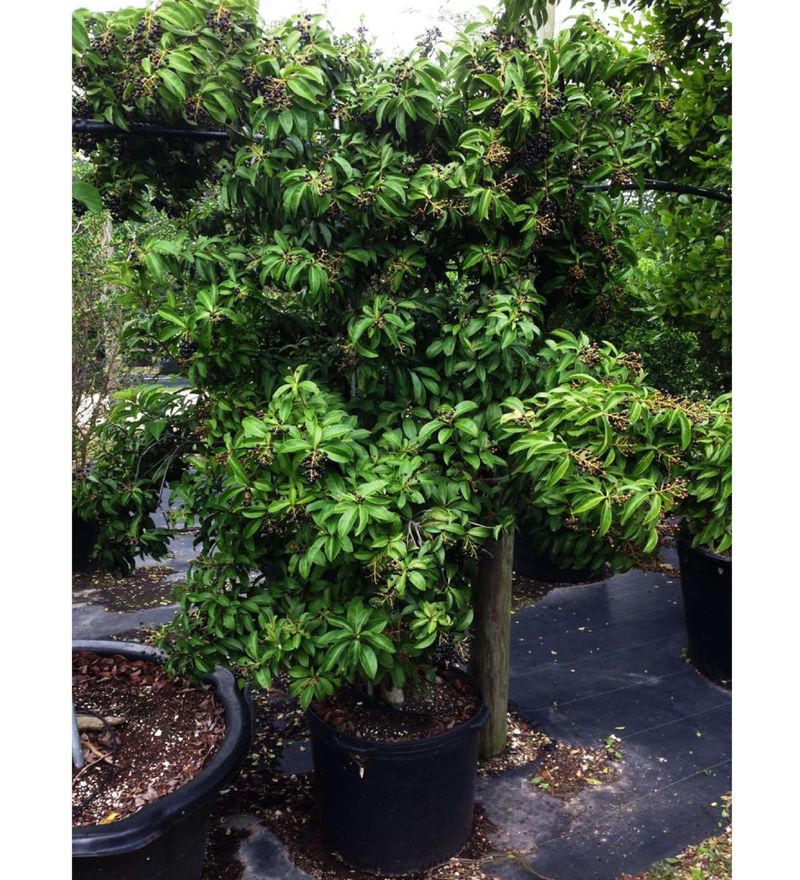
Privacy planting does not have to stop at the shady side of a South Florida house. Marlberry, Ardisia escallonioides, can build a leafy screen there while adding dark fruit for birds.
Its ripe fruits turn purple-black, giving this native a quieter look than red-berried hollies. Flowering and fruiting can occur at different times in warm areas, so a planting may supply food during winter without every branch carrying fruit at once.
Give marlberry partial shade or suitable sun and well-drained soil. It commonly grows 10 to 15 feet tall and can become taller, making it a better choice for a generous border than a small bed beside the front steps.
Central Florida gardeners should check local cold exposure before planting; South Florida’s warmer conditions are generally a better fit. Water new plants consistently, then adjust irrigation to rainfall and soil moisture as roots spread.
Check the botanical name carefully when shopping. Native marlberry is not invasive coral ardisia, Ardisia crenata, a different plant with persistent red berries.
Leave its branches lightly shaped so flowers and fruit can develop. A mixed border with lower native plants will look fuller than a narrow, repeatedly sheared row.
7. Simpson’s Stopper
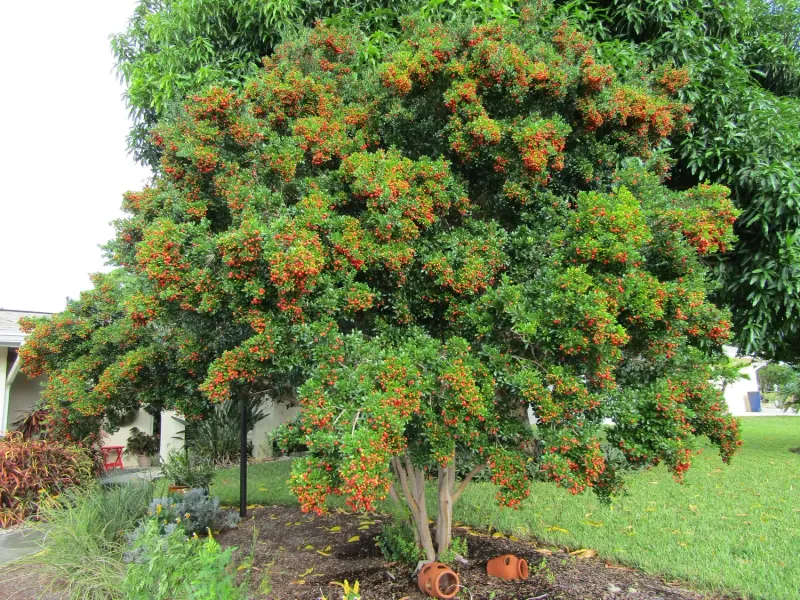
For gardeners who still want a polished hedge, there is a middle ground between a clipped green wall and a wild thicket. Simpson’s stopper, Myrcianthes fragrans, offers small evergreen leaves, attractive branching, and orange-red fruit in a form that responds well to thoughtful shaping.
It is best suited to South Florida and warmer parts of Central Florida. Standard plants often reach 10 to 20 feet, while named compact selections stay smaller, so read the label rather than assuming every plant will fit beneath a window.
White flowers support pollinators, and birds eat the fruit that follows. In warm locations, flowering and fruiting can occur in more than one season, including winter, although crop size and timing vary.
Plant in sun or partial shade with good drainage, and provide establishment water even though mature plants tolerate dry conditions. Coastal gardeners may find it useful in protected seaside landscapes, but direct salt exposure still deserves a local suitability check.
The key trade-off is simple: frequent shearing means fewer flowers and berries. Use selective cuts, keep some fruiting growth, and combine it with other native shrubs so birds have several food sources rather than one crop to finish.