
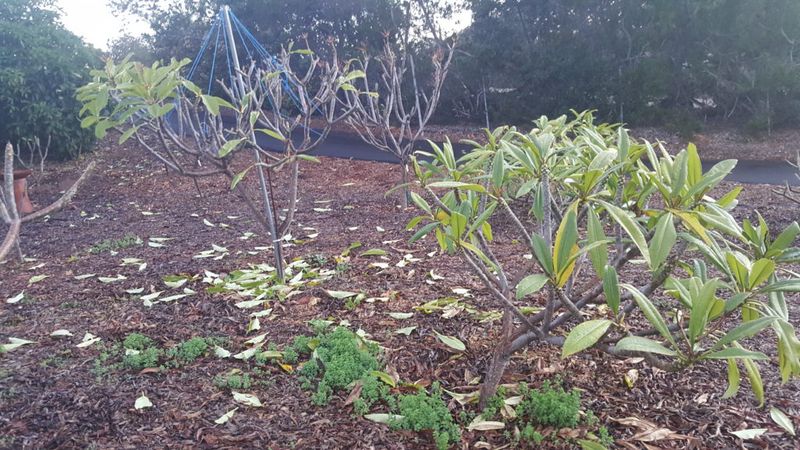
Plumeria can look pretty rough in a Florida winter. Leaves drop, branches go bare, and a cold snap can leave you wondering what you will find in spring.
A few forecast-based habits can cut down on avoidable winter stress, especially for potted plants. Here is how to tell normal dormancy from trouble and what to do before the next cold front.
Let dormancy and the forecast set the timing
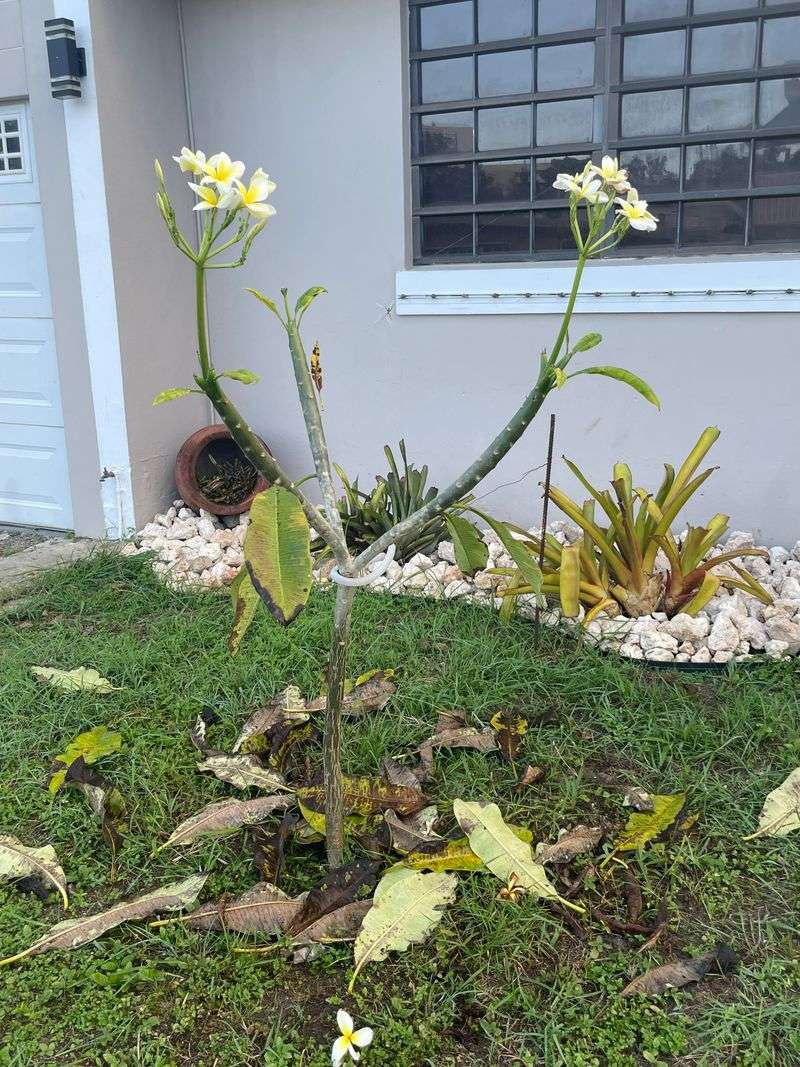
A bare plumeria in winter is usually just a plumeria doing what it does. Florida plants commonly lose their leaves and go dormant as days shorten and nights cool, and UF/IFAS Gardening Solutions notes that plumeria is cold-sensitive and can suffer cold damage.
Leaf drop by itself is not a sign of disease, so there is no need to panic when the branches go bare.
Because Florida is long and varied, there is no single date when everyone should finish winter prep. Let the plant’s condition and your own local forecast set the schedule.
A gardener in Tallahassee or Ocala deals with a very different winter than one in Miami or Key West, and even one yard can have warm and cold corners.
Freezing weather is more typical in north and central Florida and rare in south Florida, according to UF/IFAS cold protection guidance. The same publication points out that tropical plants can also suffer chilling injury when temperatures fall below 50°F.
Chilling injury is not the same as freeze damage, which happens at or below freezing and is a much bigger danger.
Neither number is a promise of black tips. A cool night does not doom a plant, and a mild winter does not guarantee a perfect spring.
Check the forecast a few days ahead, know your yard’s cold spots, and have a plan ready before the front arrives.
Keep dormant roots from staying wet
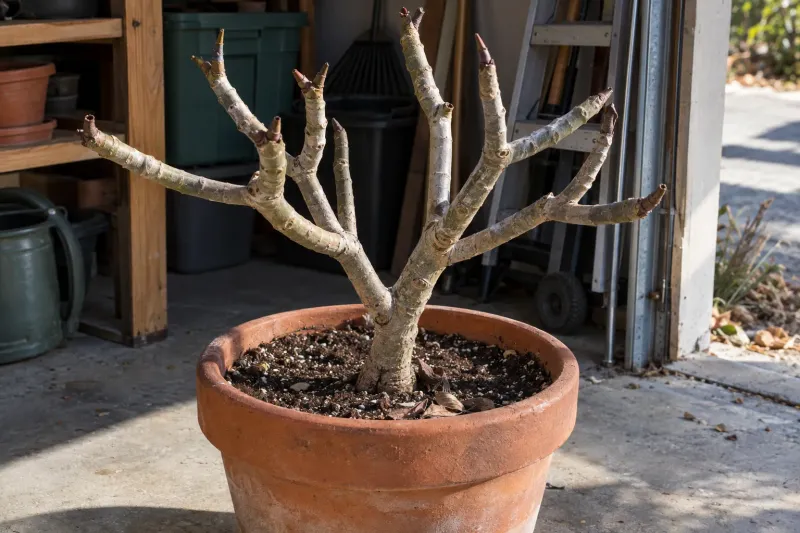
Sandy Florida soil drains fast, but a pot of potting mix can stay soggy for days once a plant stops using water. A dormant, leafless plumeria has few leaves to pull moisture up, so the root zone dries out slowly.
That is the moment to ease off.
When your plumeria is dormant and leafless, reduce or stop routine irrigation that keeps the soil wet. An older University of Florida publication describes plumeria as tolerant of drought and happiest in moist, not wet, soil.
Think of that as your target: damp at most, never soaked.
The Plumeria Society of America makes a similar point in its winter storage guidance, warning that excess water during dormancy can contribute to root rot. Pots with open drainage holes, a gritty fast-draining mix, and no water sitting in saucers all help.
This advice is for dormant plants only. A plumeria that is still leafy and actively growing, such as one in a warm South Florida yard, still needs sensible watering.
Check the soil a couple of inches down before you decide, and remember that skipping water is good care for dormant roots, not a guaranteed fix for tip damage.
Treat black tips as a symptom, not a diagnosis
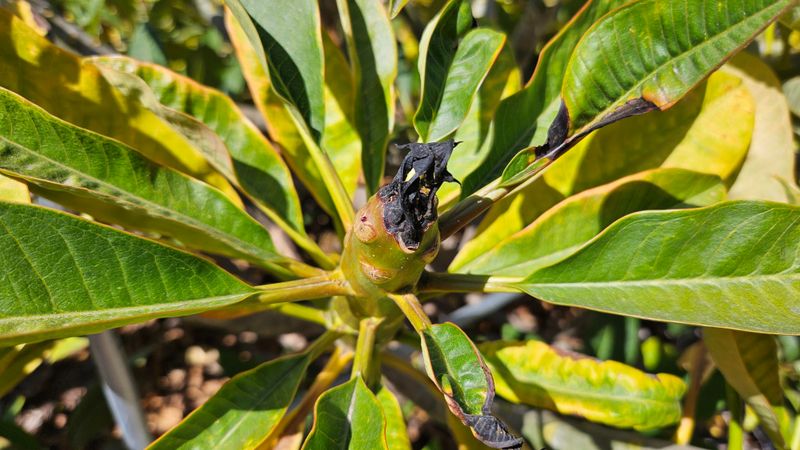
Spot a black tip in spring and the guessing game starts. Was it the cold, a fungus, or wet roots?
Honestly, a blackened tip does not tell you which one, because several things can produce the same look.
Cold can injure plumeria branches, and UF/IFAS Extension in Indian River County reports that below-freezing temperatures can cause leaf loss and branch dieback. Shoot decay can also involve pathogens.
In a University of California study, Dothiorella was described as a potential pathogen, not as the cause every time.
That study looked at two Plumeria rubra cultivars in California, so it cannot explain every case in a Florida yard. Treat it as a useful clue, not a verdict.
So keep two ideas separate. Keeping dormant soil from staying wet is prudent care for the roots.
It is not a proven cure or a guaranteed way to prevent tip decay. If a tip does blacken, note when it happened, what the weather did, and how the soil was kept, because that history helps you sort out likely causes.
Protect plumeria when frost or freezing is forecast
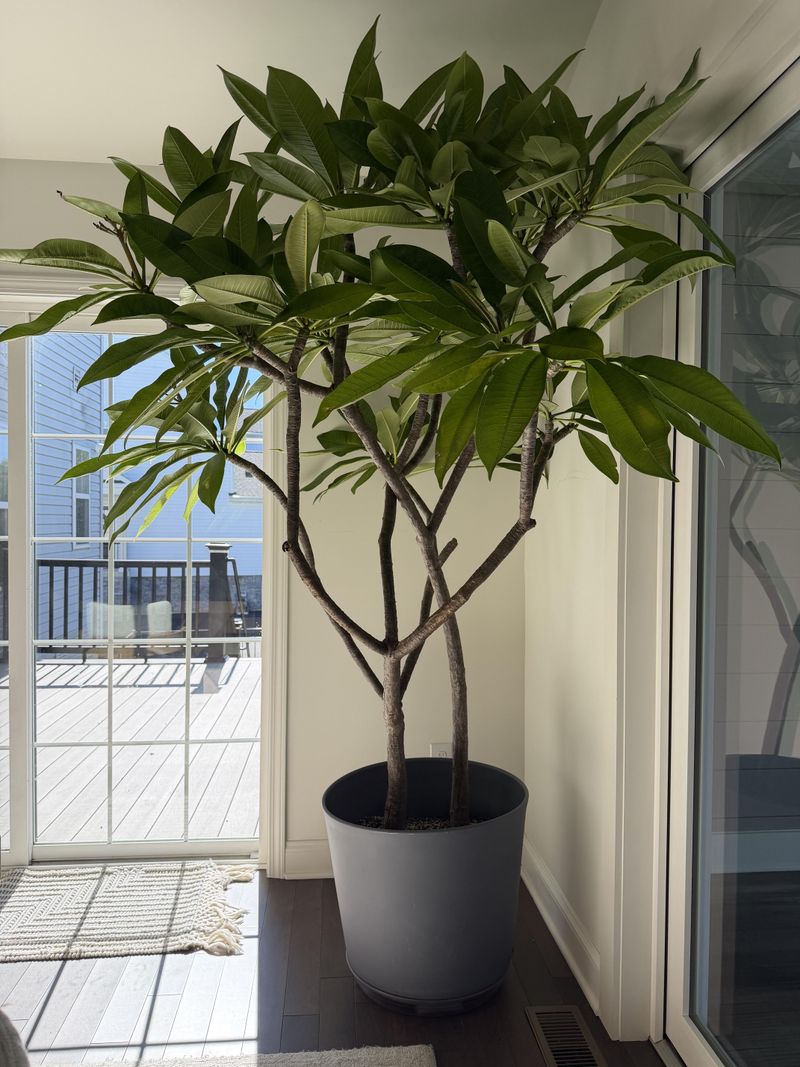
When the forecast shows frost or freezing, act before dark. For a potted plumeria, the best move is usually the simplest: carry it to a protected, frost-free place such as a garage, covered porch, or bright shed, if that is feasible.
Containers are one reason UF/IFAS recommends growing plumeria in pots farther north, and it warns that Central Florida plants remain frost-vulnerable.
For in-ground plants or pots too heavy to move, use a cover. According to UF/IFAS cold protection guidance, the cover should reach the ground, be secured against wind, and ideally stay off the foliage.
Stakes or a light frame can hold fabric up and away from the plant.
Covers help more against frost than against extreme cold, so do not expect a bedsheet to beat a hard freeze. Remove coverings once temperatures warm the next day.
Skip the garden hose and sprinklers. UF/IFAS says ordinary home irrigation may do more harm than good in a freeze.
Freeze-protection sprinkling is a specialized method that needs continuous management and the right equipment. Also turn off in-ground irrigation systems before freezing temperatures arrive.
Leave leaves on and wait to assess cold damage
Some gardeners strip off remaining leaves to tidy up or to winterize. Skip that.
A peer-reviewed study of two Plumeria rubra cultivars, summarized in the 2023 PalmArbor articles from UC, found more shoot decay where leaves were removed, especially stripped, than where they dropped naturally.
The authors note that removal wounds may let decay-causing organisms in. The work covered only those two cultivars under California conditions, so it does not prove what happens in every Florida garden.
Still, it gives no support for leaf stripping as routine prevention. Let leaves fall on their own schedule.
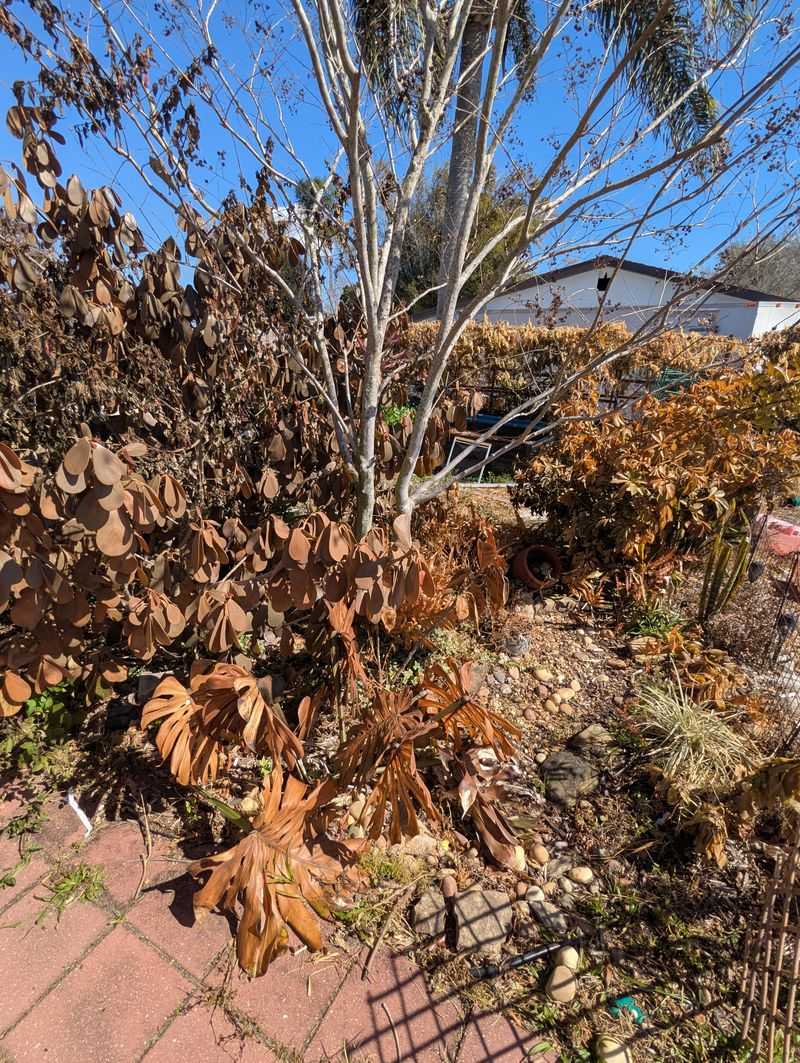
After a freeze, patience matters just as much. Damage can take a while to show, and the Indian River County Extension post advises waiting to see what survives.
Below-freezing temperatures can cause leaf loss and branch dieback, and recovery takes time.
In practice, that means leaving the shears in the shed until new growth shows you which branches are alive. A branch that looks rough in January may still surprise you in the warm weeks of spring.
Use the forecast, not a promise
The routine is short: notice when your plumeria goes dormant, ease off any watering that keeps the roots wet, and cover or move it when your local forecast calls for frost or freezing. UF/IFAS and its cold protection publication back the cold-sensitivity side of this plan.
These steps reduce avoidable winter stress, but they cannot guarantee a spring without black tips. Your forecast is the best deadline you will get.