
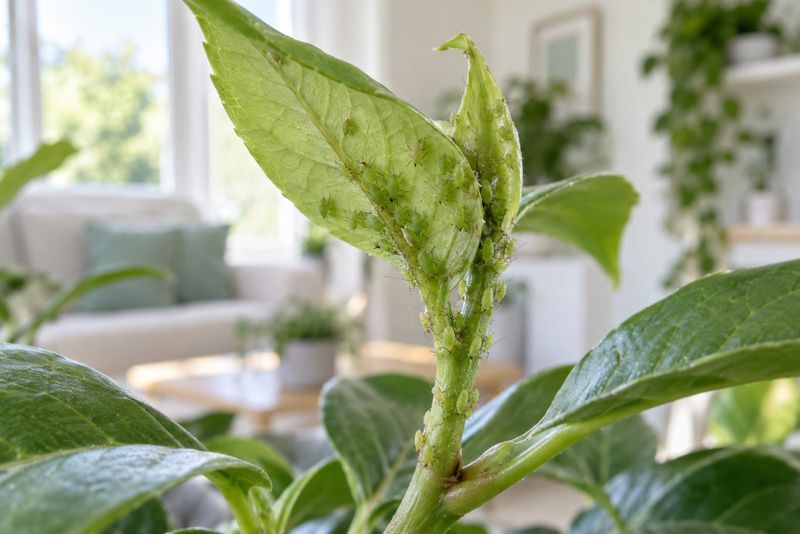
Herbs that spent the summer outside can come indoors with a few extra passengers. Aphids are tiny sap-sucking insects, and a warm room can give them a comfortable place to settle in.
You may not have any at all, but a quick check now can save you from sticky, curling leaves later. Here is how to look, what to do, and when to leave well enough alone.
Check more than the undersides of leaves
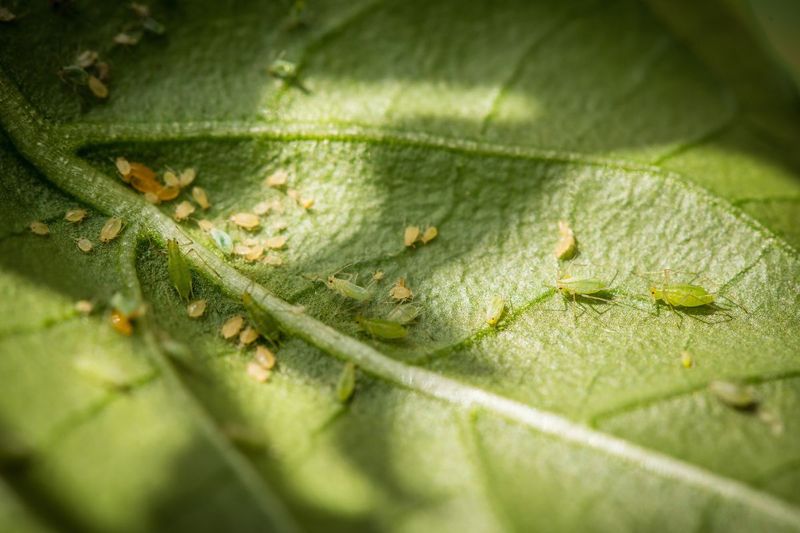
Grab a bright light and look closely at each pot. Leaf undersides matter, but they are not the only spot.
University of Minnesota Extension notes that aphids can also gather on stems and new growth, so check tender tips and buds too.
Aphids are small, soft-bodied insects that can be green, yellow, black, or other colors. Clues include sticky honeydew on leaves or the surface below the pot, plus leaves that look curled, yellowed, or distorted.
Stunted new growth can be another sign.
Seeing a few aphids does not mean you must treat. Aphids often cause little or no harm to plant health, so match your response to how many there are and whether the plant shows symptoms.
Note what you find, then decide on your next step.
Warm indoor conditions can let populations grow
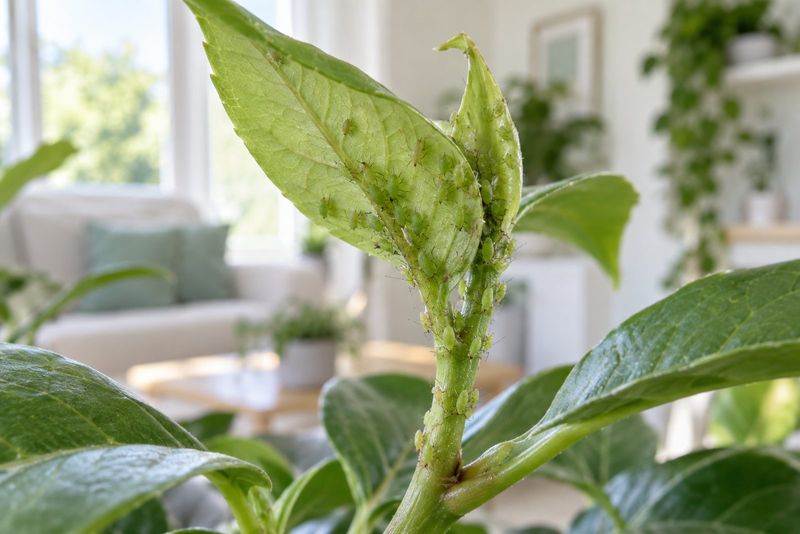
Plants that summered outdoors can carry pests inside with them. Minnesota Extension warns that pests brought indoors can turn into a major winter problem.
That does not mean every pot has aphids, only that a check is worthwhile.
Heated rooms keep conditions mild, and aphids may keep reproducing instead of slowing down. University of Alaska Fairbanks Extension describes how quickly they can multiply indoors, though life cycles vary by species and conditions, so no single rate fits every home.
If you spot aphids, move that pot away from other plants when you can. Keep looking at it every few days, using the same inspection habits described earlier, so small groups do not become big ones unnoticed.
Start with a targeted water rinse
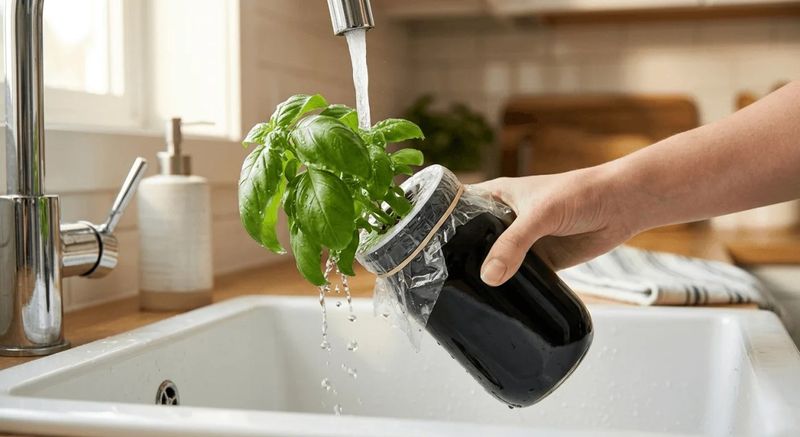
For a small group of aphids, plain water is a sensible first move. Take the pot to a sink or shower and use a steady spray, aiming at leaf undersides, stems, and new growth where aphids cluster.
Oregon State University Extension lists spraying with water among the simple ways to knock them off.
Keep the pressure firm enough to dislodge insects but gentle enough that tender herbs like basil are not torn. Let the pot drain well afterward and avoid leaving it sitting in a puddle.
Water removes some aphids, not necessarily all of them. Minnesota Extension also suggests repeating checks, so treat this rinse as one step in a routine rather than a one-time cure.
Prune concentrated clusters only when it helps
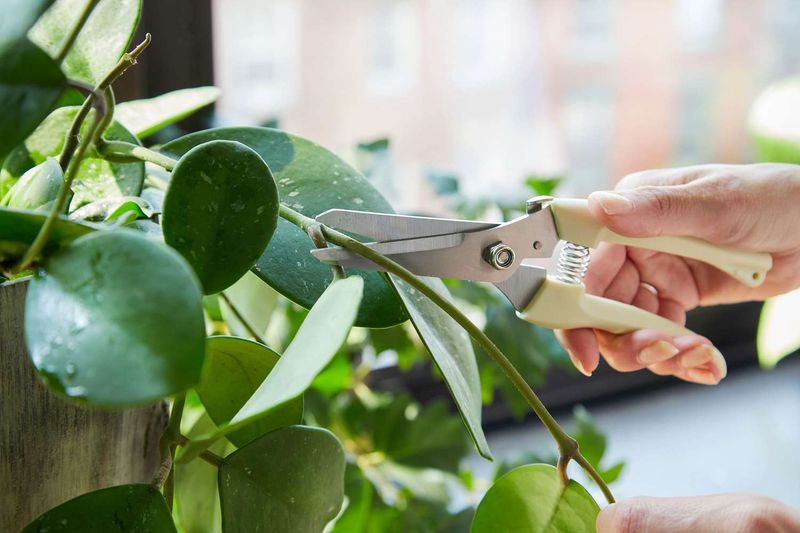
Sometimes aphids bunch up on one shoot or a few badly curled leaves. In that case, snipping off that growth can remove many insects at once.
Oregon State Extension includes pruning heavily affected parts as an option.
Pruning also helps when curled leaves make a rinse hard to aim. Drop the clippings into a sealed bag and toss them rather than leaving them near other plants.
You do not need to prune after every sighting. If aphids are scattered, a rinse may be enough, and cutting healthy growth only slows your herbs down.
After trimming, rinse the rest of the plant as needed and look it over again. Extension guidance stresses ongoing checks, so see whether new clusters show up on stems or fresh shoots over the following days.
A labeled insecticidal soap is not dish-soap water
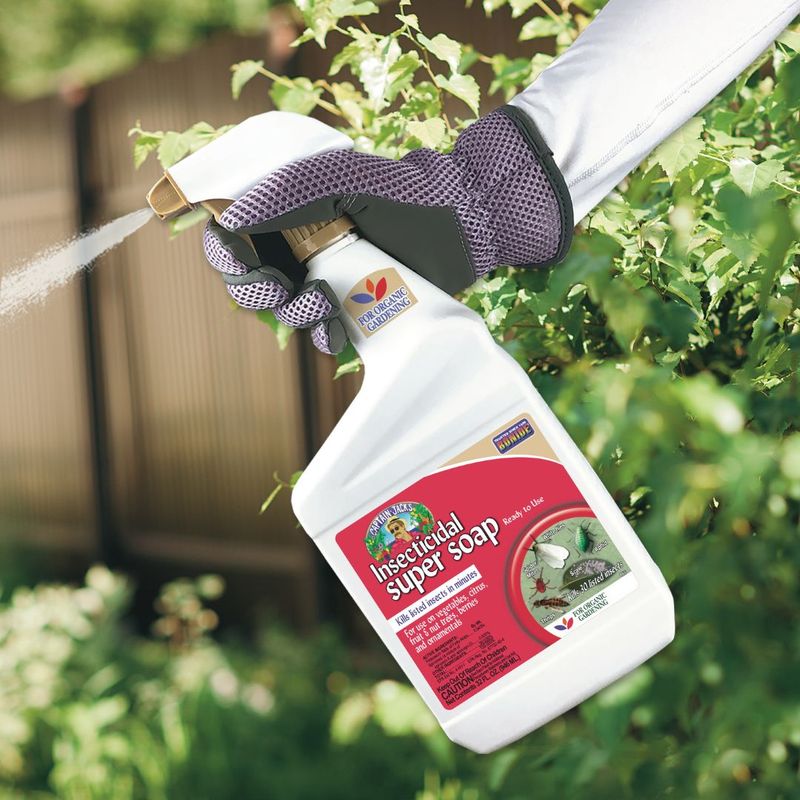
Plain water and insecticidal soap are different tools. Soap only works on insects it directly touches, and Colorado State University Extension explains that it has no lasting residual effect once dry.
Aphids tucked into curled leaves may be missed and survive.
If aphids remain after rinsing and pruning, choose a product labeled for your specific herb. Follow the directions, cover the insects thoroughly, and test a small area first if you are unsure how the plant will react.
Skip homemade dish-soap mixtures. CSU Extension warns they are not consistently formulated or tested and can injure plants, and UConn Extension notes that dish detergents can damage leaf surfaces.
A product made for the job gives you a clear label to follow.
Protect herbs you plan to eat
Herbs end up in soups and salads, so labels matter more than usual. Before using any pesticide, confirm that the label allows use on that herb and follow every direction, including any harvest interval, which is the wait time before picking.
The EPA states that using a pesticide in a way that does not match its labeling is unlawful. If a product does not list your herb, pick a different option or stay with water.
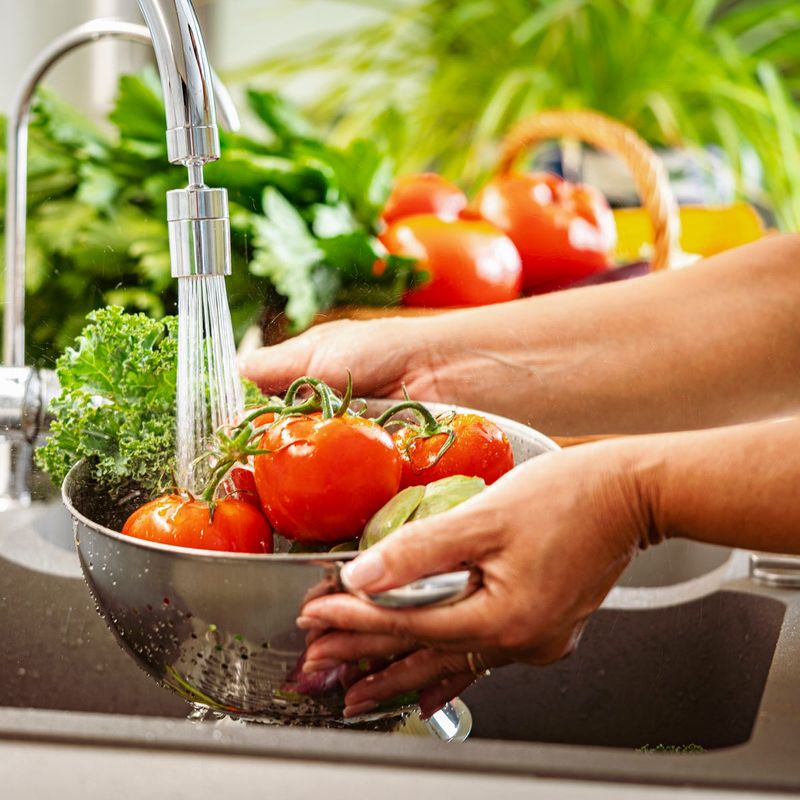
When it is time to harvest, wash the herbs under running water. The FDA does not recommend washing produce with soap or detergent, so keep the suds out of the kitchen sink for this job.
Recheck the plant instead of assuming the first rinse finished the job
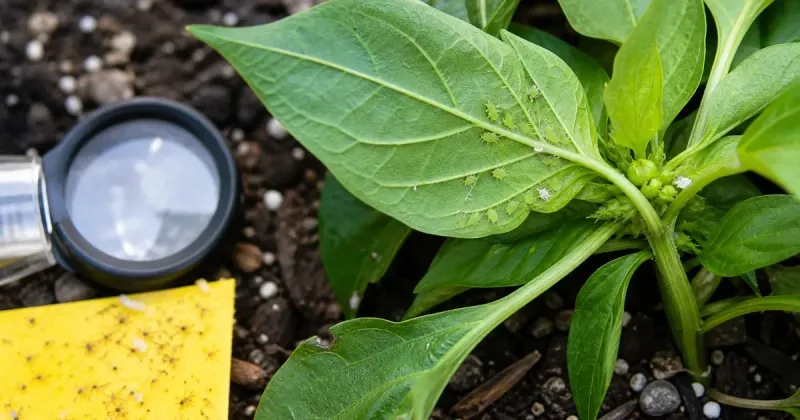
A few days after rinsing, look again at the same hiding places: leaf undersides, stems, buds, and new growth. Survivors and missed clusters are common, and Minnesota Extension supports follow-up checks.
If you still see aphids, repeat the water rinse first. Only if they persist should you move up to a labeled soap, and CSU Extension reminds that coverage matters and repeat checks are needed.
For edible herbs, keep the label and harvest interval in view.
Aphids are persistent, but a calm routine of looking, rinsing, and rechecking keeps most indoor herb pots manageable.