
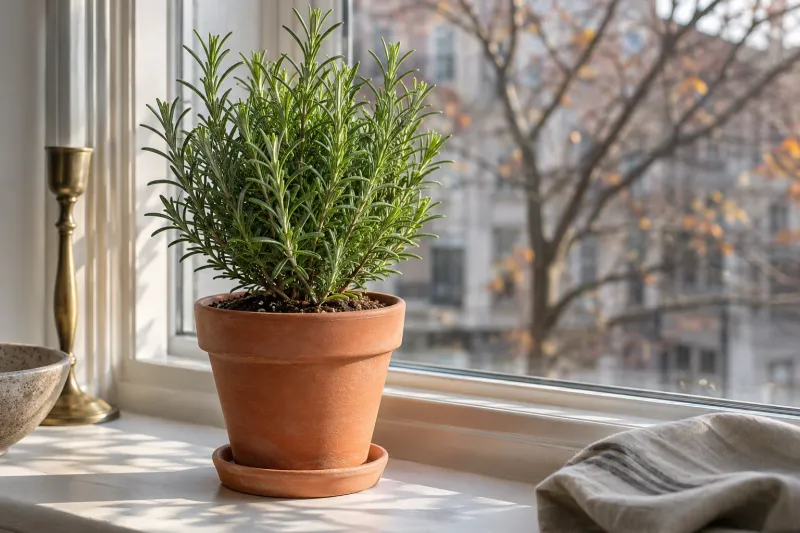
Crispy, brittle rosemary on a winter windowsill is a worrying sight. Many gardeners reach for the watering can right away, but that quick fix does not always help.
Several things can cause the same dry look, and some of them get worse with extra water. Here is how to sort out what your plant may be telling you.
Crispy leaves don’t prove rosemary is thirsty
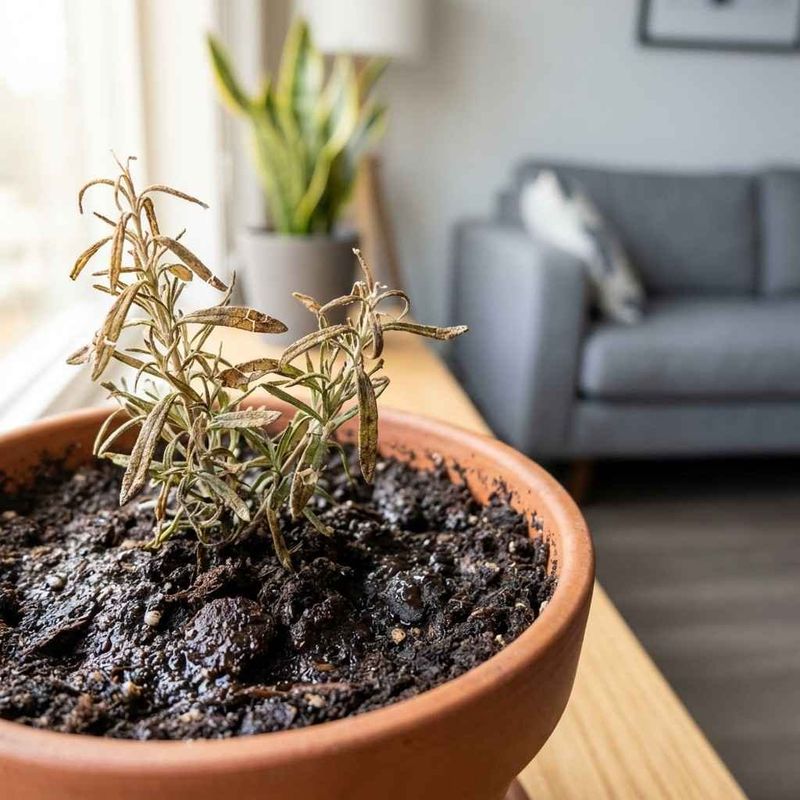
Brown tips and brittle needles make it easy to assume the pot is bone dry. Sometimes that is true.
Virginia Cooperative Extension notes that dry soil can bring on brittle leaves in container plants, but the same guidance makes clear that watering needs shift with conditions.
Other causes can look almost identical. Heated indoor air can scorch foliage while the mix stays damp, and Illinois Extension warns that indoor rosemary may get brown tips and dieback in dry conditions, and that adding more water can lead to root rot.
Overwatering can also damage roots, and University of Maryland Extension describes wilting and foliage decline as possible results.
So the leaves alone cannot tell you what went wrong. Before you change anything, look at the potting mix, the pot, and where the plant sits.
A few minutes of checking can keep you from fixing the wrong problem, though no check can promise a full recovery.
Check the potting mix before you water
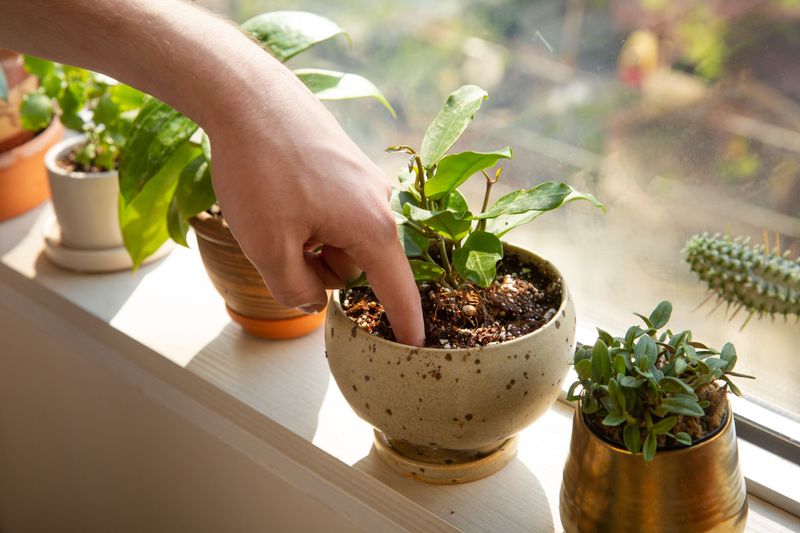
Let the soil, not the calendar, decide. Push a finger a couple of inches into the mix and see how it feels.
If it is clearly wet, wait. If it has dried out to the point you are comfortable with, it is time to water.
Extension sources do not agree on exactly how dry is right. Penn State Extension says rosemary’s mix should dry slightly between waterings.
Illinois Extension cautions against letting the soil go completely dry, while UNH Extension suggests waiting until it is very dry.
Given that range, a rigid rule is not safe. A workable middle path is to avoid both long stretches of bone-dry mix and mix that stays soggy for days.
Your own pot, room, and light will shape how fast it dries, so expect to adjust.
Water thoroughly and let the pot drain
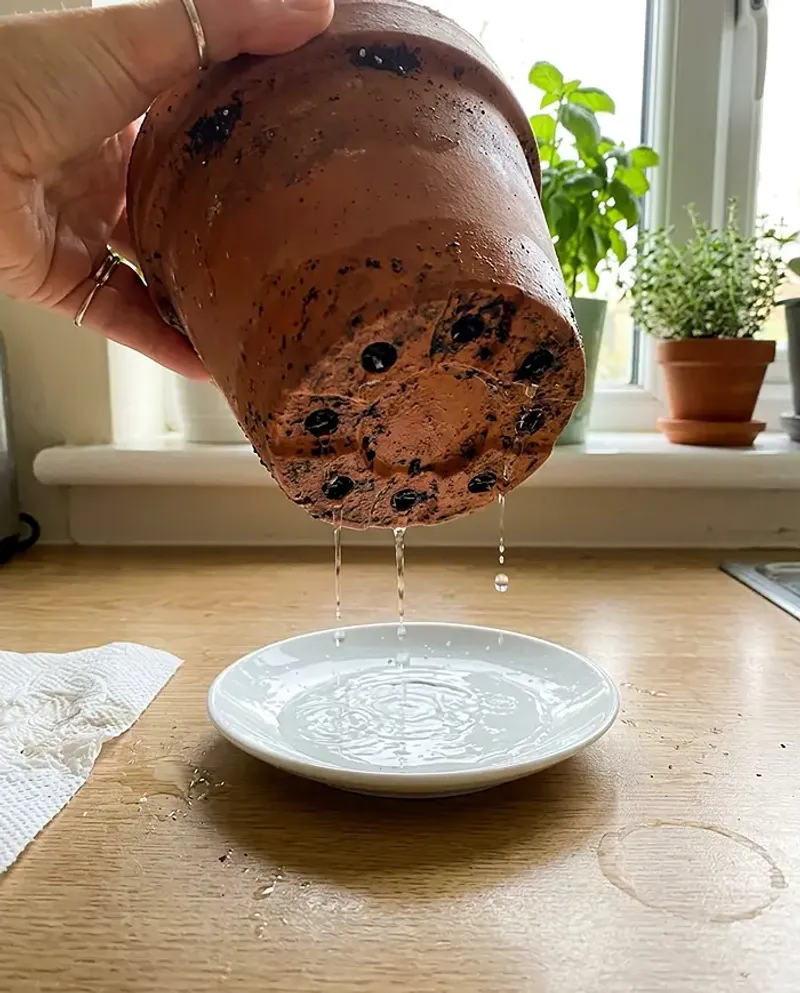
Once you have confirmed the mix is ready, water slowly until liquid runs out of the bottom holes. A light sprinkle only wets the top and leaves the lower roots dry.
Then let the pot drip for a while and empty the saucer.
Standing water is the part to avoid. Virginia Cooperative Extension advises watering thoroughly, letting excess drain, and not leaving the pot sitting in water.
Container type, potting mix, season, and plant conditions all change how quickly soil dries.
The mix matters too. Penn State Extension recommends a pot with drainage holes and a well-drained mix, since rosemary is prone to root rot in wet, poorly drained conditions.
Think of it as two separate jobs: deciding when to water, and then watering in a way that lets the extra escape.
Dry indoor air can damage leaves while roots stay wet
A heat vent can blow dry air across a plant all day. That may brown the needle tips even when the soil underneath is still damp.
In that case, pouring in more water treats the wrong problem.
Illinois Extension links dry indoor conditions to brown tips and dieback in rosemary. Start by moving the pot away from vents and radiators.
Drafty spots by doors are worth avoiding too.
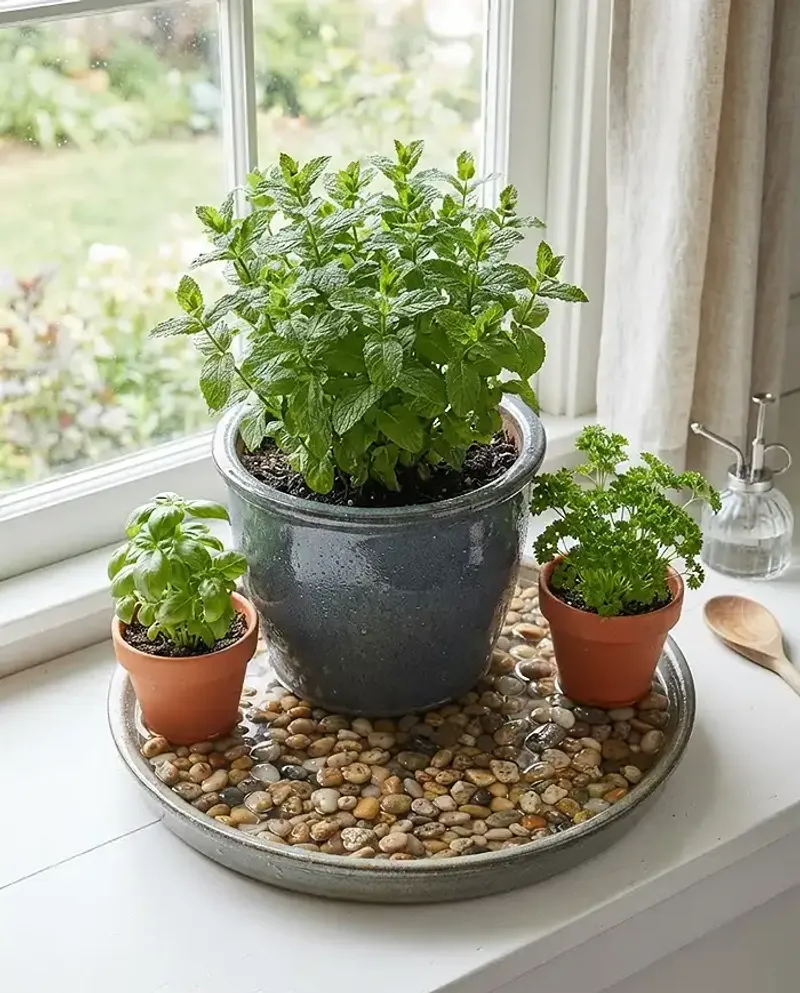
To raise humidity near the plant, a pebble tray can help. Set the pot on stones above a shallow layer of water so the pot base stays out of the water.
Illinois Extension suggests this, with the point that it does not mean the soil needs more water.
Low humidity and wet roots are separate problems, as Ask Extension discusses. A pebble tray may soften the air a little, but it is not a guaranteed fix.
Check light and temperature during winter
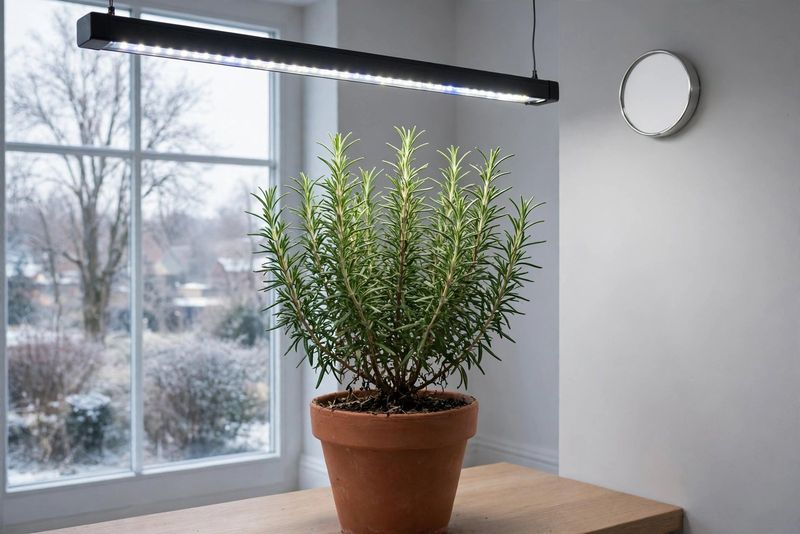
Rosemary likes sun, and winter days are short. A bright, sunny window is the best spot most homes offer.
If the plant sits in a dim corner, it may weaken and struggle regardless of how carefully you water.
Cool rooms can improve its odds. UNH Extension suggests about 45 to 55°F, which is guidance rather than a strict requirement.
Many homes run warmer, so a cooler window or unheated sunny room may be worth trying.
Illinois Extension also recommends a cool, sunny location and notes that rosemary is not reliably hardy in colder regions. A warm, dim spot tends to dry foliage and raise the risk of problems.
Adjusting light and temperature may help, but it will not guarantee recovery. Overwintering rosemary indoors can simply be hard, even for experienced gardeners.
Check drainage and roots if decline continues
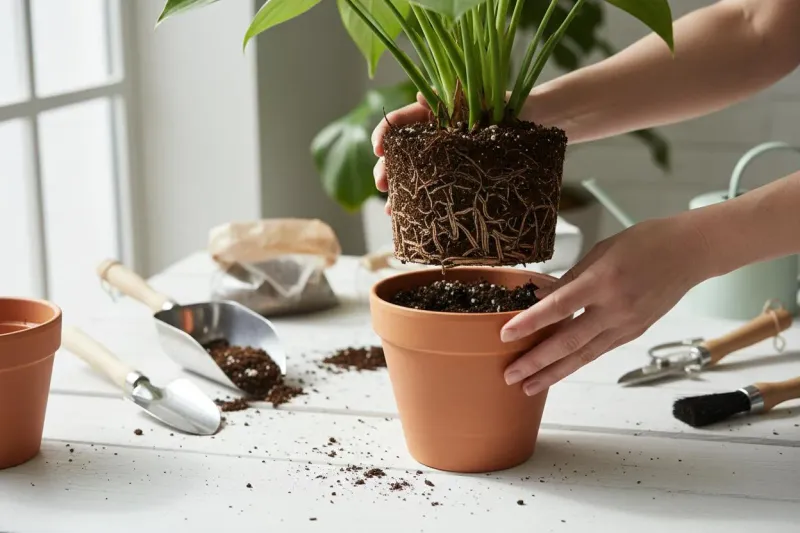
If the plant keeps slipping after you adjust watering, humidity, light, and temperature, look underneath. Tip the pot and confirm the holes are open and water runs through freely.
A mix that stays heavy and wet may need replacing with a well-drained one, as Penn State Extension recommends for rosemary.
When decline is steady, slide the plant out and look at the roots. Healthy roots are usually firm and light in color.
Dark, soft roots are a warning sign of root rot, according to University of Maryland Extension. Crispy foliage by itself cannot diagnose it, so let the roots tell the story.
Trim away mushy roots, repot into fresh mix in a pot with holes, and then check the mix before each watering. Results are not certain, and some plants will not make it through winter.
Rosemary rarely forgives guesswork, but it often rewards a closer look.