
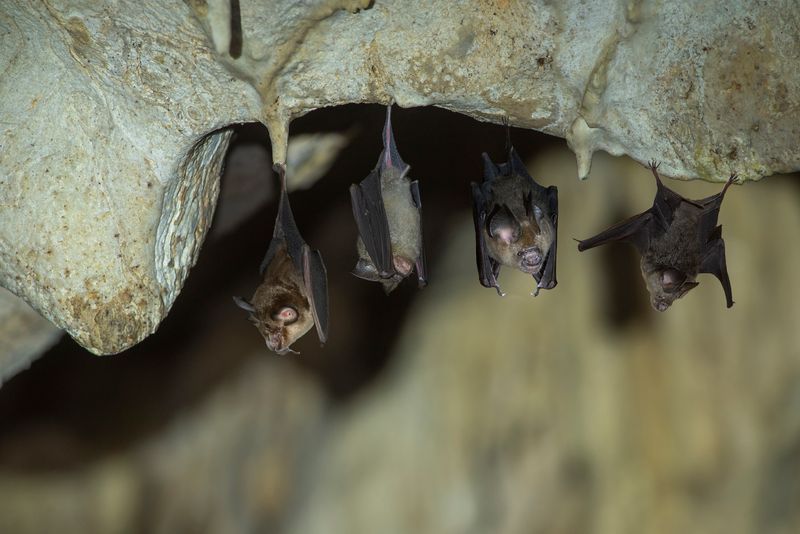
You flip on the porch light and within minutes a swirl of moths shows up. Bats are out there on summer nights too, but most of us never catch a glimpse of them.
Does one have anything to do with the other? Here is what scientists actually know, and what you can do about your outdoor lighting.
California’s bats hunt after dark
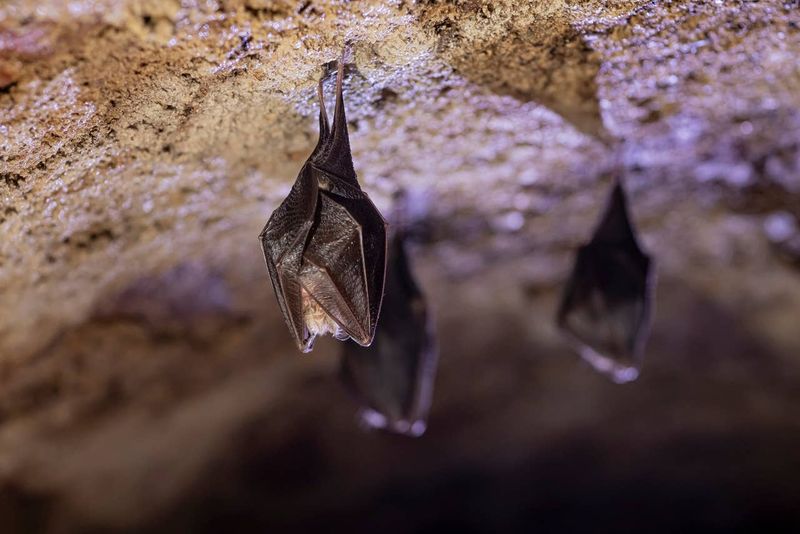
Step outside after sunset in most parts of California and bats may be working the air overhead, even if you never notice them. They are nocturnal, small, quick, and quiet to human ears, which is why so few homeowners ever see one.
According to UC Statewide IPM Program guidance, almost all of California’s 25 bat species are insectivores. They eat a variety of night-flying insects, and they can help keep some landscape pests in check.
That does not mean every bat visits every yard. Some species roost in rock crevices, trees, or buildings and forage over water, open fields, or woodland edges far from any house.
Others may pass over a neighborhood on the way somewhere else.
It also does not mean bats control every garden pest. Bats eat some insects, and many garden troublemakers are active by day or live in the soil, where bats never reach them.
So picture the scene at your porch. You can see the moths, but the bats, if any are around, are invisible to you.
Seeing one without the other does not prove they are connected. A swarm of moths tells you moths are present.
It does not tell you a bat is feeding on them, or has ever been near your light.
The rest of this article looks at what is known about the possible link, and what simple lighting habits make sense either way.
Moths are only part of the menu
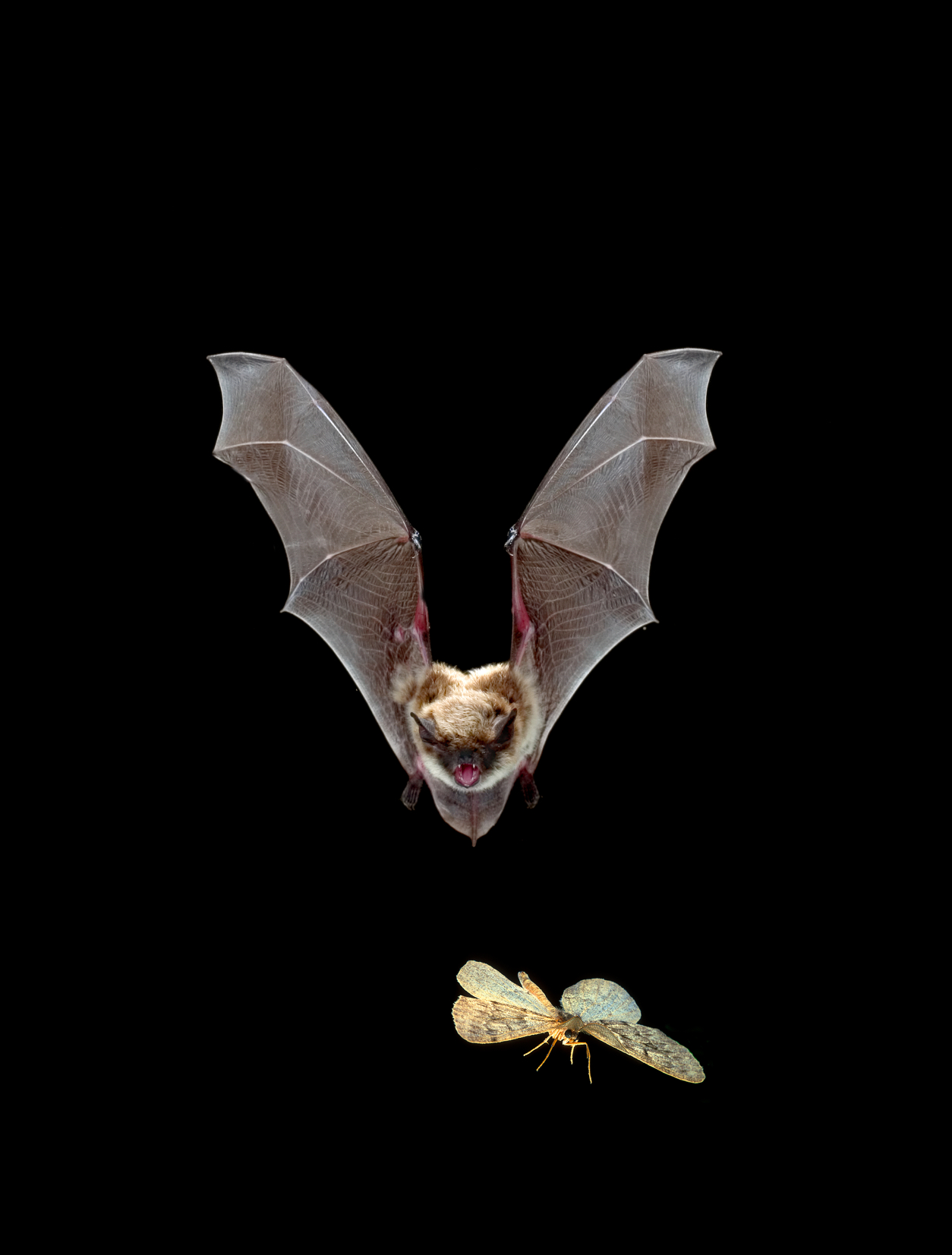
Moths do end up on the menu for some bats. They are far from the only item, though, and no single insect feeds all of California’s bats.
A good example comes from a study of Mexican free-tailed bats in the Northern Central Valley. The researchers recorded several kinds of prey in the diet of these bats, including moths, water boatmen, beetles, flies, midges, and plant bugs.
Notice how mixed that list is. Water boatmen live in ponds and slow water.
Midges and flies are tiny. Plant bugs are tied to vegetation.
A bat that eats all of these is clearly not waiting around for porch-light moths.
Keep the study in its place, too. It covers one species in one part of the state.
Other California bats are different sizes, hunt in different habitats, and may eat different insects, so the Central Valley results cannot be stretched to describe every bat in every yard.
Here is a practical way to think about it. If you have a pond, flowering shrubs, or an open lawn, your yard may offer a range of insects for any bat that happens by, and moths are one slice of that.
No single bulb or single insect is holding up the food supply.
The takeaway for a homeowner is reassuring: bats are flexible eaters, and your porch light is not the only thing on the menu.
What moths at a porch light can tell you
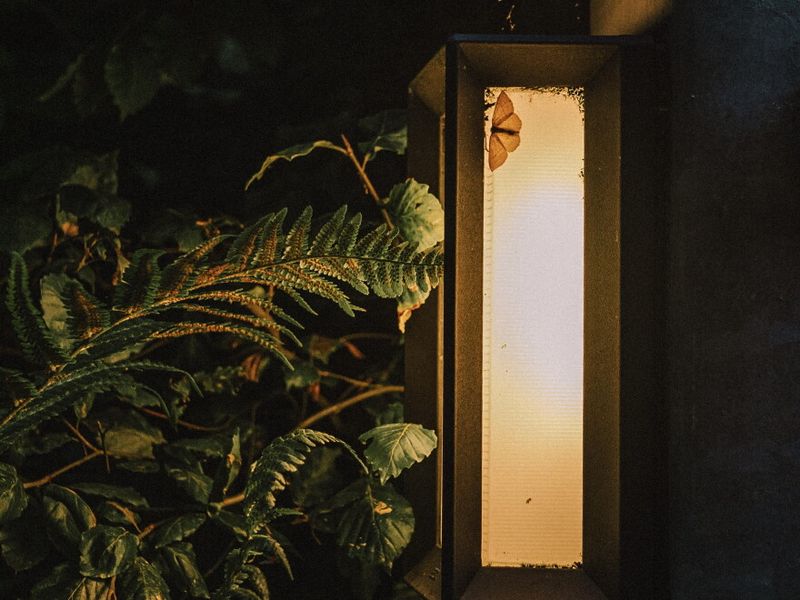
A cloud of moths around a bulb makes for a dramatic scene, but it is a limited clue. It tells you moths are active near your house tonight.
It does not show that bats are close, that they are feeding there, or that the light pulled them into your yard.
The Caltrans Bat Mitigation Guide treats feeding at lights as something some bats may do opportunistically. That is a possibility for certain species, not a dependable chain of events at any one home.
It also helps to separate flying toward a light from feeding on it. Moths are not eating the light.
Adult moths commonly feed on flower nectar, and a review of light pollution and moths reports that artificial light can disrupt that feeding behavior.
Why moths fly toward lights at all is still unresolved. Responses vary by species and by lamp type, so two porches with different bulbs can draw very different crowds.
If you want a simple diagnostic, look at what you see rather than what you assume. Lots of moths means moths are around.
A bat swooping through the glow would be a separate observation, and even that would only show one bat passing by.
You can enjoy the moth show without reading too much into it, and without worrying that you have done something wrong by having a light on.
Artificial light affects bats in different ways
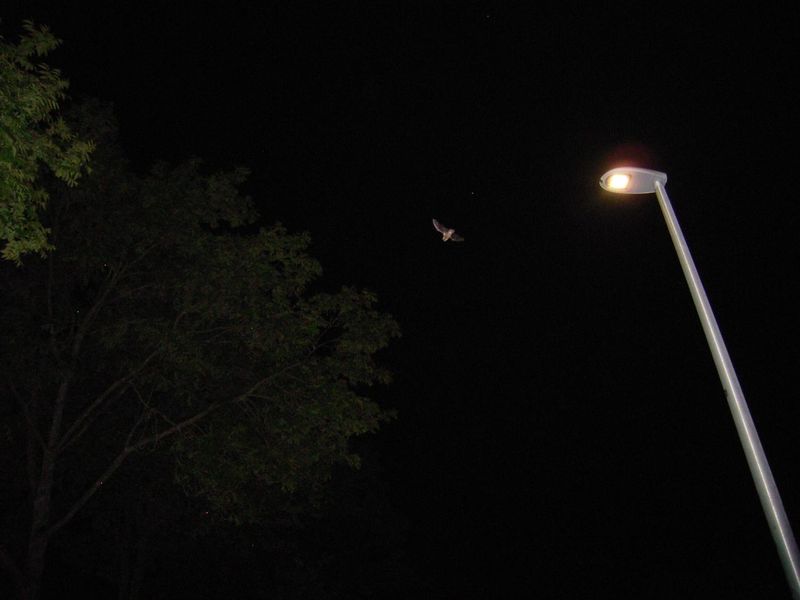
Bats do not all react to light the same way. Some may hunt insects that gather around lights, while other species avoid lit areas or show little change in behavior.
That range is described in the Caltrans Bat Mitigation Guide, which is why lighting around roosts and bat habitat gets careful attention.
One well-known test comes from a field experiment with six bat species. Some species ate more moths at lit sites, while others showed little change.
One species ate more beetles.
The authors point out that bat and insect interactions are more nuanced than the simple idea that moth eating goes up around lights. In other words, even in the study, light did not produce one tidy result.
The experiment took place in Missouri. That matters, because it cannot tell us what happens at California porches, where the bat species, insects, and landscapes are different.
So the idea of light leading to moths and then to bats does not hold up as a rule. It may describe what a few bats do in some places.
It does not describe your yard on any given night.
For a homeowner, the honest picture is that bats may use, avoid, or ignore lit areas, and you cannot tell which from the porch.
Use less light without expecting a bat boost
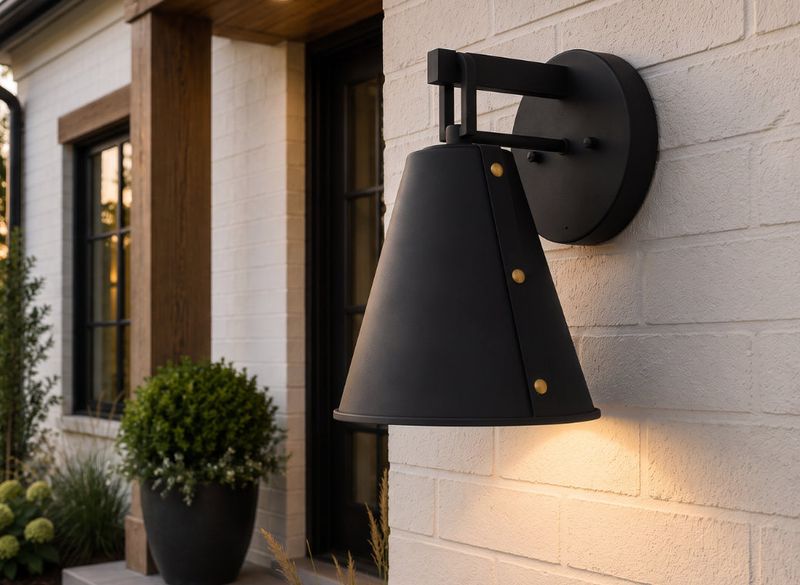
Cutting back on outdoor lighting is a sensible habit. Just treat it as a way to reduce light pollution, not as a trick to bring in bats or build up moth numbers.
No single change is likely to measurably shift local wildlife populations.
The simplest step is to switch off lights you are not using. Nobody on the patio at 11 p.m.?
That fixture can go dark.
When you do want light, DarkSky International’s lighting principles offer a handy checklist.
- Aim light only where it is needed, such as steps and doorways, using shields that point it downward.
- Use the lowest effective brightness.
- Control when it is on with a timer or motion detector.
- Choose warmer-colored light where possible.
Try one fixture at a time. A motion sensor on the side-yard light and a warm, shielded bulb at the front door cover most needs with far less glow.
These steps are about less unnecessary light, and they come with no wildlife promises. A dimmer porch may mean fewer moths at the bulb, or it may not, and either way it tells you nothing about whether bats are feeding nearby.
Moths at a bulb simply do not prove bats are around, so keep the lighting decisions practical and let the wildlife surprise you.
Keep your distance from bats
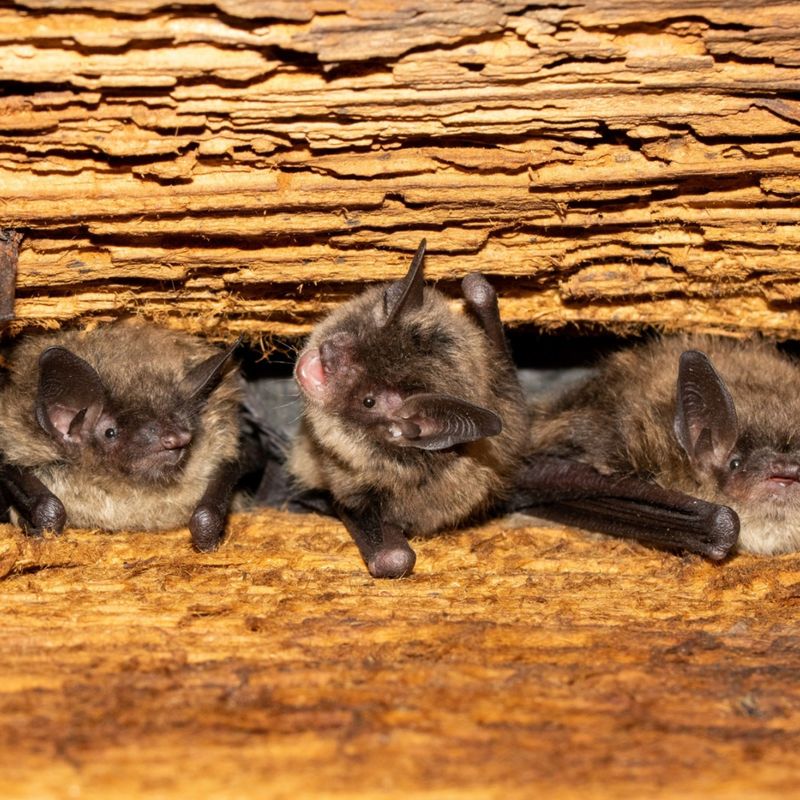
Seeing a bat up close can be exciting, but the safest move is to admire it from a distance. The California Department of Fish and Wildlife advises against handling bats, whether they are alive or dead.
If a person or pet is bitten, scratched, or exposed to bat saliva, contact your local health department immediately. CDFW’s bat guidance gives this direction, and it is the step to take rather than waiting to see what happens.
Keep children and pets away from any bat you find on the ground or inside a building. Do not pick it up, even with gloves, and let the health department tell you what to do next.
A bat flitting through the yard at dusk is normal behavior and nothing to fear. Just give it room.