
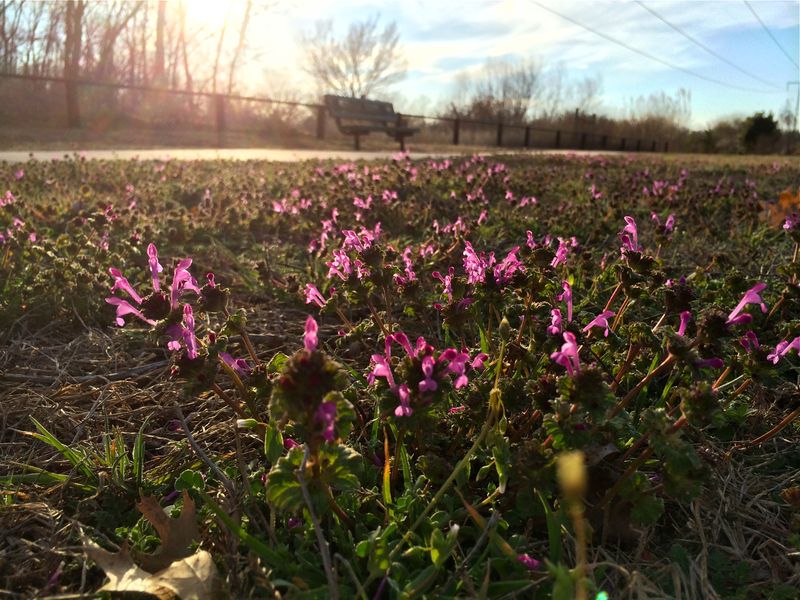
Cool nights can bring new green patches to a lawn that is otherwise going tan. In Central Texas, two winter weeds called henbit and chickweed are common reasons for that surprise.
Not every yard has them, but the cool season is when they are most likely to show up. Knowing what is growing and what has not sprouted yet helps you pick a useful next step without hurting your grass.
Why henbit and chickweed may appear as Central Texas lawns cool
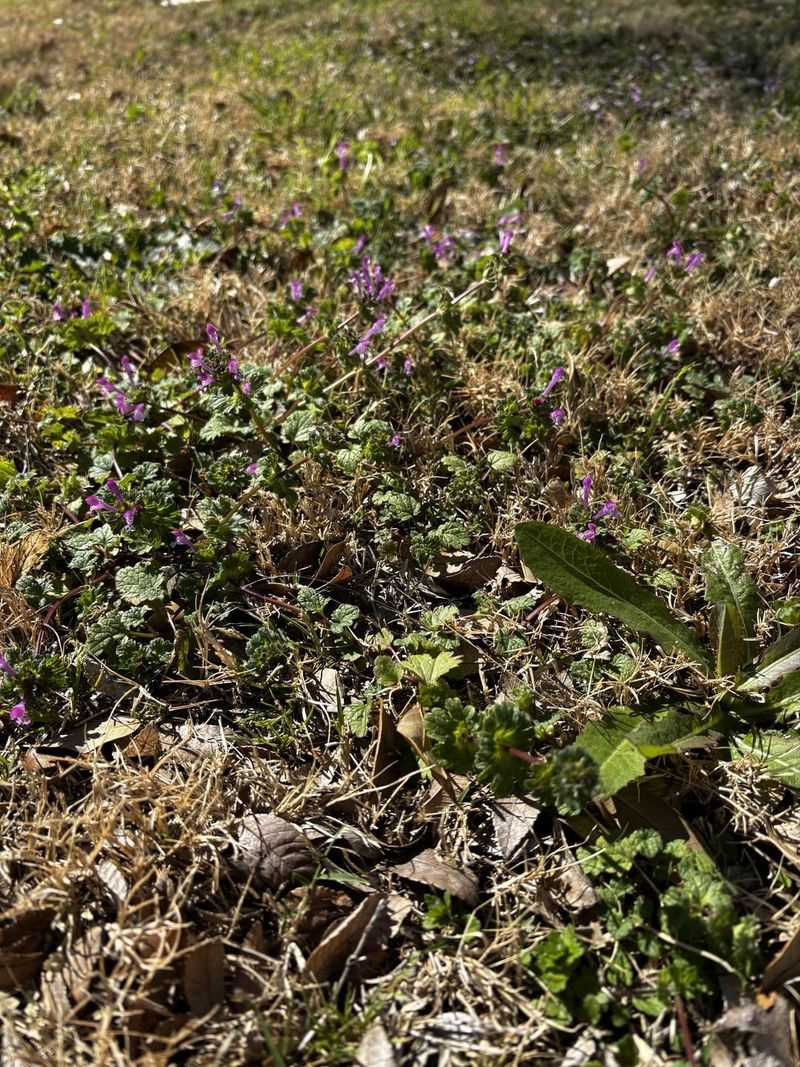
Late fall is when winter annual weeds get their start. These plants sprout as soils cool, grow slowly through the chilly months, then finish their life cycle when warm weather returns.
That pattern makes henbit and chickweed seasonally plausible in Central Texas lawns right now, but it does not mean every yard has either one.
Henbit is a good example. Texas A&M AgriLife Extension describes it as a winter annual that germinates in late summer or early fall, grows through fall and winter, then flowers, sets seed, and dies in spring.
A dormant lawn leaves open space and sunlight for seedlings, which is part of why they stand out against tan turf.
Chickweed follows a similar seasonal rhythm. Utah State Extension reports that common chickweed can germinate in fall and again in early spring, and that it can flower and set seed quickly after it sprouts.
The same page is a reminder that the name covers more than one plant, which matters when you choose a treatment.
Whether your yard has any of this depends on your seed bank, your turf density, and your weather this year. A walk across the lawn tells you more than a calendar does.
If you see little or nothing, you may still be in a window where prevention is a topic worth considering, based on Texas A&M weed science guidance.
Spring visibility is also not the same as a permanent takeover. These weeds are annuals, and Utah State turf pest guidance notes that henbit also completes its cycle and dies back.
The seeds they leave behind are what can bring them back next season.
Confirm the weed before choosing a treatment
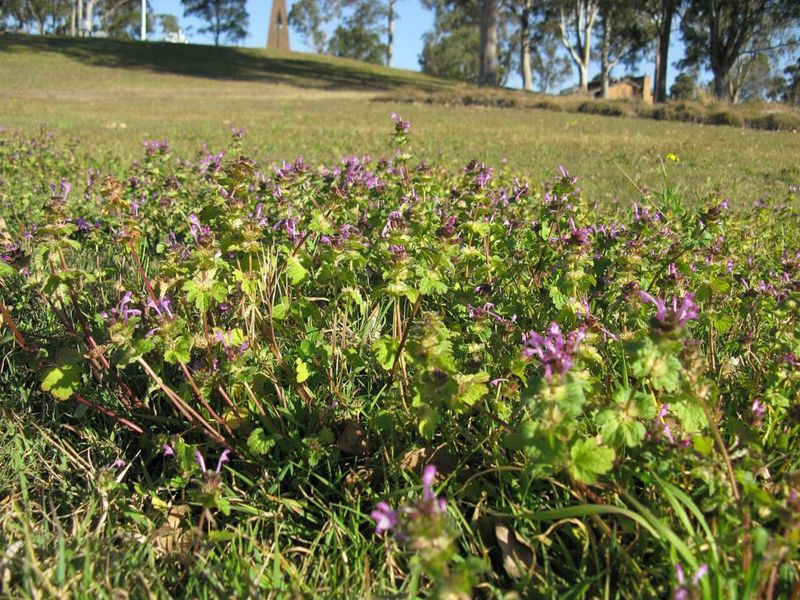
Before you buy anything, find out what is actually growing. Green patches in a winter lawn could be henbit, chickweed, or something else entirely.
A treatment that suits one weed may do nothing for another.
The name “chickweed” is a good reason to slow down. Utah State Extension covers common chickweed specifically, and the common name can refer to different plants.
So “chickweed” on a product label or a garden forum may not match the plant in your yard.
For henbit, Utah State’s turf pest guide is one reference you can compare against. Rather than relying on a quick guess, use a trusted extension reference or send a sample or photo to your county Extension office.
A simple next step is to note where the weeds are, how widespread they are, and what kind of grass surrounds them. Those details will matter when you read a product label.
If you cannot name the plant with confidence, hold off on spraying until you can.
A pre-emergent prevents new seedlings, not visible weeds
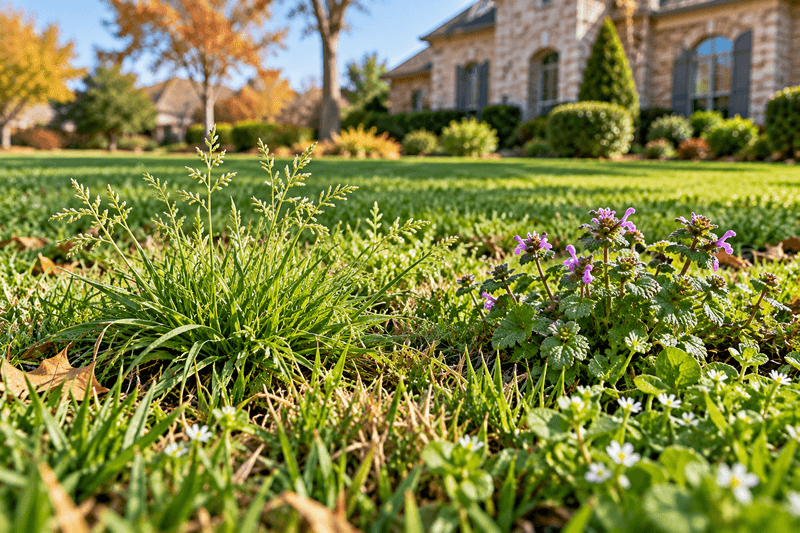
Picture a pre-emergent as a barrier that works on seeds, not on plants. It targets susceptible weed seeds that have not yet germinated and helps keep them from establishing.
Weeds that are already up are a different job.
That distinction comes straight from Texas A&M’s fall pre-emergence guidance, which focuses on timing and product selection for winter annual weeds in warm-season turf. A late-fall application can still make sense for target weeds that have not sprouted, as long as soil timing and the label are right.
If your lawn already has visible henbit or chickweed, a pre-emergent will not clear it. A product that also claims post-emergent activity can only be counted on for that if its label says so.
Texas A&M’s bermudagrass calendar treats pre-emergent timing as something that happens ahead of germination.
Think of it as a question with two parts. Are there seeds that have not sprouted yet, and are there plants already up?
Many yards have a bit of both, and each part needs its own answer.
Use soil temperature and local conditions to time prevention
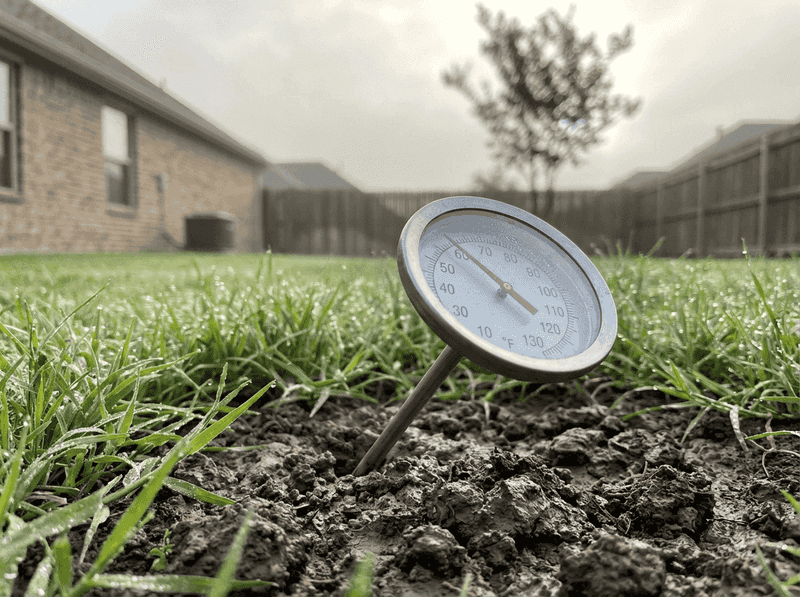
Calendars help, but soil does the real timing. Texas A&M’s general fall guide points to about 70°F at a 2-inch soil depth as the trigger for applying a pre-emergent.
A cheap soil thermometer can give you that number for your own yard.
The broad pattern shifts across the state. Texas A&M’s October guidance places the window in late September through October in North Texas, and it can extend into November farther south.
Central Texas sits between those areas, so your exact timing depends on where you live and how the season has gone.
A Texas A&M guide hosted by Collin County Master Gardeners also notes that timing varies by region and by year. A warm fall can push the window later, and a cold snap can move it earlier.
Treat 70°F and November as guides, not a deadline for every yard. Weed emergence, recent weather, and the directions on your product all affect the right date.
If weeds are already up, the window for prevention on those plants has passed.
For emerged weeds, remove small patches or consider a labeled post-emergent

Once the weeds are up, you have two practical choices. You can pull or dig out small patches, or you can look at a selective post-emergent broadleaf product.
Which one fits depends on how much is growing and what grass you have.
Hand removal works best on a small scale, and timing matters. Utah State Extension notes that chickweed can flower and set seed quickly, so pulling plants before they set seed helps limit what is left in the soil.
Henbit follows a similar path, as Utah State’s turf pest guide describes.
For larger areas, Texas A&M’s lawn calendar describes selective post-emergent broadleaf herbicides as an option. Use one only if its label lists both your weed and your turf type.
Smaller is easier. Texas A&M guidance says emerged weeds can be harder and slower to control as they mature.
Acting early gives you better odds, though no method guarantees a clean lawn.
Match the product to the weed, the grass, and the label
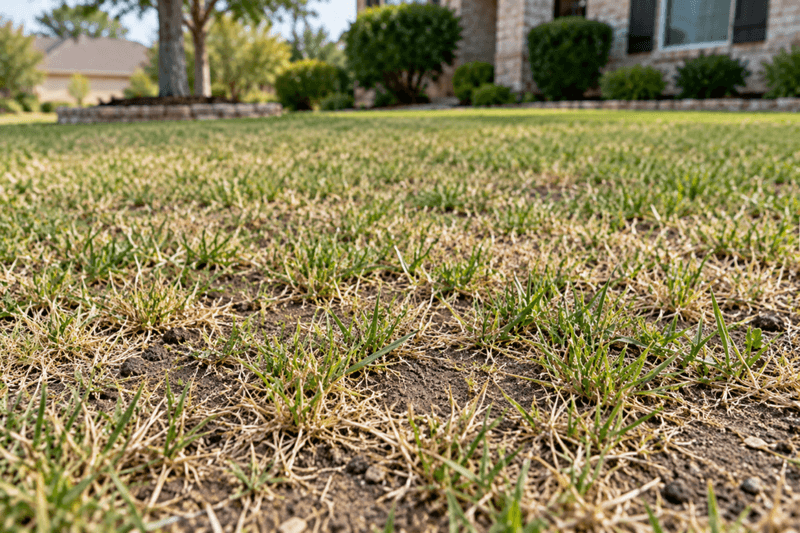
Two lawns can need very different products. The weed you are targeting and the grass you are growing both shape the choice.
Texas A&M’s fall guidance cautions that not every product is labeled for every turfgrass, and newly seeded, sprigged, or sodded turf can be more sensitive.
Grass type can change the answer. St. Augustinegrass, for instance, is less tolerant of 2,4-D than some other turfgrasses, according to Texas A&M’s turfgrass control guide.
A dormant lawn is not automatically safe from herbicide injury either.
The label is your final authority. The EPA explains that pesticide labels are legally enforceable directions for safe and lawful use.
Check which turf and weeds are listed, plus rates, timing, watering needs, and protective equipment.
Be careful with weed-and-feed. It adds fertilizer, and nitrogen on bermudagrass that is dormant or heading into dormancy is a timing problem, as the Texas A&M preemergence guide and the bermudagrass calendar both suggest.
A product with no fertilizer may fit a late-fall plan better.
Build a denser lawn and set realistic expectations for spring
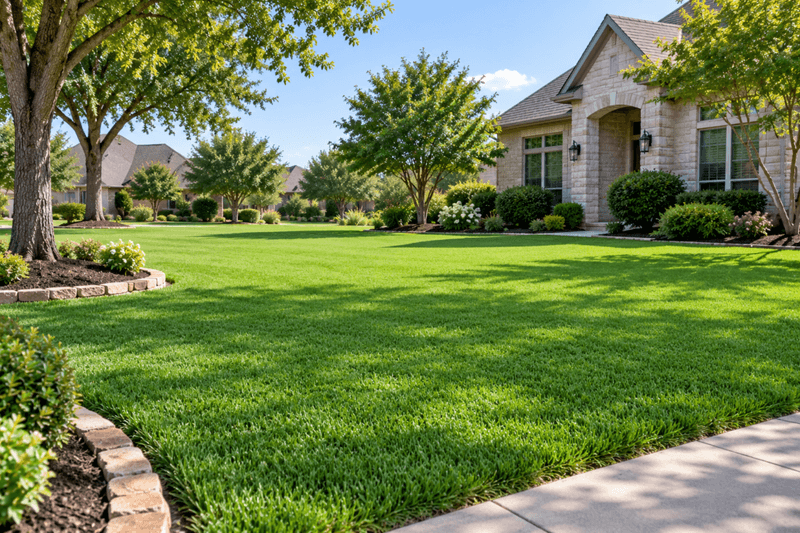
The best long-term defense is thick turf. Texas A&M AgriLife Extension points to turf density and sound lawn care as protection against weed infestations.
Proper mowing, watering, and fertilizing at the right time all help grass fill in the gaps that weeds like to use.
Spring brings a natural shift. Utah State’s turf guidance describes henbit flowering and dying as the season warms, and Utah State’s chickweed page notes how quickly chickweed can set seed.
Those seeds can feed next year’s weeds.
So a good plan for this season is modest. Identify the weed, choose prevention or removal based on what is up, and read every label.
That can reduce weed pressure, but it cannot promise a weed-free lawn by March.
A tan lawn in November and a green one in May are the same yard, and the grass is usually the better long-term weed control.