
California’s first real winter storm does more than wash the dust off your patio. It carries whatever sits on your soil straight down to the roots of your fruit trees.
Spread a layer of compost in October or November, and those rains turn it into a slow, steady meal that feeds soil life all winter. Here are eight backyard fruit trees that tend to show the difference come spring bloom and summer harvest.
1. Meyer Lemon
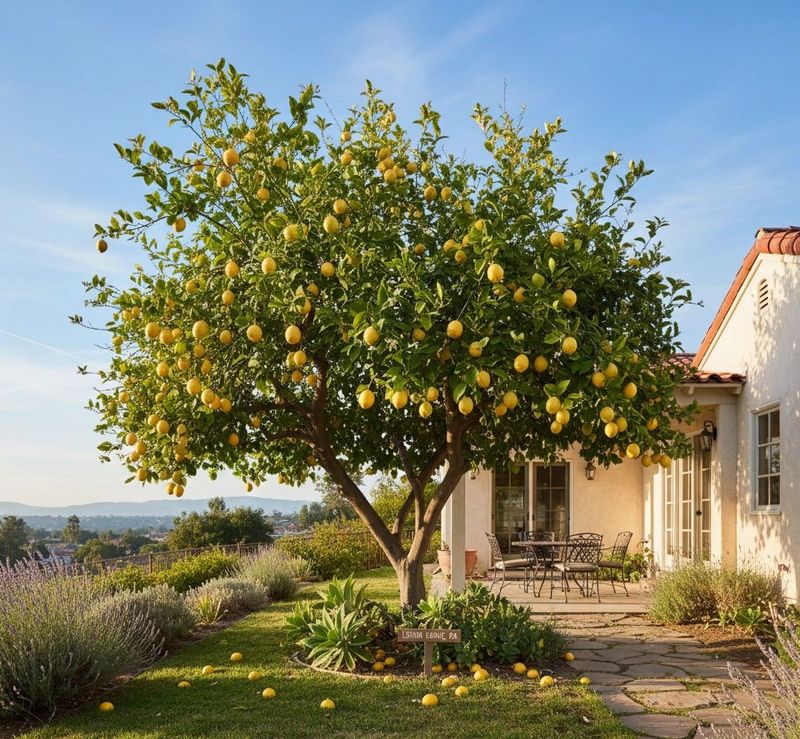
Ask any Californian with a Meyer lemon and they will tell you it never really stops producing. That nonstop fruiting is exactly why it gets hungry.
Citrus roots sit shallow, mostly in the top foot or two of soil, so a fall compost layer lands right where they feed.
Spread about two to three inches of finished compost from a few inches off the trunk out past the drip line. Keep it away from the bark, since citrus is prone to collar rot when wet material piles against the trunk.
Winter rains then carry nutrients and help build the spongy soil that holds moisture into a dry summer.
Compost alone usually will not cover all of a lemon’s nitrogen needs, so many growers still add a citrus fertilizer in late winter. Think of the compost as the foundation and the fertilizer as the top-up.
2. Fuyu Persimmon
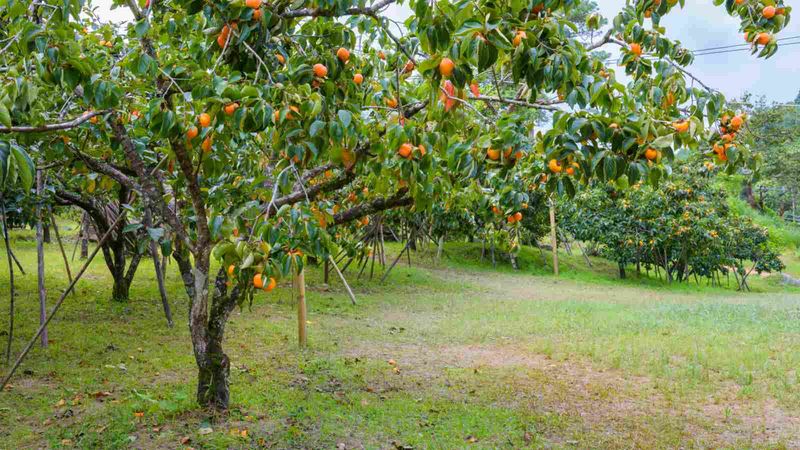
Few trees put on a fall show like a Fuyu persimmon, glowing orange with fruit just as its leaves blaze and drop. Right after harvest is a natural moment to tuck in a compost blanket.
The tree is heading into dormancy, and the soil has months to absorb what you give it.
Persimmons are fairly low-maintenance and often get by on little fertilizer. Too much nitrogen can actually trigger fruit drop.
That makes gentle, slow-release compost a better match than a heavy feed.
Let the fallen leaves stay under the compost if they look healthy. They break down alongside it and invite earthworms and beneficial fungi to do the mixing for you.
3. Avocado
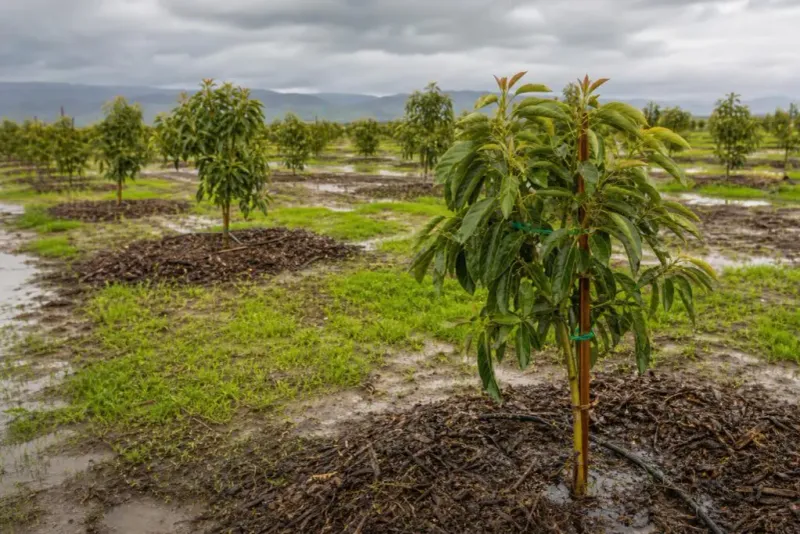
Avocados are famously fussy about their feet. Their roots need air, hate soggy clay, and are vulnerable to Phytophthora root rot, a disease that thrives in poorly drained soil.
Here is where compost earns its keep.
A coarse layer of compost topped with wood chips mimics the leafy forest floor avocados evolved in. Research from University of California advisors has long pointed to thick organic mulches as one way to help suppress root rot and improve drainage.
Fall timing means the layer is in place before the heavy rains test your soil.
Leave the tree’s own fallen leaves in place too. Just pull everything back a few inches from the trunk so the bark stays dry.
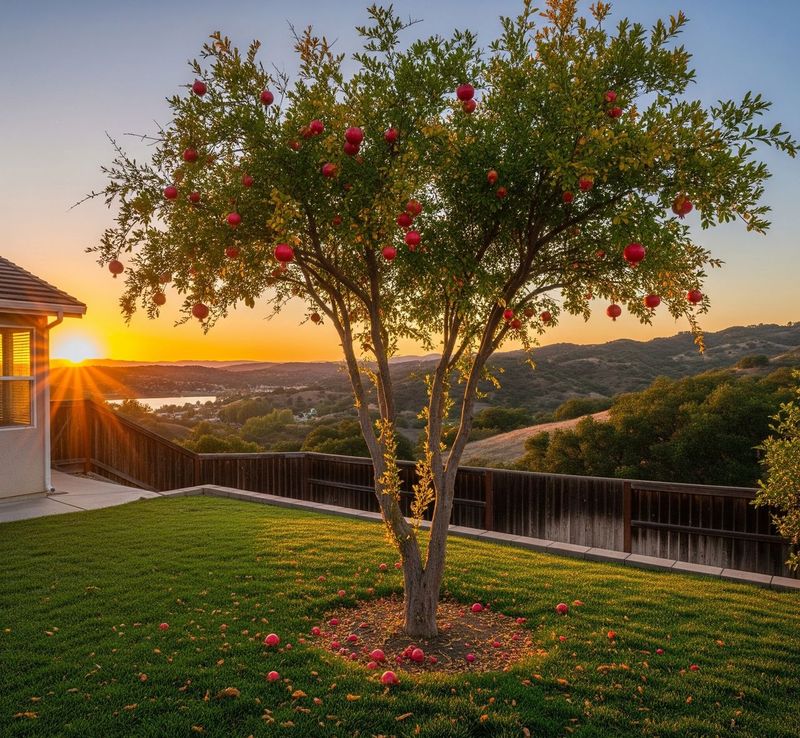
4. Pomegranate
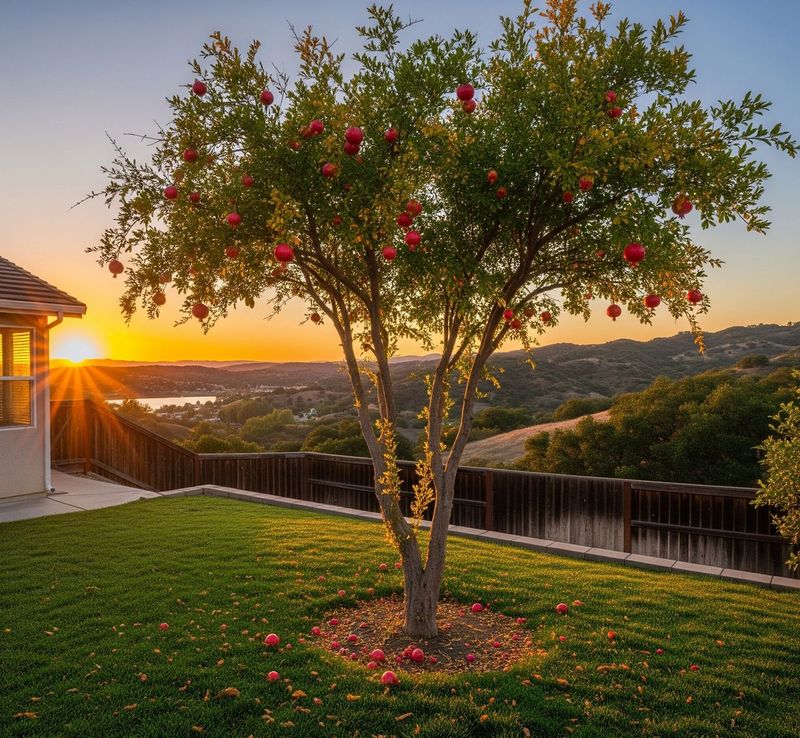
Tough as nails and right at home in Fresno heat, the pomegranate rarely asks for much. So why bother with compost?
Because tough trees still split fruit when summer watering swings between bone-dry and soaked.
Better soil structure holds moisture more evenly, which may reduce that frustrating cracking. A modest one to two inch layer in fall is plenty for this drought-tolerant grower.
Inland gardeners with hard, compacted ground often see the biggest change over a few seasons.
Fun bit of history: Spanish missionaries carried pomegranates into California in the 1700s, and some old mission plantings still fruit today.
5. Fig
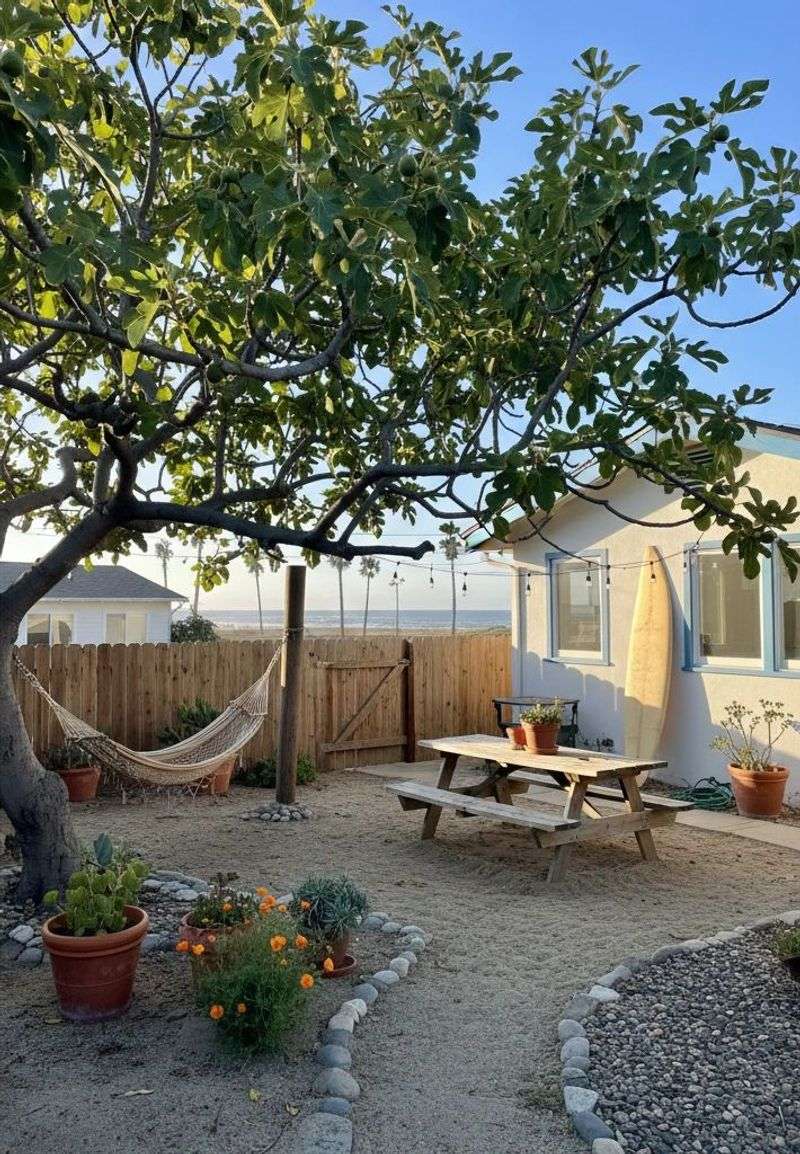
Figs have roots that wander far beyond the canopy, sometimes two or three times its width. That habit changes how you compost.
Instead of a tight ring, spread it broadly where those roots actually roam.
Black Mission and Brown Turkey figs do best with moderate feeding. Overdo the nitrogen and you get lush leaves with fewer fruit.
A fall compost layer feeds the soil without pushing that leafy growth, and winter rains settle it in while the tree sleeps.
Bonus: improved soil helps figs handle summer water limits, a real perk with local restrictions in mind.
6. Apricot
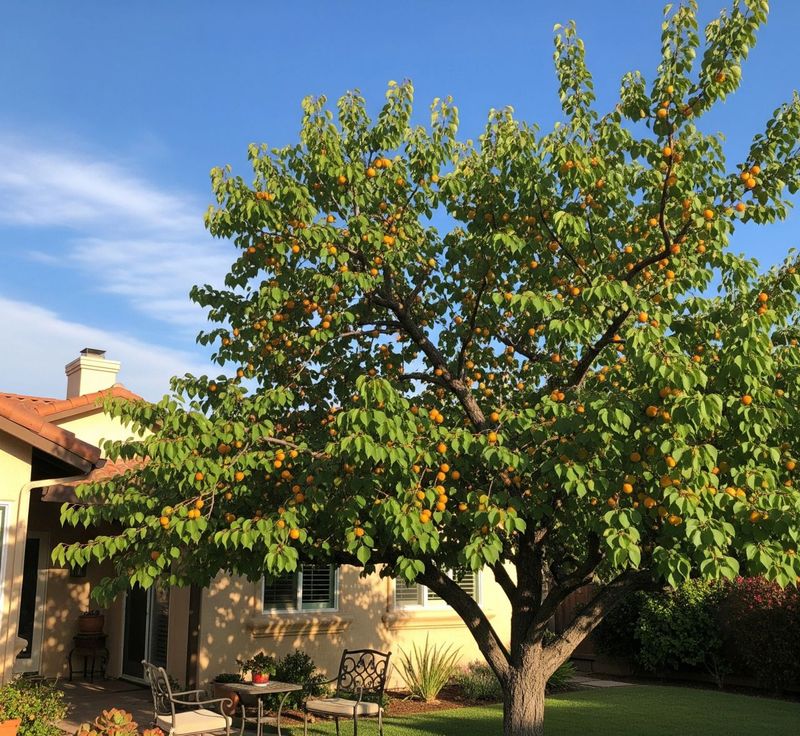
Long before the Santa Clara Valley was Silicon Valley, it was blanketed in apricot orchards. Backyard Blenheims and Royals are a sweet link to that past, and they bloom early, often in February.
Whatever soil prep happens in fall sets up that early burst.
Apricots dislike wet feet and can suffer from crown problems in heavy soil. Compost on the surface, never mounded against the trunk, improves drainage over time.
Add it after leaves drop and before the big storms roll in.
Healthier soil also supports the native bees that work apricot blossoms on chilly late-winter days.
7. Low-Chill Apple
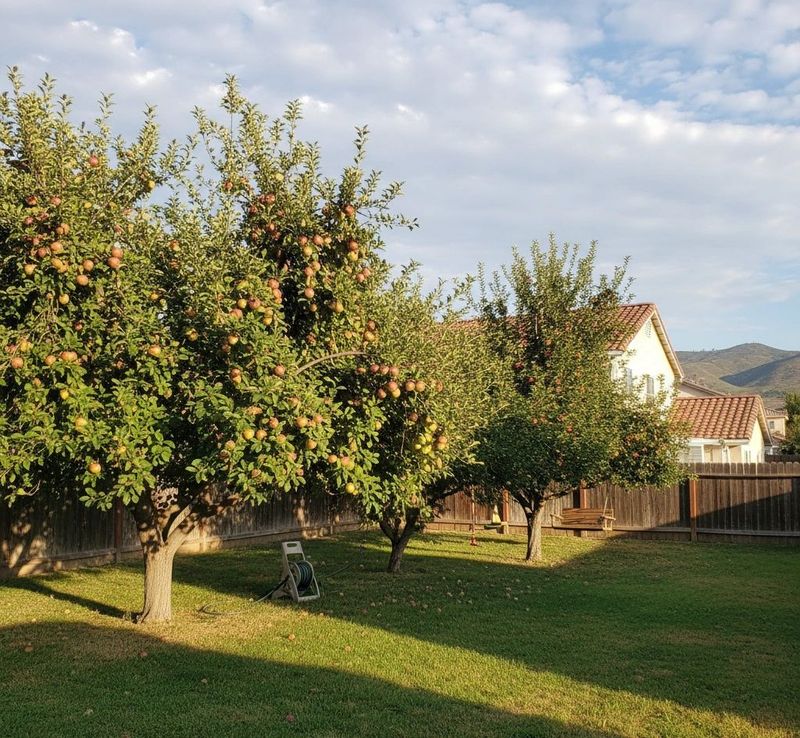
Yes, you can grow apples in Southern California. Low-chill varieties like Anna, Dorsett Golden, and Fuji have made it possible even in mild coastal towns.
They just need a little extra help building strong roots.
Apples feed heavily during spring fruit set. A fall compost layer gives soil microbes the winter to break it down so nutrients are ready when the tree wakes up.
Cleaning up fallen fruit first may also cut down on codling moth and disease hiding under the tree.
Pull compost back from any drip lines so emitters stay visible and clog-free.
8. Mandarin
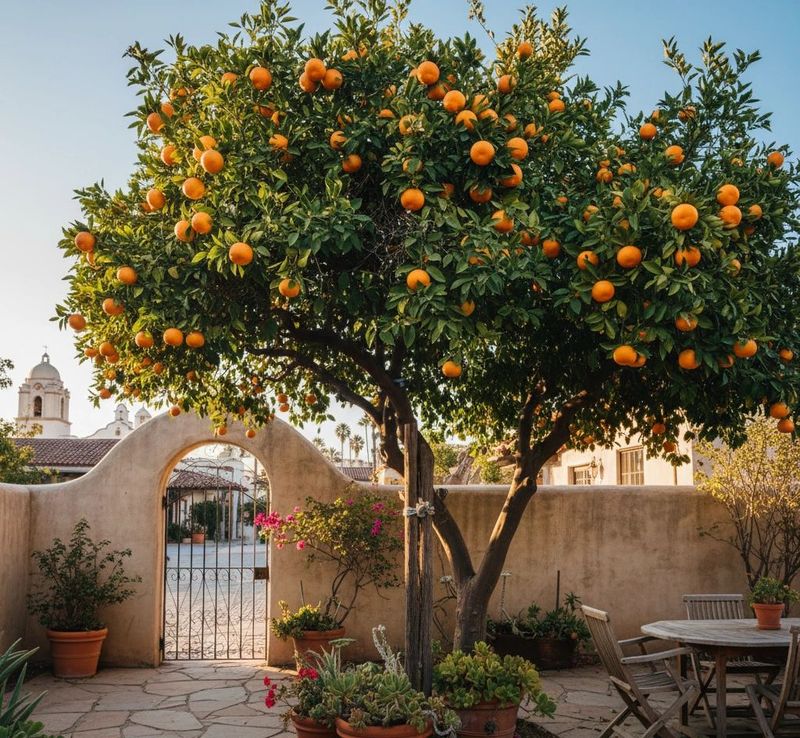
Nothing beats peeling a Satsuma picked straight off your own tree in December. Mandarins ripen right as the rains begin, which makes fall compost timing especially handy.
You are feeding the tree while it finishes its crop.
Like lemons, mandarins have shallow feeder roots, so avoid digging compost in. Just lay it on top and let worms work it down.
A layer of wood chips on top helps lock in moisture through the long dry season.
Healthy, mulched soil can also mean fewer stressed trees, and less stress may make citrus less attractive to pests.