
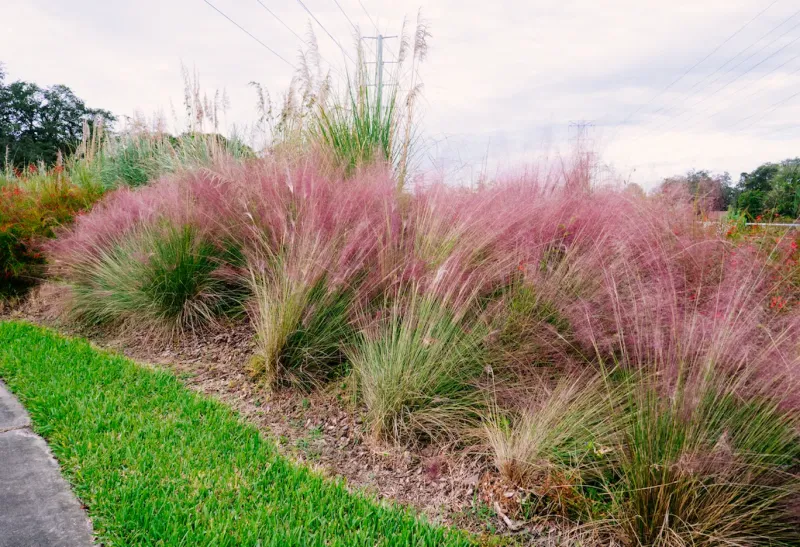
Gulf muhly is a strong pick for turning a sunny Texas slope pink in fall, as long as the ground drains well. Its airy pink-to-purple plumes look like a low cloud drifting over the hillside.
Once the plants settle in, they handle heat and dry spells with little fuss. The catch is that this grass grows in clumps, so a bare slope takes a group of plants and some patience.
What Gulf muhly can bring to a sunny slope
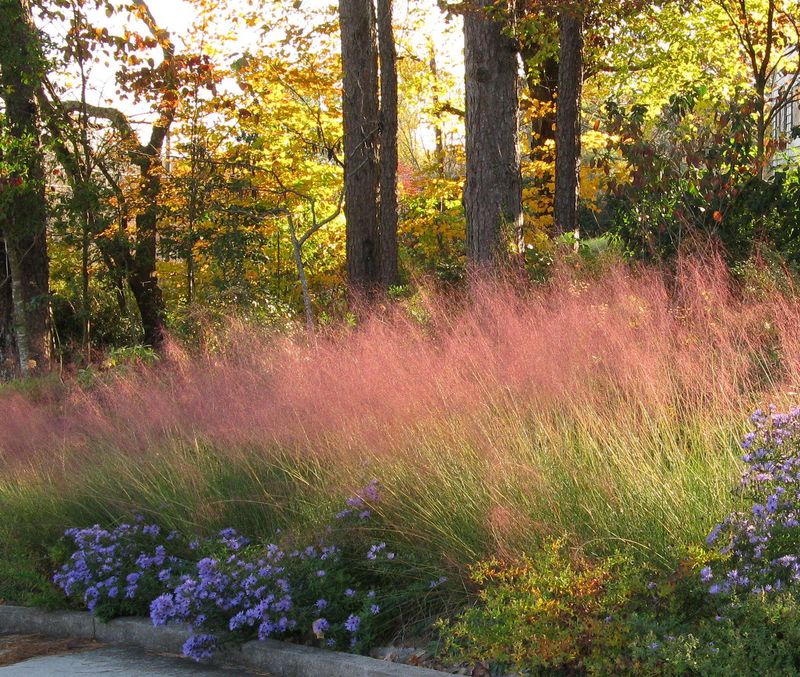
Picture a sunny slope in October, covered in soft pink plumes that move with every breeze. That is the appeal of Gulf muhly, known botanically as Muhlenbergia capillaris.
You will also see it sold as pink muhly or hairawn muhly, and North Carolina State Extension lists those same names for the plant.
Established plants tolerate heat and drought, which suits Texas summers. On a sunny slope that drains adequately, it is a strong candidate for fall color.
That is not the same as calling it the easiest grass in the state, because the sources do not compare it against every other Texas grass.
Be careful with the phrase Texas native. Austin’s plant guide identifies it as a Texas native but excludes the Edwards Plateau and Blackland Prairie.
Hill Country and Central Texas gardeners should not assume it belongs naturally on every local hillside.
One more expectation to set early: this grass grows in clumps. LSU AgCenter recommends it for mass plantings, and that is the key to a fuller display.
A handful of plants will not blanket a bare hillside quickly, so plan for a group and for time.
Sun and drainage matter more than the clay label
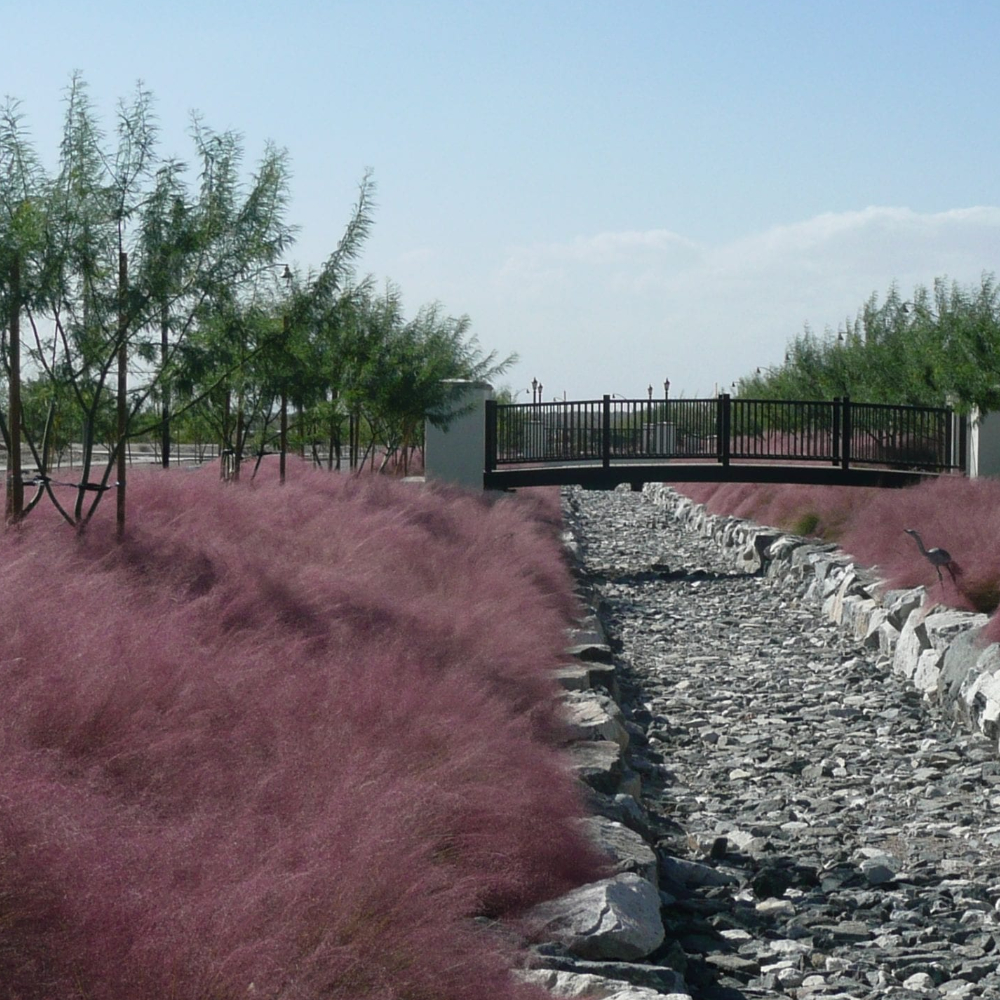
Walk your slope on a clear day and note how many hours of direct sun it gets. Gulf muhly puts on its strongest flower show in full sun.
It can tolerate some shade, but LSU AgCenter says shade reduces bloom quality, so a shady corner will give you a thinner show.
Clay is where Texas gardeners worry most. The plant tolerates clay and a broad range of soil types, which is good news in Houston and DFW.
The condition is drainage, because it should not sit in waterlogged ground.
Clay can work when water moves through it instead of pooling. That is different from standing or persistently soggy soil, which is a poor match.
Not every clay site qualifies just because the plant accepts clay in general.
Here is a simple check. After a good rain, visit the slope and look for puddles or soggy patches a day later.
You can also dig a small hole, fill it with water, and see whether it empties in a reasonable time. Low spots at the base of a slope are the usual trouble, so keep the plants on the upper and middle sections if water collects below.
If the site gets plenty of sun and sheds water rather than holding it, it passes the test. Details on soil tolerance are also covered in this NC State plant profile.
A bare slope needs a mass planting, not one clump
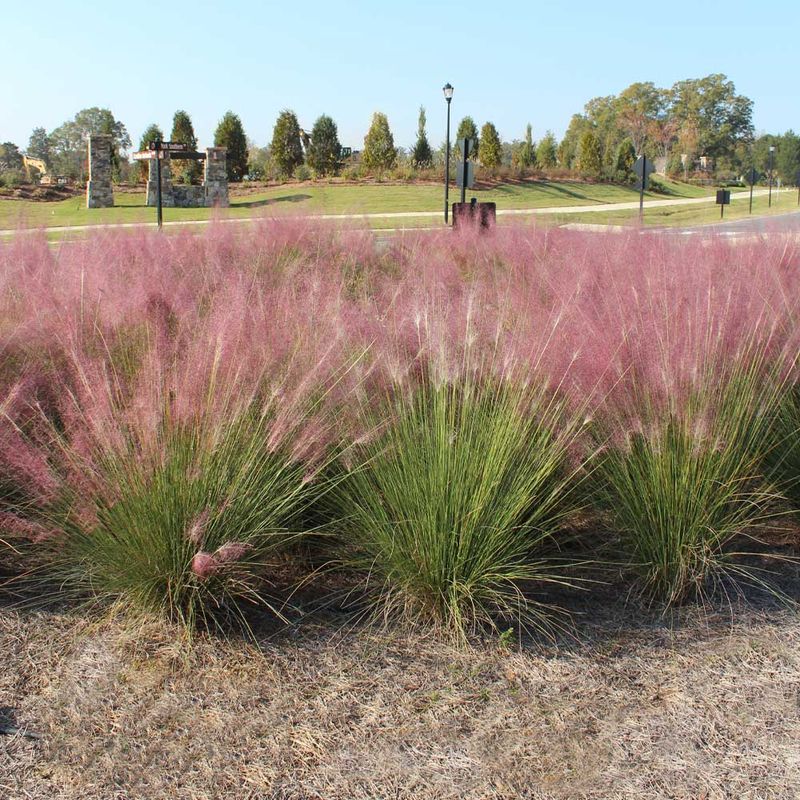
Think of each Gulf muhly as a fountain-shaped clump rather than a spreading mat. USDA’s fact sheet describes it as clumping and not spreading by stolons or rhizomes.
Each plant stays where you put it, so the gaps between plants will not fill on their own.
Mature clumps are typically about 2 to 4 feet tall and wide. Use that size to plan your layout, since small nursery pots look lonely at first.
Published spacing varies: LSU AgCenter suggests about 2 feet in mass plantings, while UF/IFAS gives 24 to 36 inches.
Closer spacing fills in sooner, and wider spacing leaves more room and costs less. Staggering the plants in rows across the slope, rather than lining them up, helps the clumps blend into one drift as they grow.
Extension sources recommend mass planting, and LSU AgCenter lists erosion-control use. Still, mass planting builds a fuller display over time.
It is not an instant carpet, and it does not give immediate erosion control. If your slope is actively washing out, pair the plants with other measures and give the roots time to develop.
Water new plants before relying on drought tolerance
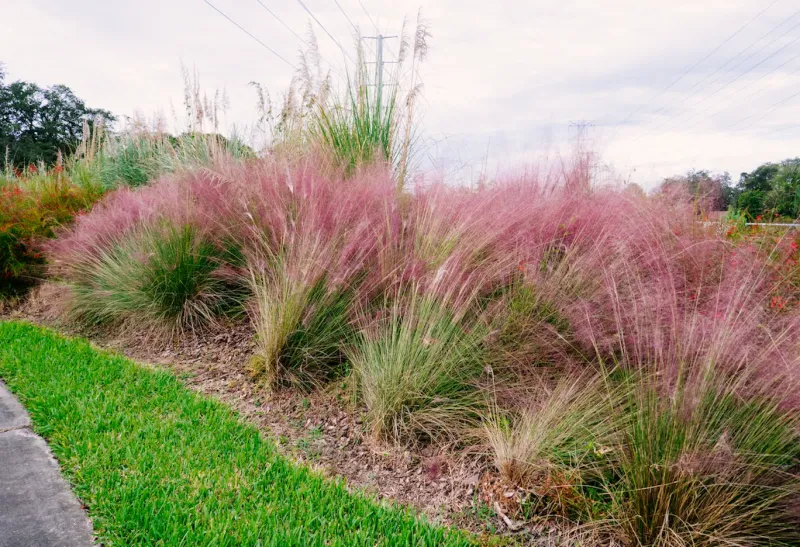
Drought tolerance is a trait of established plants. A newly planted muhly has not grown the root system that earns that reputation, so leaving it dry and hoping for the best sets it back.
Treat the first period after planting as a time when you are in charge of the water.
Texas heat makes this more pressing on a slope, where water tends to run off and soil can dry quickly. Check new plants regularly and water when the soil around them feels dry.
How often and how much depends on your soil, the season, and the weather, so watch the plants and the ground rather than following a fixed calendar.
One piece of published advice is easy to misread. USDA’s fact sheet says to keep the soil moist for seed establishment.
That guidance applies to starting the grass from seed. It is not a watering schedule for container plants or any other planting method.
Moist does not mean soggy, and this ties back to drainage. Water that sits around the roots causes trouble, even for a grass that tolerates clay.
Once the plants are established and growing well, you can lean on their drought tolerance. Until then, think of watering as part of the planting job.
The pink haze arrives in late summer or fall
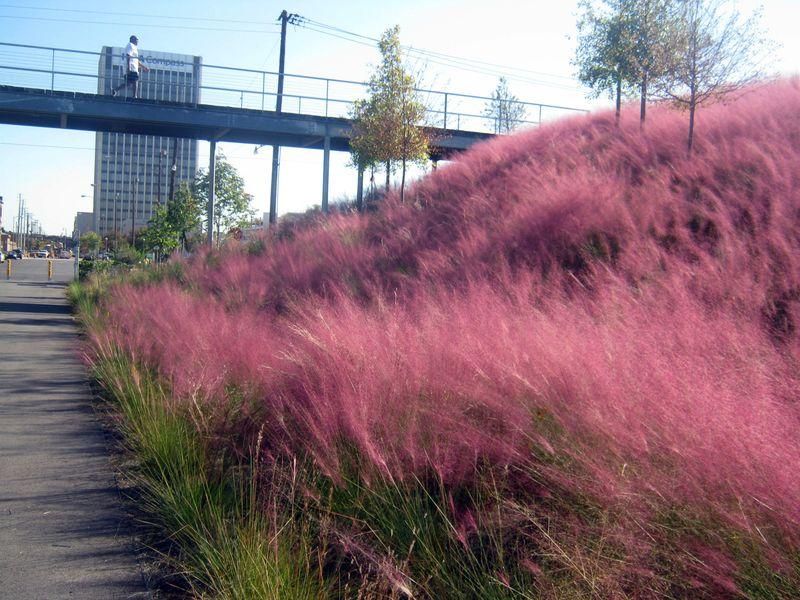
The payoff comes when the plumes open. Gulf muhly sends up airy flower heads in shades of pink to purple, so fine and thin that the planting looks like a hazy cloud.
LSU AgCenter reports blooms in late summer or early fall, and Austin’s plant guide lists fall interest.
Timing shifts with location and season. A planting in Houston may not peak the same week as one in the Hill Country.
Weather in a given year also changes things, so treat any date as a rough window. Color intensity varies too, and no source can promise a particular shade.
Groups make the biggest impression. A single clump gives you a nice accent, while many clumps side by side merge into one wide drift.
The extension article on Gulf Coast muhly as a showy fall grass highlights that grouped effect.
This is why the mass planting advice matters. Plan on a few seasons for the clumps to reach full size, and do not expect a big display right after planting.
Late afternoon light, when the sun hits the plumes from the side, shows them off best.
Late-winter trimming clears old foliage
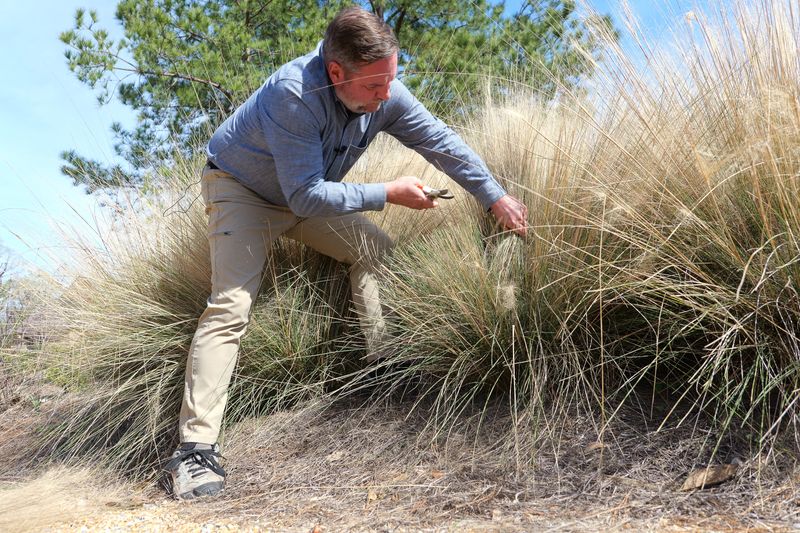
When the show ends, resist the urge to cut right away. Leaving the fall plumes standing gives winter interest and some cover for wildlife.
Then tidy the plants in late winter or near the start of spring growth, before fresh blades push up through the old ones.
Advice on how hard to cut varies. One LSU AgCenter plant profile suggests reducing plants to about 8 to 12 inches in late winter.
Newer LSU guidance for semievergreen muhly says not to remove more than half the plant. Austin’s guide simply says to cut it back in winter.
Given that range, do not treat a severe cut to the ground as a universal Texas rule. A moderate trim that removes the worn, tired foliage is a reasonable middle path.
Because this grass is described as semievergreen, some green blades may remain, and you can leave those.
The purpose is cleanup. Trimming clears old foliage and makes room for new growth.
The sources do not show that a particular haircut causes the next fall’s pink display, so do not expect pruning to make the plumes more vivid. Sharp pruners or a hedge trimmer both work, and gloves help because dry blades can scratch.
Sun, drainage, and settled roots do the heavy lifting for bloom. Trimming simply keeps the clump looking fresh.
Choose the right slope and plan for time
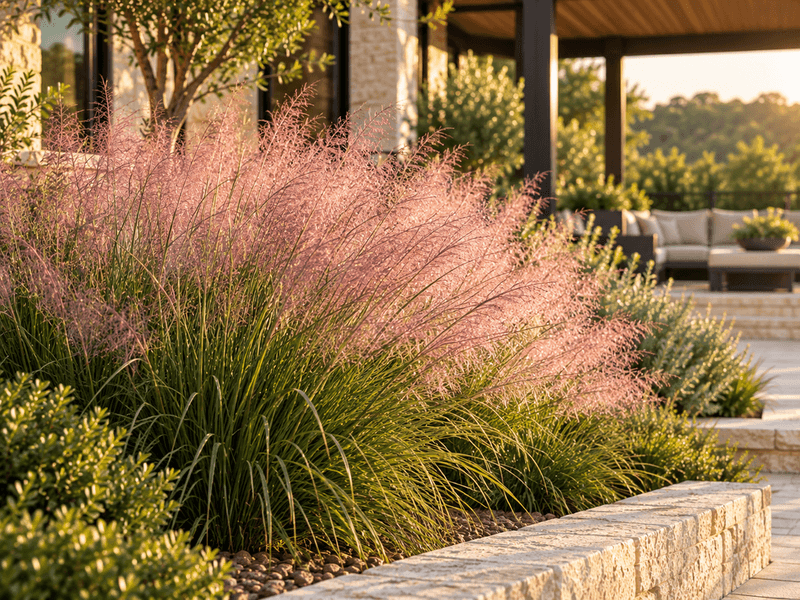
Here is a simple rule: choose Gulf muhly if your slope gets full sun, drains well, and you can plant several clumps, water them while they establish, and wait. LSU AgCenter lists it for erosion-control use, but USDA describes a clumping grass, so it will not stabilize every slope at once.
If those conditions fit, you are set up for a pink fall. If they do not, a different plant may serve you better.