
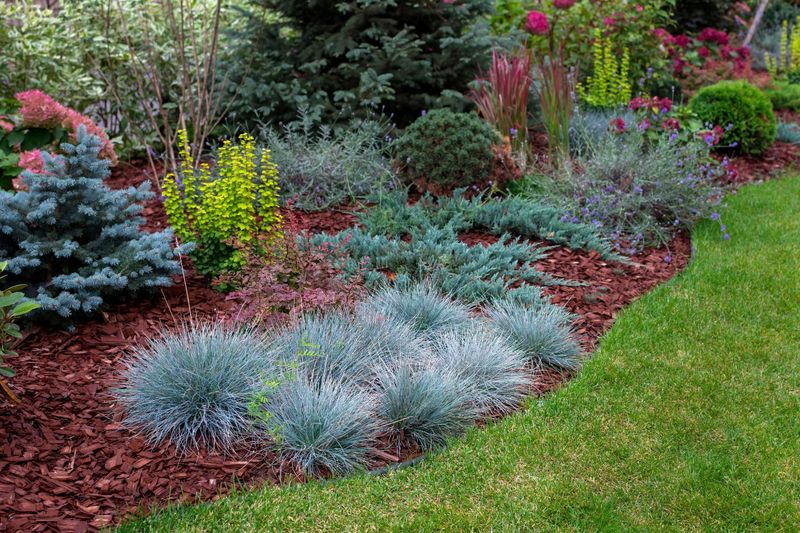
Some potted plants act like unruly teenagers, sprawling and shedding until you give in and grab the clippers. Others simply grow into a neat shape and stay that way, even through hot, dry California summers.
If you want a patio, balcony, or front step that looks good without weekend chores, picking the right plant matters more than any tool. Here are nine container stars that keep their shape on their own and sip water instead of guzzling it.
1. Dudleya (Live-Forever)
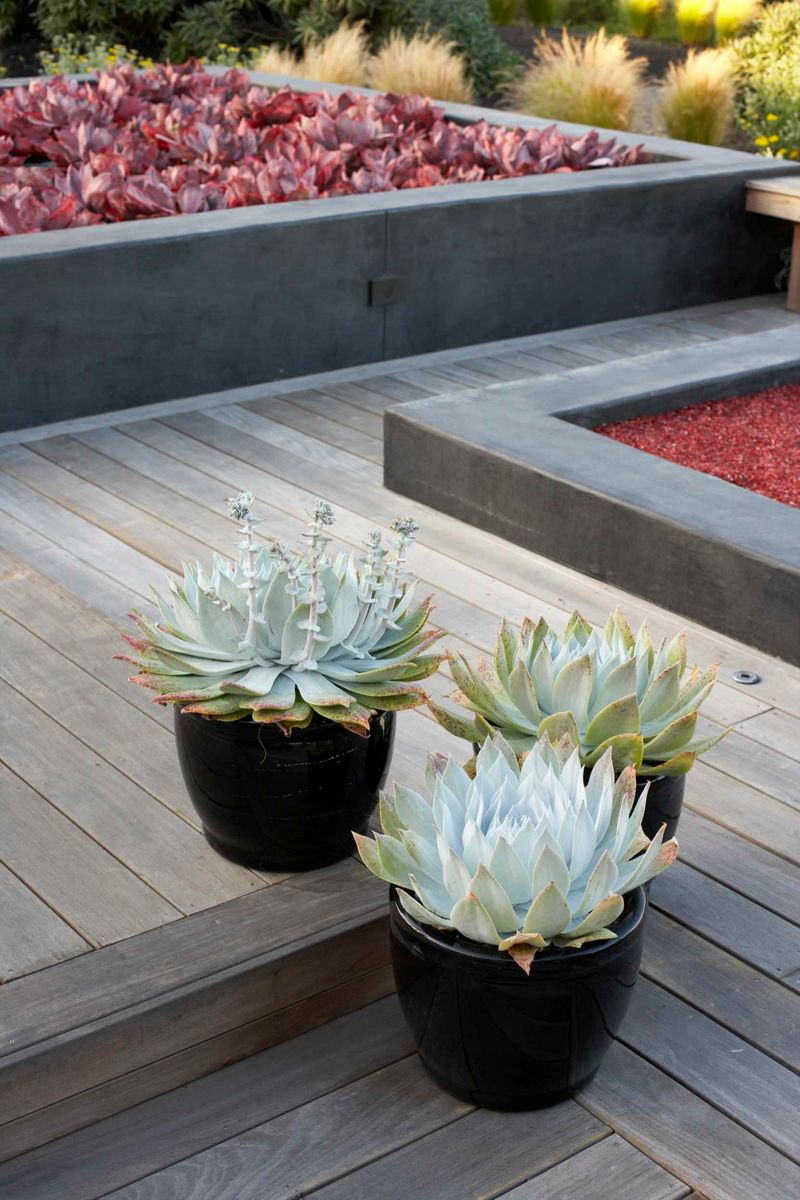
Picture a rosette so pale it looks dusted with powdered sugar. Dudleya is a California native succulent that grows along coastal bluffs, and it holds that tight, symmetrical shape for years.
There is nothing to trim because it never sprawls. Old lower leaves simply dry and tuck under the rosette, and a light tug removes them if you care at all.
Give it a fast-draining cactus mix, a pot with a big drainage hole, and almost no summer water. Do not wipe the leaves, since that white coating is natural sunscreen.
2. Blue Fescue
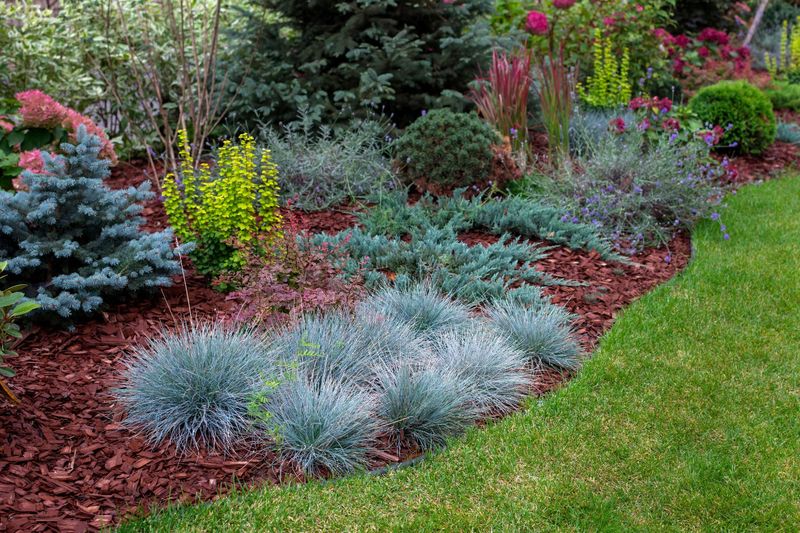
Ever seen a grass that looks like a tiny blue hedgehog? Blue fescue forms neat, rounded tufts about a foot tall, and it keeps that cushion shape without help.
Unlike big ornamental grasses that flop and need a hard chop, this one stays compact. A quick comb with your fingers in late winter pulls out any tan blades.
It loves full sun and well-drained soil, making it a smart pick for coastal and inland yards alike. Group three in a long trough for a clean, modern look that reads well from the street.
3. Dwarf Mat Rush (Lomandra ‘Breeze’)
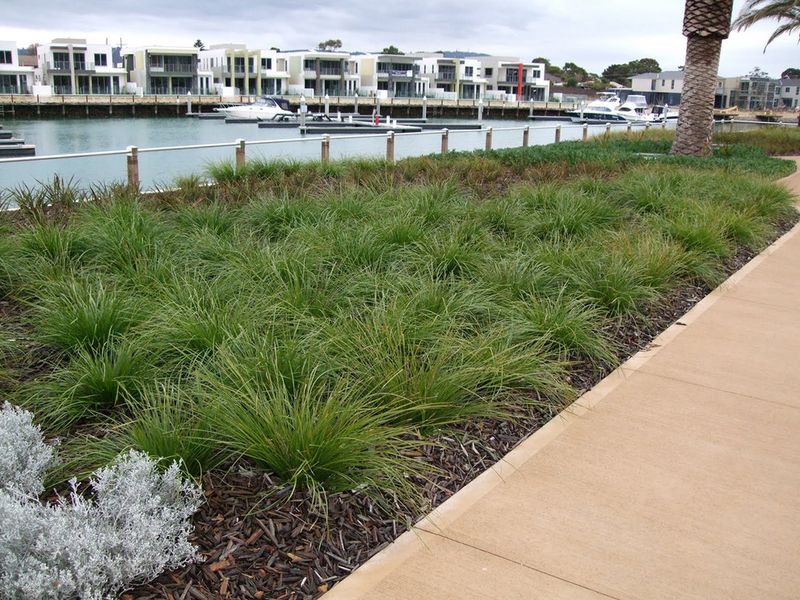
Landscapers in Australia and California quietly rely on this plant for one reason: it refuses to look messy. Lomandra ‘Breeze’ makes a soft, fountain-shaped clump of skinny green leaves that move nicely in the wind.
It tolerates heat, drought, light frost, and even a bit of shade. Most gardeners never cut it at all, and it still looks fresh in August.
Tall pots suit its arching form best. Water deeply every week or two once it settles in, then let it be.
4. Echeveria
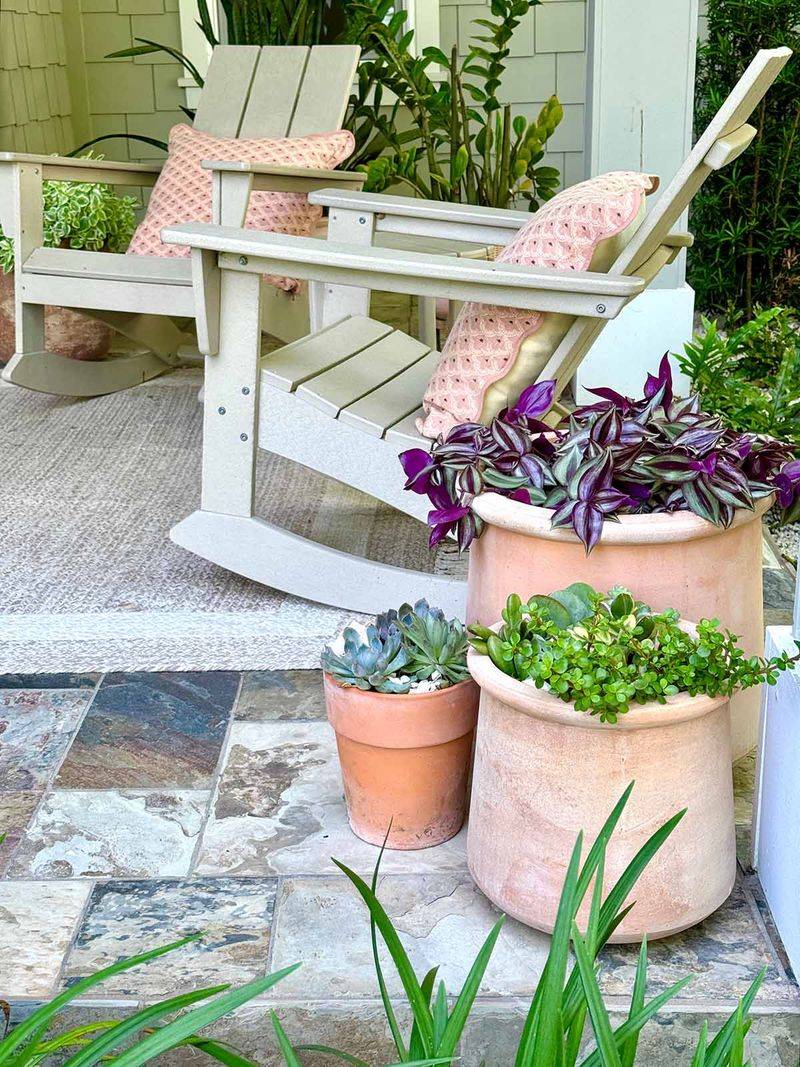
Here is the plant that looks like a rose carved from wax. Echeveria makes flat, geometric rosettes in shades of blue, pink, and lavender, and it practically designs itself.
Because it grows slowly and stays low, a shallow bowl of mixed varieties can look the same for years. When a flower stalk fades, you can snap it off by hand.
- Bright light keeps color strong.
- Water only when the soil is fully dry.
Coastal gardeners have it easiest, though inland folks can offer a little afternoon shade.
5. Coast Rosemary (Westringia ‘Mundi’)
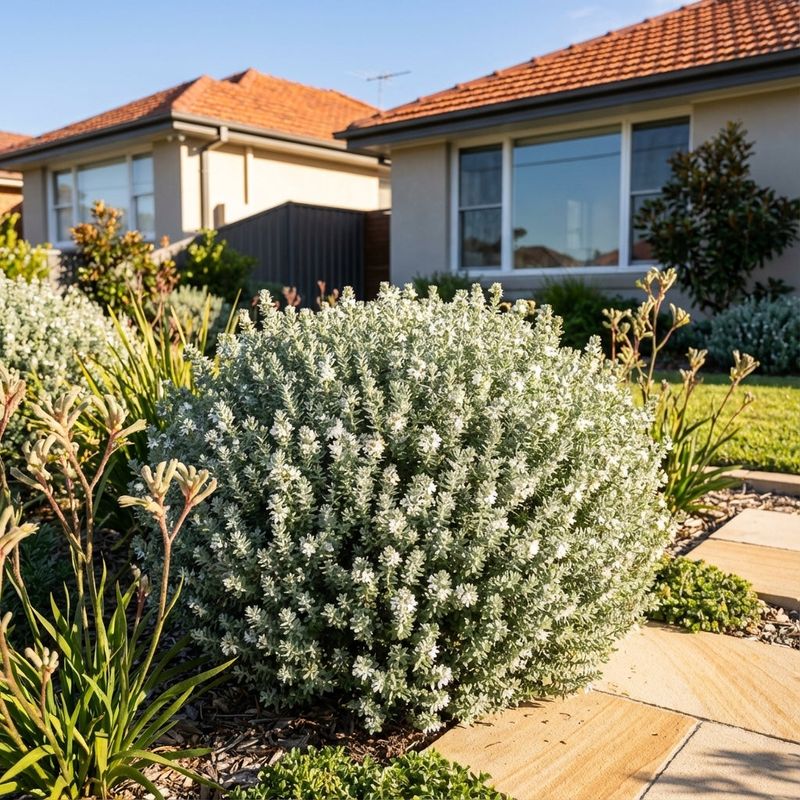
My neighbor swore she had a gift for shaping shrubs, until I told her the Westringia on her deck had never been touched. ‘Mundi’ is a groundcover form that grows into a low, even mound with no help.
Its small gray-green leaves shrug off salt air and wind, so it shines on beach-town patios. Tiny white flowers show up on and off most of the year.
Choose a wide pot so it can spread a bit. It wants sun, good drainage, and only occasional water once established.
6. Aloe ‘Blue Elf’
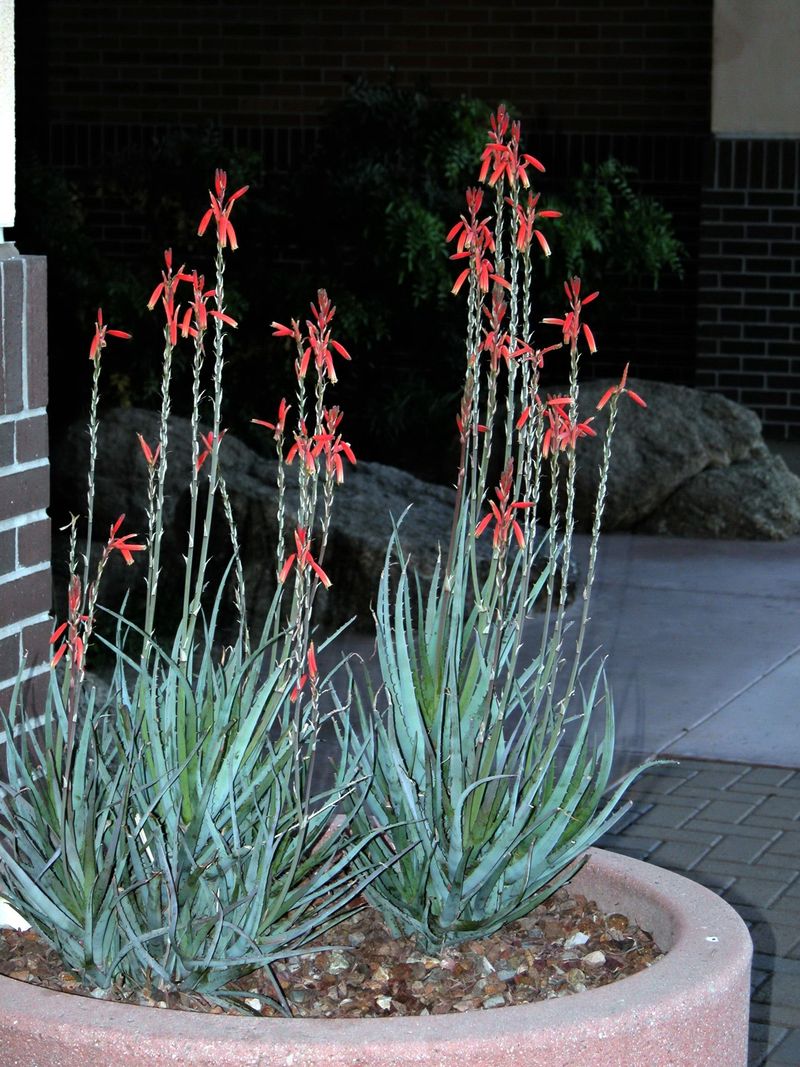
Winter flowers in a pot you never water in July? That is the deal with Aloe ‘Blue Elf’.
It forms a tidy clump of upright blue-gray leaves about a foot tall.
In late winter it sends up coral spikes that hummingbirds adore. Once they fade, the stalks pull free easily, no blades required.
It handles reflected heat from walls and driveways better than many succulents. Give it a gritty mix and a sunny spot, and it fills a pot neatly over a couple of seasons.
7. Dwarf Coyote Brush (‘Pigeon Point’)
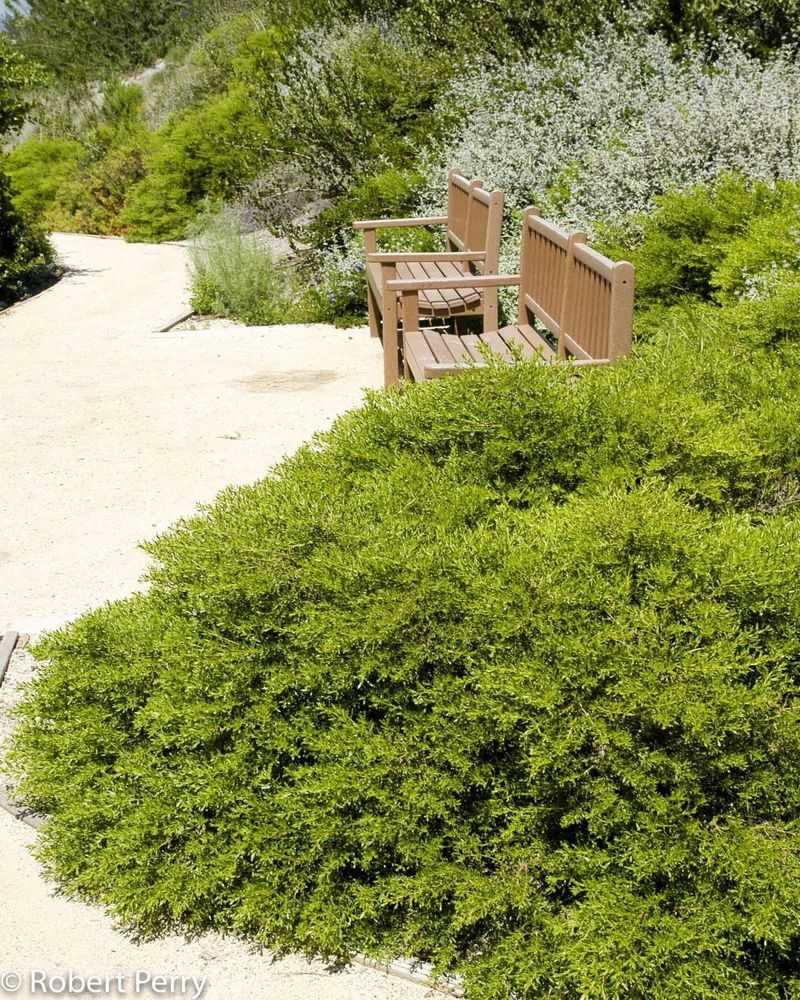
Native plant fans, this one is for you. Coyote brush covers California hillsides, and the ‘Pigeon Point’ selection stays low and dense, perfect for a half barrel.
Its bright green foliage stays glossy year-round and supports local pollinators. Being a male selection, it skips the fluffy seed that some types drop.
It handles clay, sun, and very little summer water. You will often find it at California Native Plant Society sales for a few dollars.
8. Agave ‘Blue Glow’
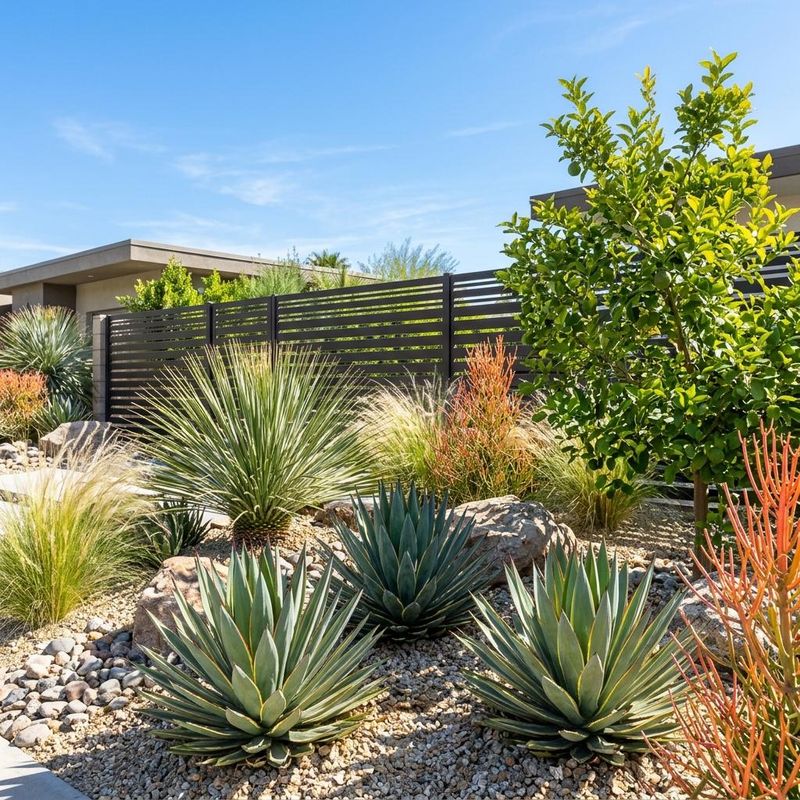
Stand it by your front door at sunset and watch the leaf edges light up red and gold. Agave ‘Blue Glow’ is a sculpture that happens to be alive.
It stays around two feet wide and keeps a perfect, spineless-tipped shape with soft margins, so it is safer near walkways than many agaves. There is simply nothing to prune.
Fun fact: it is a hybrid of two Mexican species, bred for small spaces. Water lightly once a month in summer.
9. Japanese Boxwood Alternative: Dwarf Myrtle
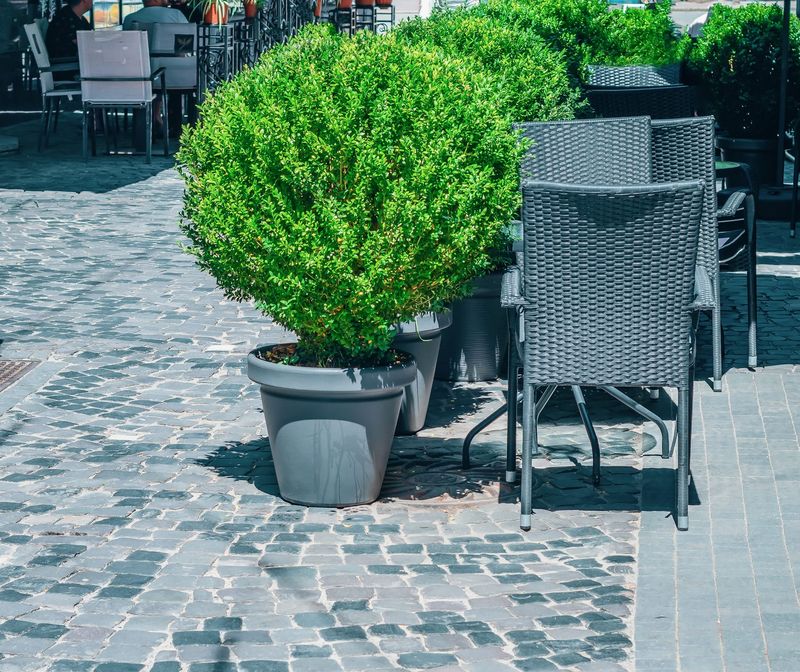
Love the formal look of boxwood but hate the shearing? Dwarf myrtle, Myrtus communis ‘Compacta’, grows into a naturally rounded ball of small, fragrant leaves.
It comes from the Mediterranean, so it feels right at home in California’s dry summers. Crush a leaf and you get a spicy, clean scent.
Pair two by a doorway for an elegant look with no hedge trimmer. Deep, occasional watering keeps it happy for years in the same pot.