
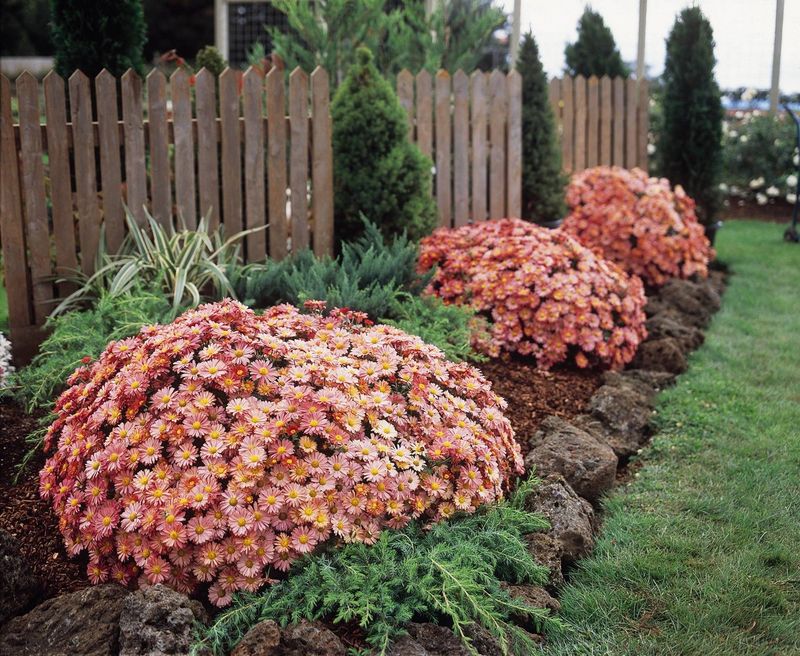
A mum with black, droopy leaves looks finished, but the plant may still be alive at the crown, the spot where stems meet the roots. New green shoots there in spring are a promising sign that the mum is growing again.
Knowing what to look for, and when, can keep you from tossing a plant that might return. A few simple steps in fall and spring can give it a fair chance.
Blackened tops do not prove a mum is dead

Frost can turn a mum’s leaves and flowers black overnight. That change happens up top, though, and the crown near the soil may still be alive.
Garden mums naturally die back aboveground, and some regrow from the crown when spring arrives.
So a blackened plant is not automatically a candidate for the compost pile. Virginia Cooperative Extension advises leaving first-year foliage and stems in place through winter instead of clearing them out.
Iowa State Extension adds that winter conditions can badly damage or kill mums, even garden types.
Regrowth is possible, but it is never assured. Think of the black leaves as a normal end to the season rather than a verdict on the whole plant.
The real answer usually shows up months later, when the weather warms.
Look for crown growth as spring begins
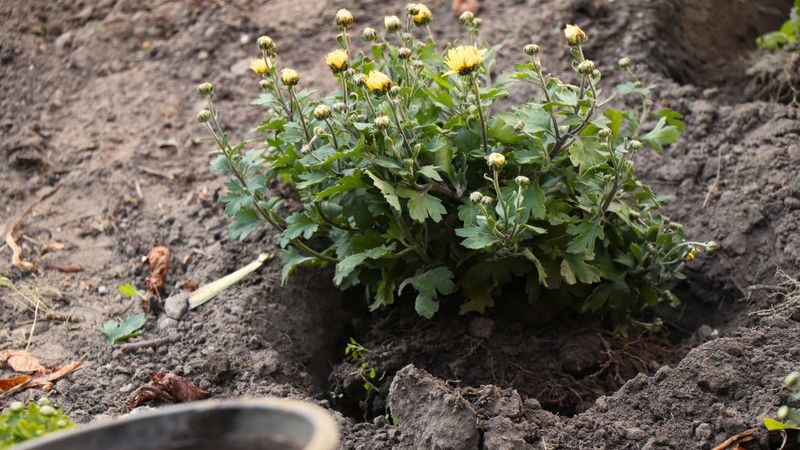
Spring is when the crown tells its story. As the soil thaws and days lengthen, check the base of the plant for small green shoots pushing up.
Those shoots show the mum is growing again, and that is a promising sign.
They are not a promise, however. A mum with new growth can still struggle later or bloom poorly, so treat the shoots as good news rather than a guarantee.
Extension advice from University of New Hampshire Extension and Virginia Cooperative Extension points toward uncovering mums as spring growth starts.
A peek right after the first frost will not settle much, since a dormant crown looks quiet either way. No shoots in fall or winter does not mean the plant is dead.
Wait until spring begins, then look again.
The kind of mum matters
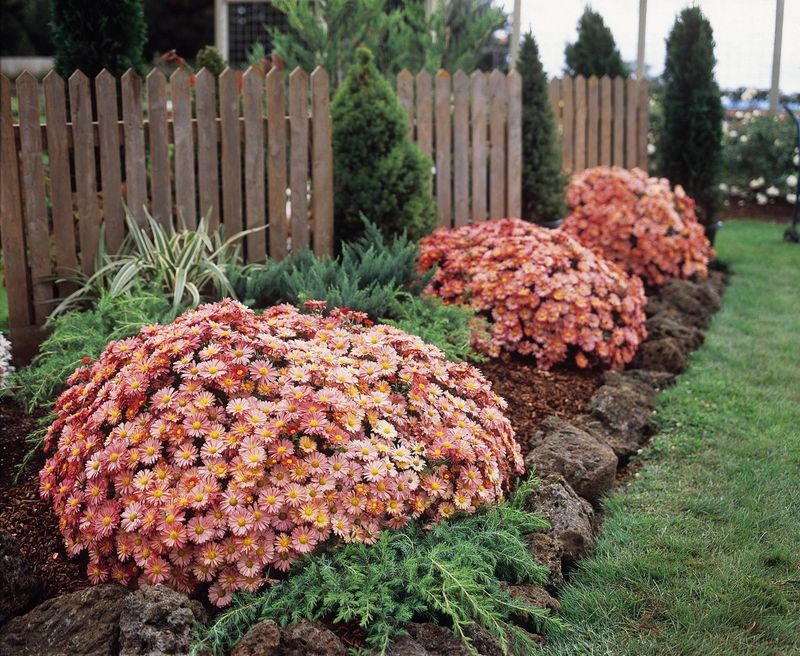
Not every mum is built for winter. Florist mums, the tidy domes sold in grocery stores and as gifts, are not bred to withstand freezing.
Garden mums are a different group, and even among them, cold tolerance varies. Virginia Cooperative Extension makes this distinction clearly.
Check the plant tag if you still have it. Labels often say whether a mum is meant for the garden and sometimes list a hardiness range.
Without a tag, you are guessing a bit.
Looking at the crown will not tell you the cultivar or how hardy it is. Iowa State and Utah State both note that fall-purchased mums often fail to survive winter.
Knowing which kind you own helps you set realistic hopes.
Late-planted mums have less time to establish

Roots need time to settle in before the ground freezes. A mum planted in September or October has only a short window, so its odds are lower.
Virginia Cooperative Extension says later planting reduces survival for this reason.
Iowa State agrees that late-summer and early-fall purchases are less likely to make it through winter. Many of those mums are sold in full bloom, with roots packed into a small pot and not yet spread into the soil.
Spring planting works better, since hardy garden mums get a whole season to build roots. University of Wisconsin Extension discusses fall mums along these lines.
Still, timing is only one factor. A fall-planted mum in a good spot may come back, and a spring one can still fail.
Leave suitable garden mums standing through winter

For a garden mum planted in the ground, resist the urge to cut everything back in fall. Leave the stems and foliage in place through winter.
Iowa State recommends this, and University of New Hampshire Extension says mums are more likely to survive when dead stems stay until spring.
Add loose, airy mulch over the crown to ease winter stress and freeze-thaw heaving. Virginia Cooperative Extension suggests 3 to 4 inches, while New Hampshire suggests 2 to 4 inches.
Straw or similar light material fits the bill, and New Hampshire warns against leaves because they mat down. Mulch helps, but it does not guarantee survival.
In spring, let your local weather decide the timing. Pull mulch back after the ground thaws and the worst cold has passed, then trim dead stems before new growth takes off.
There is no single date that works nationwide.
Wet soil and pots change the advice

Soggy ground is hard on mums in winter. Virginia Cooperative Extension warns that heavy, waterlogged soil can harm them.
Piling on mulch will not fix a spot where water sits, so a wet bed stays risky no matter what you add.
Potted mums are a separate case. Tips for covering an in-ground crown do not promise much for a pot sitting out in the open, where roots are exposed to cold from every side.
One option is moving the pot to a protected, unheated space such as a garage or shed. That is a choice, not a guarantee.
Penn State Extension notes that freezing can damage pottery and that containers need adequate drainage, so check both before you tuck the pot away.
Black leaves alone do not diagnose crown rot
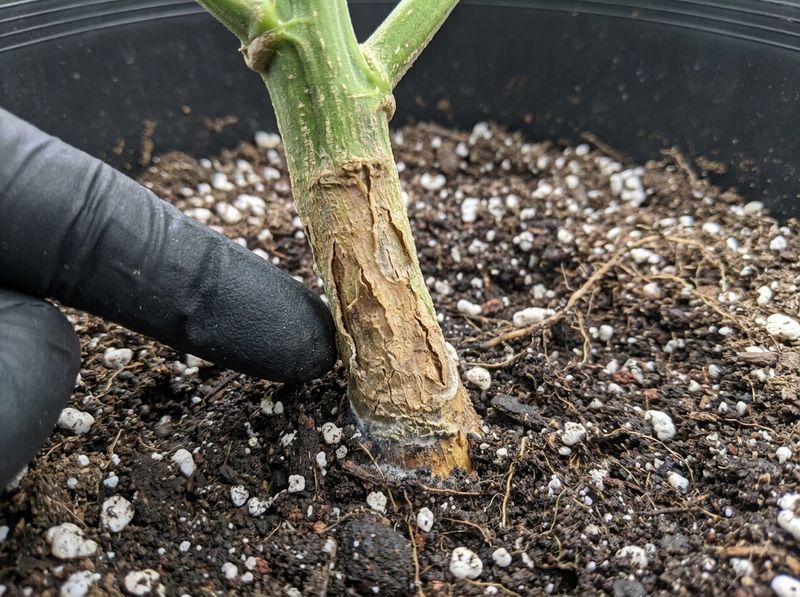
Black leaves after a frost are one thing, and crown or root rot is another. Frost damage shows up on the foliage.
Rot involves the base and roots of the plant.
UConn’s mum disease guide describes crown and root rot signs as yellowing and wilting, along with brown or black discolored roots. Those clues come from plants that were struggling, not simply from leaves blackened by cold.
You cannot diagnose a plant by looking at foliage alone. The same guide says laboratory analysis may be needed to pin down the cause.
If you see yellowing and wilting before frost, or dark, unhealthy roots when you dig, treat that as a separate concern and not as proof of what frost did.
Give an in-ground mum time before you compost it
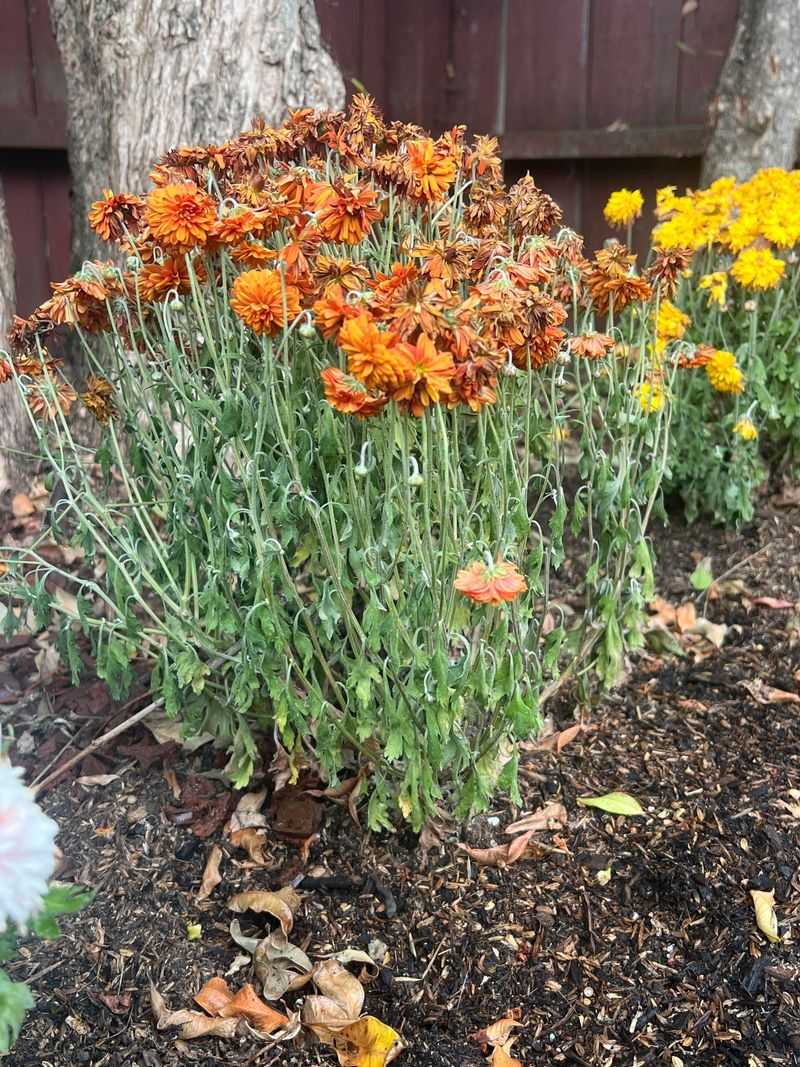
Here is a simple rule: do not discard an in-ground garden mum just because frost blackened its top. Where it suits your site, leave it standing and protected through winter.
Then watch the crown as spring begins.
Guidance from Virginia Cooperative Extension, University of New Hampshire Extension, and Iowa State all fits this wait-and-see approach.
New shoots are encouraging. How the plant does after that still depends on its type, how well it got established, how well the soil drains, and how harsh the winter was.
If spring comes and the crown stays bare well into the growing season, that is the time to let go.
A mum often gives its answer on its own schedule, and that schedule is spring.