
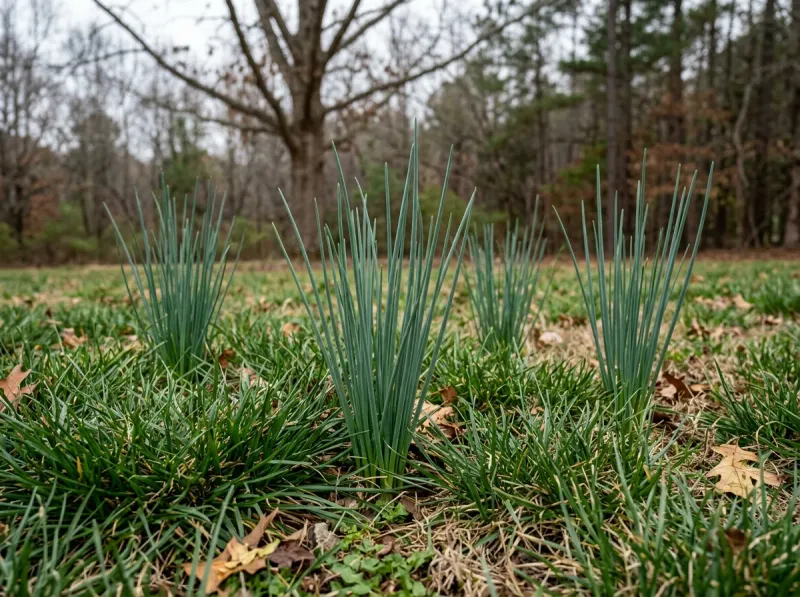
Dig out the bulbs or treat with a label-approved product, then check back and follow up. That is the two-step approach North Carolina gardeners lean on when wild onion and wild garlic show up as bright green clumps in a dull winter lawn.
These weeds are easiest to spot right now, when most turf has gone dormant. Here is how to tell them apart, pick the right step for your yard, and plan for the follow-up that makes the difference.
Fall and winter growth gives you a chance to act
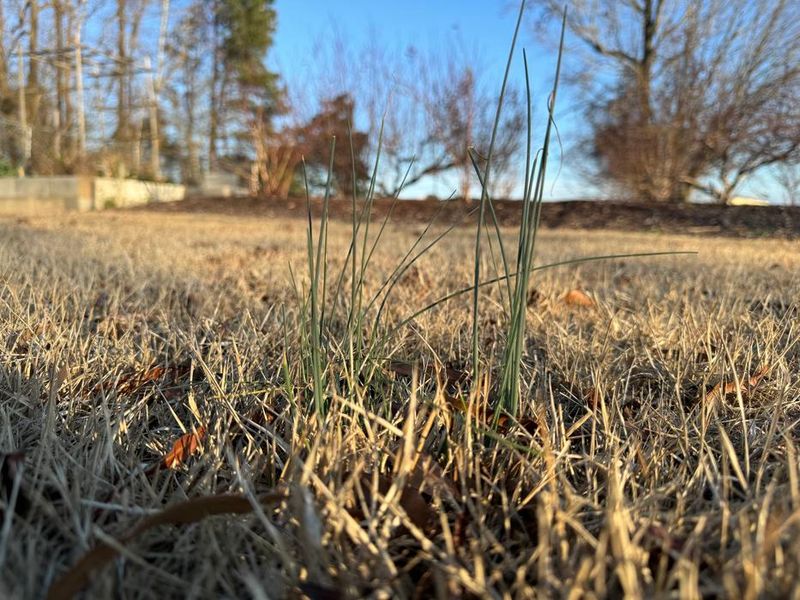
Walk a North Carolina lawn in December and the culprits are hard to miss. While warm-season grass fades to tan, wild onion and wild garlic push up thin, bright green leaves that stay visible through much of the winter.
That visible growth is your opening. Treatment guidance from NC State, including the 2025 Agricultural Chemicals Manual, focuses on the time when the plants are young and actively growing, not when they are dormant or already mature.
Two approaches make up the plan. For a few small patches, you can dig the clumps out and take the underground bulbs with them.
For larger or scattered infestations, you can consider a herbicide that is labeled for your turf, and local guidance such as this Burke County Extension page explains that results depend on the turf and the product.
Here is the candid part. Neither step is a guaranteed one-winter cure.
Established plants often survive a first round, and some come back, so think of this as a plan that unfolds over more than one growth period.
The good news is that acting while the weeds are green and easy to see gives you a real advantage. You can find them, count them, and decide which step fits your lawn before spring growth hides them again.
Use leaf shape and odor as identification clues
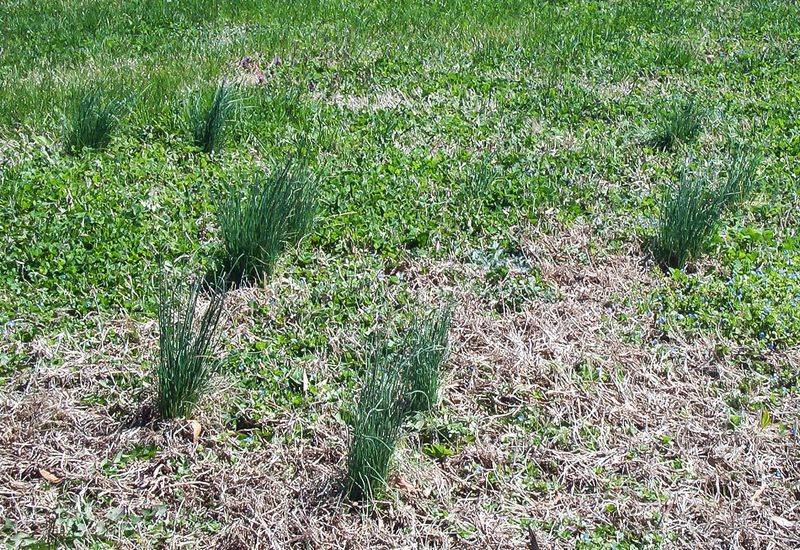
Before you pick a control method, get a good look at what you have. Pick a leaf, crush it between your fingers, and sniff.
Both wild garlic and wild onion give off an onion-like odor, which separates them from most look-alike grassy weeds.
Shape offers the next clue. Wild garlic typically has round, hollow leaves, so a snipped leaf feels like a tiny straw.
Wild onion usually has flatter, solid leaves with no hollow center.
Treat these as handy field clues, not a guarantee. The two plants are easy to confuse, and a single leaf can be misleading, so check several plants in different spots.
Your county Extension office can help if you are unsure, and the Burke County Extension guidance describes these differences and notes that the two weeds are related but distinct.
Knowing your turf matters just as much as knowing the weed. Bermudagrass, zoysiagrass, centipedegrass, tall fescue, and other lawn grasses do not all tolerate the same products.
A treatment that suits one lawn can injure another.
So jot down two things before moving on: what the leaves look like, and what grass you grow. With those notes in hand, the later steps become much easier to match to your yard.
Bulbs help explain why the weeds return
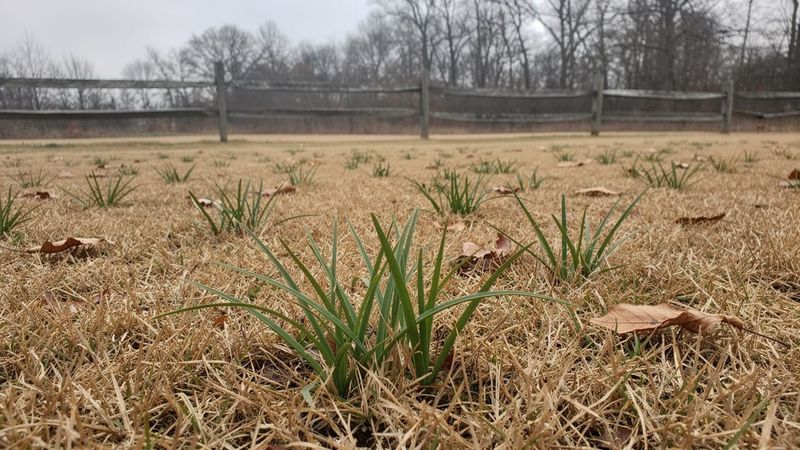
Ever pulled a clump, felt satisfied, and then spotted new shoots in the same place a few weeks later? The reason sits underground.
Both weeds are perennial plants that grow from bulbs, so the green leaves are only the part you can see.
According to Cornell weed science, wild garlic can spread through underground bulbs and through small aerial bulblets that form at the top of the plant. Seeds are possible, but they matter less for many U.S. populations.
That mix of structures is why one trick rarely settles things. Cutting back bulblets may limit one way the plant spreads, yet bulbs and small offsets stay in the soil and can send up fresh growth later.
It also explains the warning from Mississippi State Extension: tugging off the leaves often leaves the bulbs behind, so the plant may not be controlled.
Put that biology to work by marking the spots where you removed or treated weeds. Check them every couple of weeks through winter and again in spring.
Finding a few survivors early is normal, and it is far easier to deal with them when they are small.
Dig small patches out with their bulbs
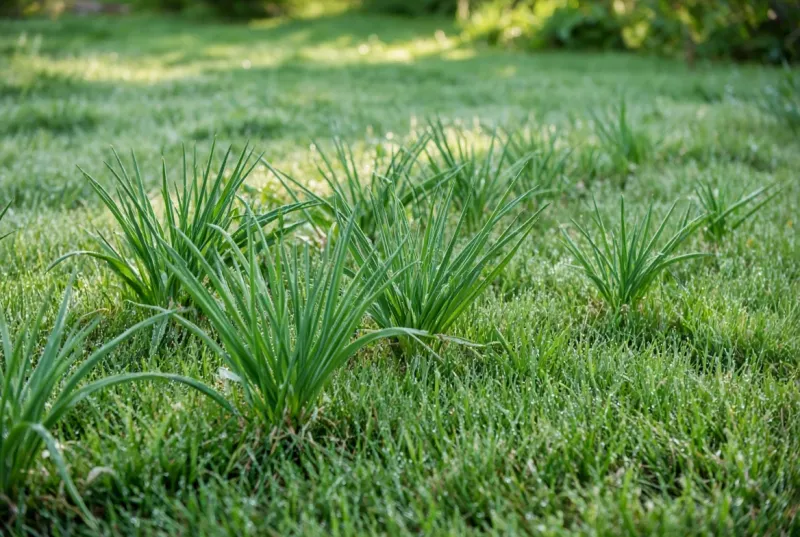
If you only have a handful of clumps, a trowel is a fine tool. Pick a day when the soil is somewhat moist, such as the day after a gentle rain, so the ground gives way without a fight.
Push the trowel in beside the clump, not straight through it. Loosen the soil all around, then lift the whole plant with the bulb attached.
Look at what came up. If you see a round bulb at the base, you got the main part, and if you see only snapped leaves, go back in.
Compare that with simply tugging the leaves. As Mississippi State Extension points out, pulling leaves alone often leaves the bulbs behind, so it may not control the plant at all.
Drop the clumps in the trash rather than the compost pile, since small bulbs can sneak through. Then firm the soil back down and, if the spot is bare, fill it in so other weeds do not take over.
Keep expectations honest. Digging works best for small patches, and it does not promise that nothing will ever emerge there again.
A few missed offsets can sprout later, so keep a trowel handy for quick touch-ups.
Match any herbicide to the lawn and the label
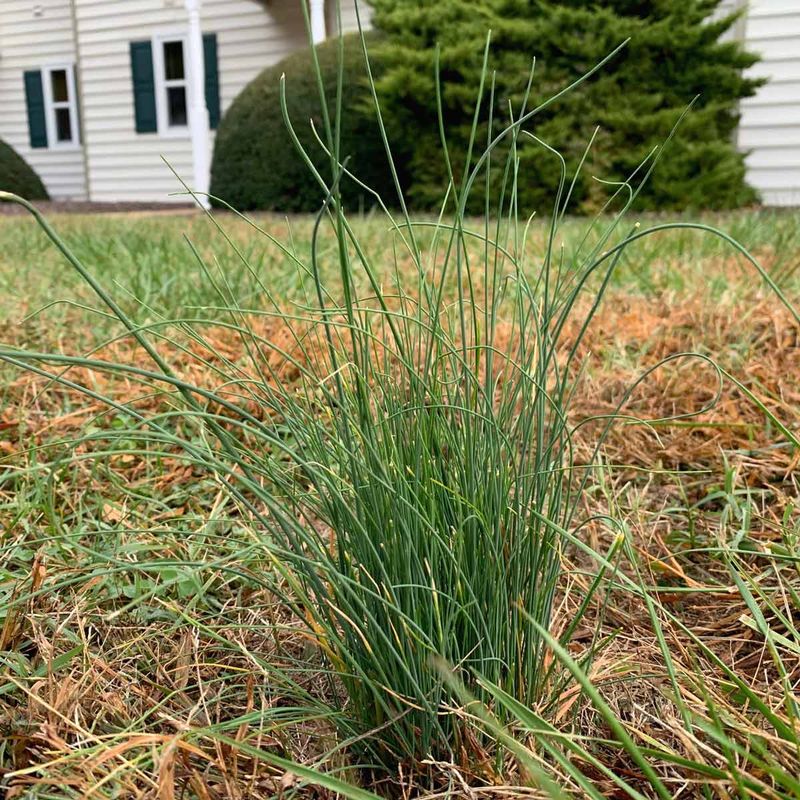
When clumps are too many to dig, a herbicide may be worth considering. The key word is matched.
The product has to be labeled for your turf species and for wild onion or wild garlic, and your use has to follow what the label allows.
NC State’s 2025 chemicals manual lists fall treatment when wild garlic is young and actively growing. It also lists spot treatment from December through April for widely scattered clumps.
That manual is a guide, not a replacement for the bottle in your hand. The current NC State manual says pesticide use must conform to the current label, so read it fully before you buy or spray.
Labels cover turf types, rates, timing, and precautions for people and pets, and this article cannot do that for you.
Mowing is a spot where advice differs. The Burke County Extension page suggests not mowing for a few days before spraying and, if possible, delaying mowing afterward.
Clemson Extension notes that mowing just before application may help uptake in some situations. Because the waxy leaves can shed spray, follow your product label and local Extension advice rather than a single rule.
If you are unsure which product fits, call your county Extension office. A quick conversation can save a damaged lawn.
Monitor treated areas and follow up as directed
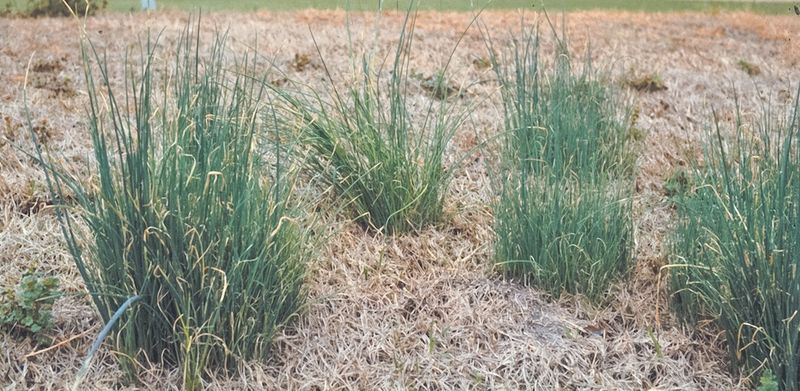
Treatment day is not the finish line. Plan to walk your lawn every couple of weeks and look for fresh green shoots in the places you dug or sprayed.
A quick note on your phone with dates and spots helps you see whether the patch is shrinking.
If growth returns, check the product label and local Extension guidance before repeating anything. Labels set limits on how often and when you can reapply, so do not simply spray again because you feel impatient.
NC State’s 2025 manual says fall treatment may need to be repeated for two years. That is not a schedule that fits every lawn, since results vary with turf, product, and how established the weeds are.
NC State’s TurfFiles fall weed control article also points to limits in control and the value of repeat applications.
Hand removal can fill the gaps. Dig any survivors out while they are small, and keep the current chemicals manual guidance about following the label in mind.
Healthy turf helps too. Mississippi State Extension notes that dense grass can suppress winter weeds, though it will not quickly clear bulbs already in the ground.
Patience, not a magic product, is what wins this one.