
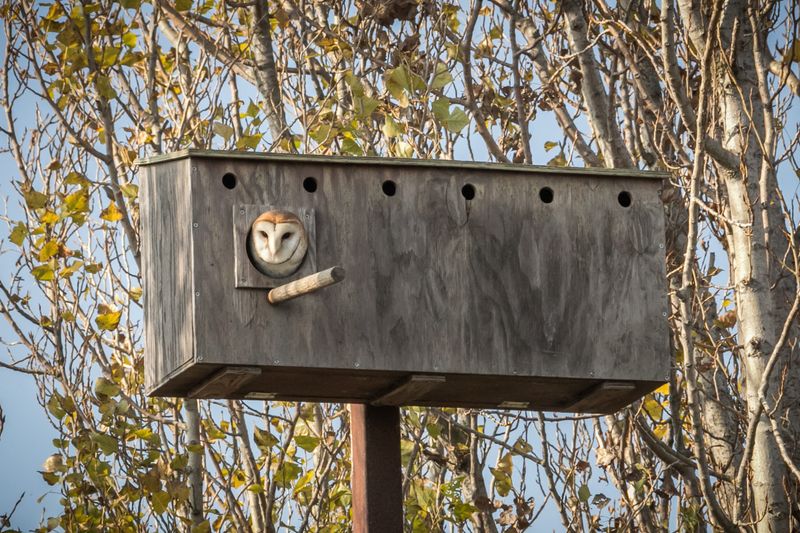
A barn owl box can give owls that eat gophers a place to nest in your California yard. Barn owls hunt rodents at night, and gophers are on their menu.
The catch is that a box is an invitation, not a guarantee, and it will not fix a gopher problem on its own. Here is what a box can do, where it falls short, and what to do about gophers that are tearing up your lawn right now.
What an owl box can and cannot do
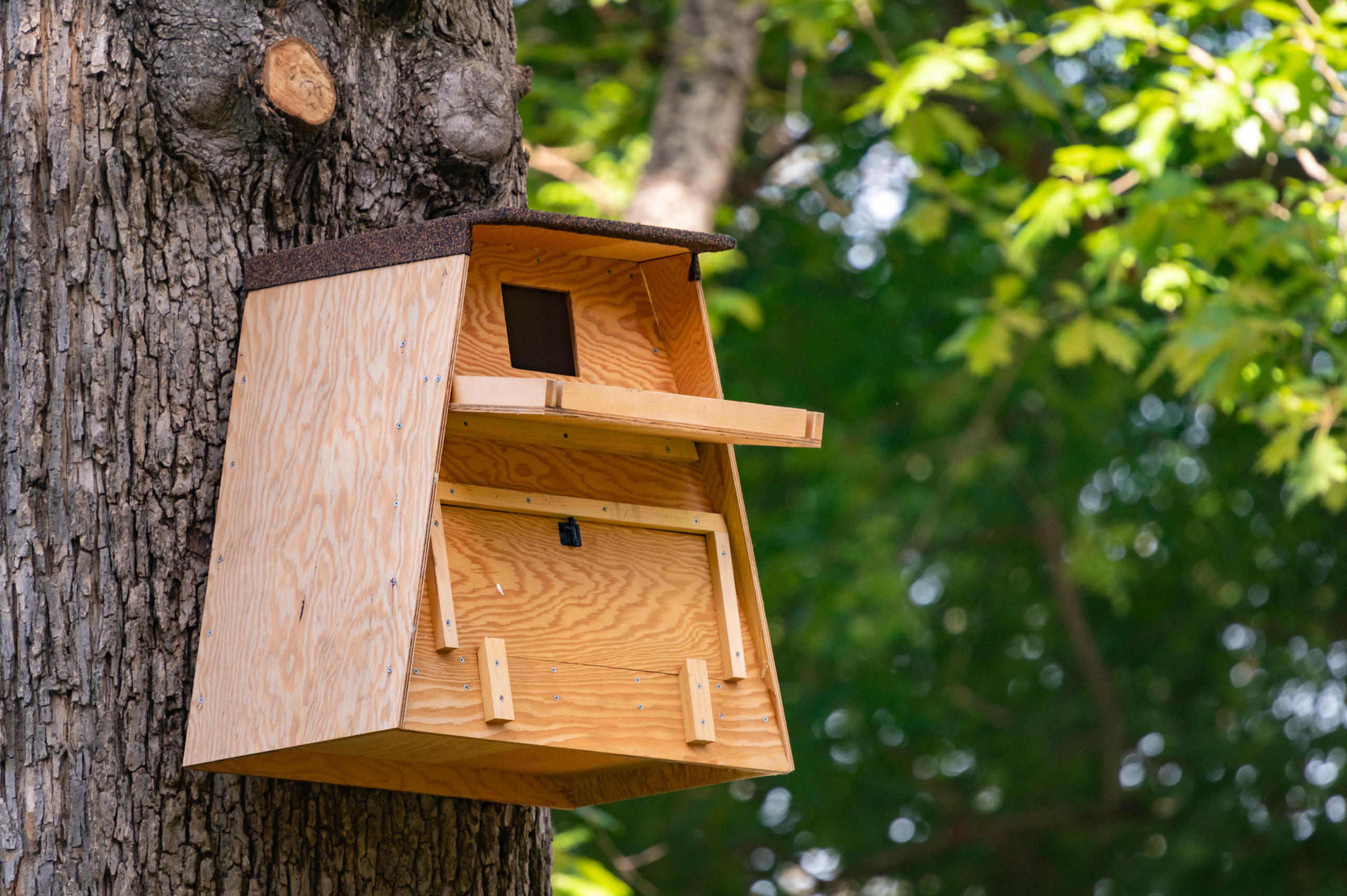
Barn owls need a dark, sheltered cavity to nest in, and a well-built box can supply one. Since barn owls eat pocket gophers along with other rodents, a box can support the kind of bird you would want hunting near your property.
The limit is just as clear. Occupancy is never assured, so you could hang a box and see no owls for a long time.
Even when owls move in, UC IPM says boxes are unlikely to reduce gopher numbers enough to prevent damage, and they are unreliable for control in small areas.
Why the gap? Owls roam widely and eat more than gophers, so one pair does not stay focused on your flower beds.
A gopher mound by your tomatoes is a today problem, and owls work on their own schedule.
So think of a box as a possible piece of a bigger plan. It helps wildlife and may add some predation pressure in your neighborhood.
For active damage, it cannot replace direct control like trapping, which we cover at the end.
Reading on, you will see what the research shows, how to judge your site, when to hang a box, and what upkeep looks like. Going in with realistic expectations keeps you from being disappointed and keeps owls from being treated like hired exterminators.
What the Napa Valley study found
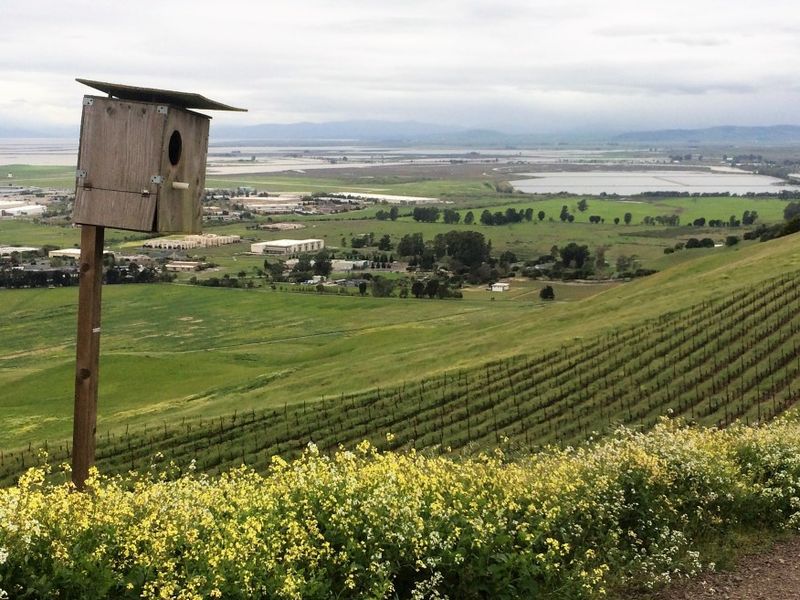
Some of the best California evidence comes from vineyards. In a 2022 Napa Valley study, researchers collected owl pellets and found that gophers made up 57% of the prey biomass, with voles at 37%.
That confirms gophers are a real part of the barn owl diet.
The study also tracked rodent activity. At the vineyard with boxes, gopher activity declined during peak owl hunting, while it rose slightly at the vineyard without boxes.
That sounds promising, and it is worth knowing about.
Now the fine print. The design compared just two vineyards over two sampling periods.
Mice declined about the same at both sites, and the vole results were inconclusive. The authors themselves describe the broader evidence as scarce.
So what can you take from it? Owls eat gophers, and in one limited farm comparison, gopher activity moved in the hopeful direction where boxes were present.
What you cannot take from it is proof that a box will control gophers in a backyard, or a general result for California yards.
Two vineyards cannot tell you how your quarter-acre lot will behave. Treat the study as a reason to be curious about owls, not as a promise.
Why a yard is not a vineyard
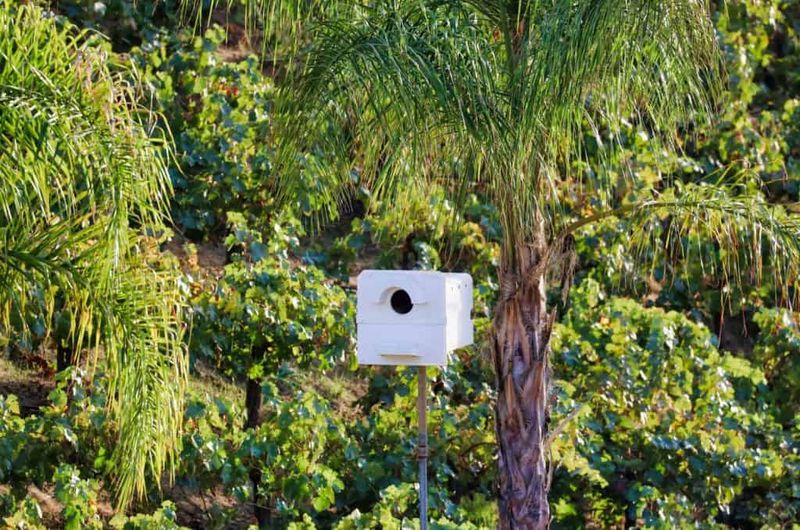
Big numbers get quoted a lot. Estimates from vineyard nest box research count the prey delivered to nesting families.
They do not show that the same number of gophers would have damaged a particular yard, and they do not prove a local population was wiped out.
Range matters too. Telemetry from Napa shows owls hunting well beyond the nest box.
California NRCS guidance notes that foraging distance changes with the season and that boxes need not sit right next to hunting areas. An owl nesting in your yard may do most of its hunting somewhere else.
Owls also pick their prey. UC IPM points to their large hunting ranges and prey preferences as the reasons they are unreliable for small-area gopher control.
Voles, mice, and other rodents are also on the menu.
Where does that leave biological control? UCANR describes boxes as one possible part of integrated pest management, not a proven standalone method for sustained rodent control.
A practical example: if a neighbor down the road has a hay field full of voles, your resident owls may favor that buffet over your lawn. Your gophers keep digging either way.
Choose a suitable place for the box
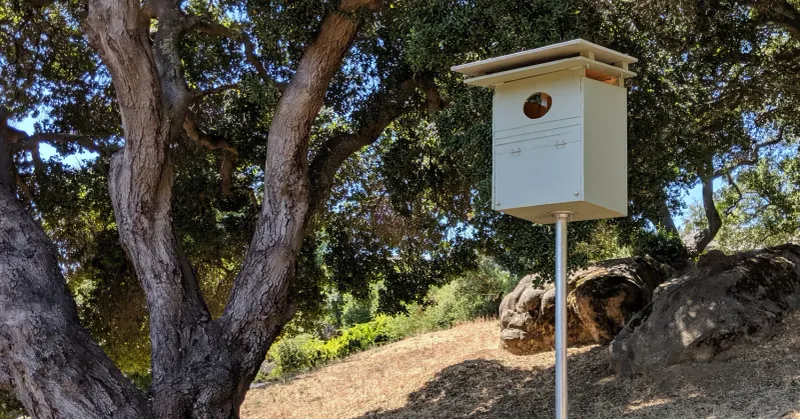
Before you pick a spot on the fence, take a hard look at your surroundings. California research guidance favors open areas near natural habitat such as grassland or oak savanna.
A tiny lot hemmed in by houses is a long shot, while a rural property with open ground nearby is a far better candidate.
Disturbance counts. Keep the box away from busy roads, where owls risk being hit by cars, and away from regular noise, lights, and foot traffic.
A quiet corner of acreage beats a spot beside the driveway.
Height is where people get stuck. One UCANR summary reports that Napa Valley owls preferred boxes more than 10 feet above ground, while California NRCS guidance says farm boxes often need not be higher than 8 feet.
Both are context-specific, so there is no universal minimum to memorize.
Use the numbers as a starting point, then weigh what your site needs. Pick a mount that is stable, safe to reach for maintenance, and out of easy reach of people and predators.
If you cannot find a place that is open, quiet, and away from roads, skipping the box is a perfectly good choice. A poorly placed box does more harm than good.
Install before breeding, but expect to wait
Timing is about preparation. A California study using 22,670 nestling-banding records found a statewide median egg-laying date of February 20.
UCANR notes that prospecting can start earlier and recommends installing boxes by late summer or fall.
That is why a box hung before winter makes sense. It puts a possible nest site in place before owls start looking, so they can find it, check it out, and get used to it.
It does not mean winter nesting is guaranteed. A February 20 median is a middle point, not a deadline, and some pairs nest earlier or later.
An empty box in January is not a failure.
Plan for patience. UCANR says colonization may take two to three years depending on location, and suitable habitat, nearby prey, and low disturbance all play a part.
A practical step: put a reminder on your calendar for late summer, finish the mounting then, and write down the date. Note any signs of visits, such as pellets or whitewash, so you can see progress over the seasons.
Plan for ongoing box care
Nobody gets a box for free. You have to buy or build one that is well made, mount it safely, and keep it in shape.
Calling it free pest control skips all of that, and it overstates the result too, since UCANR frames boxes as one part of integrated pest management.
Once owls are present, hands off. California NRCS advises not disturbing boxes when owls are present.
Peeking in or banging on the box can cause adults to leave eggs or young.
Maintenance happens in the quiet season. NRCS recommends checks from fall through late summer, timed for when no owls are using the box.
Look for damage, loose mounting, leaks, and pests, and clean out debris as needed.
Pellet debris needs care. NRCS advises wearing an N95 mask when removing it, because the dust is not something you want to breathe.
Gloves and washing up afterward are sensible additions.
Treat the box like a small, long-term project. If you will not be able to check it each year, think twice before hanging one.
Address active gopher damage directly

If gophers are chewing roots and pushing up mounds right now, do not wait for owls. UC IPM recommends trapping as a direct control option for active burrows.
The approach works like this. Look for fresh mounds to find the burrows that are in use, then set traps in the tunnel.
Check them often and reset them as needed until the activity stops.
Keep watching afterward. New gophers can move in from neighboring land, so a fresh mound a few weeks later means it is time to trap again.
Catching the problem early keeps the damage small.
Be careful with poisons. The National Pesticide Information Center identifies secondary-poisoning risks to birds, including owls, from several anticoagulant rodenticides.
An owl that eats a poisoned rodent can be harmed too.
If you do use any pesticide, follow the current label directions and your local rules. Doing so protects the wildlife you are trying to welcome.
Hang the box for the owls, and set the traps for the gophers.