
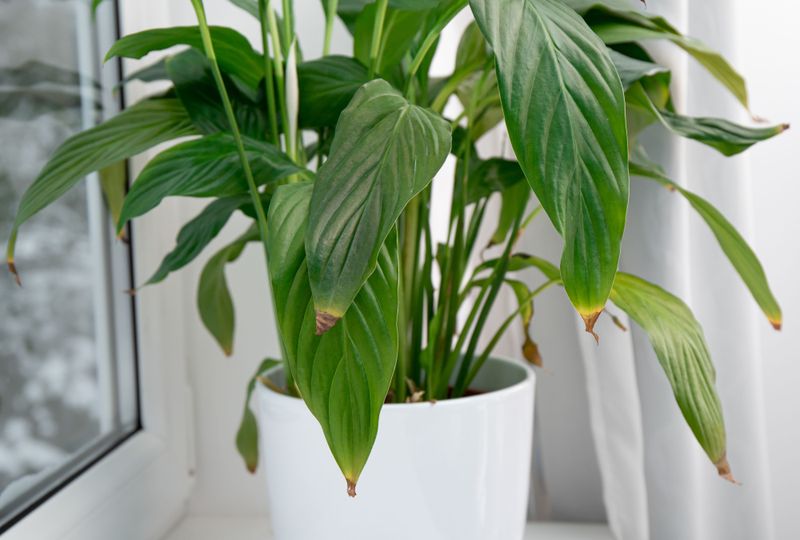
Brown tips on a peace lily usually have a cause you can fix, and water is a good first thing to look at. Nine common possibilities are covered here, from fluoride and salty water to dry air, drafts, and leaf injury.
Think of them as a checklist, not a rule that fits every plant. Winter often makes the problem show up, so a few quick checks today can save your plant’s look for spring.
Water quality is one place to look
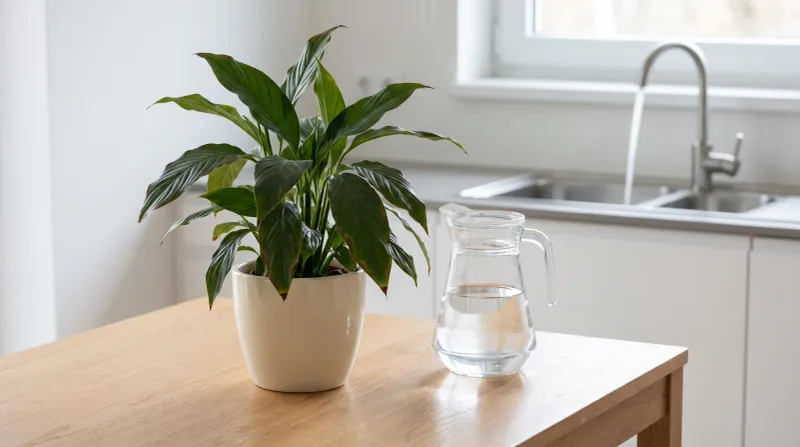
Water is a sensible first stop, though it is not the answer for every plant. Washington State University Extension says tap water suits most houseplants, but it names peace lily as sensitive to fluoride and warns against routinely using sodium-softened water.
Tap water is not one single thing. Fluoride, chlorine, and hardness differ from town to town, and a softener adds sodium to water that may otherwise be fine.
Fluoride sensitivity and softener salts are separate issues, so ask which one could apply to your home.
Start by checking whether a water softener treats the tap you use for the plant. If fluoride is a worry, try a non-softened source, and Illinois Extension suggests distilled water for fluoride-sensitive plants.
Letting water sit overnight lets chlorine escape, but it is not a dependable way to remove fluoride.
Salt buildup and excess fertilizer can burn tips
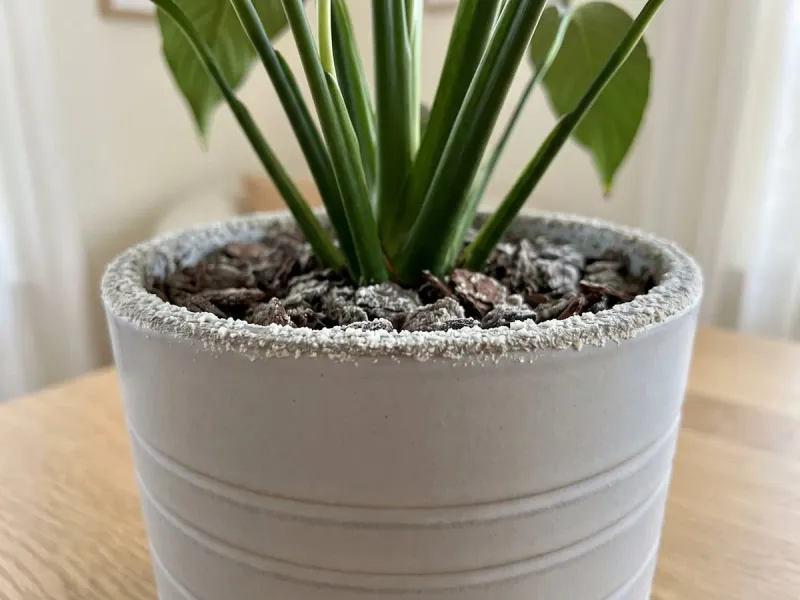
Salts can collect in potting mix from softened or mineral-rich water and from too much fertilizer. A white, crusty film on the pot rim or soil surface is a useful clue.
Brown tips alone cannot tell you whether the culprit is salt, fluoride, or something else.
Peace lilies need little feeding. Clemson Extension suggests quarter-strength fertilizer in spring and summer and warns that too much can burn tips and roots.
If your plant is resting in winter or you have fed it heavily, skip feeding for now.
If you see salt crust, flushing can help, but only when the pot drains well and the mix is not already waterlogged. Colorado State University guidance describes rinsing the mix thoroughly and letting it drain.
Do not leave the pot sitting in the runoff. For severe buildup, replace some mix or repot.
Check the soil before changing your watering
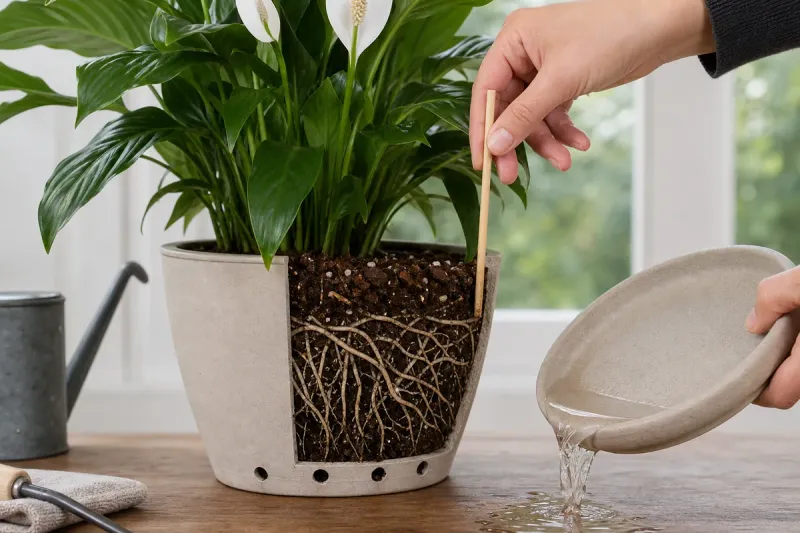
Too little water and too much water can both leave brown tips, so the soil is your best guide. Push a finger into the mix and decide based on what you feel, not what day it is.
Peace lilies like mix that stays moist but not soggy, and North Carolina State Extension describes this balance in its care notes.
When the top of the mix has dried somewhat, water thoroughly until it runs from the drainage holes. Then empty the saucer so roots are not sitting in water.
Soggy roots can fail and cause tip damage that looks a lot like drought.
Winter can change the pattern. Lower light and slower growth mean the plant may use water more slowly, as University of Vermont Extension notes for houseplants.
A brown tip is never a reason to keep the pot saturated.
Dry indoor air may be part of the problem
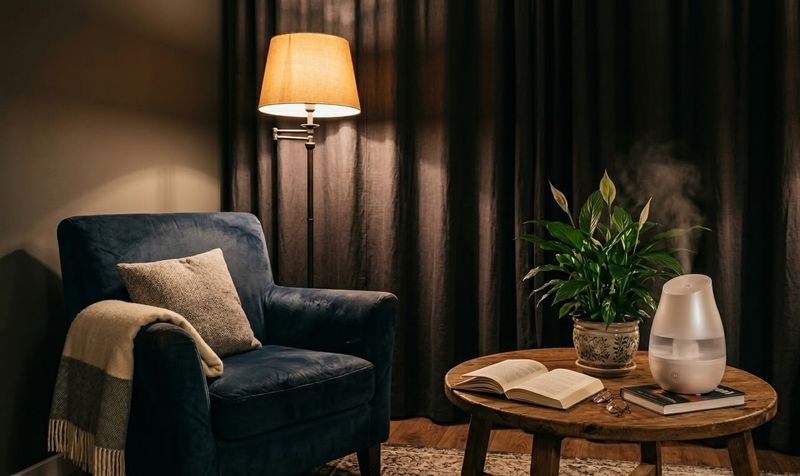
Heated homes in winter can have very dry air, and low humidity is one recognized reason for brown tips. The UC Integrated Pest Management guide lists it among several possible causes.
Dry air is a clue to weigh, not proof, especially if soil and light look fine.
A small humidifier near the plant is the most dependable fix. Grouping plants together also helps, since they release moisture around each other.
University of Minnesota Extension offers winter humidity tips along these lines.
Misting feels helpful but does not last. Iowa State Extension says it raises humidity for only a few minutes and can help spread some diseases.
Check for direct sun, vents, and drafts
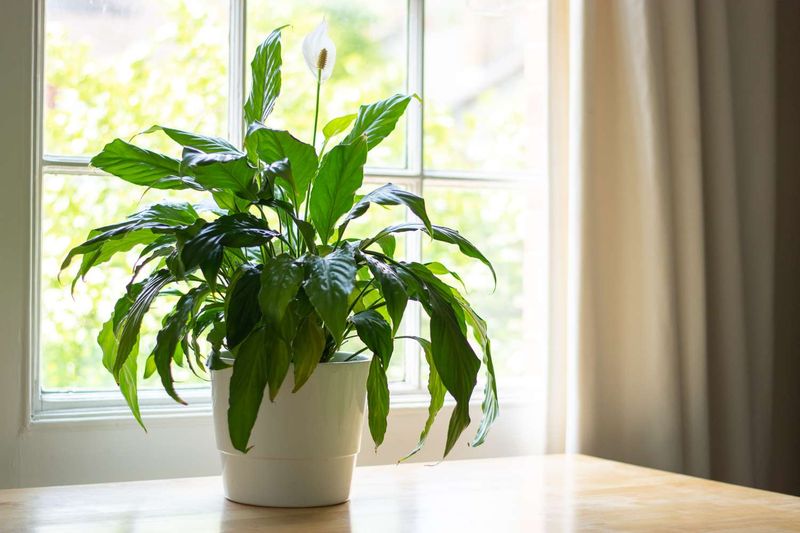
Where the pot sits matters. Peace lilies do best in bright, indirect light, and strong direct sun can scorch leaves.
Look for tips that brown after a sunny afternoon spell, especially on leaves facing the glass.
Moving air matters too. Clemson Extension advises keeping peace lilies away from heat or air-conditioning vents and cold drafts.
A spot beside a heating register, a leaky window, or a frequently opened door could be the issue.
If those clues fit, try a modest change. Slide the pot a few feet back from the window or shift it out of the airflow, as described in North Carolina State Extension’s care notes.
Placement will not explain every brown tip, so keep an eye on the other clues.
Consider recent sprays or physical damage
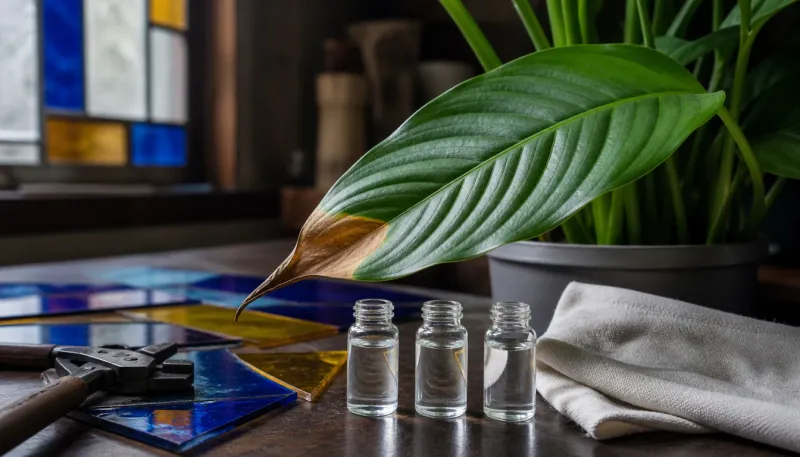
If water, soil, and placement all seem fine, think about what has touched the leaves. A recent spray of pesticide, leaf shine, or cleaner can injure tips.
So can bumps from pets, moving the pot, or brushing past the foliage.
The UC Integrated Pest Management guide lists pesticide and mechanical injury among the possible reasons for brown or scorched tips. Look at timing.
Damage that appeared within days of a spray or a rearranging session is worth noting.
Keep the conclusion modest, though. Brown tips alone do not point to a specific product or event, and several causes can overlap.
South Dakota State University Extension also covers peace lily care basics worth checking alongside. If you suspect a spray, hold off on more products and let new growth show you how the plant responds.
Use the clues to choose one measured fix
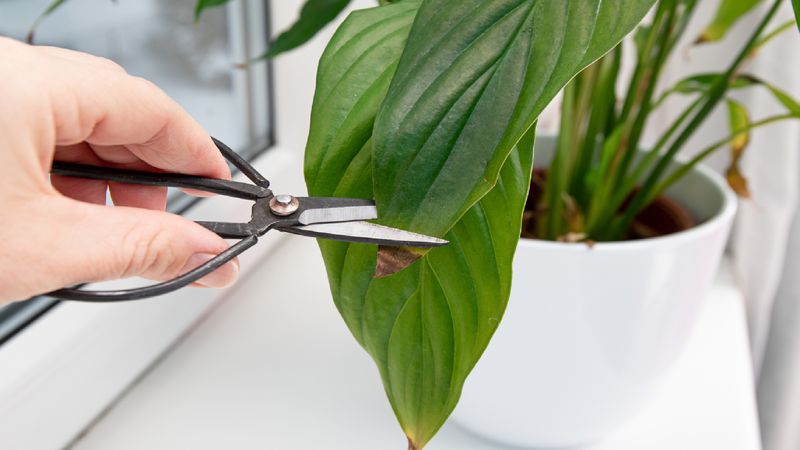
Pick the change that matches what you actually see. Dry soil points to watering, a white crust to flushing, a sunny window or nearby vent to a new spot.
Changing one thing at a time makes it easier to learn what helped, and the UC Integrated Pest Management guide reminds us that brown tips come from many causes.
Trimming is cosmetic. Brown tissue will not turn green again, so cut only the dead brown part and avoid slicing into healthy green tissue.
Wear gloves if kids or pets are around, since University of Georgia Extension materials cover houseplant care and safety.
New leaves are the real report card on your fix.