
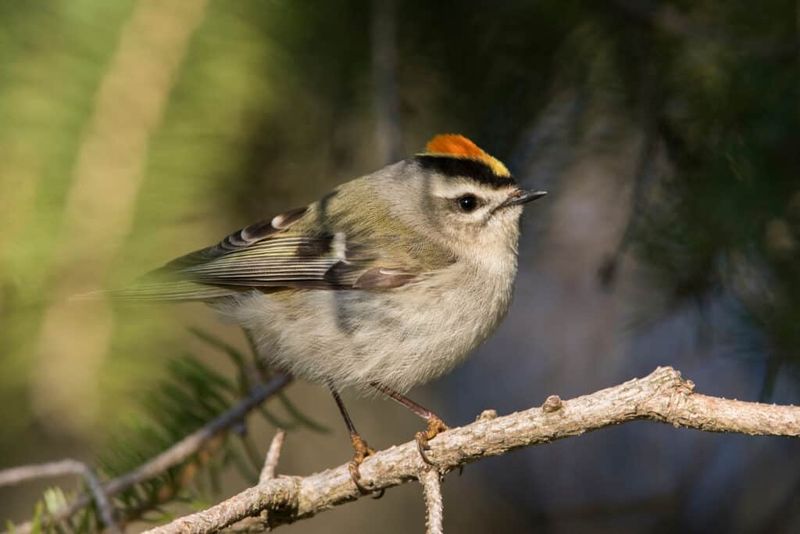
A kinglet in your shrub tells you that a small wintering bird is using woody plants in your yard right now. If it is hopping and picking at leaves, it is also telling you that tiny prey is within reach there at that moment.
That is a useful clue, but it is a modest one. Here is how to read it well, tell the two kinglet species apart, and decide what to do with your shrubs.
A kinglet is using the shrub, not grading it
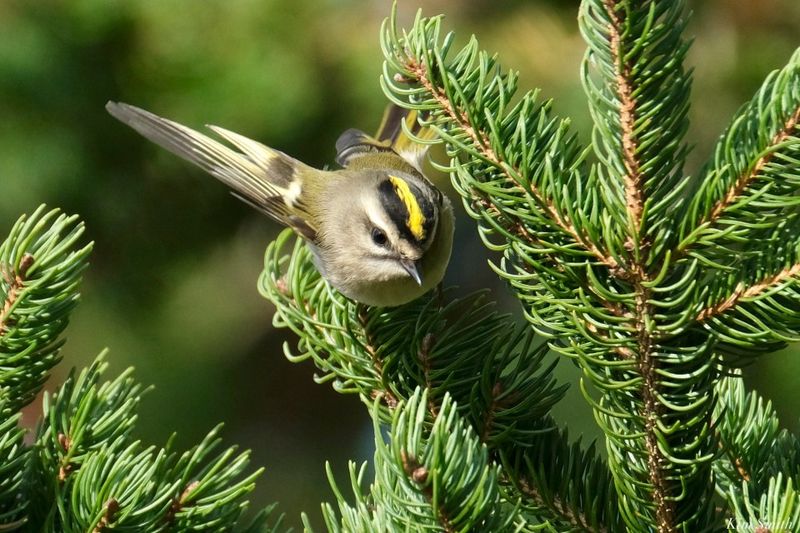
Picture a bird barely bigger than your thumb, working its way through a yeaupon or a cedar elm thicket. What you are seeing is a wintering bird using woody vegetation.
That is the plain, trustworthy part of the sighting.
If the bird is moving from twig to twig and picking at leaves and bark, it is gleaning. Kinglets eat small insects, insect eggs, spiders, and other tiny arthropods, as described in Cornell’s Ruby-crowned Kinglet life history.
Golden-crowned Kinglets are also described as mostly insect eaters in their own life history account. So active gleaning suggests that small prey is accessible on that shrub at that moment.
The shrub may also give the bird some cover from wind or hawks. That is a reasonable guess, but the sighting alone does not prove it.
A bird passing through cannot tell you why it picked that spot.
Just as important is what the sighting leaves out. It is not a grade on the plant.
A kinglet does not show that your shrub is thriving, that your soil is good, or that your yard is healthy overall.
Think of it as a snapshot. One bird, one shrub, one moment of usable winter foraging structure.
Enjoy it, note it, and keep your conclusions in proportion to what you actually saw.
What can you identify in a quick glimpse?
Kinglets rarely hold still, so you often get only a second or two. Focus on the face and the wings.
Those two features separate the species better than overall color.
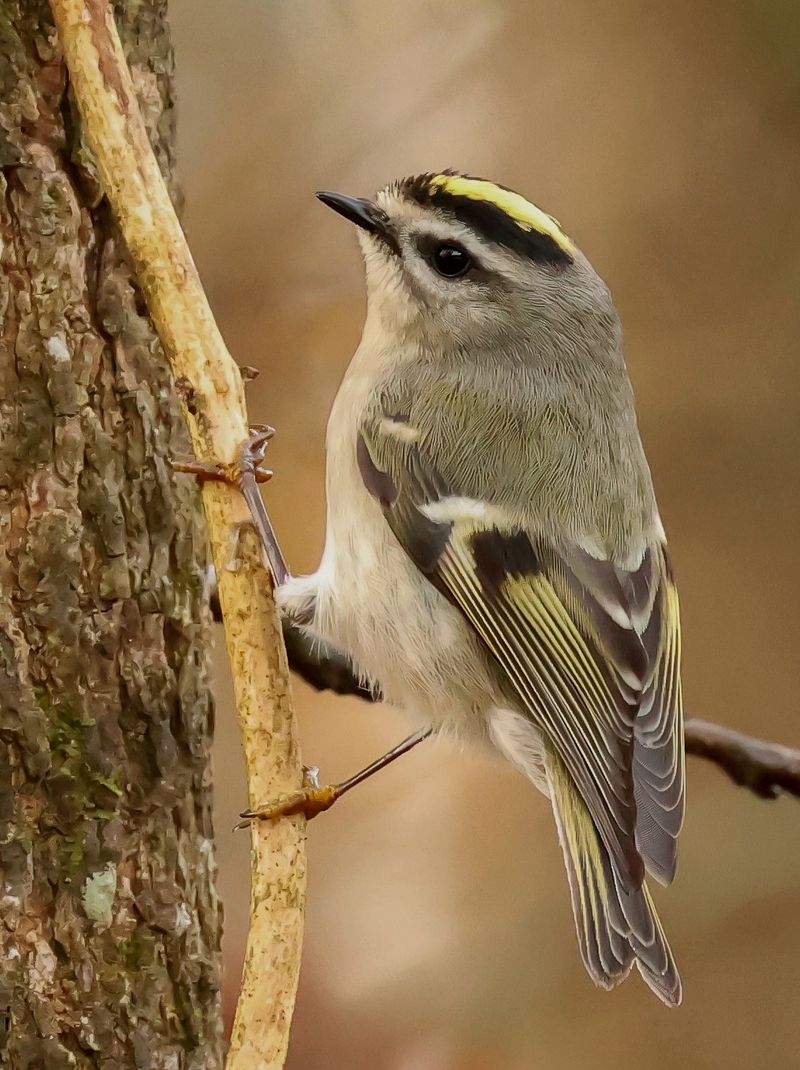
A Ruby-crowned Kinglet has a pale eye ring that gives it a wide-eyed look, and it flicks its wings almost constantly, according to Cornell’s overview. The male’s red crown is often hidden, so do not expect to see it.
Most birds you meet in winter will simply look like a plain olive-gray bird with those nervous wings.
A Golden-crowned Kinglet looks bolder. Audubon’s field guide describes strong dark facial markings and a yellow crown.
If you see a striped head, you are probably not looking at a Ruby-crowned.
Both species have regional seasonal records. The Texas Parks and Wildlife Edwards Plateau checklist lists Ruby-crowned Kinglets from October through April, and Golden-crowned Kinglets in October and November and again from January through April.
Those dates describe the region, not your yard. They do not guarantee a visit to any particular property, and they do not show that one shrub drew the bird in.
If you cannot be sure which kinglet you saw, saying kinglet is perfectly fine.
Active gleaning means small prey is reachable
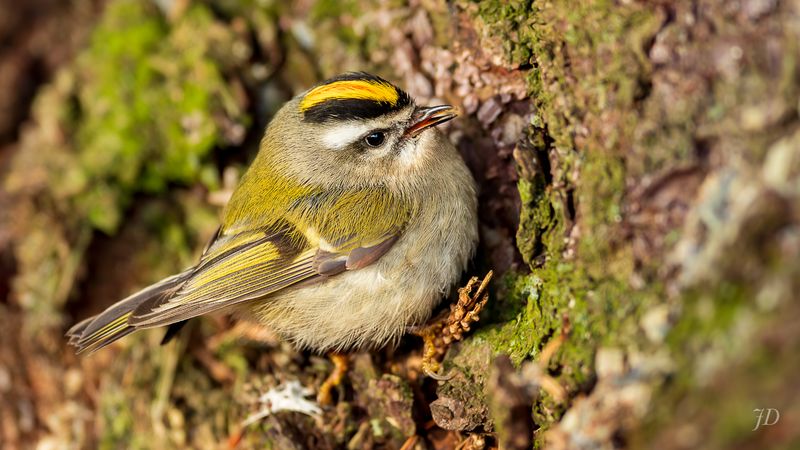
Gleaning is the bird’s way of plucking food from surfaces. A kinglet may peer under a leaf, probe a bark crack, or hover briefly to snatch something off a twig tip.
When you watch that happen, you know something edible was within its reach.
The Ruby-crowned Kinglet has a varied menu. Cornell notes that it eats spiders and many kinds of insects, including aphids, and also takes small amounts of seeds and fruit, as laid out in its life history page.
That flexibility is part of why it can make a living in winter.
The Golden-crowned Kinglet leans harder on insects. Its Cornell account describes a mainly insect diet, with small amounts of seeds in winter.
It may also work brush piles and understory trees, so check low spots as well as the tops of shrubs.
Put together, a foraging kinglet shows that your shrub works as usable winter foraging structure. It has twigs, leaves, and crevices the bird can search.
That is a statement about access, not about quantity.
You cannot count insects by watching a bird. A kinglet might find one tiny meal per minute or one per second, and from the sidewalk you will not know which.
One bird cannot measure a yard’s insect life
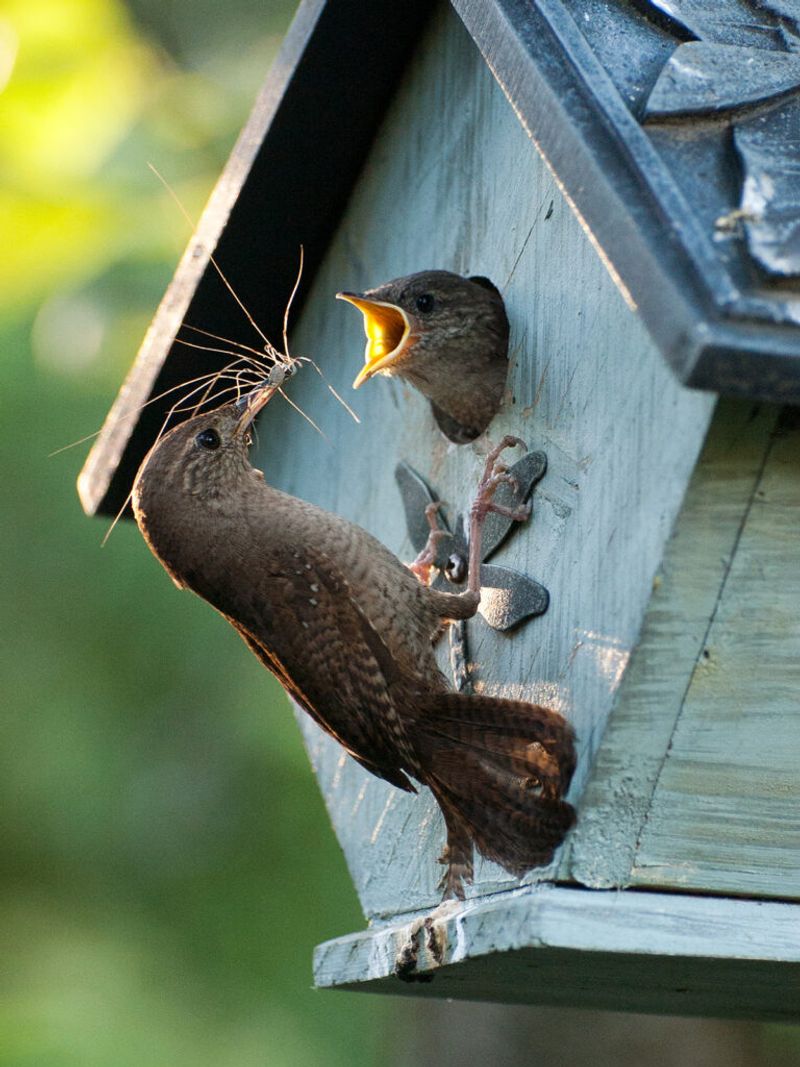
Let’s say a kinglet spends ten minutes in your pittosporum. It is tempting to read that as a report card.
It is not one.
A feeding sighting does not measure how many insects are present. It does not diagnose an infestation either, and a bird picking at leaves is not a sign your shrub has a pest problem.
Kinglets take varied small prey, so what they eat tells you little about what is wrong with a plant.
Aphids are a good example. Ruby-crowned Kinglets do eat them, according to Cornell’s life history, but eating aphids does not establish pest-control results.
Do not count on a passing bird to clean up an outbreak.
Pesticide history is another thing a sighting cannot reveal. A bird can feed in a yard that was sprayed last month or one that never was, and you cannot tell the difference by watching.
Finally, the bird may simply be using one suitable patch in a broader winter landscape. The Edwards Plateau checklist documents seasonal occurrence across the region, and the Golden-crowned Kinglet account shows how widely these birds roam for food.
Neither tells you that your yard caused the visit.
Treat a pest problem only after you identify one
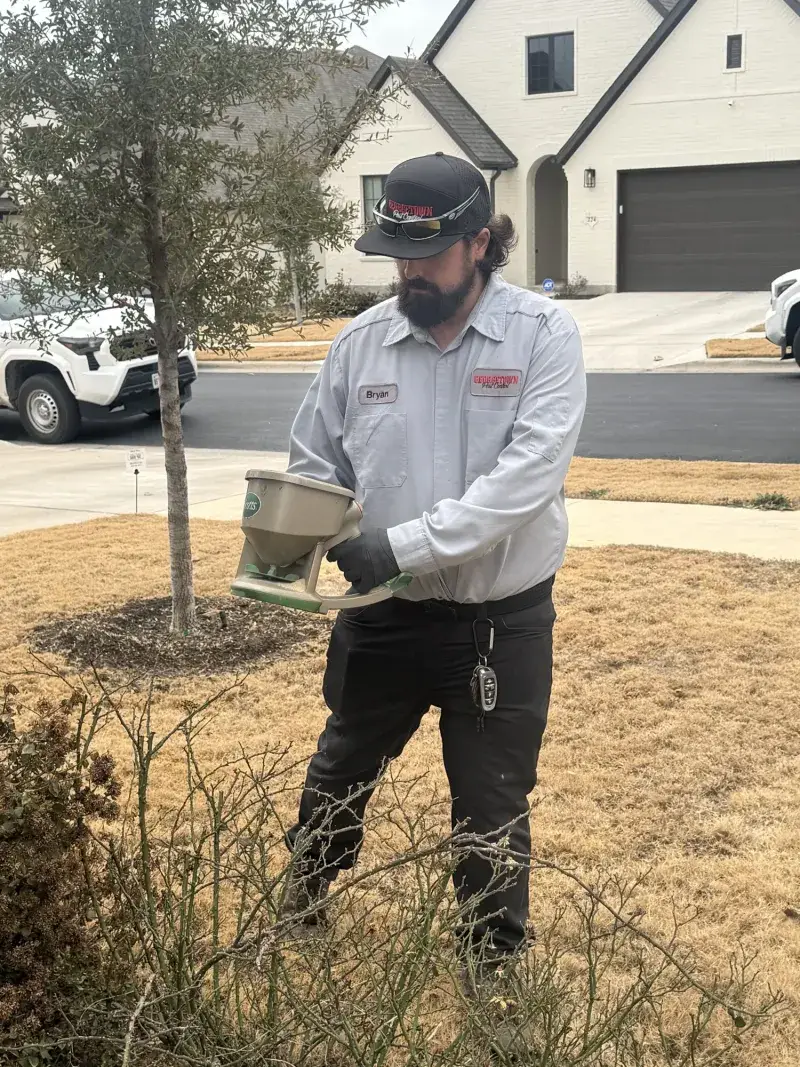
Seeing a bird feed on a shrub is not a reason to reach for a spray bottle. Many insects on your plants are harmless, and some are helpful.
Spraying because something is crawling there can cause more trouble than it solves.
Austin’s integrated pest management guidance suggests a better order. First, figure out whether you have a problem and what is causing it.
Then use pesticides only as a last resort.
A few diagnostic clues can help. Look for actual damage, such as chewed leaves, sticky residue, distorted new growth, or dieback.
Check the undersides of leaves with a hand lens. If you cannot name the culprit, a county extension office can help you identify it.
If treatment turns out to be necessary, choose the least-toxic option and use the minimum needed. That keeps the risk lower for birds, pollinators, and the creeks downstream.
Austin’s wildlife habitat guidance also encourages reducing or eliminating harsh pesticides. Treat that as general wildlife-friendly practice.
It is not an explanation for why a kinglet showed up, and a kinglet does not prove your yard passes the test.
Keep useful winter vegetation in place when you can
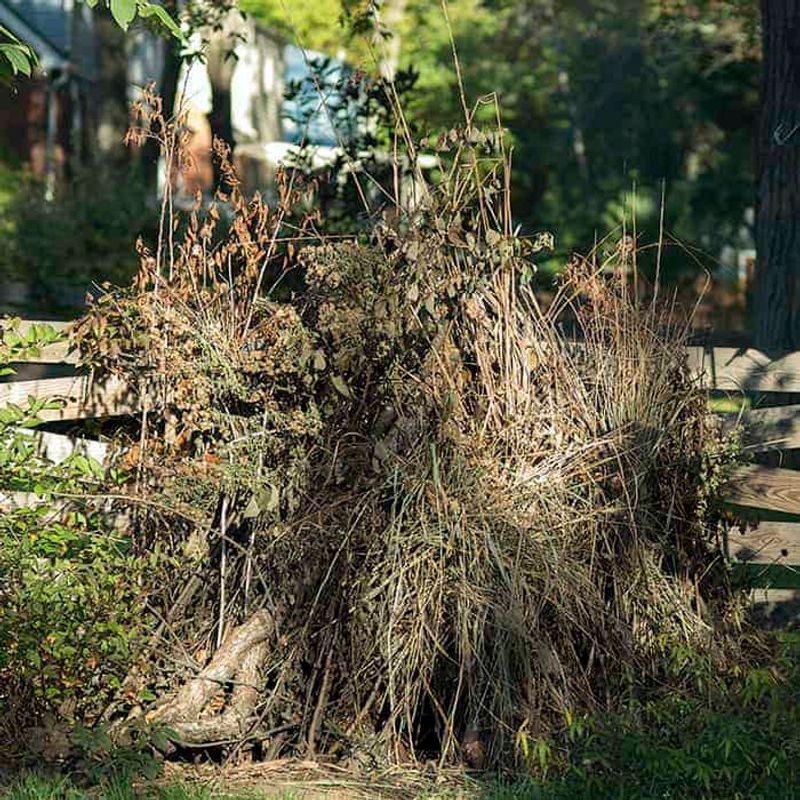
Winter is when many homeowners feel the urge to tidy up. Before you cut back that tangle, remember that woody plants can offer food and shelter to birds that are passing the season in your area.
Texas Parks and Wildlife advises planning vegetation removal around site needs and scheduling it after winter.
That does not mean every shrub must stay. A branch that blocks a walkway, a dead limb over the roof, or a fire-safety clearing may need to go.
The goal is to avoid unnecessary removal, not to freeze your yard in place.
When you plant, think long term. Austin’s habitat guidance suggests choosing plants suited to your local ecoregion.
Treat that as broad habitat advice for any wildlife, not a recipe for attracting kinglets.
A low brush pile or an understory tree can also give small birds somewhere to forage. Golden-crowned Kinglets in particular may work such spots, as noted in the Cornell life history, while Ruby-crowned Kinglets glean from leaves and branches, according to their account.
So the proportionate takeaway is simple. The bird is using woody structure, and active foraging shows prey is within reach.
It is a small gift on a cold morning, not a certificate.