
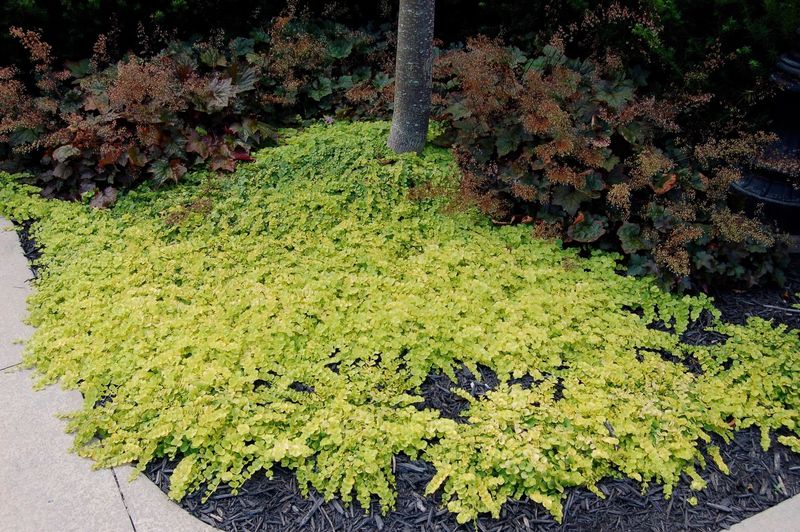
If your shady border is overrun with ajuga, green-and-gold is the native ground cover to try in its place. It forms a low mat, spreads on its own, and belongs in North Carolina woods.
Spread speed, drainage, and which plant you actually buy all matter, so a little planning pays off. Here is how to swap one for the other and keep the new planting happy.
Why ajuga can be hard to keep in its border
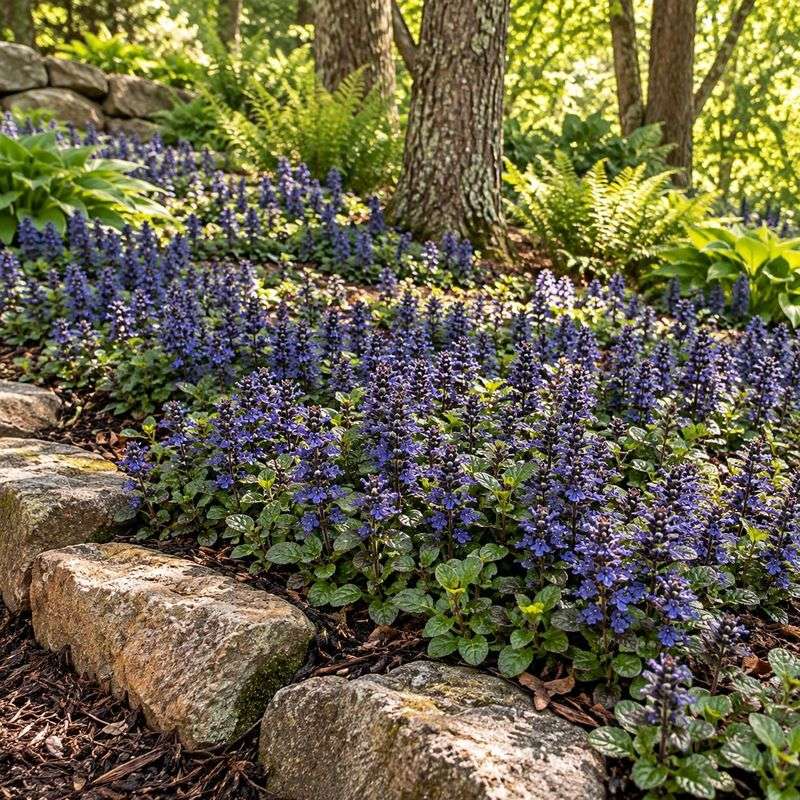
Ajuga looks tidy at the nursery, but it comes from Europe, northern Africa, and southwestern Asia, not from North Carolina. NC State Extension describes it as a rapid grower and warns against planting it near lawns or perennial beds, where its spread can make removal difficult.
That is the real problem for most homeowners. Runners slip past the edging, root into the grass, and pop up between your hostas and ferns.
Pulling them out of a lawn or a crowded bed takes patience.
It helps to keep the threat in proportion. The same extension page calls ajuga a low threat to native plant communities in the state, and the NC Native Plant Society places it in Rank 3, the lesser threat category.
North Carolina’s flora records, found in the Vascular Plants of North Carolina account, list it as a lawn weed, with some plants seeding in from gardens.
So ajuga is not a statewide ecological villain. It is a pushy, nonnative plant that can outgrow the spot you gave it.
If you are tired of policing its edges, a native mat-former is a reasonable swap.
Two green-and-gold plants form low mats
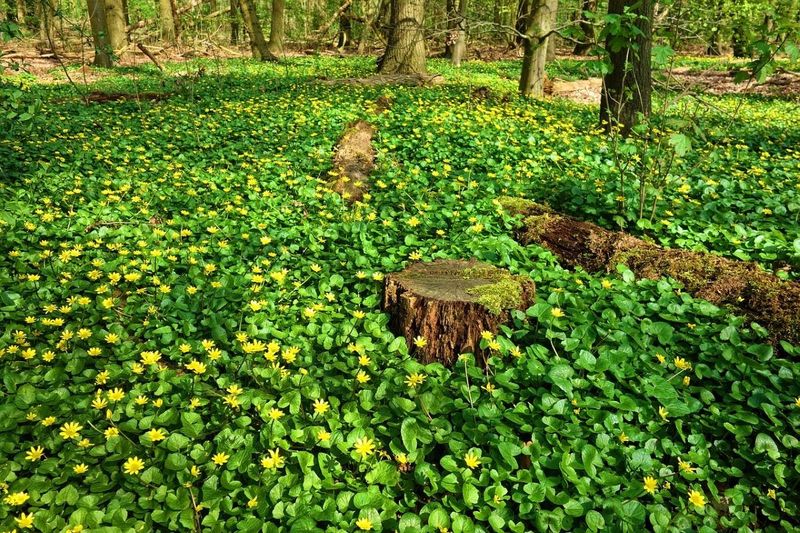
Green-and-gold is a low, semi-evergreen native that suits shade, and it is the plant to look at first as an ajuga replacement. The name covers more than one plant, though.
NC State Extension lists Chrysogonum virginianum and Chrysogonum repens on separate pages, and both can carry green-and-gold names.
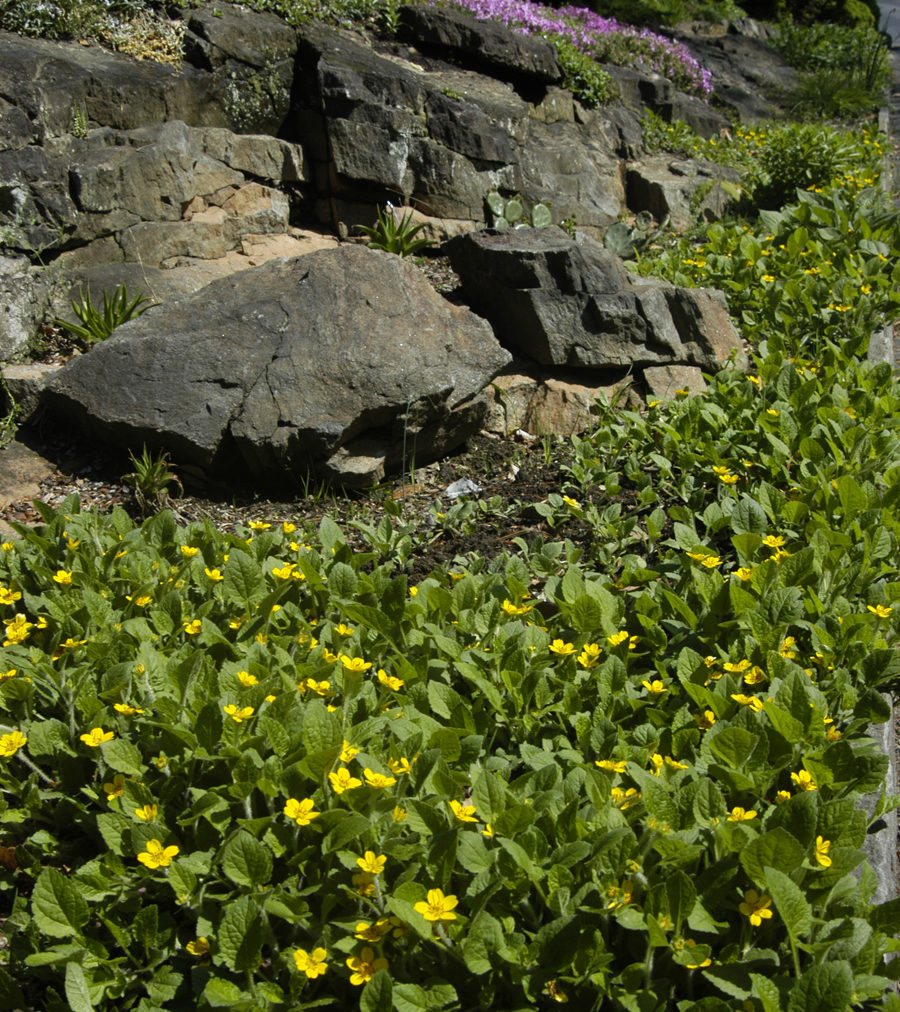
For the familiar C. virginianum, extension describes a mat up to about 2 inches tall that spreads 18 inches or more. It does well in part to full shade and medium-moisture, well-drained soil, and it may self-seed.
Small yellow flowers sit above the foliage.
The other plant, listed as Carolina green and gold, spreads by stolons, which are creeping stems that root as they go. It can also form a mat and likes shade to partial shade in well-drained soil.
Because they are listed separately, you should not assume one tag at the garden center means the same plant. A shared common name does not make them interchangeable, and older variety names add more confusion.
Look for the botanical name on the label before you buy.
What the growth descriptions tell you
Does green-and-gold spread as fast as ajuga? The sources describe both as spreaders, but they never run a head-to-head test, so no one can promise a match.
What you can do is read the descriptions side by side.
NC State Extension calls ajuga a rapid grower. For C. virginianum, growth is described as moderate to rapid.
The C. repens profile describes spread by stolons and lists a medium growth rate.
One more detail comes from Brunswick County Extension. It says the longer-stoloned southern variety, var. australe, colonizes larger woodland sites faster than the other varieties.
That compares forms of green-and-gold with each other, not with ajuga.
The practical meaning is simple. Expect a spreading mat that fills in over a few seasons, and plan to space plants with that in mind.
Treat the speed as a bonus you will see in your own yard, not a guarantee.
Check drainage, light, and regional fit
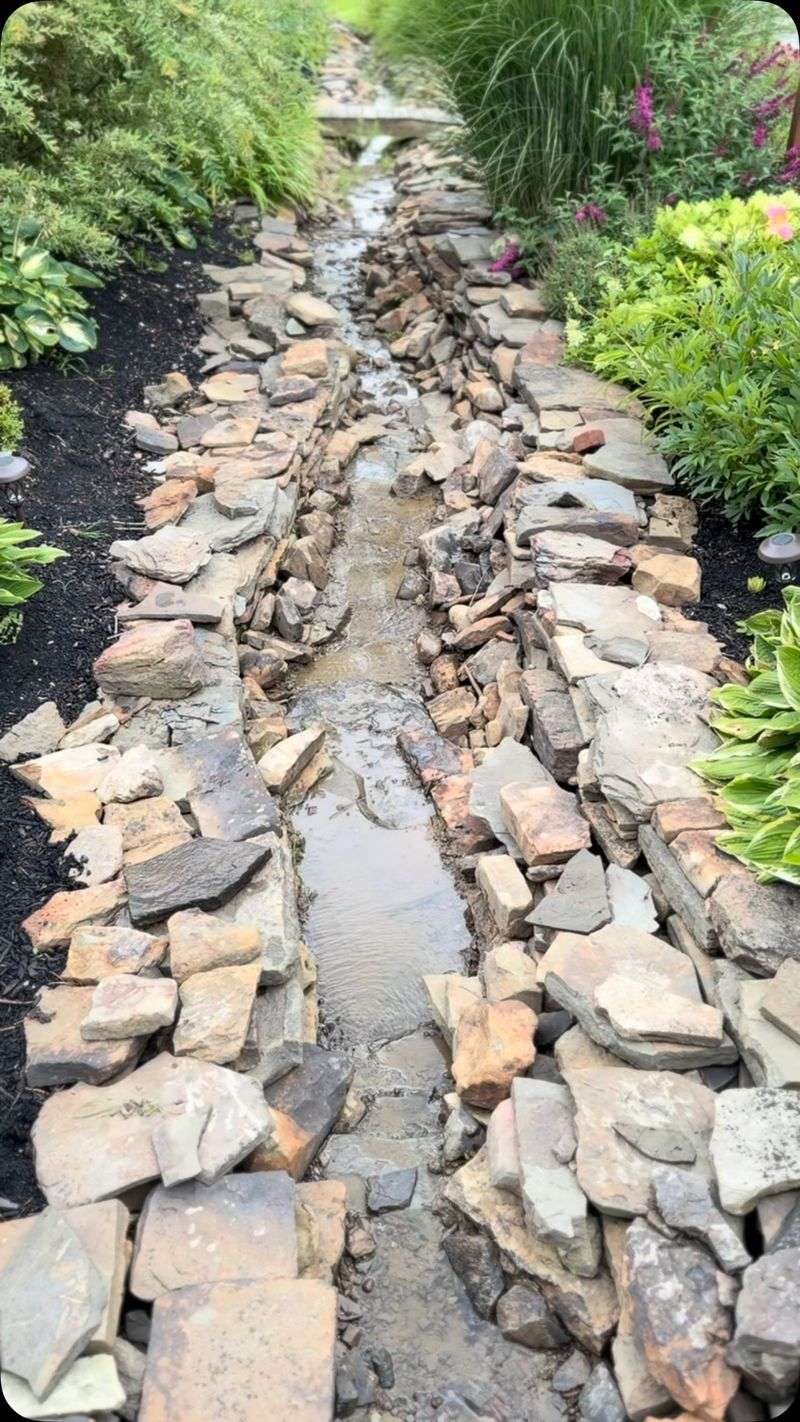
Before you buy anything, look at your border at different times of day. Green-and-gold wants part to full shade and soil that drains well.
A spot that stays soggy after a storm is a poor match, no matter how shady it is.
Region matters too. The Plant Toolbox lists C. virginianum for the Coastal Plain, Mountains, and Piedmont, while C. repens is listed for the Mountains and Piedmont.
A native plant is not automatically right for every North Carolina yard.
Rot is a site risk for both plants. Extension reports that ajuga can get crown rot in very humid conditions and heavy soils, and the Texas A&M disease handbook ties it to poor drainage and warm, humid weather.
Carolina green-and-gold can develop root rot in poorly drained soil.
So the swap helps only if the site is right. Heavy Piedmont clay may need compost worked in or a raised edge.
Ask a native-plant nursery to confirm the botanical name and which stock suits your region.
Clear ajuga and weeds before planting
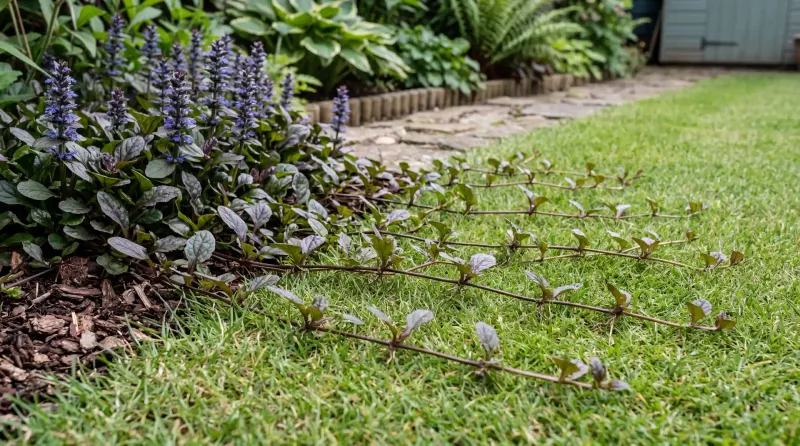
Start by pulling or digging out the ajuga. Follow the runners back to the main clumps and lift as much root as you can.
Extension notes how hard ajuga is to remove, so treat this as a first pass rather than a one-day cure.
Next, clear the weeds that would compete with new plants. Bare, loosened soil gives green-and-gold a clean start.
Check the border again in a few weeks, because missed pieces of ajuga may resprout and need pulling.
Then plant. Brunswick County Extension recommends dividing the crown in late spring or transplanting rooted stolons in fall.
Either way, set plants with room to spread instead of crowding them.
Do not expect an instant carpet. The first season looks sparse, and that is normal.
A thin layer of leaf mulch between plants can hold moisture while the mat fills in, as long as you keep it off the crowns.
Water during establishment and watch the border
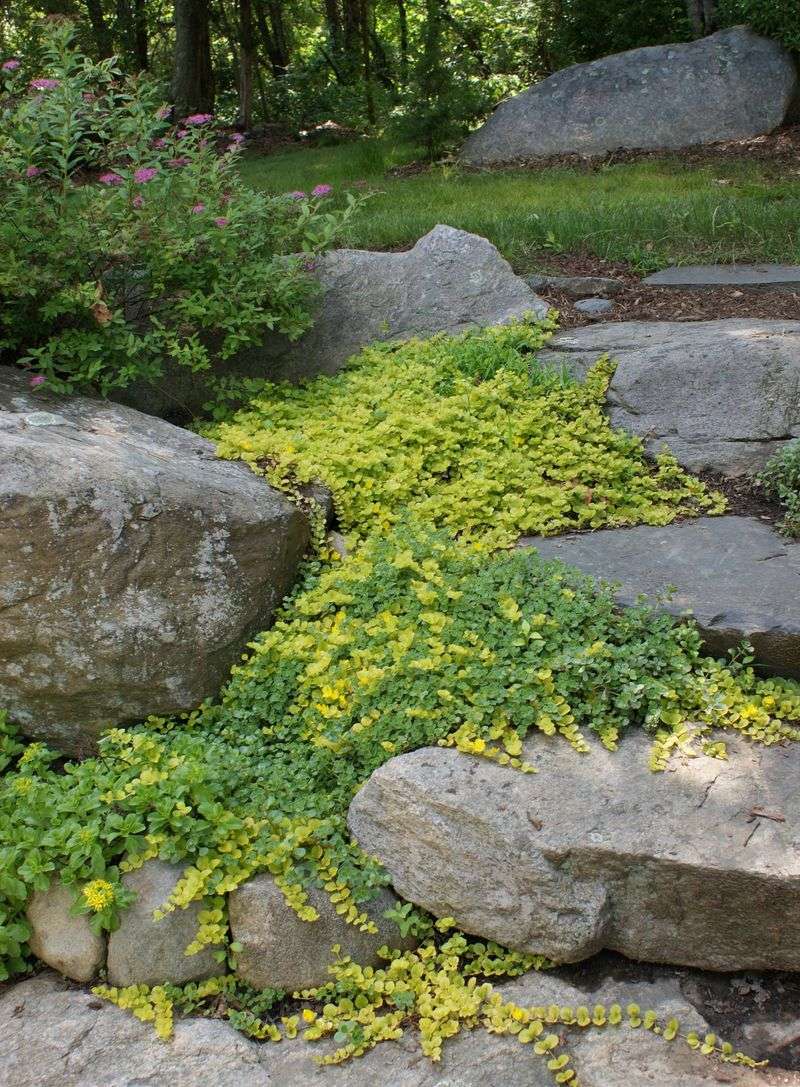
New plants need steady water. Keep the soil evenly moist while they root in, and water during summer drought as well.
Brunswick County Extension stresses this especially where afternoon sun reaches the plants. Moist does not mean soggy, so let drainage do its job.
Green-and-gold is not a no-care plant. Extension suggests removing spent flower stems for the best look, and it notes occasional mildew.
If leaves turn powdery or the mat looks tired in a humid stretch, give the planting more air and avoid watering late in the day.
Walk the edges now and then. Carolina green-and-gold spreads by stolons, and C. virginianum may self-seed, so a few strays can wander.
They are easy to lift and move to a bare patch.
Handled this way, the border gets thicker each year without the lawn battles ajuga brings. A native mat still wants a gardener who pays attention.