
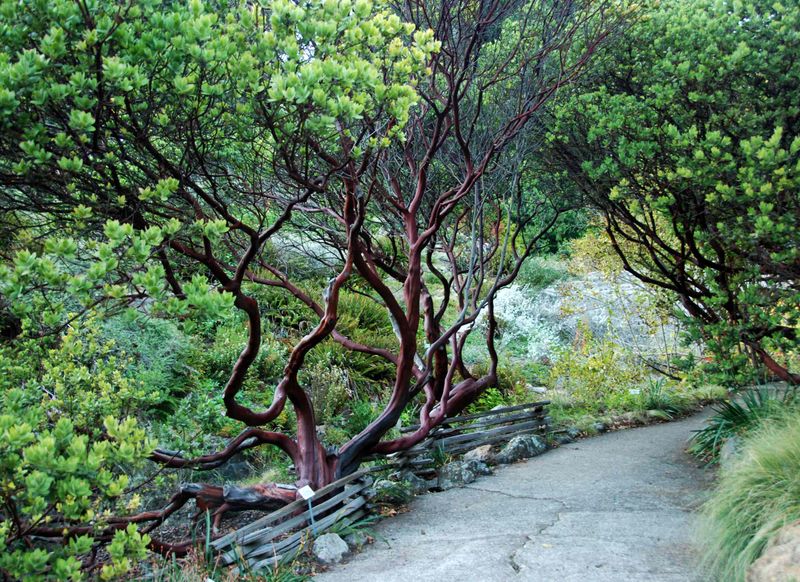
Winter in California can be a hungry time for birds, even when the hills turn green. Many of the bugs they eat in summer disappear, so robins, waxwings, and thrushes go looking for fruit.
The good news is that a few native shrubs hold their berries for months, turning your yard into a reliable snack stop. Plant the right ones, and you will have bright feathers and busy songs outside your window from December to March.
1. Toyon (Heteromeles arbutifolia)
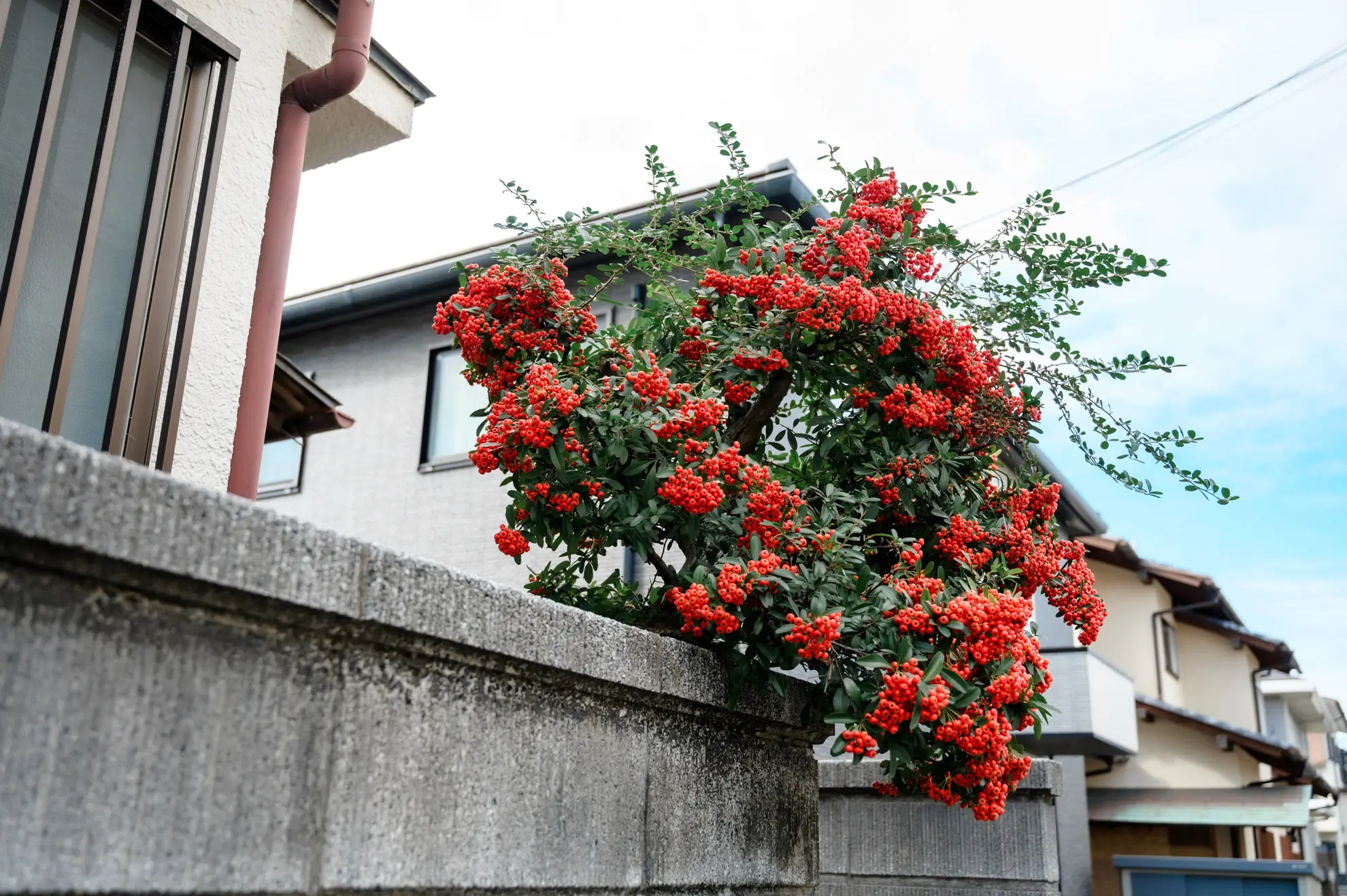
Legend says Hollywood got its name from this shrub, once called California holly, that covered the hills above Los Angeles. Its red berry clusters ripen right around the holidays, and they hang on well into February.
Birds actually wait for the fruit to soften before feasting. That delay is a gift, because it stretches the buffet deep into winter when other food runs low.
Cedar waxwings, mockingbirds, robins, and hermit thrushes all line up for a turn.
Toyon grows 6 to 15 feet tall and handles clay, slopes, and summer drought once established. Give it full sun to part shade and skip the summer water after year two.
It also makes a handsome evergreen screen along a fence line without heaving pavement.
2. Coffeeberry (Frangula californica)
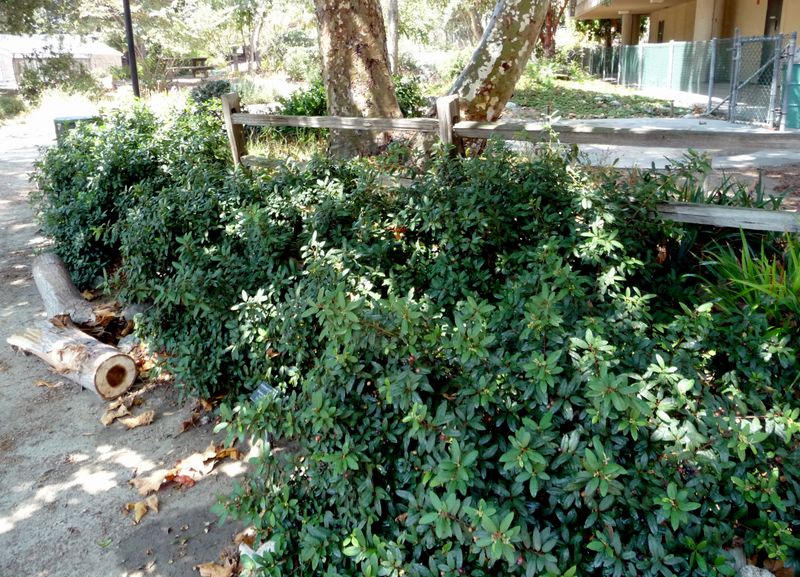
Picture a shrub that changes outfits as its fruit ripens, from green to red to deep, glossy black. Coffeeberry does exactly that, and birds track every shift like shoppers watching a sale.
The berries look like coffee beans, but please do not brew them. Band-tailed pigeons, thrushes, and towhees, however, gobble them happily through late fall and into early winter.
Compact varieties like ‘Eve Case’ stay around 4 to 6 feet, making them a smart swap for thirsty privet or boxwood. They tolerate shade, clay, and dry summers with ease.
3. Lemonade Berry (Rhus integrifolia)
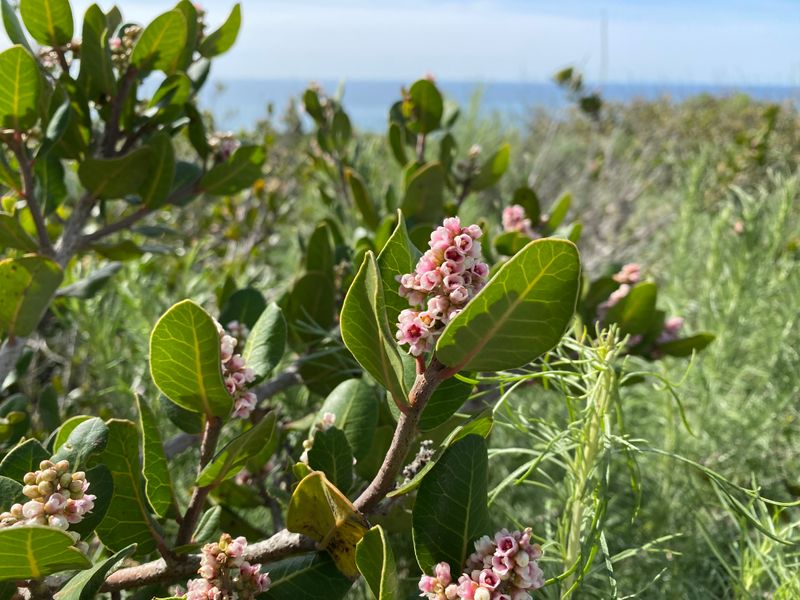
Kids in old California used to soak these sticky berries in water to make a tangy drink. Birds skip the recipe and just eat them straight off the branch.
Lemonade berry is a tough coastal shrub with leathery leaves that shrug off wind, salt, and drought. Its fuzzy reddish fruit lingers through winter, feeding quail, towhees, and thrashers that like to forage low.
Its dense, spreading roots make it a champion for holding hillsides before winter storms. If you live south of Santa Barbara or near the coast, this one deserves a spot.
4. Hollyleaf Cherry (Prunus ilicifolia)
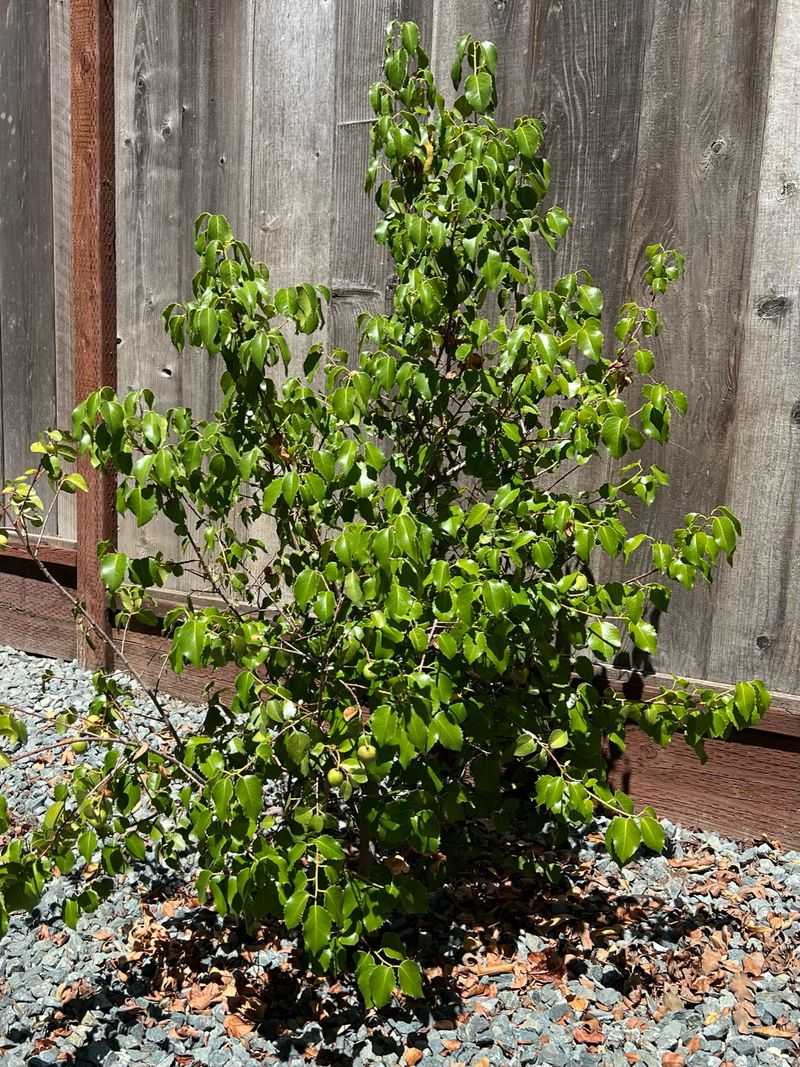
Spiky leaves, sweet cherries, and serious privacy power. Hollyleaf cherry checks a lot of boxes for a homeowner who wants birds and a green wall at once.
The fruit ripens in late fall, and while the flesh is thin, birds and scrub jays love it. Leftover fruit that drops keeps ground-feeding birds busy into winter.
The prickly foliage gives small birds a safe hiding place from hawks and cats. Plant several in a row for a dense evergreen hedge that needs little water after the first couple of summers.
5. Blue Elderberry (Sambucus nigra ssp. caerulea)
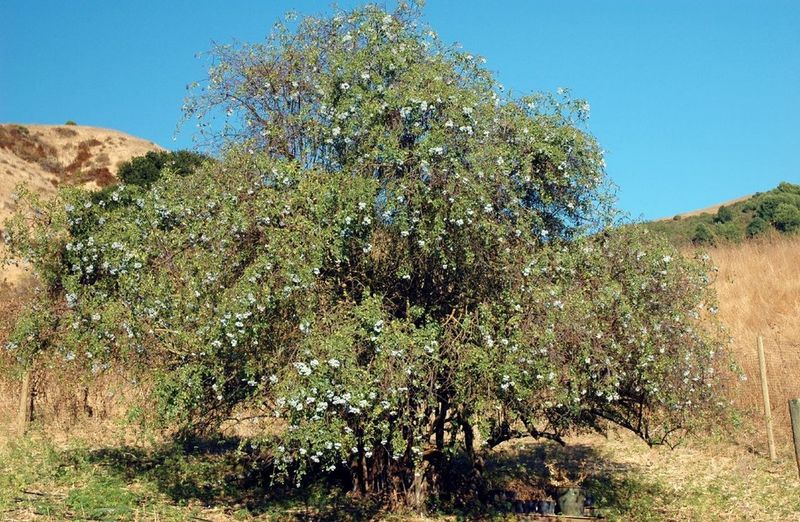
Ever seen a whole flock of bluebirds descend on one shrub? Blue elderberry has that kind of pull, with heavy clusters of powdery blue fruit.
Fruiting can stretch from summer into fall, and dried berries often remain on the branches as winter begins. Phainopeplas, grosbeaks, and bluebirds are frequent visitors.
It grows fast and large, so give it room near the back of the yard. It goes semi-dormant in winter, which lets more light reach plants beneath it.
6. Manzanita (Arctostaphylos)
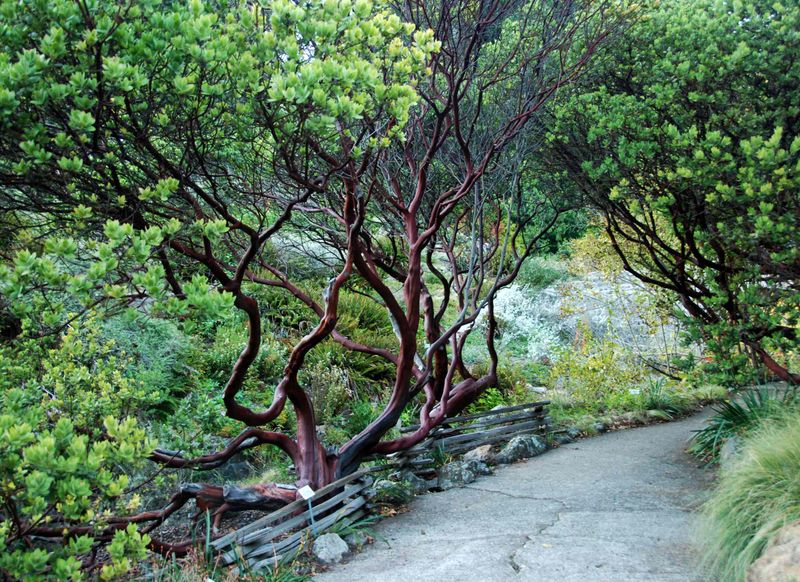
Here is the shrub that pulls double duty. Manzanita blooms in winter, feeding hummingbirds with tiny pink bells, then forms little apple-like berries that birds and wildlife enjoy.
Its twisting red bark looks like sculpture all year. Varieties range from low groundcovers to small trees, so there is one for nearly any yard.
The key is drainage and almost no summer water. Treat it kindly by leaving it alone, and it will reward you for decades.
7. Pink-Flowering Currant (Ribes sanguineum)

Spring arrives early when this currant starts dangling pink flower chains in late winter. Hummingbirds show up almost the same week.
Later, blue-black berries feed robins, thrashers, and towhees. That timing bridges the gap as other shrubs on this list run out of fruit.
It loves dappled shade and fits nicely under oaks. Pair it with toyon and coffeeberry, and your yard serves birds nearly year-round.
Plant a mix of these seven, and the birds will learn your yard is worth the trip all winter long.