
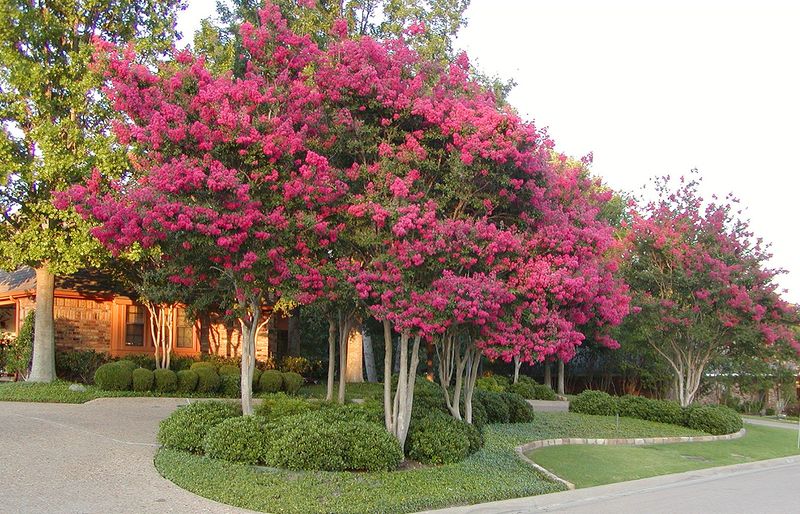
Your crape myrtle does not need a hard winter chop to bloom next summer. These trees flower on new growth, so they will make flowers without being cut back to stubs.
Skipping that severe cut can protect the number of flower clusters and keep bloom from running late. Here is what to do instead, and when a few careful cuts still make sense.
What severe topping can change about the bloom
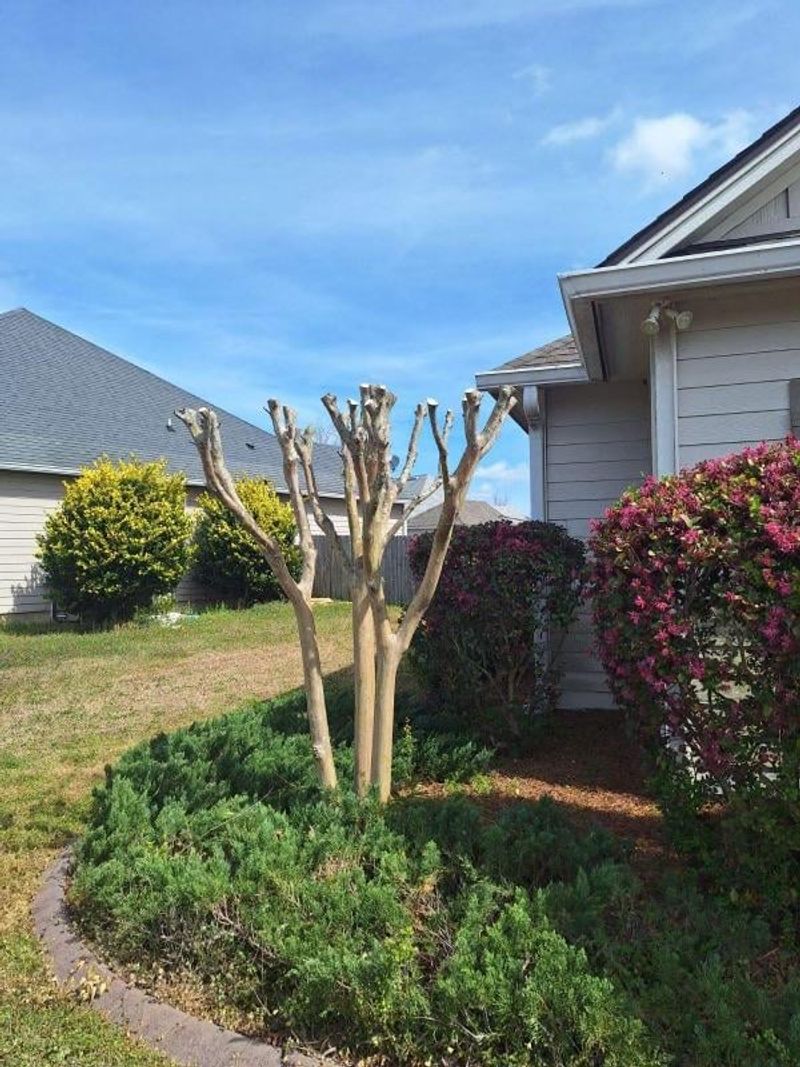
Crape myrtles flower on new growth, which means they do not need annual severe topping to bloom. Topping is the practice of cutting stems to an arbitrary height, often leaving blunt stubs about the thickness of an arm or a thumb.
It is the cut people mean when they say crape murder, and it is different from every other winter pruning job.
According to University of Florida guidance on crapemyrtle pruning, topping can delay flowering and reduce the number of flower clusters. It also sets off a flush of vigorous regrowth, with many thin shoots sprouting from each cut end.
Those shoots can be crowded and weakly attached, and they may flop under the weight of summer blooms.
Topping is also different from specialized pollarding. Pollarding is a deliberate, long-term system in which the same knuckles are managed each year, and it is not the same as lopping a tree back at random heights.
Even so, Virginia Tech Extension treats severe cutting as something to avoid on ordinary landscape trees.
Plants do not all respond the same way, so a topped tree may bloom fine in one year and poorly in another. Skipping the severe cut will not promise a bigger show, and it does not mean every cut is harmful.
It simply removes a job that your tree never needed.
Flower size, flower count, and bloom timing differ
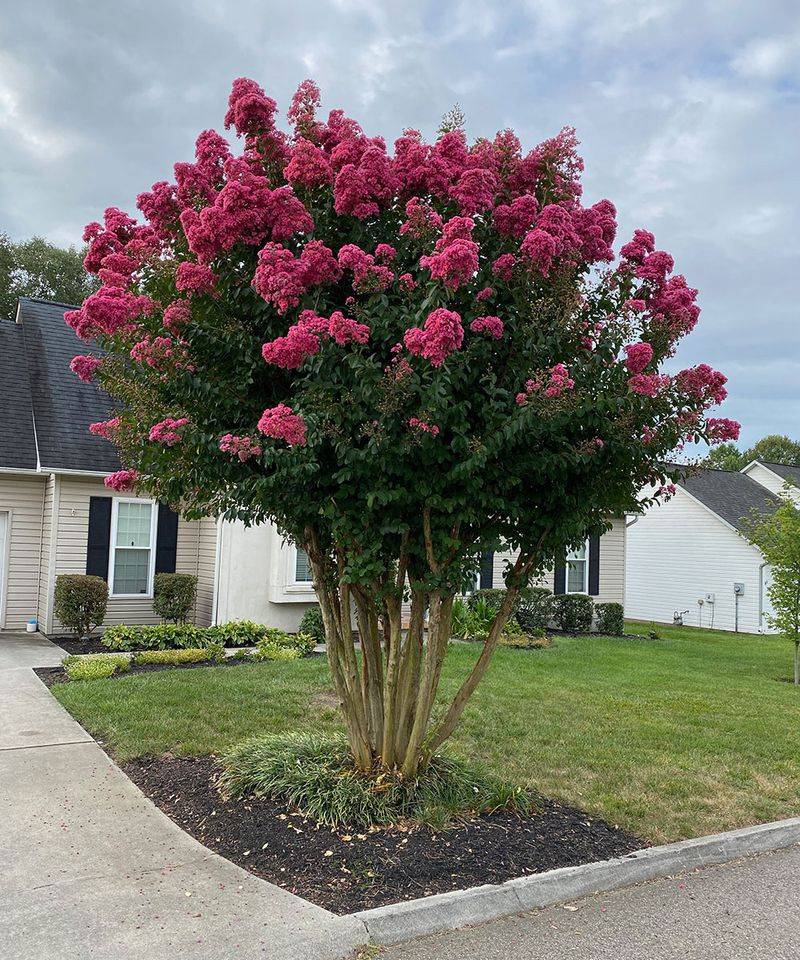
When people talk about bigger blooms, they may mean four different things: the size of each flower cluster, called a panicle, the total number of clusters, when the tree starts blooming, and how long the show lasts. Each can respond differently to pruning.
Mixing them together is how the topping myth keeps going.
Per University of Florida research-based guidance, pruning may slightly increase panicle size. At the same time, the number of flowers tends to decline as pruning gets more severe.
An unpruned tree may therefore carry more clusters, each a bit smaller, while a pruned one may carry fewer, slightly larger ones.
Timing matters too. Topping can push the first blooms back by up to a month, which shortens the stretch of summer color you get to enjoy.
Some cultivars may also have a shorter bloom season after severe cutting, though not every plant reacts identically.
The practical takeaway is that no pruning method is a dependable way to boost the whole summer display. A slightly larger cluster is a small trade, and it can cost you flower count and weeks of color.
If you count your blooms by total show rather than single heads, leaving the tree uncut is a sound default.
Make selective cuts for a clear reason
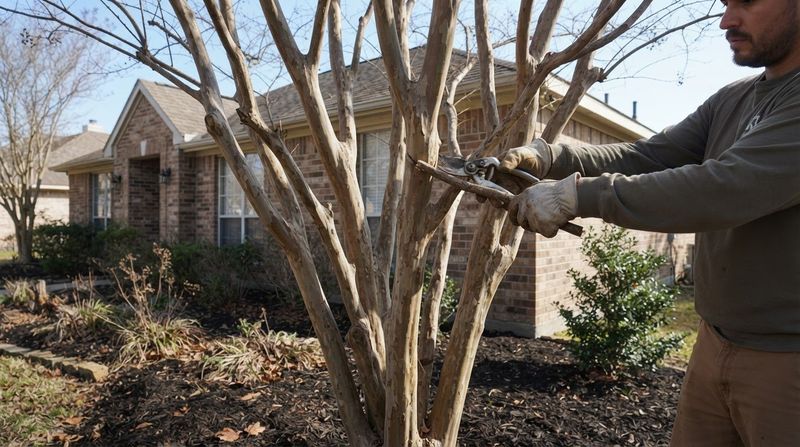
Selective pruning is a different job from topping. Instead of chopping the whole canopy to one height, you remove particular branches for particular reasons.
Each cut should have a purpose you can name before the pruners close.
Good reasons include wood that is dead, damaged, or diseased, plus branches that cross, rub against each other, or grow into the center of the canopy. This is the kind of light maintenance described by North Carolina Cooperative Extension.
Rubbing branches wound each other, and a crowded center holds moisture and blocks airflow.
Where you cut matters as much as what you cut. To shorten a branch, trace it back to a suitable side branch and cut just above it.
To remove a branch entirely, cut just outside the branch collar, the slightly swollen ring where it joins the trunk, rather than flush with the trunk.
This is called thinning, and it takes a branch out at its attachment rather than leaving a stub. Stay with small branches you can reach from the ground, in line with University of Florida pruning steps.
These cuts are about health and structure. They are not a trick for guaranteeing larger flowers.
Use late winter as a general pruning window
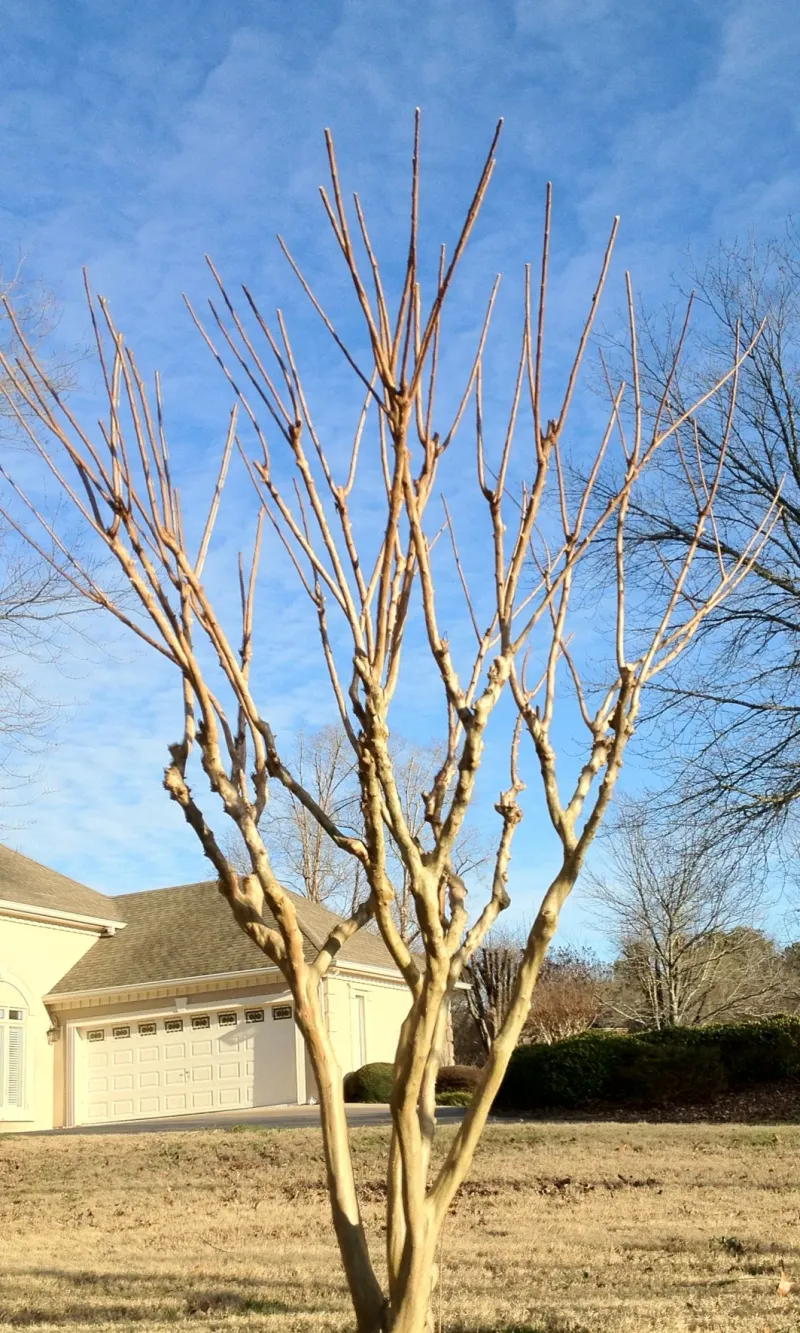
Crape myrtles bloom in summer, so Texas A&M AgriLife guidance from Travis County groups them with other summer-flowering trees. For those, the usual advice is to prune in late winter, before spring growth begins.
That timing lets you see the branch structure clearly, and it lets the tree put new growth to work right away.
Think of it as a stage of growth rather than a date on the calendar. In Central Texas, late winter can arrive earlier in some years and later in others, and it varies between sunny south-facing yards and cooler spots.
Watch the buds. When they are still tight and the tree has not leafed out, the window is open.
Notice the word needed. You do not have to prune every year.
If the tree has no dead wood, no rubbing limbs, and no crowded center, you can leave it alone and feel good about it.
When there is a reason, make the selective cuts described above and stop. A quick walk around the tree with a notepad, listing what bothers you, is often enough to decide.
Frozen or freeze-hit wood is a separate case, and it follows its own rule.
Wait for regrowth after a hard freeze
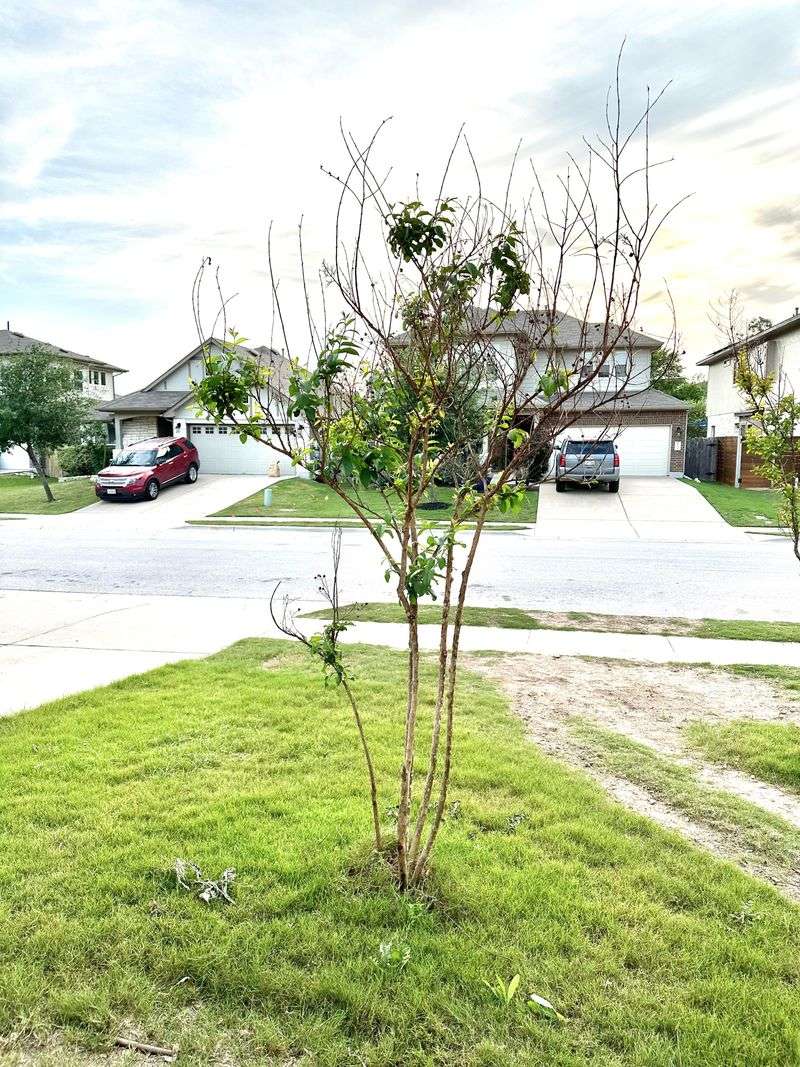
A hard freeze changes the timing rules. Normally late winter is the time for needed cuts, but freeze damage is an exception.
Right after a freeze, it is hard to tell which wood is dead and which is only dormant.
Texas A&M AgriLife advises in its freeze damage guide to wait until the plant sprouts. Once new growth shows where the plant is recovering, cut the damaged wood back to that point.
Cutting early risks removing branches that would have recovered.
Damage varies by cultivar and by microclimate. A tree against a warm south wall may come through fine, while one in an open, low spot may lose more.
So the stems on your tree may not all recover at the same rate, and patience pays off.
Seed capsules are a different matter and not a freeze task at all. Per University of Florida guidance, leaving the winter seed capsules on does not affect next season’s flowering.
Removing them is optional, so do it only if you prefer a tidier look.
Match the plant to its space and get help for major cuts
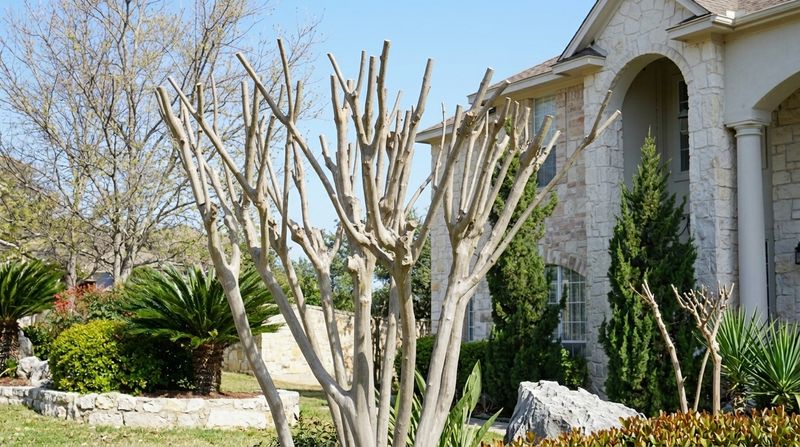
If a crape myrtle keeps outgrowing its spot, the real problem is size and cultivar, not a lack of chopping. Topping it every winter to force it to fit just brings back crowded, vigorous regrowth.
It also repeats the bloom delays and reduced clusters covered earlier.
The Texas A&M Forest Service crapemyrtle profile shows how much size varies across types. Choose a cultivar whose mature height suits the space, such as a semi-dwarf near a patio or walkway.
If a tree is already planted, selective reduction, taking branches back to side branches, is better than cutting everything to one height.
Severe pruning has one narrow exception: some dwarf plants grown in containers or low shrub borders. It does not apply to ordinary tree-form landscape trees, so do not use it as a reason to cut a large one back hard.
Keep your own work minor. Stay on the ground, skip ladders, and leave major limbs alone.
University of Florida guidance recommends an ISA-certified arborist for trees taller than about 15 feet, and for any big or high-up cuts.
Look for a reason before making a cut
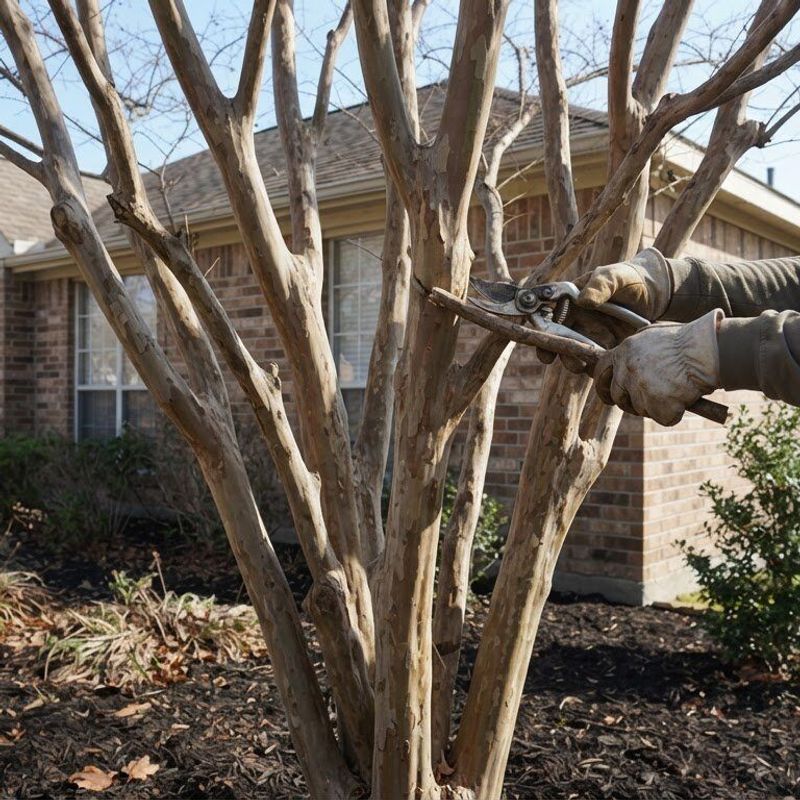
Before any cut, find the reason. Is there dead wood, a rubbing limb, or a crowded center?
If so, make a selective cut for that need and stop.
If a freeze has hit, leave the damaged wood until new growth shows where to cut. If you can name no reason at all, put the pruners away.
A tree left alone is usually a tree doing fine.