
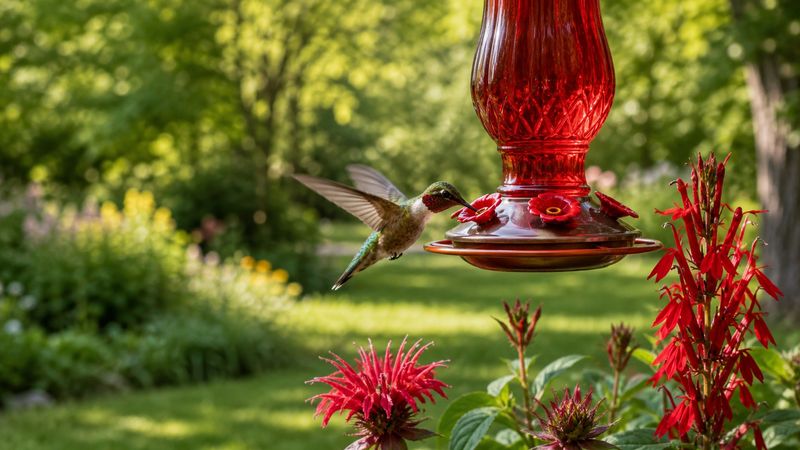
Hummingbird feeders left up after the first frost can save late migrants that would otherwise starve, or at least give them a place to refuel when little else is available. A clean feeder may be the best bet for a tired bird that shows up long after your summer regulars are gone.
How long to keep it out depends on where you live and what you see in your yard. Here is how to decide, and how to keep the nectar from freezing.
A first frost is not a nationwide cutoff
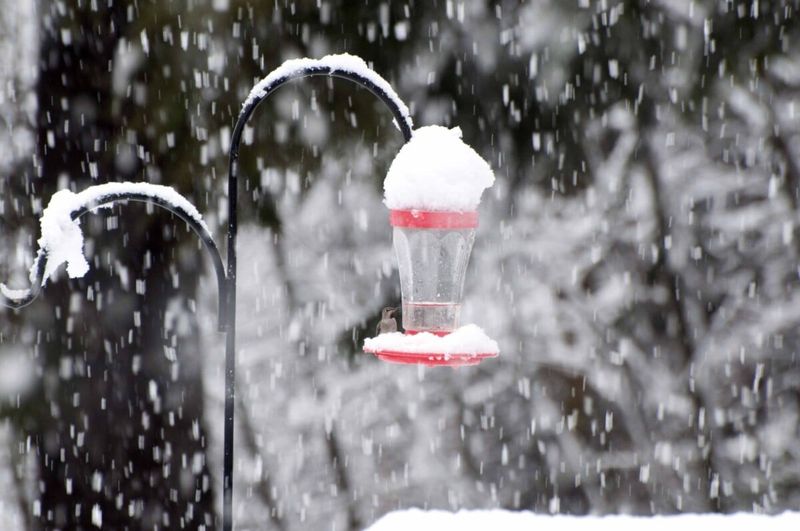
Frost alone does not tell you when to take a feeder down. Hummingbird timing changes from one region to the next, and a cold snap in one state may come weeks before or after a similar one in another.
Many guides suggest keeping a feeder up for a while after your last local sighting. Audubon’s feeding FAQ notes that late migrants and out-of-range species may turn up into early winter, so a quiet feeder in November does not always mean the season is over.
Guidance does differ. A U.S.
Fish and Wildlife Service handout recommends removing feeders shortly after Labor Day in places with subfreezing winters. Other advice, including Oregon State University Extension, supports continuing when a bird is actually using the feeder and you can keep the nectar fresh and reachable.
So let local bird activity and your own schedule guide you, not a single date on the calendar.
What a winter hummingbird sighting can mean
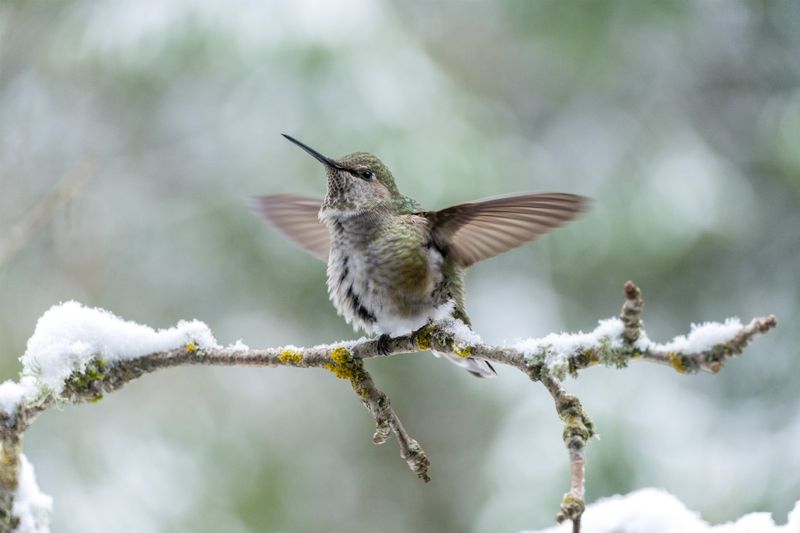
Not every hummingbird in winter is a lost wanderer. Some species normally spend the cold months in parts of the United States, and a few are simply residents.
Anna’s Hummingbird is a good example. Its winter range has stretched northward, and Boise State’s Intermountain Bird Observatory describes Anna’s Hummingbirds wintering in places where they once were not expected.
Then there are late migrants, which are birds still moving south after most others have gone, and out-of-range visitors, which show up far from where their species usually lives. Audubon’s bird FAQ and Oregon State Extension both treat winter sightings as varied situations rather than a single kind.
A December hummingbird, by itself, does not prove the bird is lost or needs your feeder. It is a clue to watch, not an emergency.
A feeder can offer fuel, but its impact is uncertain
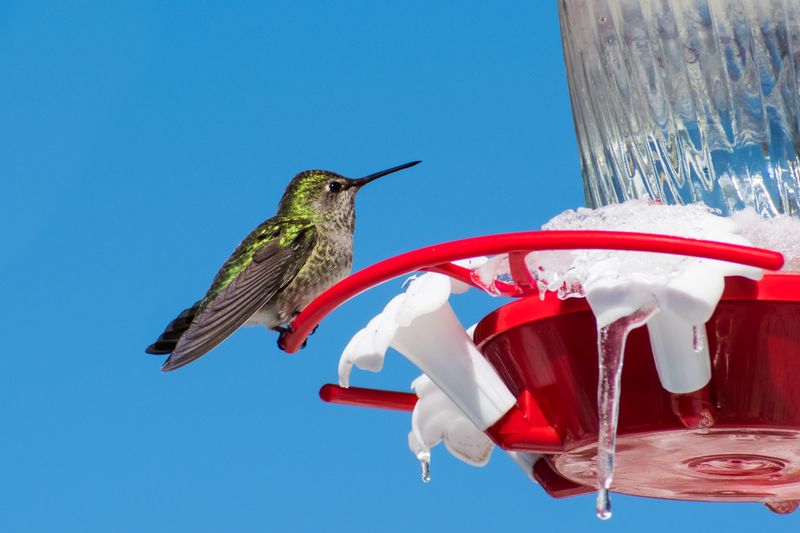
An available feeder can give a late migrant or out-of-range visitor a chance to refuel. Sugar water is quick energy, and that can matter to a small bird on a long trip or in cold weather.
What nobody can say is how many birds actually benefit. The sources reviewed do not show that a particular bird would otherwise starve, so a feeder is best described as a possible refueling stop, not a proven rescue.
One useful piece of research is a 2017 study on Anna’s Hummingbirds. It found that their northward winter-range expansion was associated with urbanization and supplementary feeding.
An association is not proof of cause. The study does not show that feeders caused the expansion or that they improved the survival of any one bird, and it covers Anna’s Hummingbirds, not every species.
Treat Audubon’s feeding advice as practical guidance for a plausible benefit.
Leaving a feeder out does not appear to delay migration
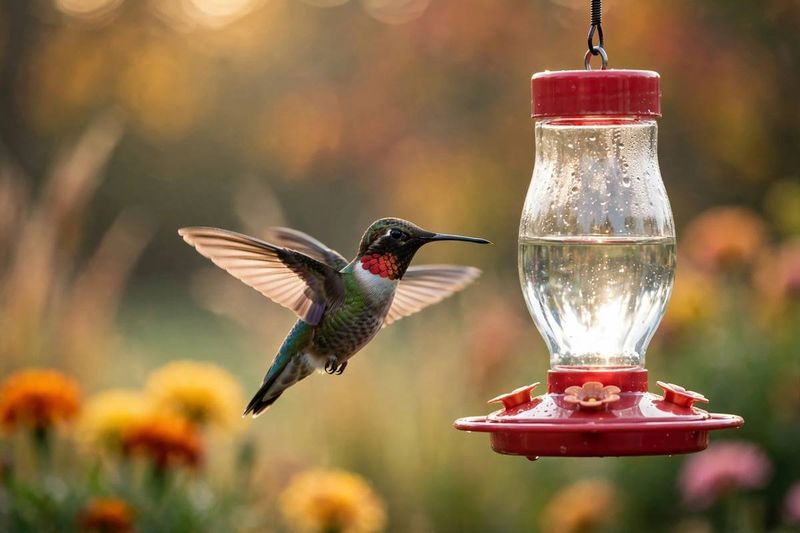
Many people worry that a full feeder will trick hummingbirds into staying too long. Guidance from the Cornell Lab of Ornithology does not support that idea.
Migration is driven mainly by seasonal cues, especially shorter day length. Audubon and the Missouri Department of Conservation say much the same: birds leave when their bodies and the calendar tell them to, whether or not nectar is out.
That is a separate question from what happens when a bird shows up late. A winter visitor that is already around may simply use a feeder it happens to find.
So you do not need to pull your feeder early out of fear of holding birds back. Your decision can rest on local sightings and your care routine.
Keep nectar simple and the feeder clean
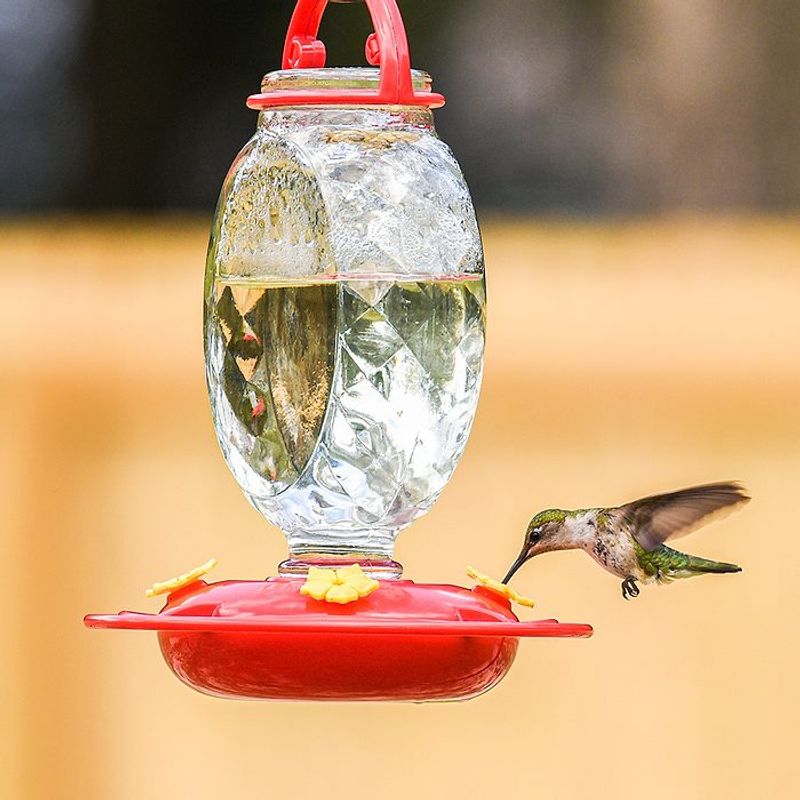
The recipe is short: one part plain white table sugar to four parts water. Audubon advises against red dye, honey, brown sugar, molasses, and artificial sweeteners, and stronger mixtures are not better.
Cleaning matters as much as the mix. Plan to wash the feeder every few days, and about twice a week in cooler weather.
Clean it sooner if you see mold or cloudy nectar, and pour out any leftover liquid each time, as Audubon’s winter feeding tips suggest.
Remember that nectar is a supplement. Hummingbirds also eat insects and other natural foods, which Cornell’s Anna’s Hummingbird profile covers in more detail.
A small feeder that holds only a few days of nectar makes this easier, since less is wasted when you refresh it.
Keep nectar accessible when temperatures freeze
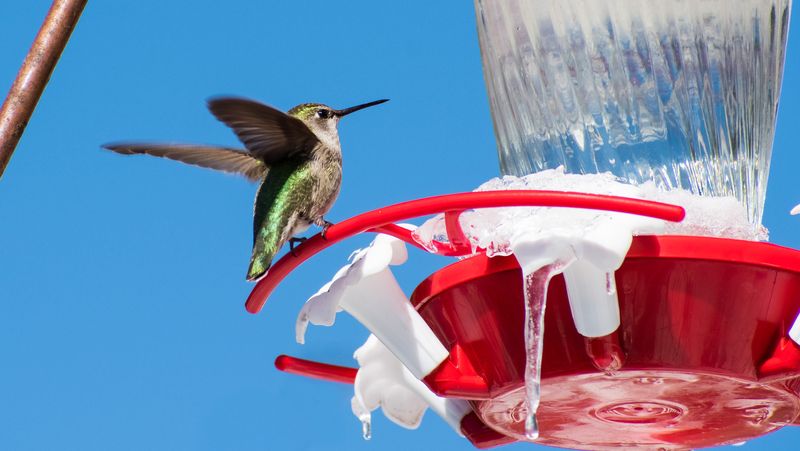
Frozen nectar is the main hurdle in winter. A feeder that is solid ice is no help to a hungry bird, even if it is full.
The simplest fix is to bring the feeder inside overnight and put it back out early, before birds start their morning search. Oregon State University Extension suggests this, and also says to keep the standard 1:4 mix.
Do not make it sweeter to resist freezing.
Another option is a purpose-built heated feeder, which Boise State’s winter hummingbird guidance also mentions. Follow its instructions closely, and skip improvised heat sources, which are not shown to be safe.
Advice differs on very cold nectar. Audubon’s FAQs disagree on whether it can cold-stun birds.
Keeping nectar unfrozen is a cautious habit, not a response to proven danger from cold liquid itself.
Keep a winter feeder only if you can maintain it
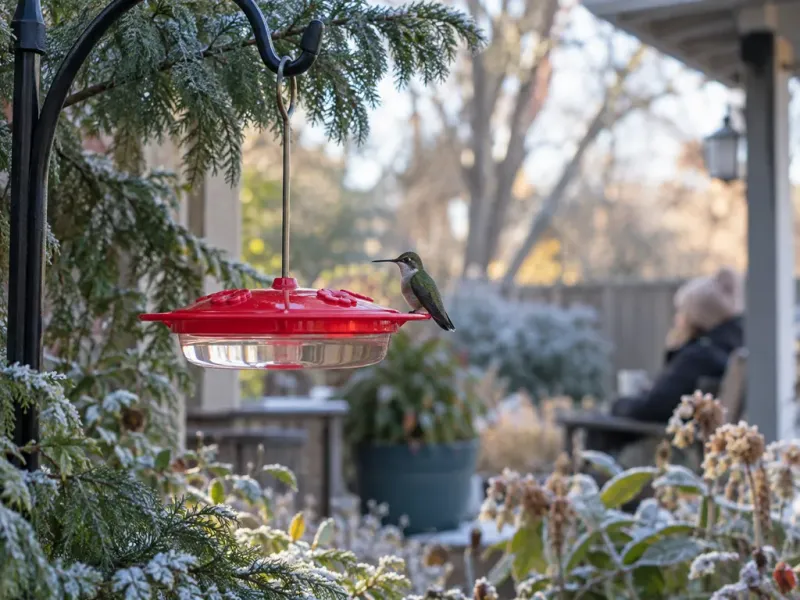
A clean, reliably available feeder may give a winter visitor a chance to refuel. It is a supplement, not a guaranteed lifesaver, and it is fine to decide it is not right for your household.
Look at your own situation. If a hummingbird is still visiting and you can keep nectar fresh and unfrozen, continuing may make sense, as Oregon State Extension describes.
If you cannot manage daily care, taking it down is reasonable, and the U.S. Fish and Wildlife Service leans that way for subfreezing regions.
Hummingbirds also find insects, so your garden still matters; see Cornell’s life history notes.
One well-kept feeder beats three neglected ones.