
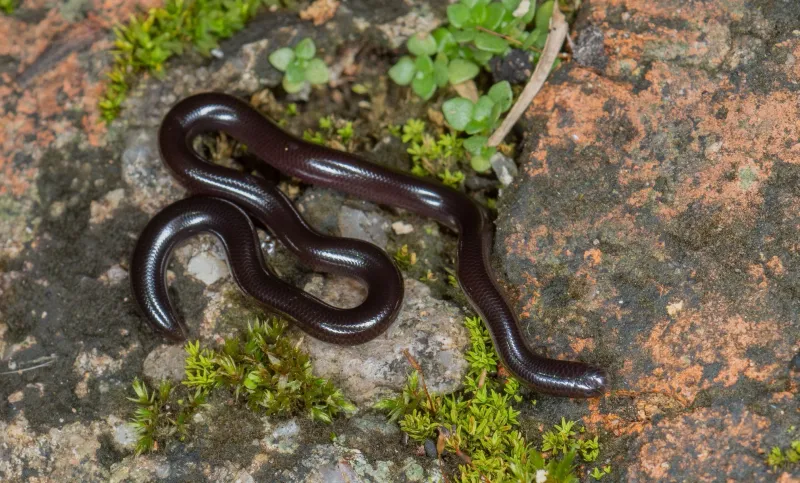
The Florida snake that turns up in porch pots is most likely the Brahminy blindsnake, a tiny, non-native snake that can hide in potting soil. It looks so much like an earthworm that many people never realize what they have found.
Knowing what it is, and what it is not, helps you water your plants with a calm head. Here is how to look over a pot safely and what to do if something does move.
How to recognize a Brahminy blindsnake
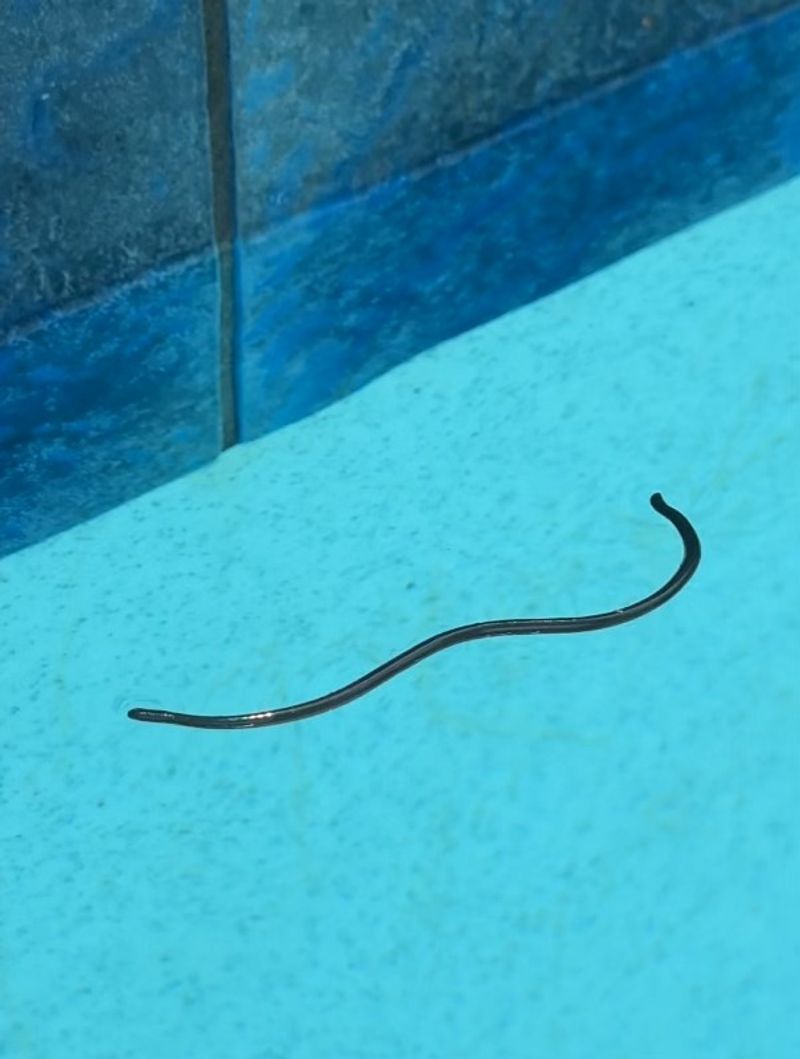
The snake behind the “flowerpot snake” nickname is the Brahminy blindsnake. Its scientific name is Indotyphlops braminus.
The nickname belongs to this one species only, not to every snake found near a planter.
According to the Florida Museum’s snake guide, this animal is smooth, shiny, and threadlike. Most adults measure only about 4.4 to 6.5 inches long.
Its head and tail both look blunt, so it can be hard to tell which end is which.
People often mistake it for an earthworm. One clue is that an earthworm has visible rings along its body, while a blindsnake is not segmented.
It has tiny scales that give it a polished look.
This species is harmless to people and pets. That statement covers the Brahminy blindsnake and nothing else.
Plenty of other snakes live in Florida, so a small snake near a pot is not automatically this one.
Location alone cannot identify a snake. Shape, size, and surface texture matter far more than where you spotted it.
UF/IFAS Extension also says it is non-native, found across much of peninsular Florida, and a snake you cannot identify confidently should be left alone.
Why one might be in potting soil
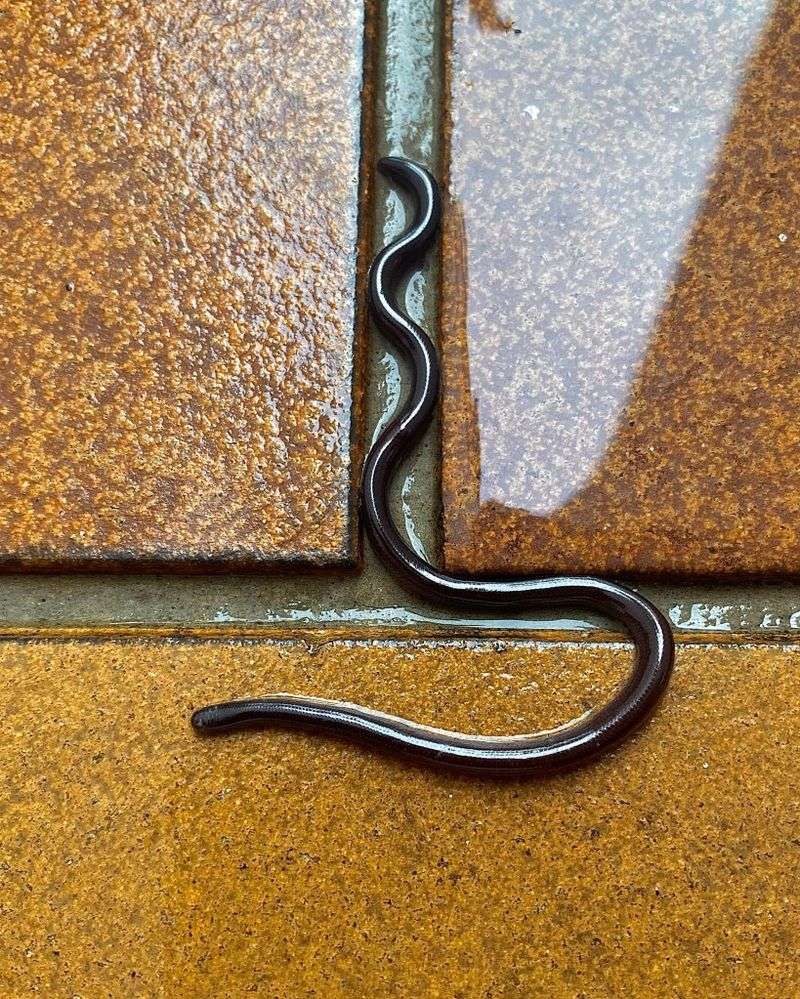
Ask a soil scientist how a tiny snake ends up on your porch, and the answer is often a bag of dirt. The Florida Museum notes that Brahminy blindsnakes are often transported in potting soil.
They can hide around plant roots, which makes a pot a believable place to find one.
In the wild, these snakes use loose soil, leaf litter, and debris. They also turn up in urban and farm areas.
A flower bed or a nursery pot offers much the same loose, damp cover.
Their food adds to the picture. Blindsnakes eat ants and termites, and specifically their eggs, larvae, and pupae.
Soil that hosts ant colonies could attract one.
All of this makes a potting-soil discovery plausible. It does not make it common, and it does not show that porch pots are a preferred or seasonal refuge.
Most pots will never hold a snake.
Think of it as one possible explanation for a small, wormlike creature in your planter. If you see something thin and shiny, your next step is to look closely from a distance, not to assume anything.
What winter weather can tell you
The idea that a snake curls up in pots on chilly mornings makes a good story, but the sources do not back it up. The Florida Museum’s profile describes a small burrowing snake hidden in soil.
It does not name cool mornings as a trigger, a curled-up posture as typical, or porch pots as a predictable winter destination.
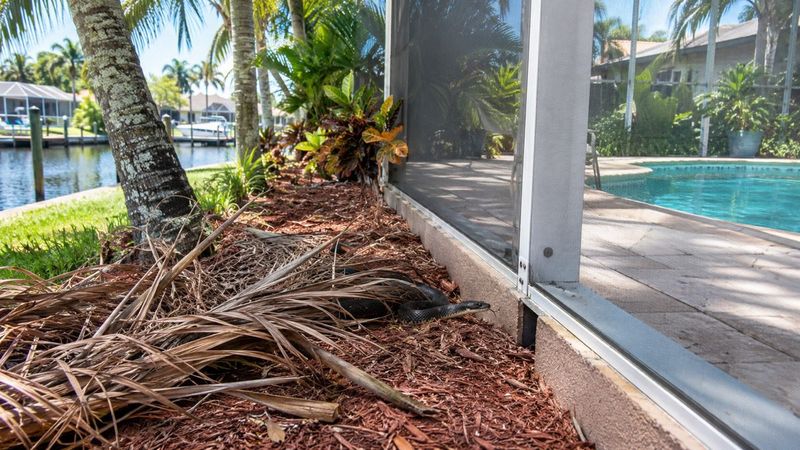
Other snakes may shelter under debris or surface cover, as shown in the ring-necked snake guide. That still does not make pots a common winter refuge.
Winter does not switch every Florida snake off. UF/IFAS describes snakes as generally inactive in winter in the Panhandle.
It also notes that sun can bring them out to bask and that encounters can still happen in cold weather.
Activity varies by region and conditions, and there is no single temperature that guarantees a quiet porch. A cold morning will not rule out a snake, and a warm one will not prove one is there.
Keep the same habits all year.
How to check a porch pot cautiously
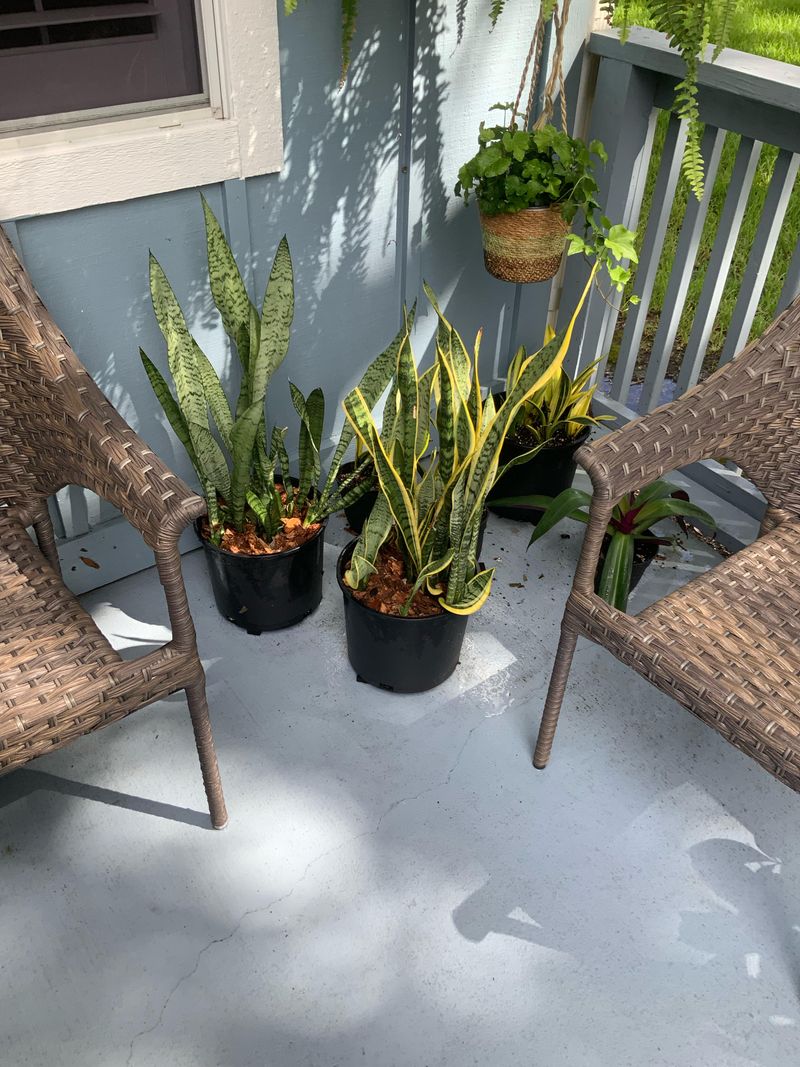
A quick look before you water costs only a few seconds. This is conservative safety advice, not a published UF/IFAS inspection protocol.
It simply applies common sense to a place where a small animal could hide.
Start with the outside of the pot. Look at the sides, the rim, and the saucer or drainage area underneath.
Then scan the visible soil surface for anything that moves or looks like a thin, shiny cord.
Do the same before you shift a pot to a new spot. A blindsnake is tiny and, as the Florida Museum guide explains, it can look like an earthworm.
That is one more reason to look before you touch.
Do not put your fingers into the soil, and do not reach beneath a pot where something could be concealed. Tilt or lift a pot only after you have looked, and consider gloves and a tool for heavy work.
Most of the time you will see nothing but soil and leaves. Most snakes people meet in Florida are nonvenomous, according to the Florida Fish and Wildlife Conservation Commission, but a calm check keeps your hands out of places you cannot see.
What to do if you see a snake
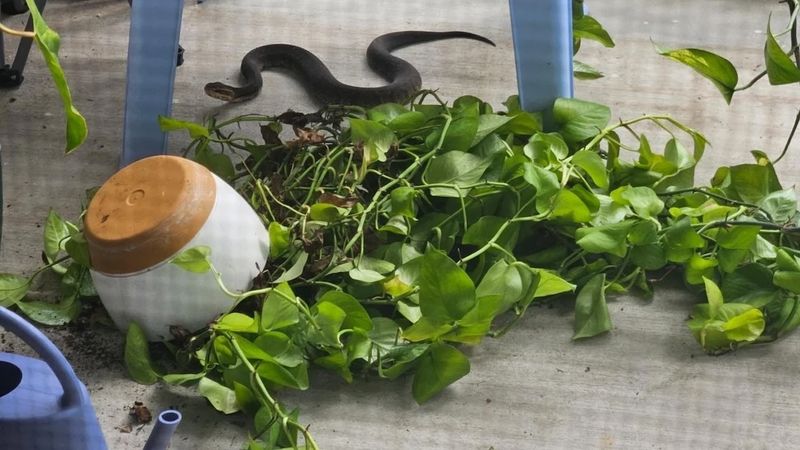
Step back first, then think. Keep children and pets away, and watch the animal from a distance.
Most of the time the snake will simply move on.
If you cannot confidently identify it, do not handle it. UF/IFAS guidance on preventing encounters suggests photographing it from a safe distance if possible.
It also advises contacting a qualified wildlife professional when needed, and it warns that handling a snake or trying to kill one raises the chance of a bite.
A photo can help with identification later. Take it from where you stand, using zoom if your phone has it.
Never move closer for a better shot.
The harmless label applies only to the Brahminy blindsnake. Florida has six venomous snake species, according to FWC, though most snakes people meet are nonvenomous.
FWC recommends standing back and observing rather than killing a snake.
So the plan is simple: give it room, keep others away, and call a professional if you are unsure or the snake stays put. Calm distance protects both you and the snake.
Mothballs will not solve the problem
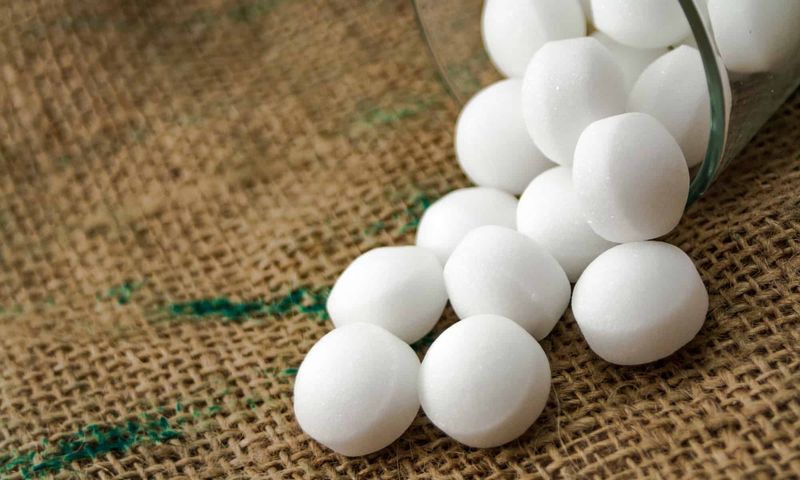
A common bit of folk advice says to scatter mothballs around pots to keep snakes away. It does not work, and it can cause harm.
The National Pesticide Information Center says mothballs have little or no repellent effect. Their vapors can also expose people and animals to pesticide.
There is a legal side too. Using mothballs outdoors or as a snake repellent conflicts with the product labeling.
The Florida Department of Agriculture and Consumer Services says in its mothballs brochure that this use violates Florida pesticide law.
That means mothballs near your planters add risk without adding protection. Children, pets, and wildlife could come into contact with them.
If you have already put some out, read the product label for guidance on handling them.
The better habit is the one you already know: look before you water, and keep your distance if something is there.
Check first and keep your distance
A Brahminy blindsnake is one plausible explanation for a small snake in potting soil, but neither the pot nor the season confirms what you are seeing. Look over the pot before watering, give any snake space, and leave handling to qualified people, as UF/IFAS advises.
For help comparing species, UF/IFAS identification guidance is a good place to start.
A good look beats a lucky guess every time.