
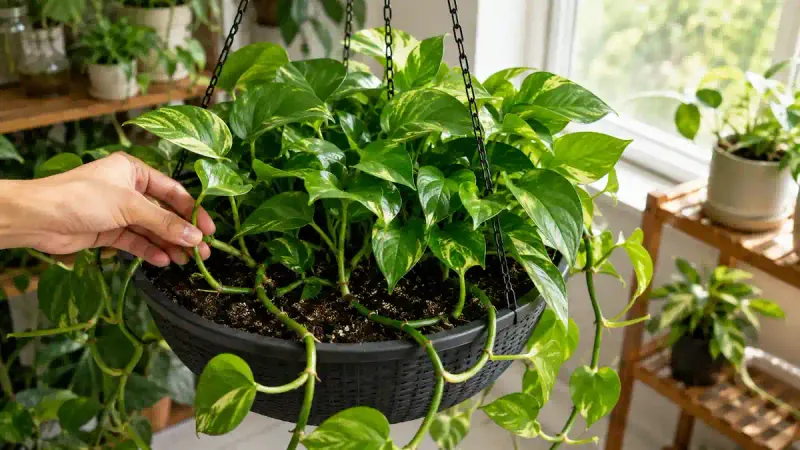
Pin a long pothos vine back onto the soil, and a stringy plant can start to look full again. The trick uses the vines you already have, so no scissors are needed.
A pinned section may even grow roots right where it touches the mix, while it stays attached to the plant. Here is how to do it, what to expect, and what to skip.
A node can root while the vine stays attached
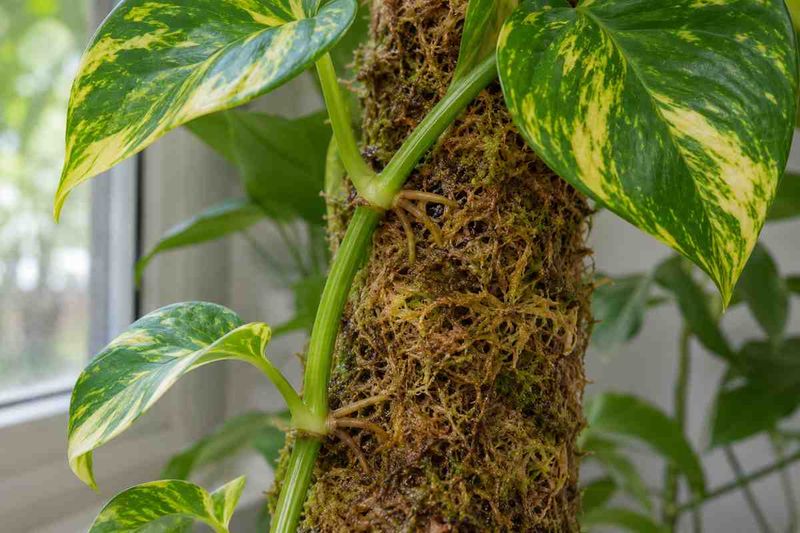
A node is the spot on a stem where a leaf or bud attaches. On a pothos, you can spot it as a small bump, often with a tiny brownish root nub nearby.
Roots can form at these points.
Gardeners use that habit for layering, which means rooting a portion of a stem while it is still connected to the parent plant. Rutgers Cooperative Extension houseplant propagation guidance lists pothos as a plant suited to layering.
The attached vine keeps getting water and nutrients from the main plant while the new roots get started.
Rooting is possible, but it is not guaranteed. When people take pothos cuttings, University of New Hampshire Extension advises putting at least one node below the soil surface, because that is where roots can form.
Pinning a node against the mix borrows the same idea without cutting anything.
Lay the vine across the bare soil
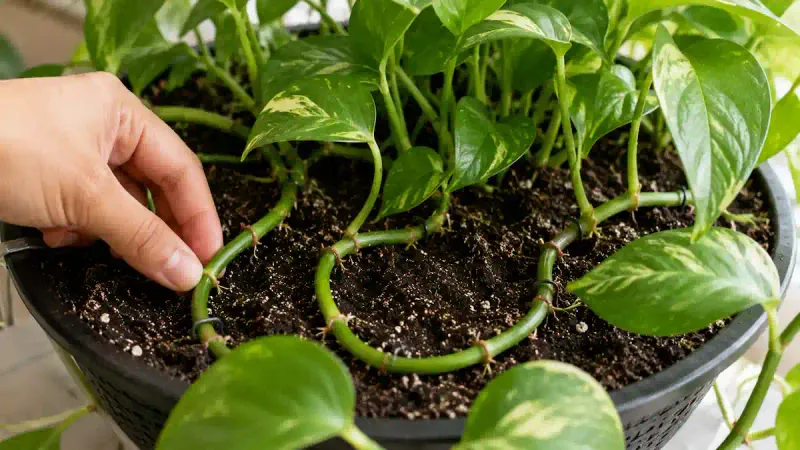
Pick a vine that bends easily without kinking. Loop it gently over the bare patch of potting mix so the leafy part lies where you want more coverage.
Find one or more nodes along the vine and rest them against the mix. Hold each one in place with something that does not crush or pierce the stem, such as a bent piece of soft wire, a hairpin shape, or a small stone.
Skip anything that squeezes the vine tight.
Keep every leaf above the mix, since buried leaves tend to rot. Only the node should touch the soil.
This is a practical adaptation of layering, the rooting method described by Rutgers Cooperative Extension. The sources do not prescribe a particular pin for a pot, and they do not promise that every node will root, so treat it as a simple experiment.
Keep the plant in suitable light and water it carefully
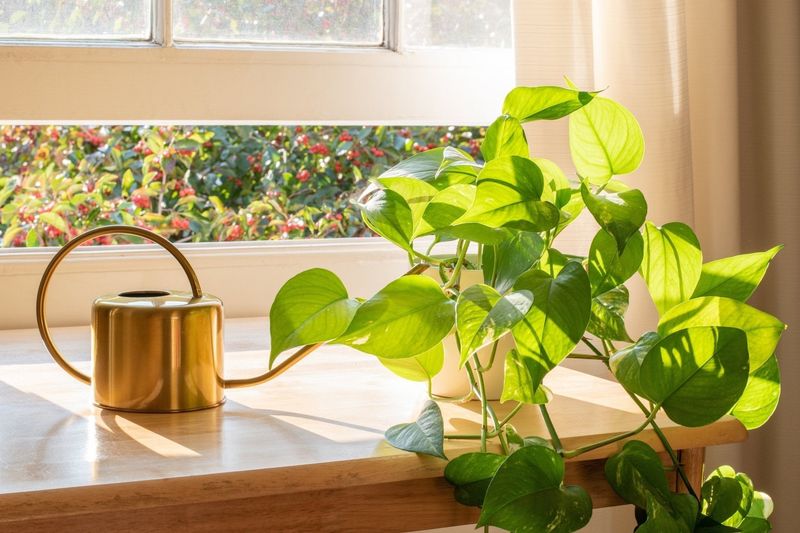
Pothos likes bright, indirect light. It tolerates low light, but University of Illinois Extension notes that leaf color can fade when the light is dim.
Better light may help the plant’s overall care, but it does not guarantee fuller growth, and low light is not the one sure cause of a leggy plant.
For watering, soak the mix thoroughly, then let it dry between waterings. Clemson Cooperative Extension warns that overwatering or poorly draining mix can contribute to root rot.
Do not keep the soil soggy in hopes of speeding up rooting. Wetter is not faster here.
A pot with drainage holes and a loose, well-draining mix gives pinned nodes a healthier place to start.
Expect more coverage, not a new branch
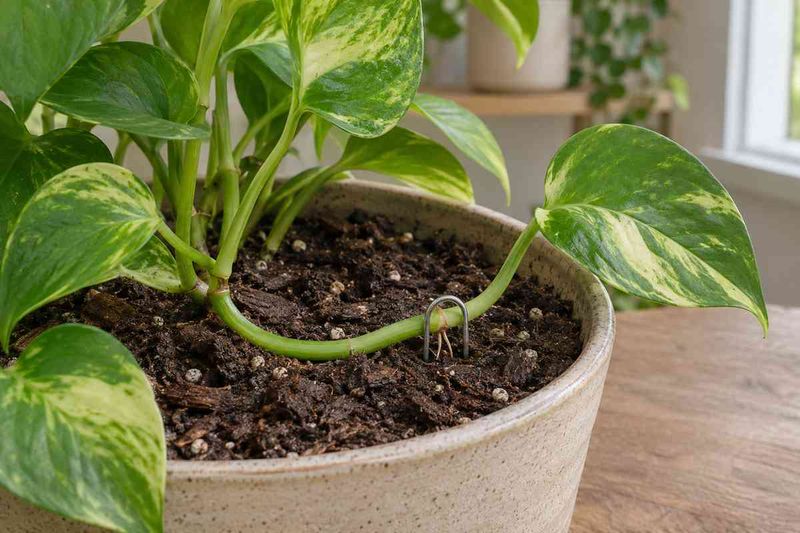
Here is the realistic payoff. Leafy vine sections laid across the pot can make the surface look fuller, because leaves now sit where there was bare mix.
What pinning does not do is prove that the original vine will branch, or that every empty spot will fill in. The vine you pinned is the same vine, just placed differently.
If a node does root, you have another anchored section. Rutgers describes cutting a well-rooted layered section free to make a new plant.
That is a different goal from changing how the attached stem grows.
Do not expect a deadline. University of New Hampshire Extension says rooting time varies with the plant and growing conditions.
A gentle tug test is a fair clue: if the node resists, roots may have formed.
Pruning is a separate option for growth below a tip
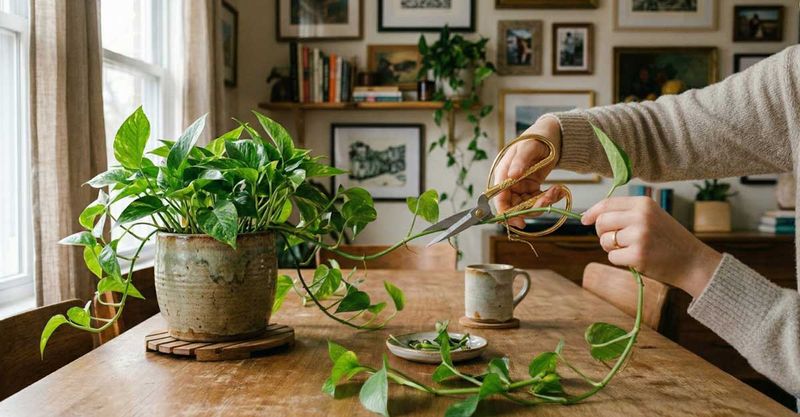
Pinning repositions a vine that stays attached. Pruning removes a growing tip, and it needs scissors.
General houseplant guidance from University of Arkansas Cooperative Extension says that removing a growing tip can prompt new growth below that tip. It is a tendency, not a promise, and results vary from plant to plant.
So choose by goal. If you want leaves to cover bare soil without cutting, pin the vine.
If you want to encourage growth below a removed shoot tip, consider trimming a vine.
You can also do both on different vines. Just remember that the two methods work differently, so judge each by what it is meant to do.
Keep pothos away from anyone who might chew it
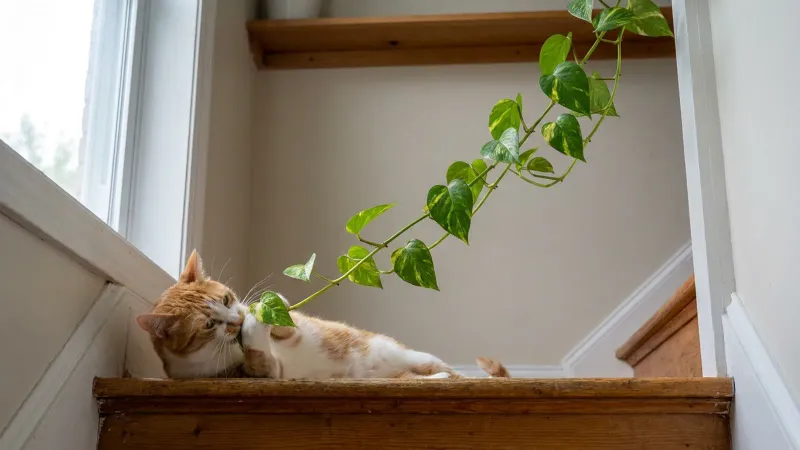
Pothos contains insoluble calcium oxalate crystals, and it can irritate the mouth and digestive tract if chewed or ingested, as noted by Clemson Cooperative Extension. The ASPCA also warns pet owners about it.
Place the pot on a high shelf or in a room closed off from children and pets who might eat it. Trailing vines that dangle low are easy to grab, so tuck them up out of reach.
A fuller plant is lovely, but a safe home matters more.