
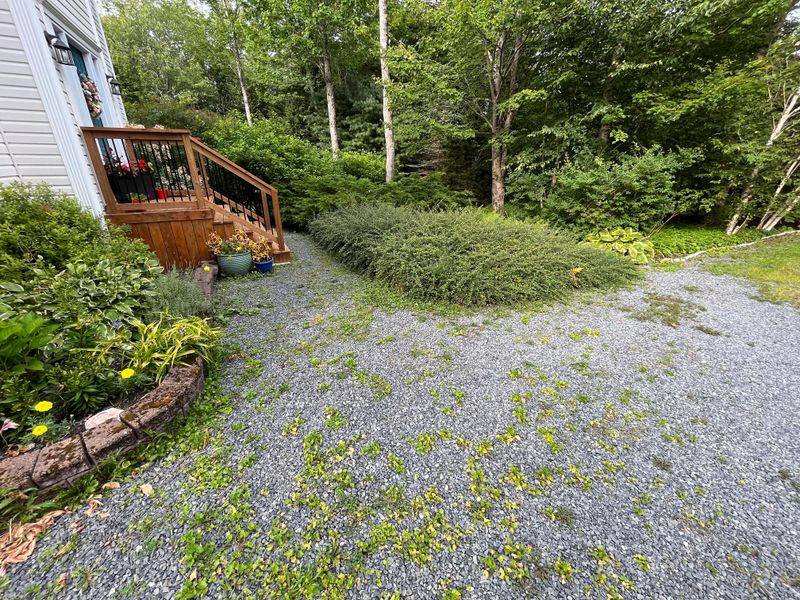
You can get weeds out of a gravel driveway without digging up and replacing all that stone. The trick is to deal with the weeds already growing, then make it harder for new ones to take hold.
A few simple tools and habits will do most of the work. Here is how to match the fix to the weed you actually have.
Find where the weeds are growing
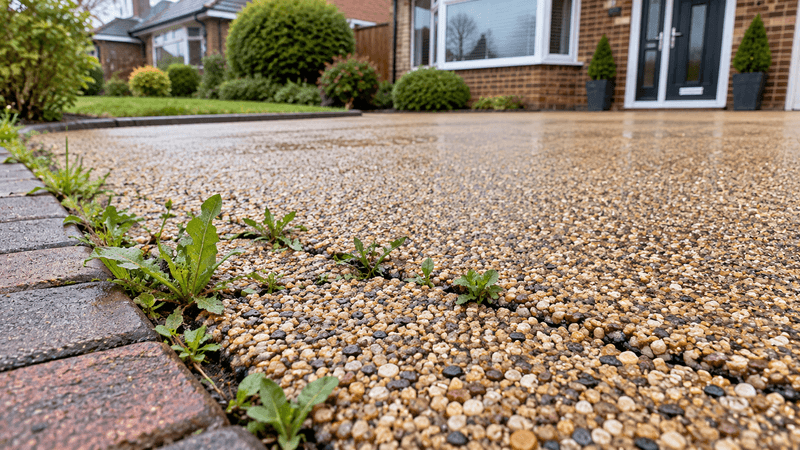
Before you pull or spray anything, take a slow walk along the driveway and look closely. Some weeds are rooted in a thin layer of soil, leaves, and dust that has settled on top of the gravel.
Others really do emerge through the stones, and some creep in sideways beneath them from a lawn or garden bed at the edge.
Why does it matter? Each situation calls for a different fix.
Weeds sitting in surface debris often lift out easily, while spreading plants can run underground and pop up in several spots. Cornell turf guidance on gravel notes that some spreading weeds can travel under the gravel and emerge elsewhere, so treating only the visible leaves may miss the source.
Try tugging one plant gently. If it slides out with a small tuft of roots, it was likely growing in buildup.
If you feel resistance or find a long runner heading toward the edge, follow it. Check the borders too, since that is often where the trouble starts.
Identifying the plant helps as well, because UC Statewide IPM Program advice separates annual weeds from perennials that need different handling.
Pull small weeds before they set seed
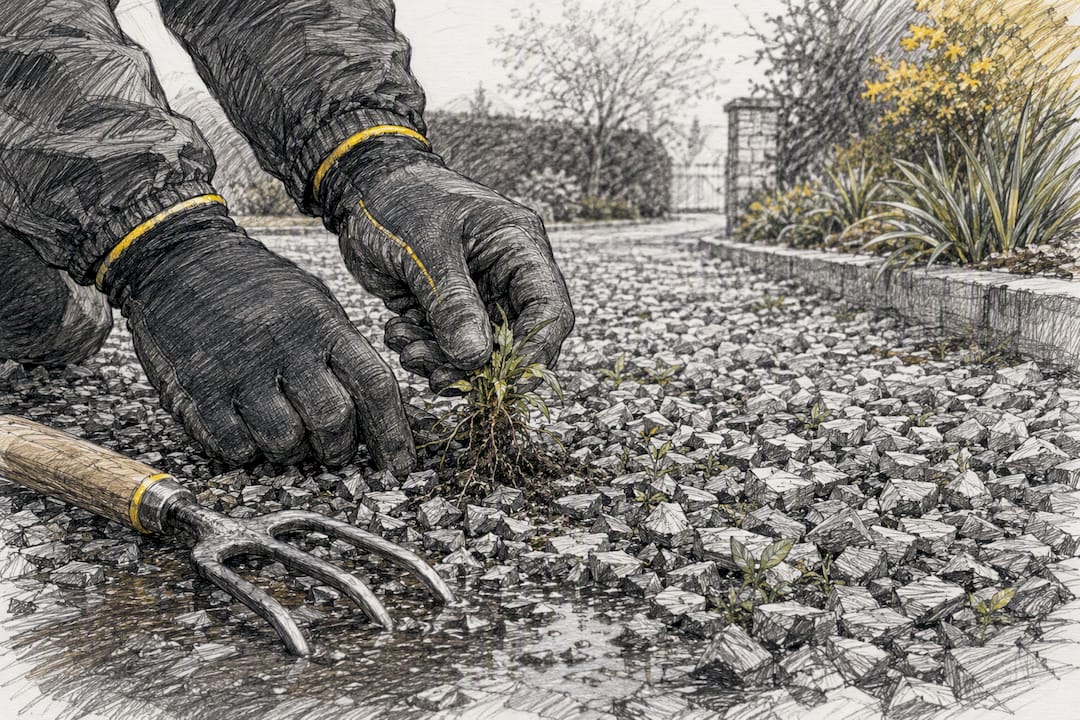
Young weeds are the easiest ones to beat. Pulling them while they are small, and before they flower, keeps them from dropping seed that will sprout next season.
After a rain, the ground is softer and roots slip out with less fuss.
A hand weeder or narrow trowel helps you get under the plant instead of snapping it off at the surface. Wear gloves, and drop each weed into a bucket rather than tossing it back onto the stones.
Perennial weeds are a tougher crowd. Dandelions, thistles, and similar plants store energy in roots or other underground parts, so leaving a piece behind can mean regrowth.
UC IPM guidance says to remove the roots or underground parts where you can, and that established plants may need repeated control.
Plan on a few rounds. If the same clump keeps returning, that is normal, and each pass tends to weaken it.
Rake to limit soil buildup
Gravel by itself is a poor place for seeds to grow. The trouble comes when dust, leaves, and soil settle between the stones and create a tiny garden bed.
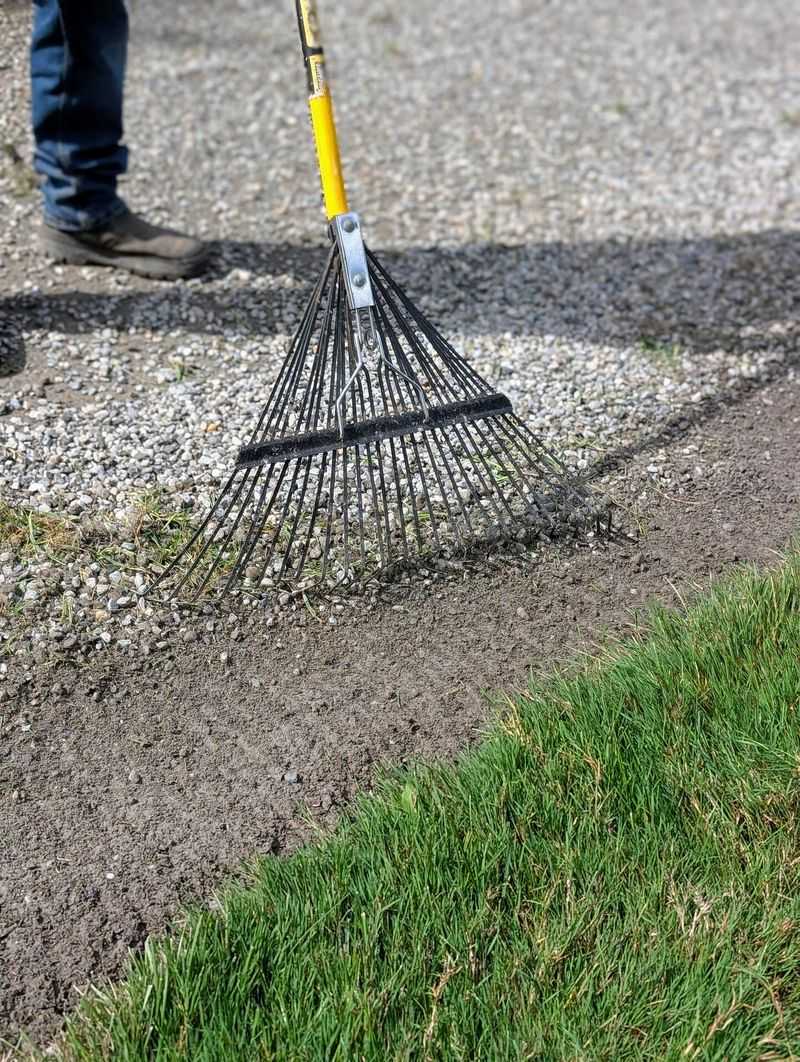
A regular raking stirs that layer up and makes it harder for weeds to root between or below the stones.
A sturdy landscape rake works well. Drag it across the surface, then collect any larger uprooted weeds and haul them away.
Cornell recommends removing them so they do not take hold again, which is easy to skip when you are in a hurry.
Some driveways can handle a bit more. According to Cornell’s gravel guidance, harrowing can work when the surface gravel is loose and sits over a compact base.
If your stone is thin or the base is soft, skip it, since you could churn up the foundation.
Raking is not right for every driveway, either. Light, shallow gravel may just need gentle smoothing so you do not scrape down to bare ground.
Use targeted treatments with care
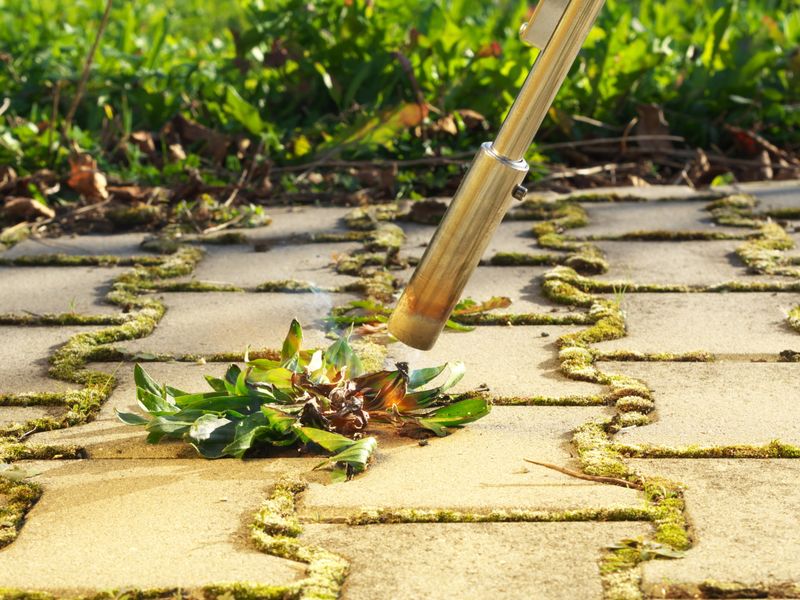
When handwork and raking are not enough, flame weeding and herbicides are the next options. Flame weeding does not set plants on fire.
It heats plant tissue enough to damage it, and University of Vermont Extension describes it that way. It works best on small broadleaf weeds, is less effective on grasses, and may need repeating.
Safety comes first. Skip windy or dry days, stay away from dry plant matter, buildings, and other flammable materials, wear protective clothing, and keep water close.
UC IPM offers similar cautions.
Herbicides come in two main types. Post-emergent products target weeds that are already growing.
Pre-emergent products help prevent certain seedlings from establishing and do not kill mature weeds, as University of Nevada, Reno Extension explains.
Choose a product labeled for your specific site and use, then follow the directions exactly. The U.S.
EPA stresses that pesticides must be used according to their labels.
Know the limits of popular shortcuts
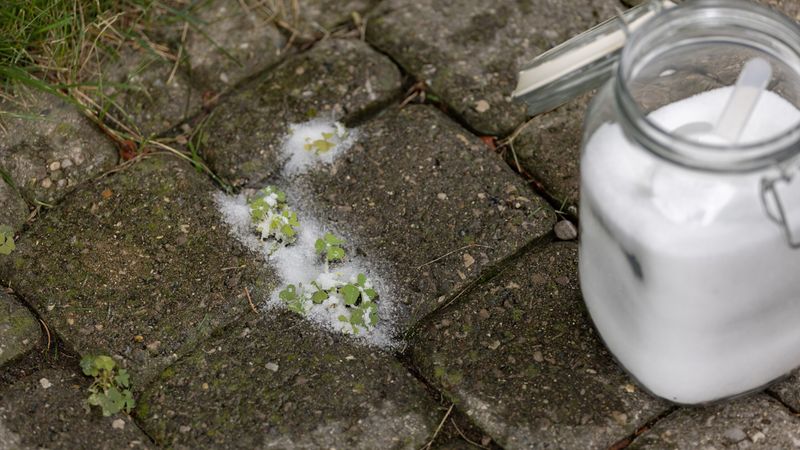
Kitchen-cabinet fixes sound appealing, but most come with strings attached. Vinegar is a contact treatment.
University of Maryland Extension says it is most useful on very young weeds, and plants with taproots may be top-killed and then regrow. Strong horticultural vinegar can also cause serious handling injuries.
Salt is a poor answer too. University of Illinois Extension warns that salt can move through soil and harm nearby desirable plants.
Natural or organic does not mean safe, and Oregon State Extension cautions that organic herbicides can be dangerous to handle.
Hot water has limited use against established weeds and can scald you, so it is not a dependable choice for perennials. Landscape fabric is no magic shield either, since seeds can sprout in debris above it and some weeds root into it.
Adding it under an existing driveway is not a simple no-dig fix.
Bare-ground products are not meant for home use around gardens and landscapes, and they can move with water and harm trees and shrubs.
Keep up with gravel and new seedlings
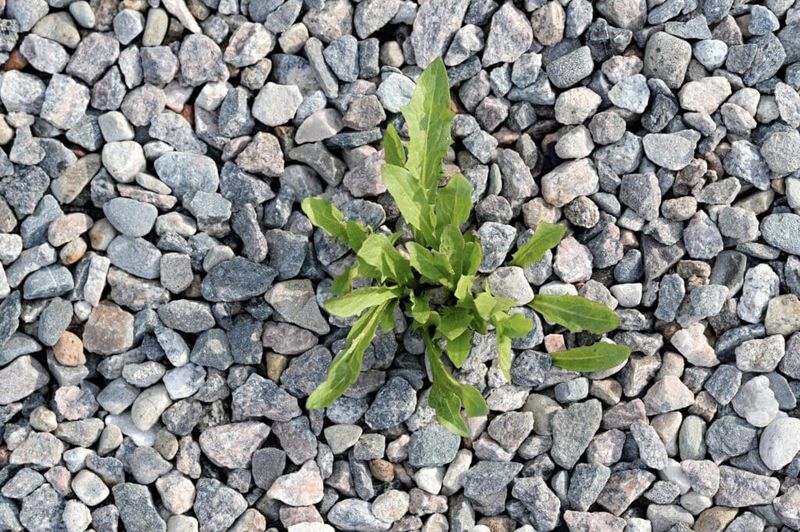
Think of weed control as a light, regular chore instead of a single big project. Every few weeks in the growing season, stroll the driveway and look for tiny seedlings.
Catching them at that stage takes seconds. Remove any seedheads and debris before they scatter or settle into the stones.
Rake where it suits your driveway, and add gravel when the layer wears thin. Cornell recommends keeping the gravel thick and topping it up periodically, which buries a lot of small seeds.
Why not simply treat it once and be done? Seeds blow in, roots regrow, and weeds creep in from the borders.
Colorado State University Extension notes that weed seeds can stay viable for years, and a CSU Extension expert response states there is no permanent weed-control product for gravel.
A tidy driveway is a habit, not a finish line.