 Complete Gardening
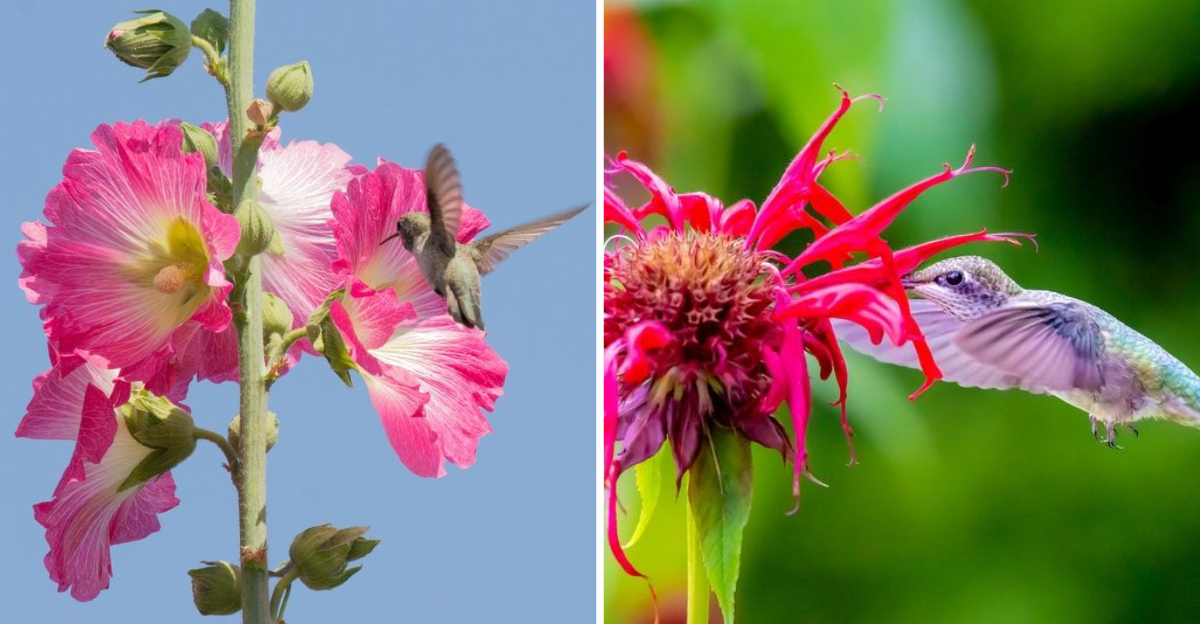
Transform your garden into a vibrant oasis for songbirds by introducing these captivating blooms. Each flower not only adds beauty but also lures delightful birds with its nectar and seeds. Discover how to create a harmonious haven that welcomes nature’s melodies.
Sunflower

Sunflowers are more than just a bright face in the garden. Known for their towering height and radiant yellow petals, they act as natural magnets for songbirds like goldfinches and sparrows. These birds are particularly drawn to the sunflower’s seeds, which provide a rich source of nutrition.
Imagine a beautiful morning where a goldfinch delicately lands on a sunflower, pecking at its seeds. The sight and sound of this interaction bring life and joy to any garden. A must-have for any bird enthusiast looking to add vibrancy and movement to their green space.
Bee Balm

Bee balm, with its spiky and aromatic blooms, acts as a beacon for hummingbirds and butterflies. The brilliant red flowers offer a feast of nectar, inviting these creatures to linger longer in your garden space.
Imagine the thrill of spotting a hummingbird darting from one bee balm flower to another, its wings a blur of motion. This perennial not only adds an eye-catching splash of color but also serves as a pivotal element in supporting local wildlife. A crucial addition for gardeners eager to foster a lively ecosystem.
Coneflower
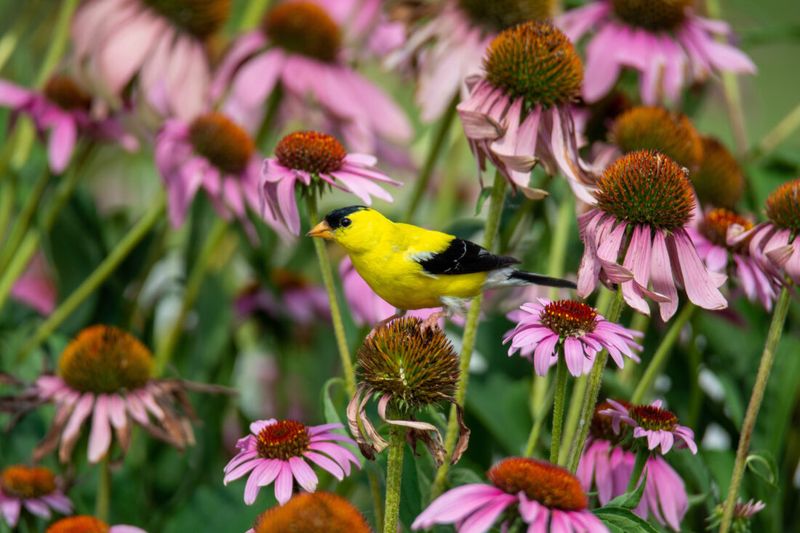
Coneflowers, with their distinctive purple petals and raised centers, are a magnet for a variety of songbirds. Finches, sparrows, and other small birds are particularly fond of the seeds found in the heart of these blooms.
Picture a lazy afternoon where birds flit from flower to flower, their cheerful chirping a delightful addition to the garden ambiance. Coneflowers are not only visually appealing but also play a key role in attracting and nourishing birdlife, making them an essential plant for any bird-friendly garden.
Black-eyed Susan
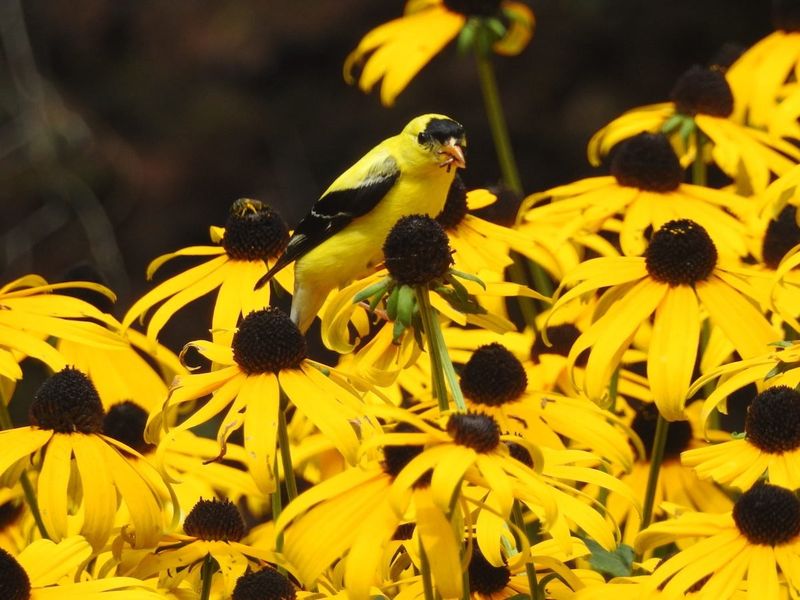
Black-eyed Susans, with their sunny disposition and dark, central cones, are a favorite among songbirds like chickadees and nuthatches. These flowers provide ample seeds that are easily accessible to birds.
Envision a garden alive with the flutter of wings as these birds feast on the seeds, bringing energy and vibrancy to your green space. Their ability to thrive in various conditions makes them a versatile choice for bird lovers. A key plant for anyone wishing to attract and support avian visitors.
Cardinal Flower

The cardinal flower’s striking red hue is not only visually stunning but also irresistibly attractive to hummingbirds. These blooms provide a rich source of nectar, enticing these agile creatures to visit frequently.
Imagine the excitement of witnessing a ruby-throated hummingbird hover effortlessly while sipping nectar. This interaction not only adds a dynamic element to the garden but also supports local ecosystems by encouraging pollination. An indispensable flower for gardeners aiming to draw in these colorful and energetic birds.
Aster
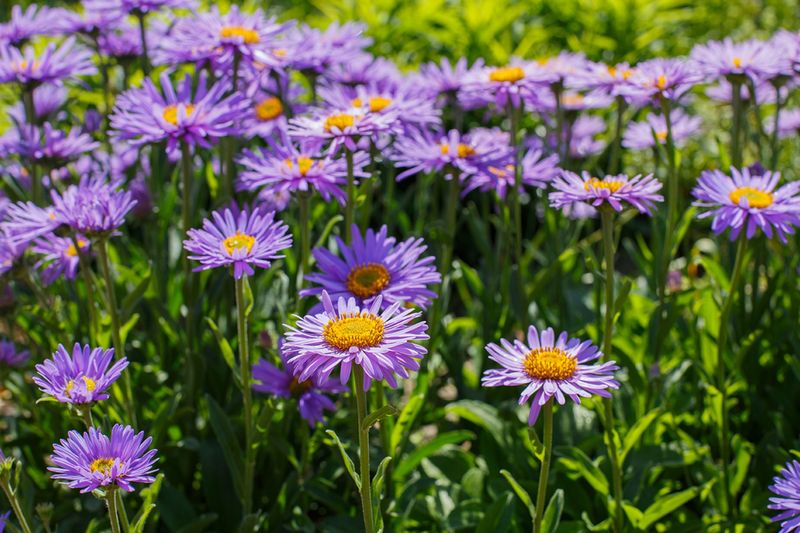
Asters, with their delicate purple flowers, offer both aesthetic charm and practical benefits for wildlife. They’re a favorite for sparrows and other small birds who feast on their seeds, and they also attract an array of butterflies.
Visualize the serenity of a garden filled with fluttering wings and soft bird songs, thanks to the presence of asters. These perennials thrive in various conditions, ensuring a consistent display of beauty and biodiversity. A vital plant for enriching your garden’s ecosystem and attracting lively visitors.
Zinnia
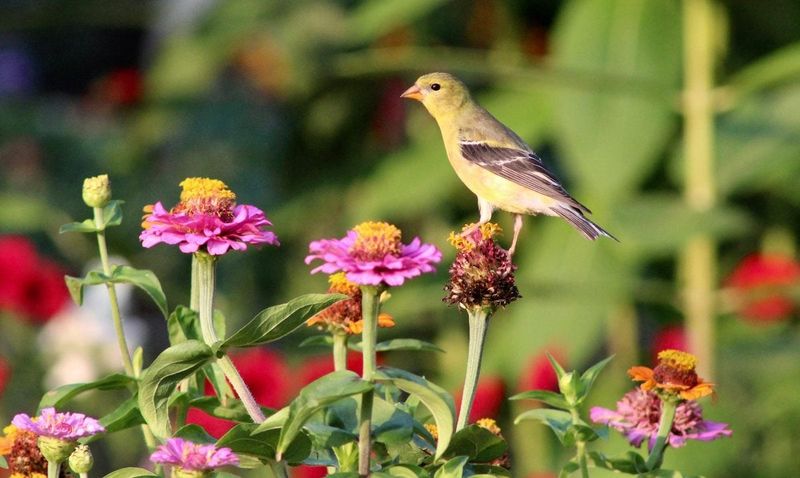
Zinnias are not just vibrant and colorful; they’re also a feast for the eyes and a lure for birds like finches and sparrows. These blossoms offer a rich supply of nectar and seeds, drawing in songbirds with their abundance.
Picture a lively scene where birds chatter and flit about, sampling the offerings of zinnia blooms. Their ease of cultivation and variety of colors make them a delightful and practical choice for any bird-friendly garden. A crucial addition for gardeners seeking to create a bustling, avian-friendly environment.
Hollyhock
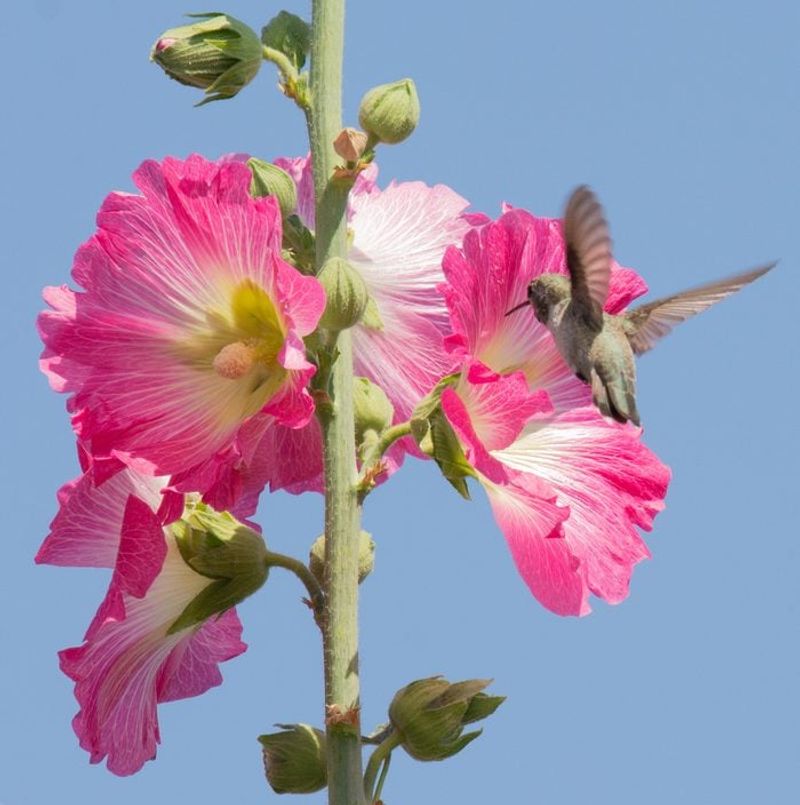
Hollyhocks, with their tall stalks and vibrant blooms, are a striking addition to any garden. These flowers are particularly appealing to hummingbirds and butterflies, thanks to their rich nectar supply.
Imagine the scene of a hummingbird delicately hovering, sipping nectar from the deep wells of hollyhock flowers. This plant not only brings height and color to garden beds but also supports a diverse range of wildlife. An essential choice for gardeners looking to add vertical interest while supporting local ecosystems.
Lavender
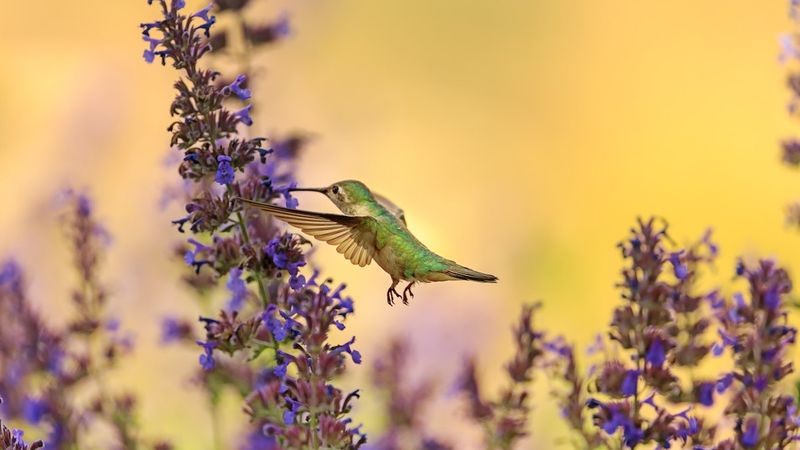
Lavender is renowned for its soothing scent and calming presence, but it also serves as a favorite stop for birds like goldfinches. These aromatic plants offer seeds that are appealing to small songbirds.
Picture a tranquil scene where a goldfinch perches gracefully among lavender stalks, its gentle song mingling with the plant’s fragrance. Lavender is not only easy to grow but also draws in a variety of beneficial insects and birds. A must-have for those looking to create a serene and wildlife-friendly garden paradise.
Marigold
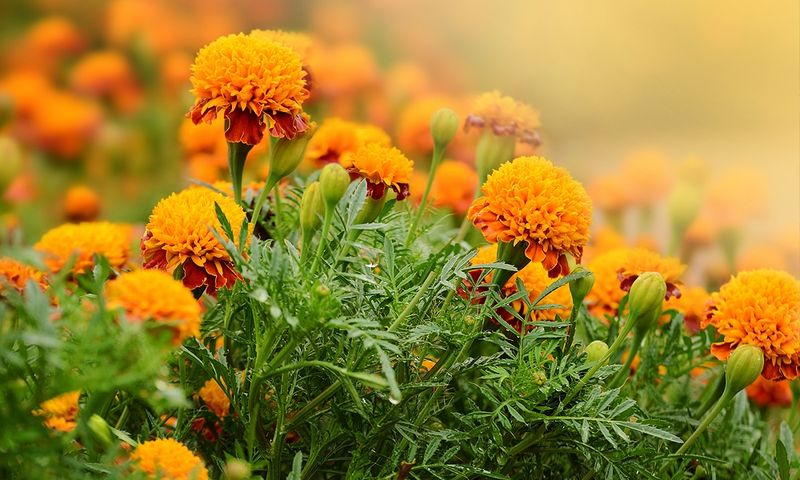
Marigolds, with their bold orange hues, provide more than just a splash of color. They attract birds such as sparrows and finches, who are drawn to their seeds. Besides birds, they also invite beneficial insects, creating a balanced garden environment.
Imagine a cheerful garden scene where birds and butterflies dance among marigolds, their vibrant colors complementing the plants. These flowers are easy to grow and care for, making them an excellent choice for gardeners seeking to attract a variety of wildlife. A captivating and practical addition to any bird-friendly garden.
Coral Honeysuckle

Coral honeysuckle, with its tubular blooms and sweet fragrance, is a magnet for hummingbirds. These flowers offer abundant nectar, making them irresistible to these fast-flying birds.
Envision a sunny day where a hummingbird hovers effortlessly, dipping its beak into the honeysuckle’s flowers. This vine not only adds vertical interest to garden spaces but also supports pollinators and birds. An essential plant for gardeners looking to combine beauty with ecological benefits, inviting a symphony of wings and song to their green spaces.
Blazing Star
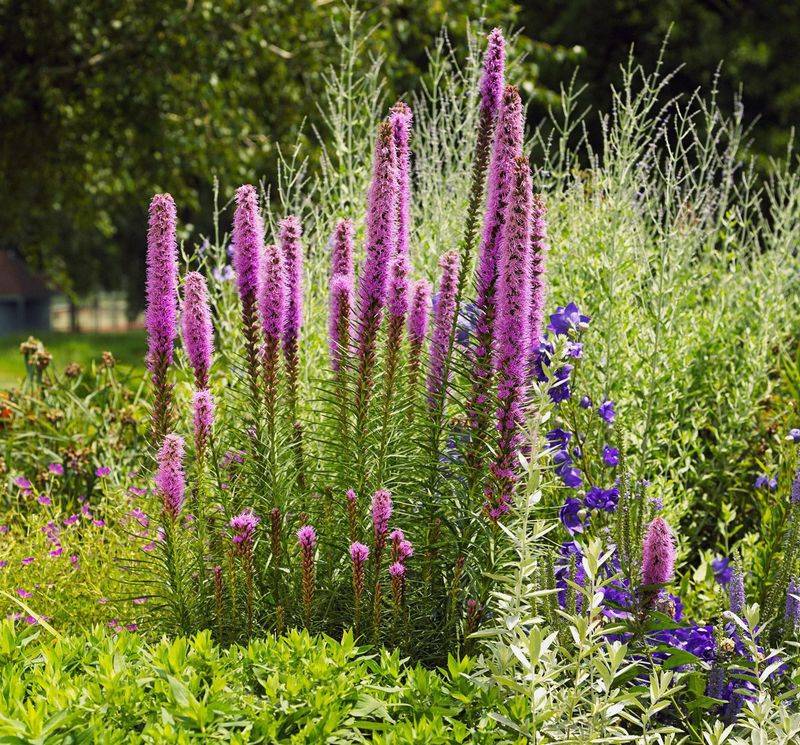
Blazing star, known for its tall spiky blooms, offers both a visual treat and a practical source of nectar and seeds. Birds like sparrows and butterflies find it particularly appealing.
Imagine a vivid garden where sparrows flit from one purple spike to another, their presence adding a lively dimension to the scene. This flower not only enhances the aesthetic appeal of garden landscapes but also plays a vital role in supporting local wildlife. A magnificent choice for those aiming to foster a dynamic and bird-friendly environment.
Petunia
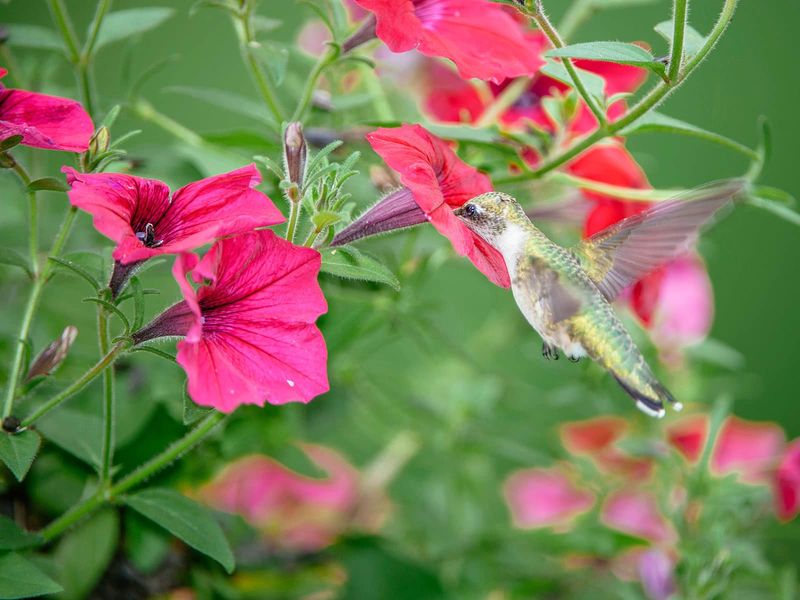
Petunias are celebrated for their vibrant colors and versatility. They’re particularly attractive to hummingbirds, thanks to the abundance of nectar they provide.
Picture a charming garden nook where hummingbirds hover, their wings a blur of motion as they sip from petunia flowers. These blooms not only add a splash of color to gardens but also encourage a lively interaction between flora and fauna. An excellent choice for gardeners looking to add both beauty and ecological value to their garden spaces.
Cosmos

Cosmos flowers, with their delicate petals and airy grace, are a delightful addition to gardens. Their seeds attract birds like sparrows and finches, while their blooms draw in butterflies.
Visualize a serene garden scene where sparrows flit through cosmos flowers, their soft chirps echoing in the air. These flowers are easy to grow and offer continuous blooms throughout the season, making them a practical and beautiful choice for any garden. A fantastic plant for those wanting to attract a variety of wildlife to their outdoor spaces.
Echinacea
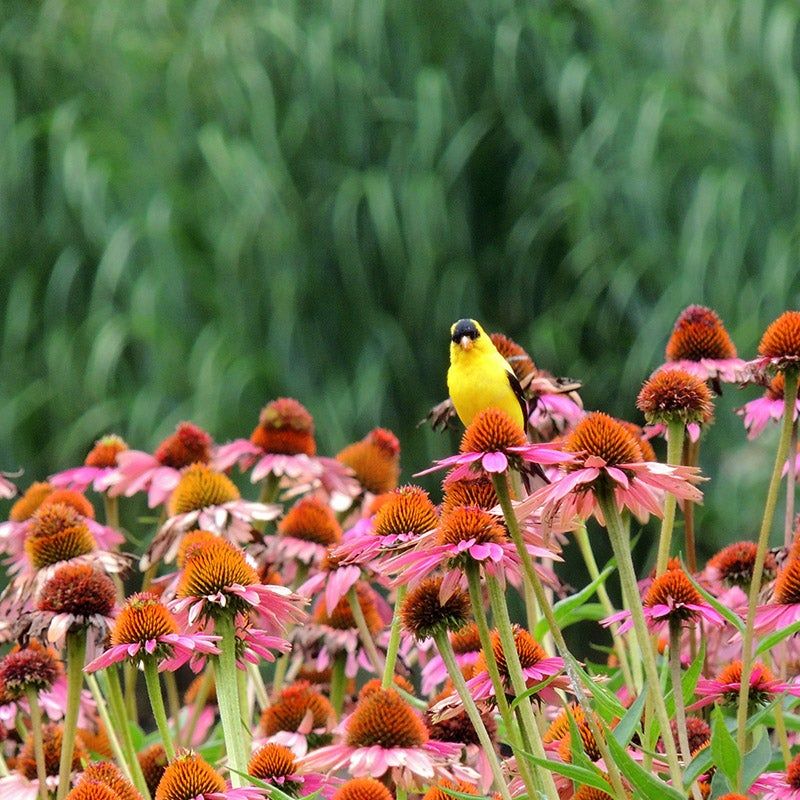
Echinacea, or coneflower, is not only a medicinal marvel but also a favorite among songbirds. Goldfinches and other small birds are drawn to the seeds within its cone-shaped centers.
Envision a garden where a goldfinch perches atop echinacea blooms, its vibrant feathers contrasting with pink petals. These perennials offer both aesthetic charm and practical benefits, providing nourishment and habitat for various bird species. An indispensable flower for any gardener looking to support and enjoy the presence of songbirds.
Butterfly Bush

The butterfly bush is famed for its dense clusters of flowers and ability to attract a variety of wildlife. Sparrows and butterflies are particularly drawn to its blooms.
Imagine the joy of watching birds and butterflies dance around these vibrant clusters, their movements adding life to garden spaces. This shrub not only offers visual interest with its blooms but also supports biodiversity by providing food and habitat. A brilliant choice for gardeners eager to create a lively and welcoming environment for wildlife.
Lilac
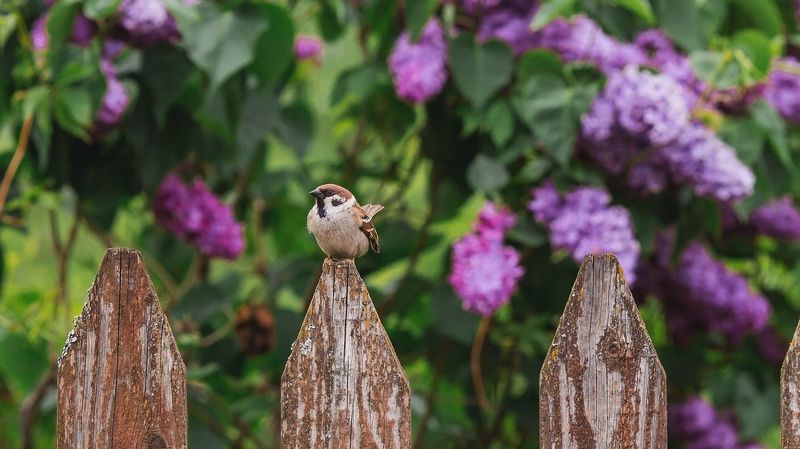
Lilacs, with their intoxicating fragrance and lush clusters, are a wonderful addition to any garden. Finches and other small birds are drawn to their seeds and the shelter the shrubs provide.
Picture a spring morning when a finch alights on a lilac branch, its song mingling with the lilac’s sweet scent. These shrubs offer not only a sensory delight but also support a variety of birdlife, making them an essential plant for bird-friendly gardens. A timeless choice that combines beauty with ecological benefits.
Snapdragon

Snapdragons, with their whimsical tube-shaped blooms, capture the imagination and attract hummingbirds. These flowers offer a rich source of nectar, inviting these agile birds into your garden.
Imagine the scene of a hummingbird delicately extracting nectar from snapdragon blooms, its presence adding a dynamic element to the garden. This plant not only brings vibrant color to garden beds but also supports local wildlife by providing food and habitat. An ideal choice for gardeners wishing to combine visual appeal with ecological benefits.
Salvia

Salvia, with its vivid spikes of flowers, is a favorite among hummingbirds and butterflies. These blooms offer abundant nectar, drawing in these creatures with their richness.
Envision a lively garden where hummingbirds zip between salvia flowers, their vibrant colors mirrored in the blooms. Salvia not only adds vertical interest and color to garden spaces but also plays a crucial role in supporting pollinators. A vital plant for gardeners eager to enhance their outdoor areas with beauty and wildlife activity.
Rudbeckia
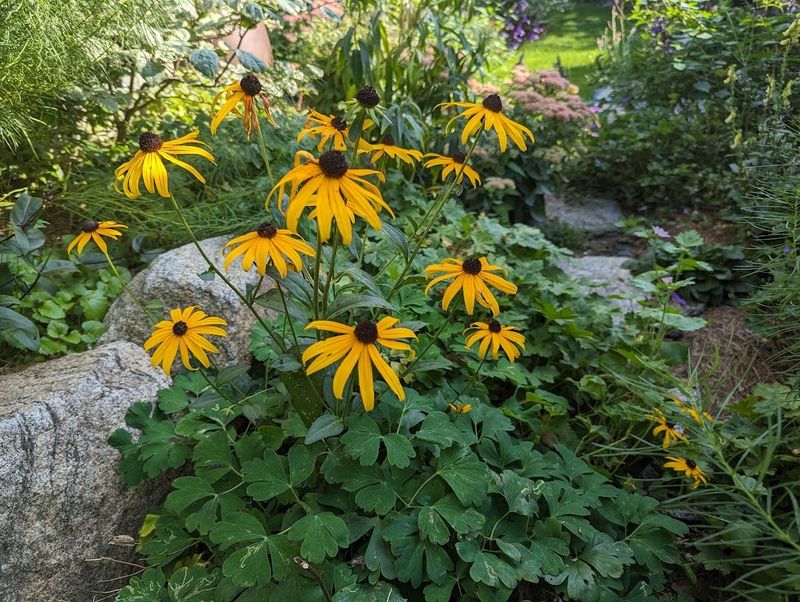
Rudbeckia, also known as black-eyed Susan, offers more than just a cheerful appearance. Its seeds attract a variety of songbirds, making it a staple for bird-friendly gardens.
Picture a vibrant scene where sparrows dance around rudbeckia blooms, their presence bringing movement and life to the garden. These flowers are easy to grow and maintain, providing continuous blooms and a steady food source for birds. A fantastic choice for gardeners looking to combine visual splendor with ecological support.