
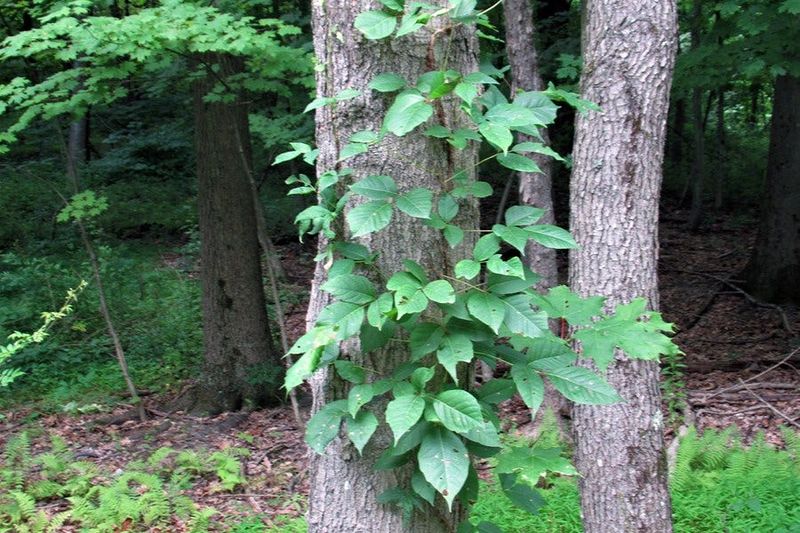
A poison ivy vine hugging a tree trunk or fence post can make a whole corner of the yard feel off limits. Spraying leaves high in a tree is messy, and the mist can drift onto plants you want to keep.
A cut-stump approach lets you treat the vine near the ground instead, as long as you follow the product label and take some careful safety steps. Here is how it works, what it cannot do, and how to handle it safely.
What the cut-stump method can—and cannot—do
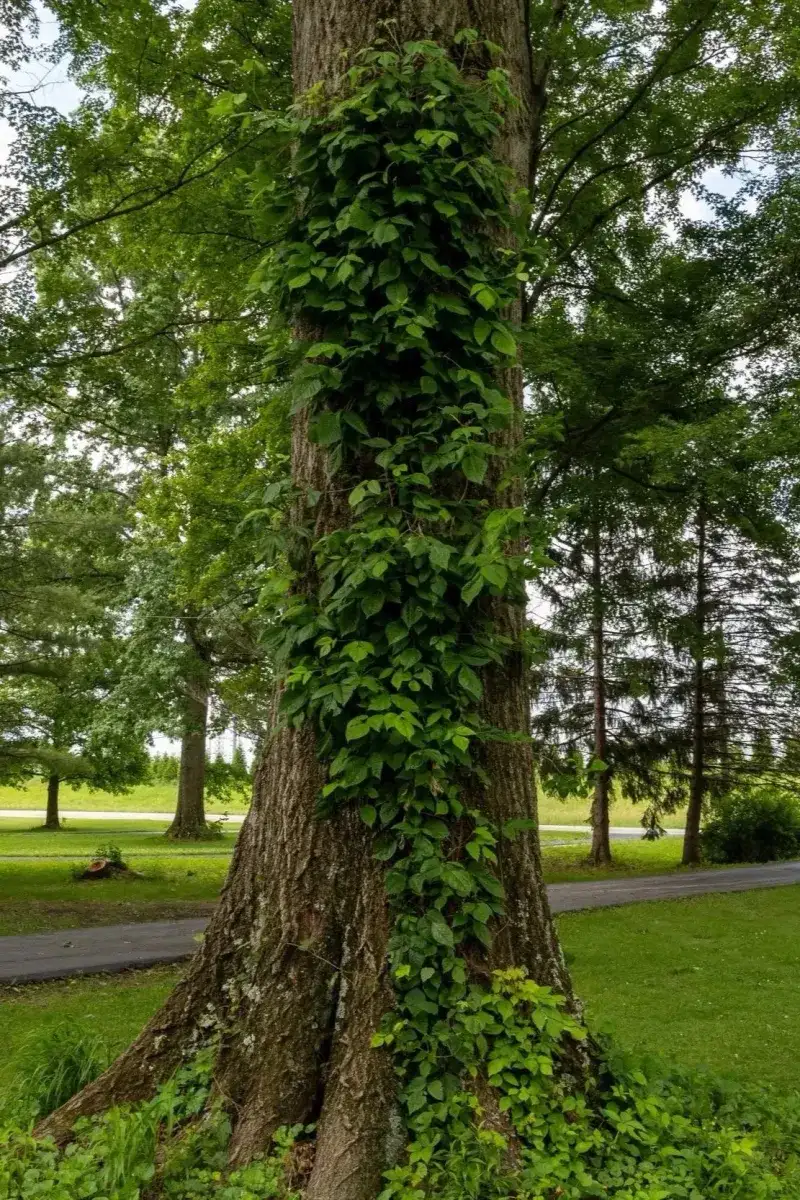
The idea is simple. You cut a climbing vine near the ground, which disconnects the upper growth from the roots below.
The vine above the cut will die, but the rooted stump can send up new shoots, so cutting alone is not a cure.
That is where treating the fresh cut comes in. NC State Extension lists herbicide on freshly cut stumps as one control option for poison ivy, and UF/IFAS describes painting a cut stem with a labeled glyphosate product.
Neither source promises certain eradication or a guarantee of no regrowth.
It helps to be clear about what “no spraying” means here. You avoid spraying the leaves, which is where drift and overspray usually happen.
You are still using a pesticide, though, just in a smaller and more targeted way.
Poison ivy has extensive roots and underground stems, so the realistic goal is to control the vine and reduce regrowth. Some stumps may need a second look, and some may need follow-up treatment.
Iowa State Extension also describes cut-stump treatment as one tool, not a one-time fix.
One more rule applies before you buy anything. The product label must allow cut-stump use at your site, whether that is a tree base, a fence line, or a garden edge.
If the label does not allow it, this method is not for you.
Protect yourself before handling the vine
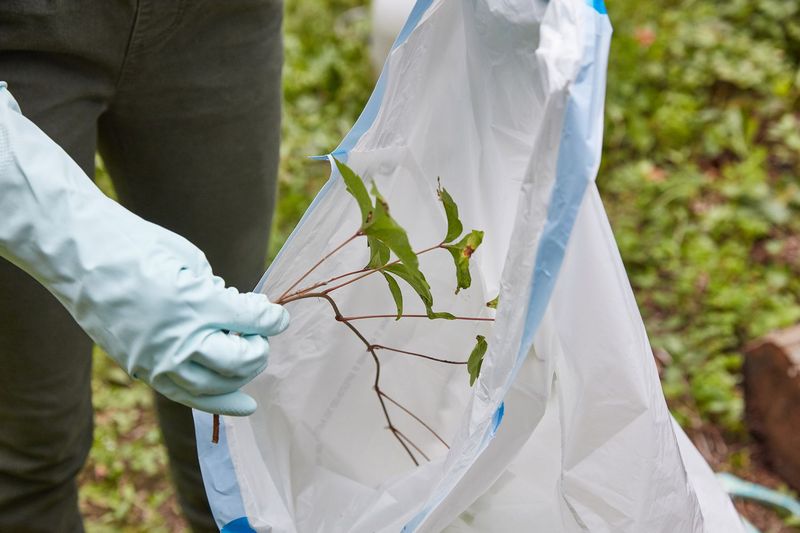
Gear comes first, because the oil in poison ivy, called urushiol, causes the rash. Wear a long-sleeved shirt, long pants, closed shoes, waterproof gloves, and eye protection.
Penn State Extension advises covering skin and avoiding direct contact with the plant.
Urushiol does not disappear when the vine dies. It can stay on dead stems, tools, gloves, and clothing for a long time.
The CDC and NIOSH warn that burning poison ivy releases urushiol into the smoke, which can cause serious harm if it is inhaled.
So never burn poison ivy, even dead vine pieces. Bag them for trash instead, following your local waste rules.
Afterward, treat everything you wore as contaminated. Remove gloves carefully, wash clothes separately in hot water, and wipe pruners and loppers with soap and water or rubbing alcohol.
Wash your own skin with cool water and soap soon after you finish.
Keep pets and kids away from the area, since fur and toys can carry the oil indoors. It is also worth knowing the plant by sight.
NC State Extension notes its three-leaflet pattern and its hairy, rope-like stems on mature vines.
Choose a suitable treatment window
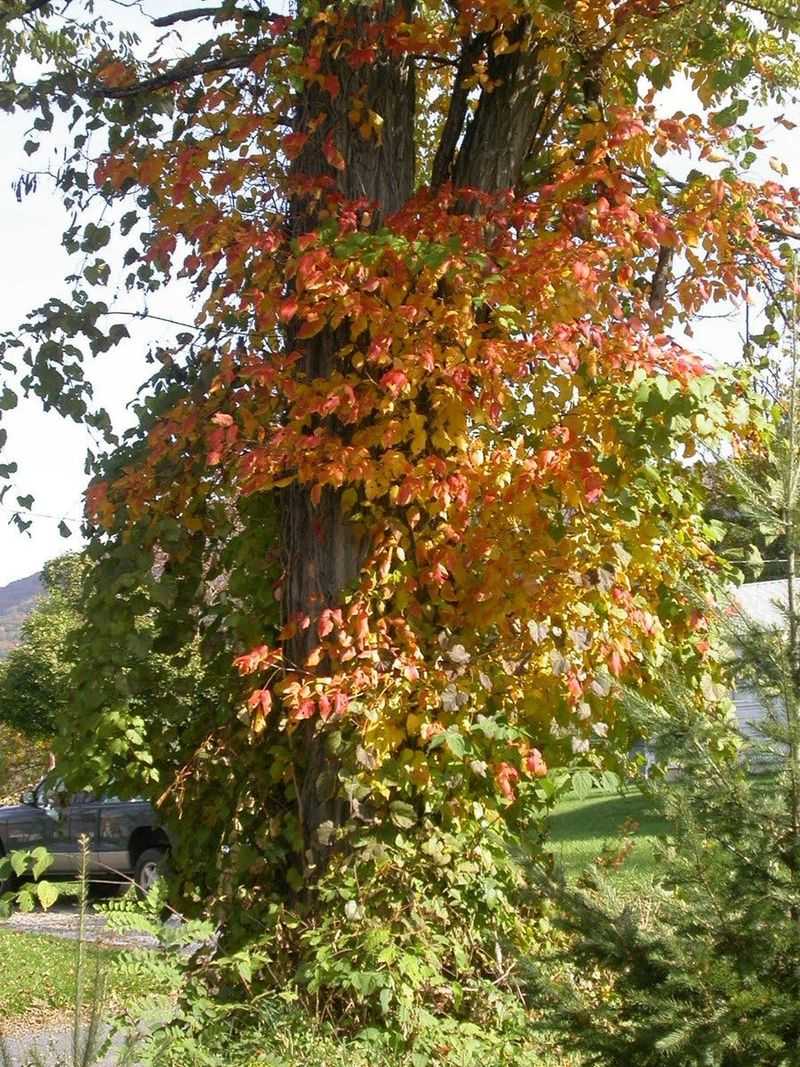
Timing matters, but not as much as some headlines suggest. Late summer and fall can be a favorable period because plants are moving resources toward their roots.
Iowa State Extension says cut-stump applications can be made during the growing season, with late summer and fall tending to be slightly more effective.
That small edge is not a rule. Other guidance allows treatment across more of the year.
The Alabama Cooperative Extension describes cut-stump work as flexible, with seasonal and product-specific limits.
For that reason, there is no single calendar date that fits all of North Carolina. Mountain yards, Piedmont yards, and coastal plain yards see different weather and different seasonal changes.
Conditions on the day matter too.
Choose a dry day when no rain is expected soon, since rain can wash a fresh application off the stump. Avoid very windy days, and skip any day when the label tells you to wait.
The label’s timing notes always outrank general advice.
If you miss the fall window, you have not lost your chance. Treat the vine when you can do so safely and within the label directions, then watch for regrowth.
Cut the stem and treat the fresh stump
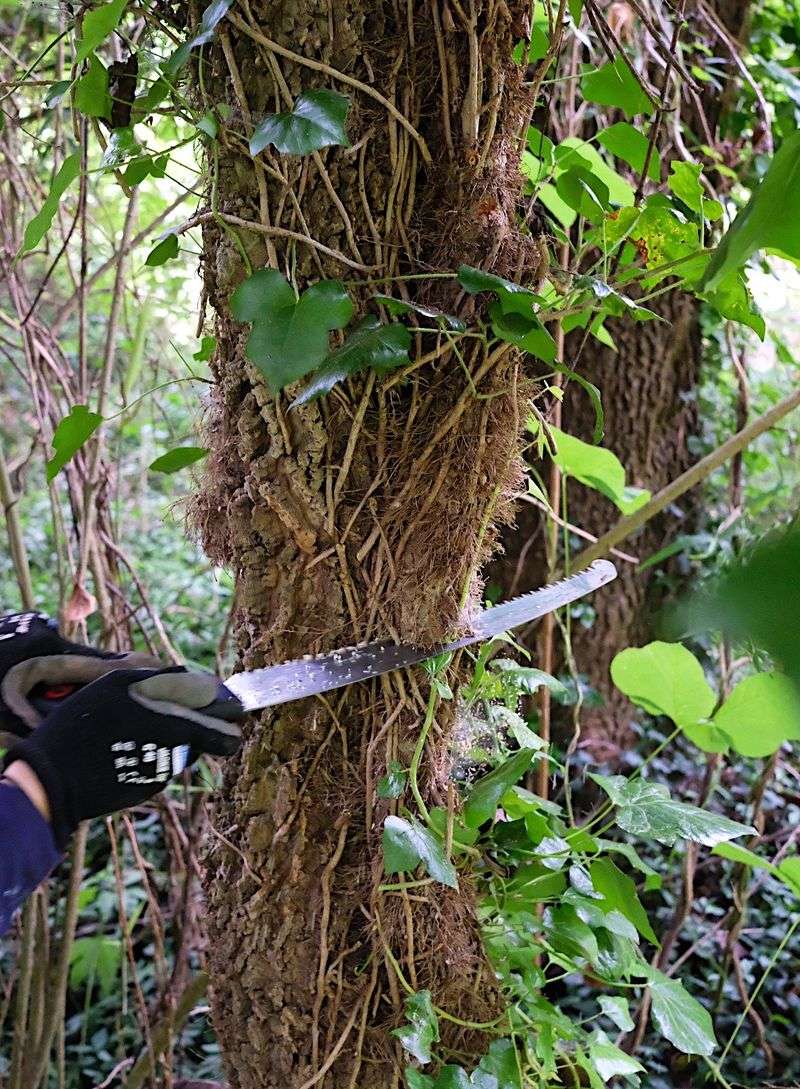
Start by finding the main stem where it enters the soil. Use sharp loppers or a pruning saw to cut it as close to the ground as you can.
Make a clean cut, and consider removing a short section, a few inches long, so the two ends stay apart.
Then treat the fresh cut promptly, within the time the label describes. Only use a product whose label allows cut-stump or cut-vine use at your site.
The EPA explains that labels set the permitted uses and directions, and that using a pesticide in a way the label does not allow violates federal law.
This is why you should never copy a mixing rate or recipe from another product or guide. Formulas differ, and a number that works for one can be wrong for another.
Read your own label and follow it.
Apply the product only to the cut surface with a small brush or applicator, as UF/IFAS describes for a labeled glyphosate product. Keep it off bark, soil, and nearby plants.
Careful painting lowers the chance of hitting neighboring plants compared with spraying leaves, but it does not remove the risk. Iowa State Extension notes that glyphosate can injure desirable plants if it touches them.
Hold a piece of cardboard behind the stem, avoid runoff, and follow the label’s limits.
Leave the upper vine in place
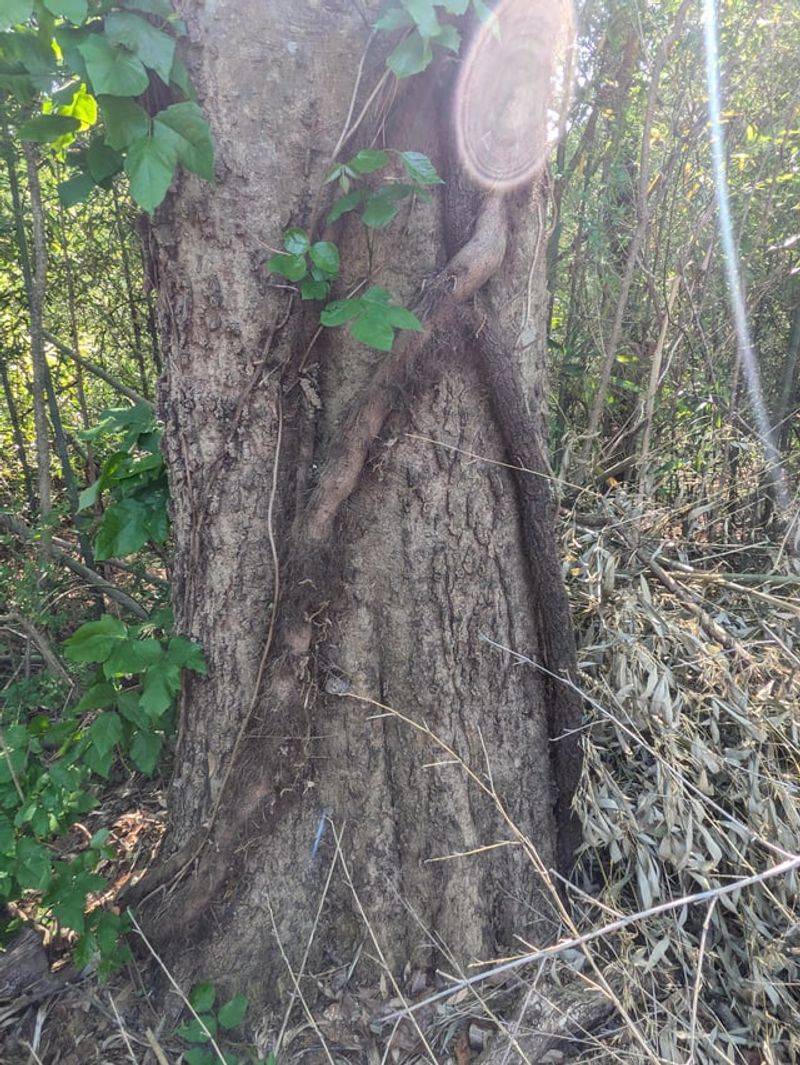
After the cut, the vine above it will look alive for a while, then turn brown and dry. Resist the urge to yank it down.
It is easier to wait than to deal with the consequences.
Pulling a vine off a tree can scrape or tear bark, since the rootlets cling tightly. UGA Extension recommends leaving the cut vine in place to die rather than tearing it off.
There is a handling reason as well. Penn State Extension points out that pulling can put you in direct contact with plant material that carries urushiol, even when the vine looks dead.
On a fence, the same idea applies. Let the upper vine dry out where it hangs, and avoid weaving your hands through the wires.
Over time the dead vine will loosen and break down, and pieces may fall by themselves. Check on it now and then from a distance.
If it must come down eventually, wait until it has fully dried, wear full protection, and bag the pieces rather than burning or composting them.
Monitor the stump and plan for follow-up
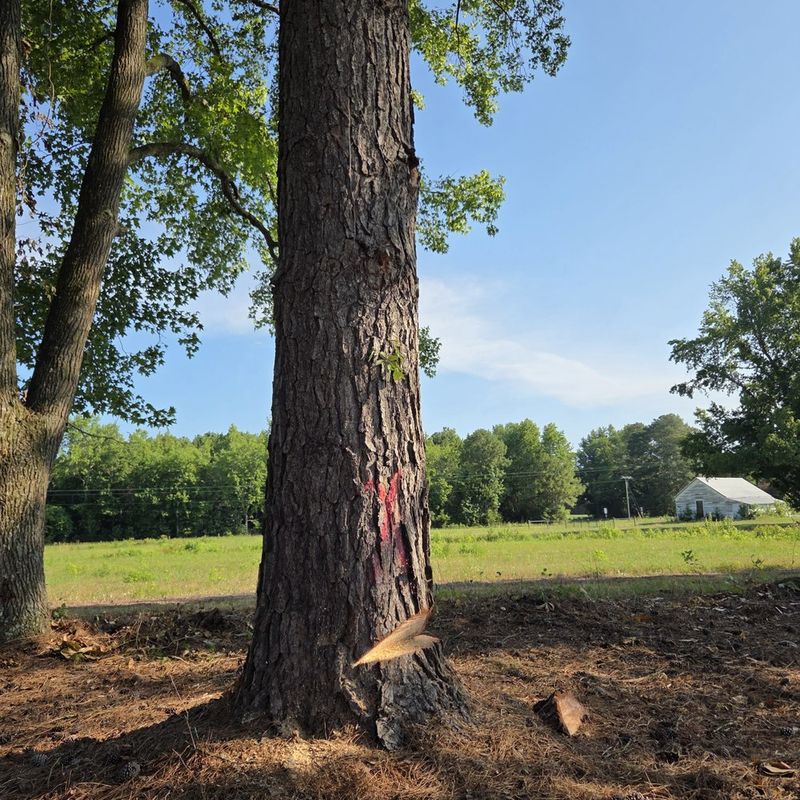
Plan on checking the base every few weeks through the next growing season. New shoots near the cut are the main sign that the stump survived.
If you see regrowth, treat it only as your product label directs.
Do not be discouraged if a second round is needed. Iowa State Extension and NC State both treat cut-stump work as part of a longer management effort, not a single event.
Poison ivy roots and underground stems can be extensive.
If you would rather skip herbicide, repeated cutting is an option. UF/IFAS notes that repeated cutting can eventually control vines, but it may take several growing seasons or years.
Penn State Extension likewise describes it as slower.
Each cutting needs the same protective gear and cleanup as the first one. Keep a short note on the dates you cut or treated, so you can see progress.
You may feel odd about removing a native plant. NC State Extension notes that poison ivy is native and that birds eat its fruit, but that does not mean you must keep a vine where it threatens your family.
Patience is the real tool here, and the stump will tell you when you are done.