
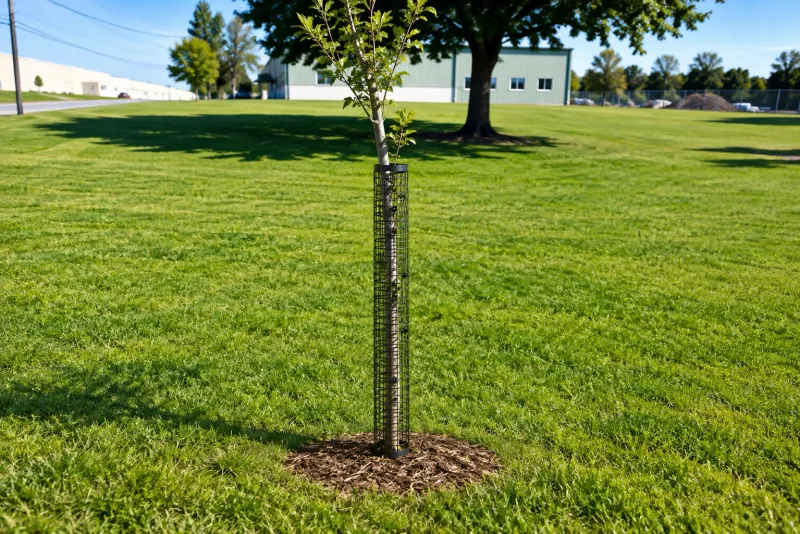
A young fruit tree can look healthy in the fall and then show missing bark at the base a few weeks later. Rabbits are often suspected, and a ring of stripped bark can seriously harm a small tree.
A simple cylinder of hardware cloth, set up the right way, can lower the odds of that damage. Here is how to spot trouble, build the guard, and keep it working as your tree grows.
Food scarcity can put young trunks at risk
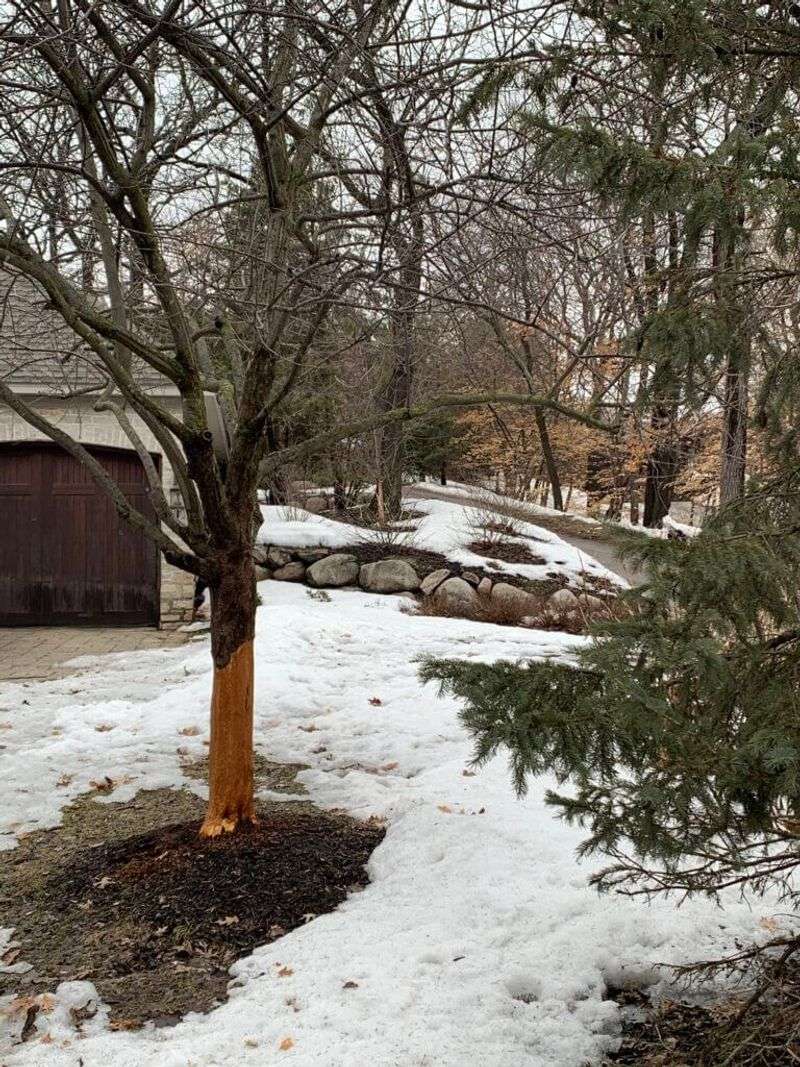
Rabbits eat green vegetation during the growing season, so your tree may go untouched for months. When other food gets scarce, they may turn to twigs and bark instead, as Missouri Extension explains.
Young orchard trees are especially vulnerable, since their thin bark and small trunks cannot absorb much loss.
Rabbits feed all year, so damage is not strictly a winter problem. Winter is simply a common time for the shift, because fresh greens are harder to find.
Penn State Extension describes the same pattern for cottontails, and a drought or a dry spell in your area could create similar pressure at other times.
Extensive bark removal can girdle a tree, which means the bark is stripped all the way around the trunk, and that can kill it. Not every nibble is fatal, though.
UF/IFAS also notes winter bark feeding by rabbits on apple trees. Rabbits are not known to single out apples, pears, or peaches as a group, so any young woody plant in your yard may be at risk.
Use damage signs as clues, not proof
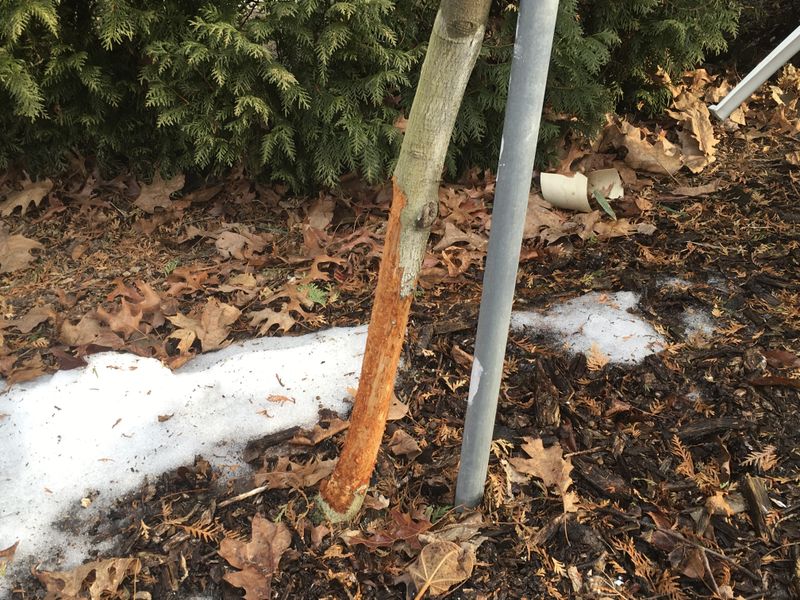
Before you pick a fix, look closely at what happened. Clean, angled cuts on low twigs or stems can point toward rabbits, according to UF/IFAS wildlife damage guidance.
Treat that as a clue, not a verdict.
Gnawed bark by itself cannot tell you which animal visited. Voles can also chew trunks, often near the ground and sometimes under mulch or snow, and Penn State describes vole damage and the tooth-mark patterns to look for.
Take a few minutes to check the tree. Note how high the damage sits, whether twigs show angled cuts, and whether you see tooth marks or droppings.
Photograph what you find so you can compare it later.
A guard works as prevention. It will not heal bark that is already gone, and it will not prove who caused the harm.
Choose a freestanding hardware-cloth guard
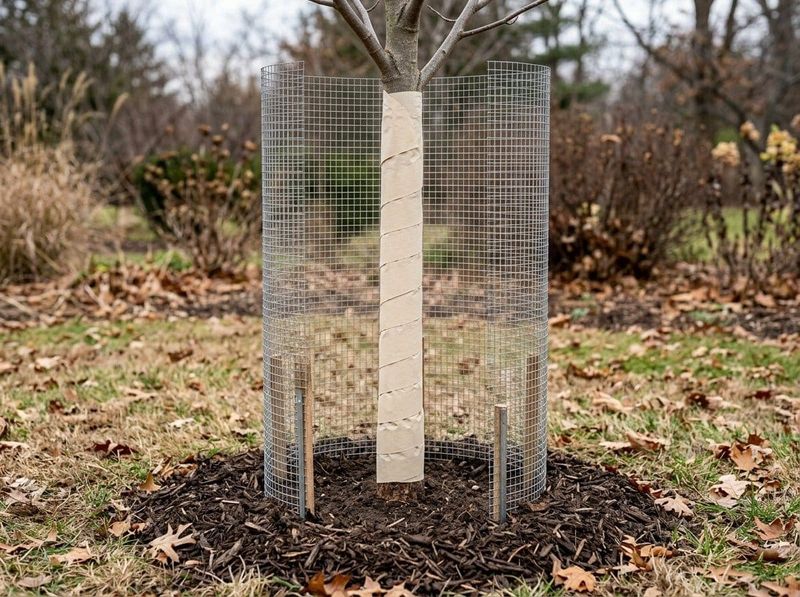
Hardware cloth with ¼-inch mesh, shaped into a cylinder, is a well-supported way to keep rabbits off the bark. It works because it is a physical barrier.
If the animal cannot reach the trunk, it cannot chew it.
For height, Missouri Extension describes a cylinder 18 to 24 inches tall. Think of that as a reference point, not a rule for every yard.
Your local conditions, including snow where you get it, may call for something different.
The guard must stand clear of the trunk and rise above what a rabbit can reach, a point Penn State Extension makes in its cottontail guidance.
Conventional tree wrap is a different tool. Penn State notes that tree wrap is often used for handling or winter-injury protection.
For rabbit exclusion, choose a rigid mesh cylinder instead, and avoid soft wraps pressed against the bark.
Fit the guard close to the ground and above the reach of rabbits
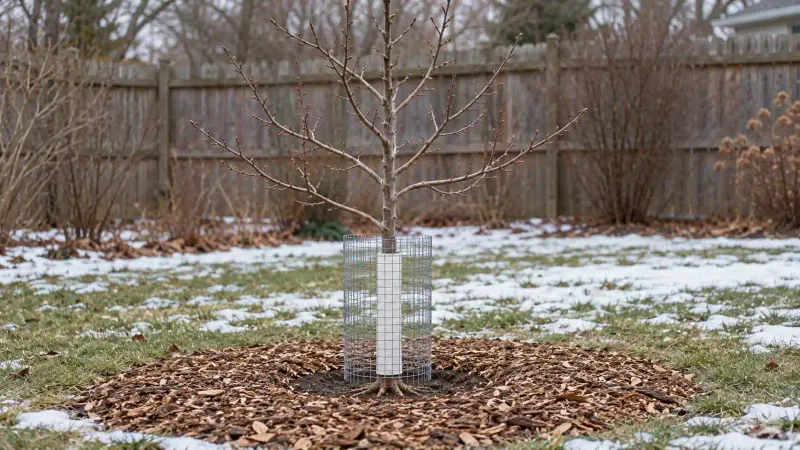
Roll the mesh into a cylinder wide enough to leave space between the wire and the trunk. Minnesota Extension gives about 6 inches of clearance as one option.
Secure the seam with wire or ties so the cylinder stands on its own.
Set the bottom edge right at the soil line and leave no gap at ground level. Press the mesh against the soil and fill any low spots, because a rabbit can squeeze through a small opening.
Height depends on your site. Snow can raise the level a rabbit stands on, and Minnesota Extension suggests extending the guard 18 to 24 inches above the expected snow.
Penn State notes that damage can reach roughly 2 to 3 feet depending on snow depth. In most Florida and Texas yards, snow is not a factor, so size the guard to the conditions you actually have.
You may see advice to bury the mesh deep. That advice often aims at voles, as Penn State’s orchard vole guidance shows.
For rabbits, a gap-free base and enough height matter most.
Inspect and adjust the guard as the tree grows
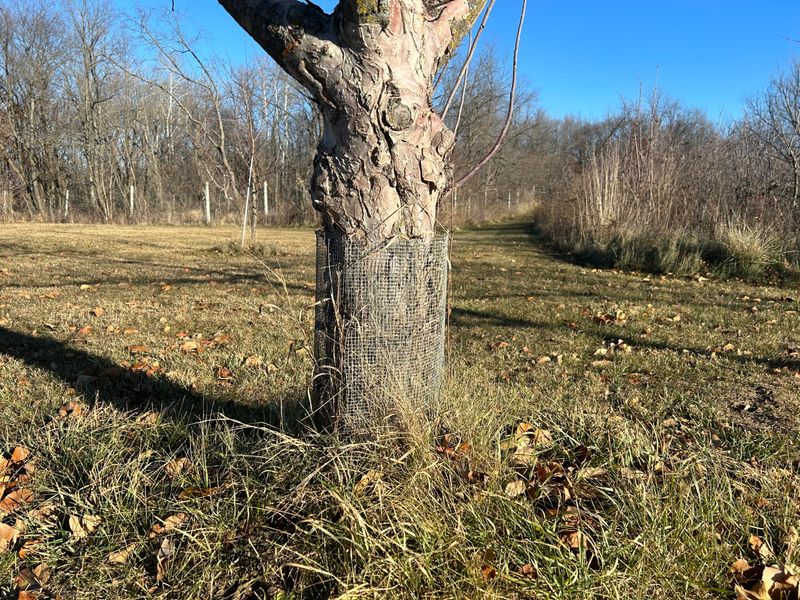
A guard that fit well at planting can become a problem as the tree gets bigger. Plan a quick check every so often, and again after storms, mowing, or heavy rain that may have shifted the mesh.
Look for gaps at the base, bent or sagging sections, and any spot where soil has washed away. Also look at the top edge and ask whether it still sits above a rabbit’s reach.
Texas A&M Forest Service, in its temporary browse protection guidance, advises adjusting guards as saplings grow.
Check the clearance, too. If the trunk is nearing the mesh, loosen or replace the cylinder with a wider one so it does not press on the bark.
Keeping that open space is part of what makes the barrier work, as the Minnesota guidance on clearance suggests.
Even with careful upkeep, no guard is a guarantee. Regular checks simply give you the best chance to catch weak spots before a hungry rabbit does.
Set timing for local risk, not a universal calendar date
There is no single date that works for every yard. Rabbit damage tends to matter more when other food is scarce, but that moment depends on where you live and the weather that year.
Watch your own yard for thinning greens and early signs of nibbling.
Winter bark damage is possible in the South. Texas A&M Forest Service describes rabbits chewing young-tree bark especially in winter when other food is scarce.
UF/IFAS also describes winter bark feeding on apple trees, though that does not mean every Florida yard faces the same risk.
Florida’s deciduous fruit tree guidance also notes that suitable trees and conditions vary by region. Since rabbits feed all year, as Missouri Extension’s cottontail guidance explains, installing a guard when you plant is a sensible option.
A well-fitted guard lowers the risk but cannot remove it. Think of it as cheap insurance that is easiest to fit before trouble starts.