
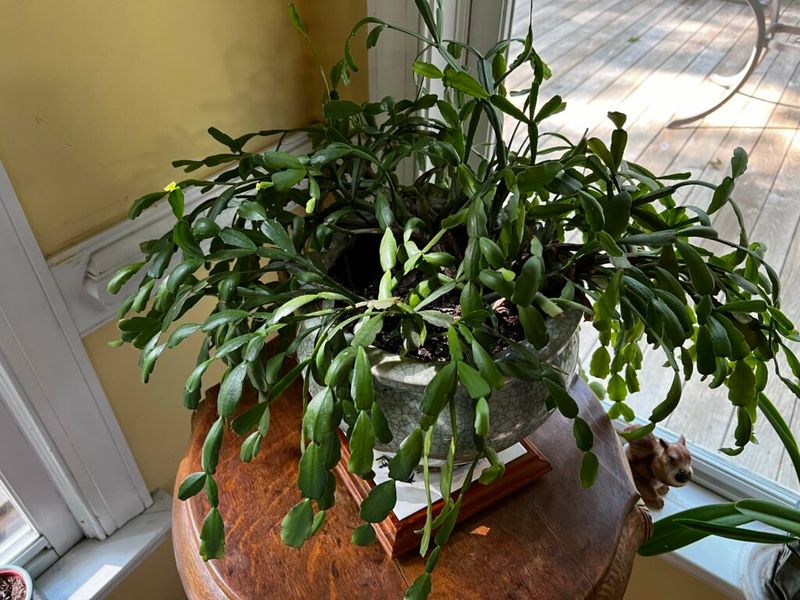
A Christmas cactus with floppy, wrinkled stems can look like it is giving up. Many people grab the watering can right away, but that quick fix can make some plants worse.
A short check of the potting mix tells you what to do next. Here is how to read the clues, give steady care, and help the plant have a chance at flowers.
A limp cactus does not reveal whether it needs water
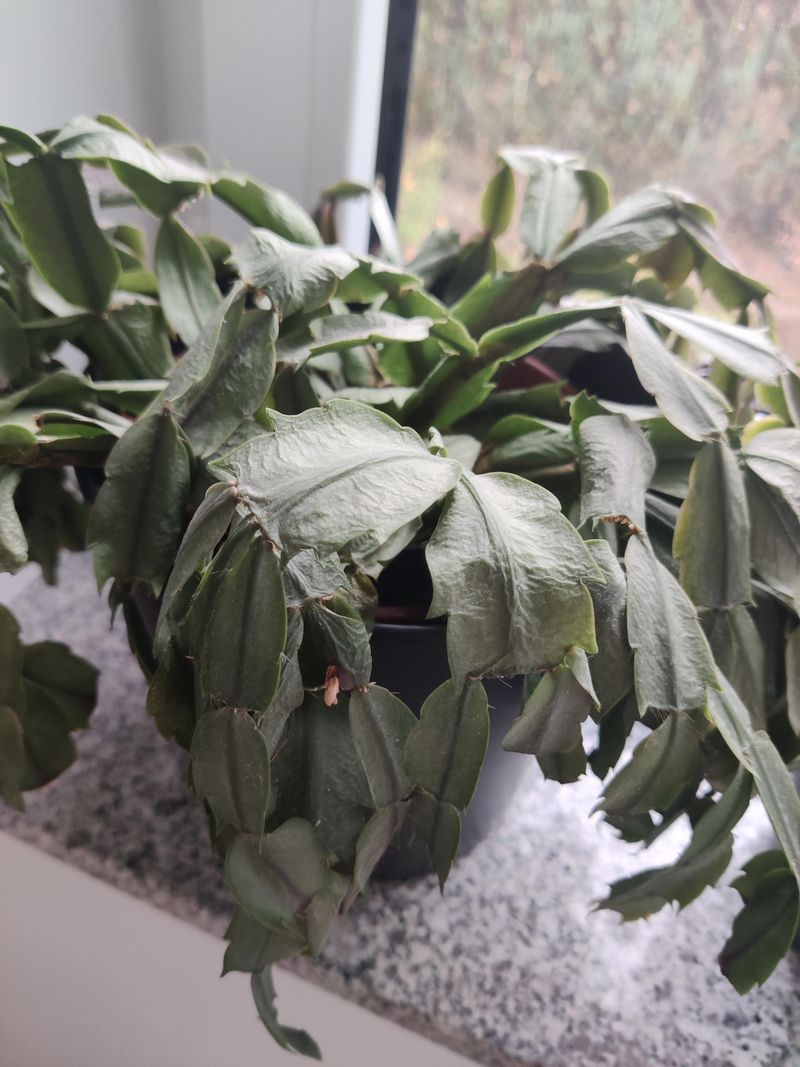
Wrinkled, drooping stems look like thirst, yet the same symptom shows up in plants that have been watered too much. As University of Illinois Extension explains, both underwatering and overwatering can cause wilting.
Soggy soil can damage roots, and damaged roots cannot take up water even when plenty is available.
That is why the first move is simple: check the potting mix before you water anything. Push a finger an inch or two into the soil and notice whether it feels dry, damp, or wet.
The name can also mislead. Holiday cacti are tropical epiphytes, plants that grow on trees in humid forests, so they are not desert cacti.
University of New Hampshire Extension notes that long dry spells and waterlogged soil can both cause trouble.
Once you know what the mix feels like, the next steps split in two directions. Dry mix gets a thorough drink.
Wet mix gets no more water, and the roots need a closer look.
Water dry mix thoroughly and let it drain
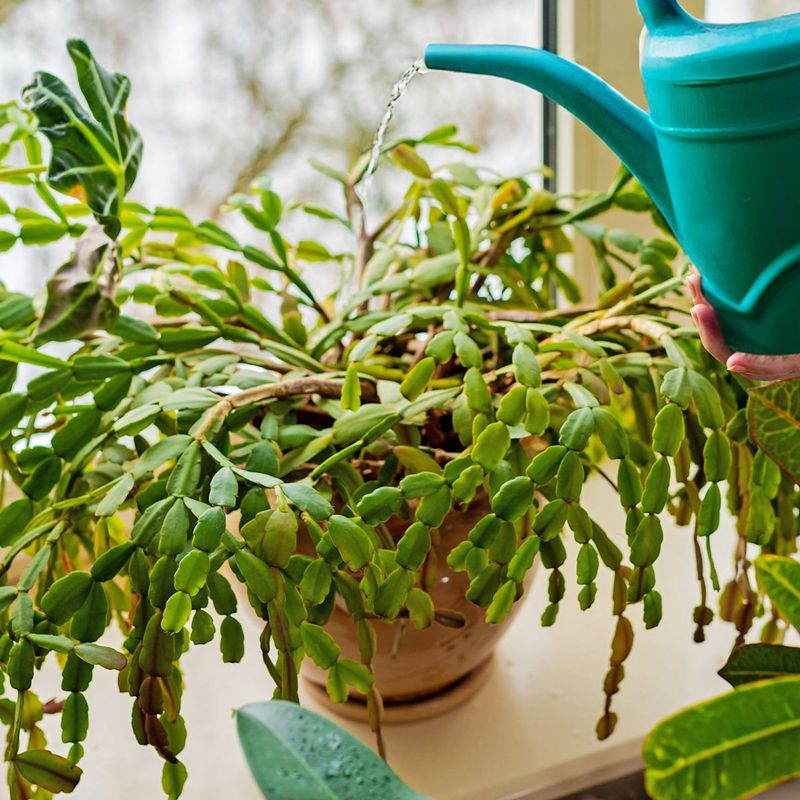
Dry mix is the one clear signal that water is the fix. UF/IFAS recommends watering when the top inch of mix is dry, soaking it well, and letting the excess run out through the drainage holes.
Take the pot to a sink if that is easier. Pour slowly until water flows freely from the bottom, then let it drip for a few minutes.
Empty the saucer afterward so the pot never sits in a puddle.
Keep in mind that this is a response to dry soil, not a rule for every droopy plant. There is no single schedule that fits every home, because pot size, mix, light, and Florida or Texas indoor air all change how fast the soil dries.
Checking the mix each time works better than following the calendar.
As Illinois Extension points out, a plant that was simply thirsty may perk up over the following days, though a full recovery is not guaranteed.
Wet mix can point to root trouble
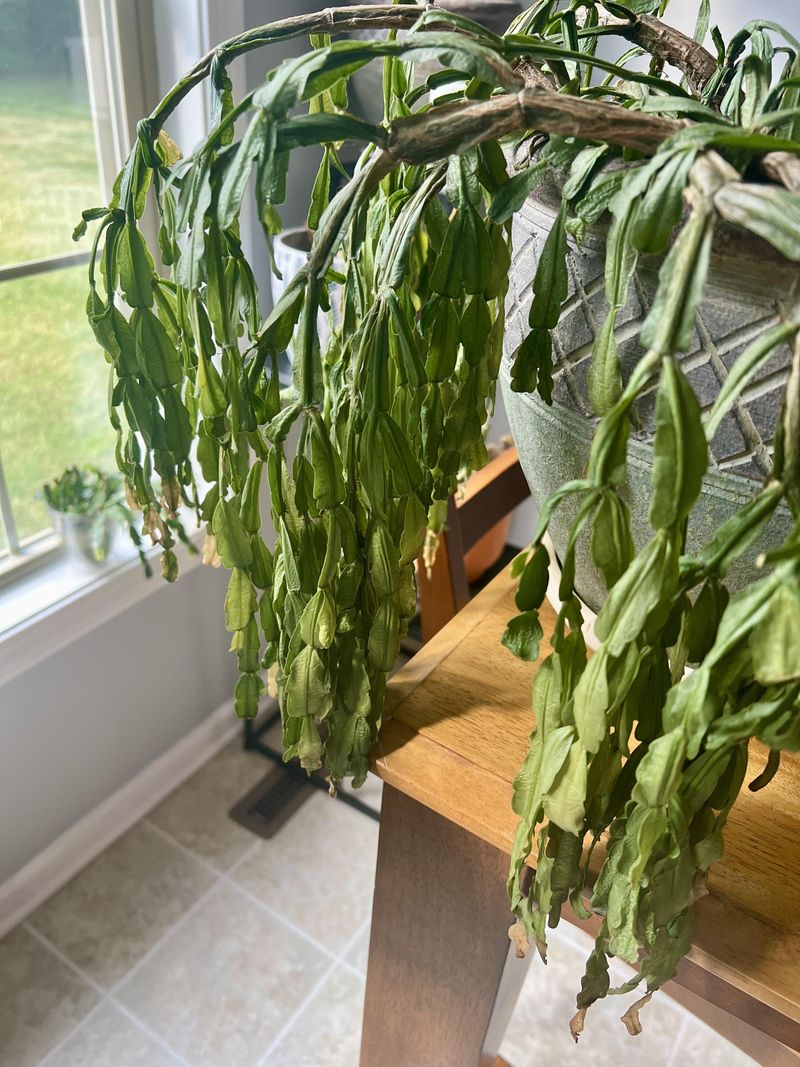
If the pot feels heavy and the mix is still wet, adding water is the wrong move. Constantly soggy soil can cause stem or root rot, according to UF/IFAS, and rotted roots cannot move water up to the stems.
The plant then wilts even though the soil is wet.
Hold off on watering and make sure the pot drains. Empty any water in the saucer and move the plant out of strong sun while it settles.
When a plant is badly stressed, University of Wisconsin Extension suggests checking the roots. Slide the plant out of the pot and look.
Firm, light roots are a good sign, while dark, mushy, or missing roots point to damage.
This check helps you judge what you are dealing with, but it does not fix anything on its own. Wisconsin warns that plants with extensive root loss can be very hard to save, so repotting into fresh, well-draining mix is worth trying but is not a sure rescue.
Restore steady care before encouraging buds
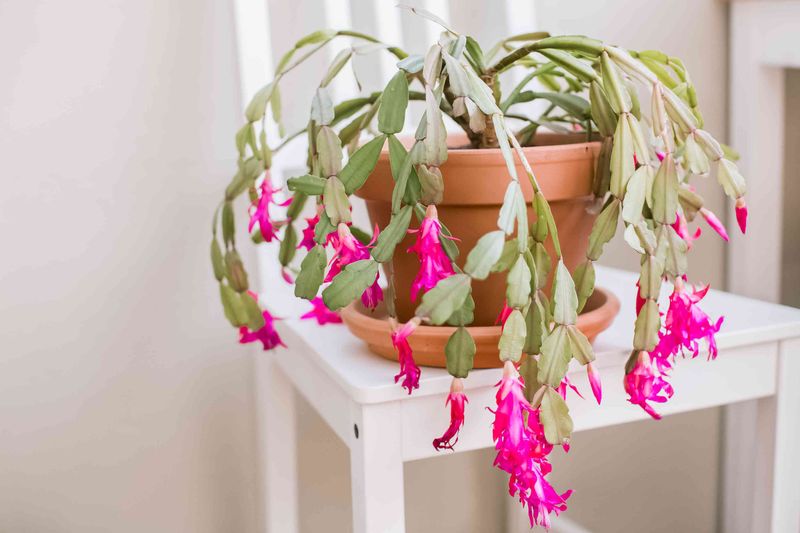
Before thinking about flowers, give the plant a calm stretch of good basics. Bright, indirect light suits it well, along with a well-draining mix and a pot with drainage holes, as UF/IFAS describes.
A bright window with filtered light works better than a spot with hot afternoon sun, which can be harsh in Florida and Texas homes.
Never let the pot stand in water. University of New Hampshire Extension stresses that these plants do not like long periods of either dryness or soggy soil, so aim for even moisture rather than extremes.
Resist any urge to stress the plant on purpose. UMass Extension reports that water stress during flower induction can reduce bud set, and it advises against letting plants shrivel.
Good care keeps the plant healthy, which gives it a better shot at blooming. It cannot promise flowers, though.
Treat this stage as recovery, separate from the bud-encouraging routine that comes next.
Long, uninterrupted nights can encourage flowering
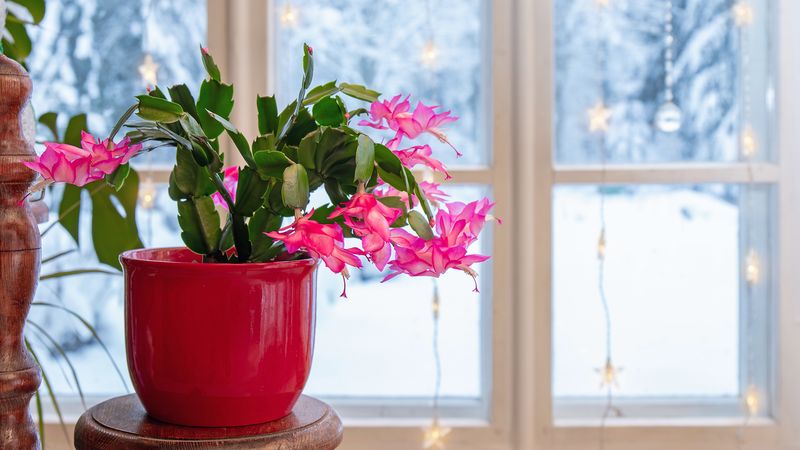
Buds form when the plant gets several weeks of long nights and cooler conditions. Think of the schedules below as guidance, not a recipe that works every time.
Illinois Extension recommends at least 12 hours of continuous darkness for five to six weeks. It gives daytime temperatures of 65 to 70°F and evening temperatures of 55 to 65°F as a useful range.
A spare room with no lamps, or a spot where no light switches on after dark, can work.
UF/IFAS describes a six-week short-day treatment, so the sources differ a little. Variety and growing conditions also change how a plant responds.
Interruptions matter, so keep porch lights, TV glow, and hallway lamps away from the plant. In warm Southern homes, finding cool enough evenings can be the harder part, so a cooler room may help.
Do not swap darkness for dryness. UMass Extension reports that water stress during induction can reduce bud set.
Late October is not a proven cutoff
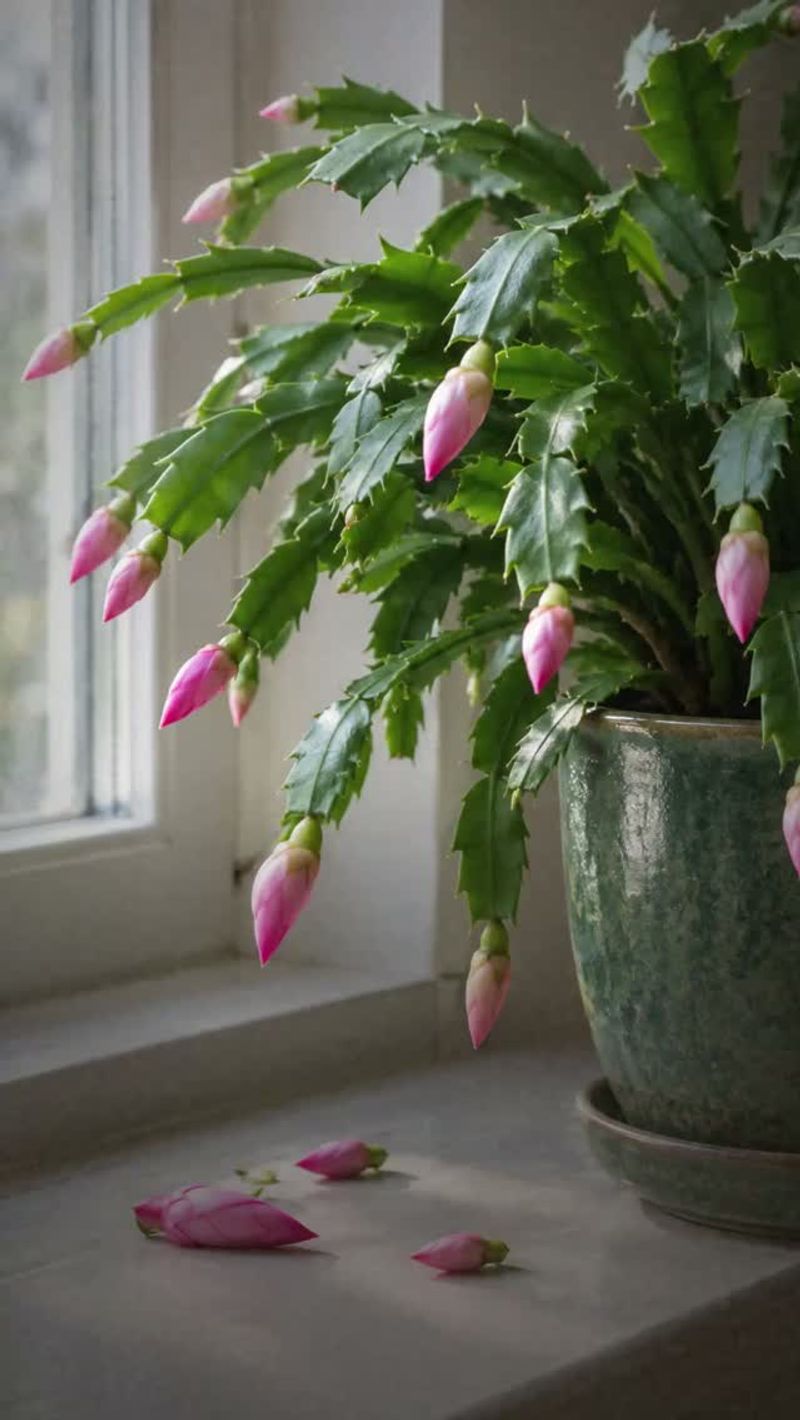
The idea that everything ends on October 31 is not backed by the sources. What they describe is a number of weeks of the right conditions, not a single deadline.
UF/IFAS describes a controlled six-week short-day treatment, with blooms possible about ten weeks after treatment begins. Its example starts around mid-October and aims for flowers near December 23.
That example shows how long the process can take. It does not make October 31 a universal cutoff, and it does not show that a recently rescued plant will bloom on time.
A plant that is still recovering from root trouble may not be ready to flower at all.
Starting late may not leave enough time for Christmas flowers, so it helps to hold the date loosely. University of Wisconsin Extension also describes bloom timing as varying with conditions.
If the holiday passes first, blooms that come a little later are still a good result.
Holiday cactus types can have different bloom windows
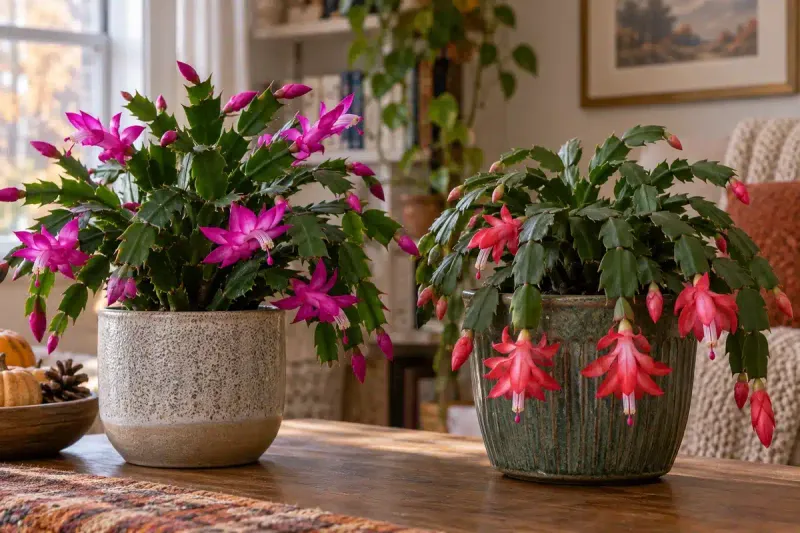
Check the stem edges and you may learn that your plant is not what the tag said. Many plants sold as Christmas cactus are really Thanksgiving cactus.
Illinois Extension says Thanksgiving cactus has pointed edges on its segments, while Christmas cactus has smoother, rounded edges.
The two also differ in when they usually flower. Thanksgiving cactus typically blooms from late November to late December, while Christmas cactus commonly blooms from late December to March.
So a plant that opens early may simply be the earlier type, and one that waits until after New Year’s may be right on schedule. Knowing which you have can keep expectations realistic.
Identification alone will not give you an exact bloom date, since your plant’s variety, temperatures, and light all play a part. Think of the type as a rough window for when flowers might show up.
Keep conditions steady after buds appear
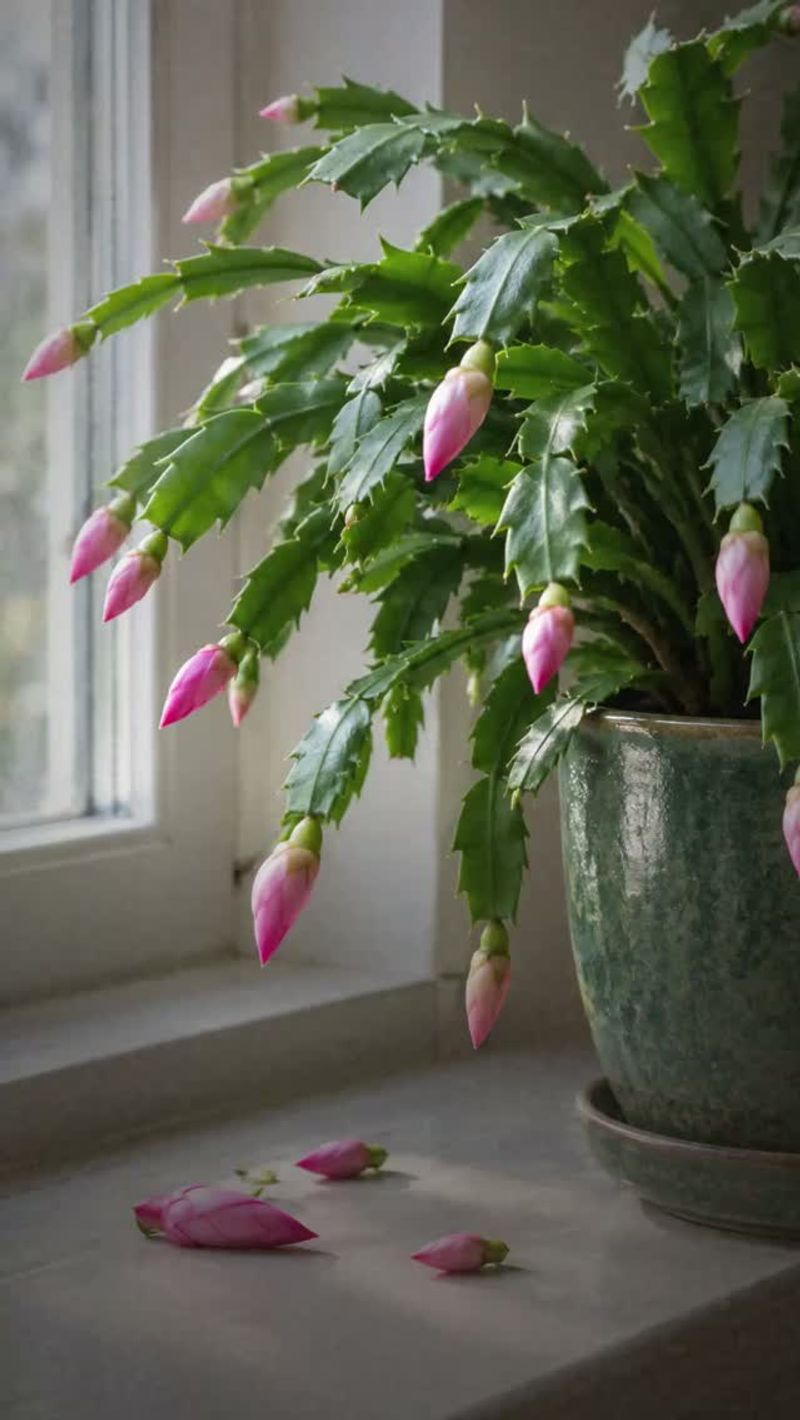
Once tiny buds show up, the job changes from encouraging them to protecting them. Iowa State University Extension notes that sudden changes in location, temperature, or watering can contribute to bud drop.
That means leaving the pot where it is, away from heating vents, cold drafts, and doors that open often. Water in the same way as before, only when the mix calls for it, as Illinois Extension also advises.
The takeaway from start to finish is simple: check the soil, respond to what it actually feels like, and treat holiday flowers as possible rather than promised.
A limp cactus is often telling you about its roots, not its calendar.