
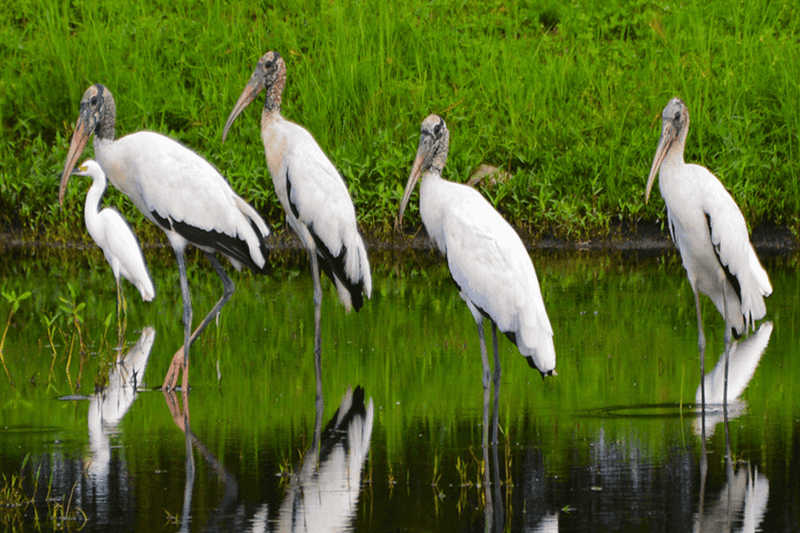
A tall, pale bird with a bald gray head and a heavy bill standing near your home is hard to ignore. Wood storks are large wading birds, and Florida homeowners spot them in some surprising places.
A nearby pond, ditch, or wet spot may be part of the story. Here is what the bird may be doing, what we can and cannot tell from one sighting, and how to treat your visitor.
Nearby shallow water may explain the visit
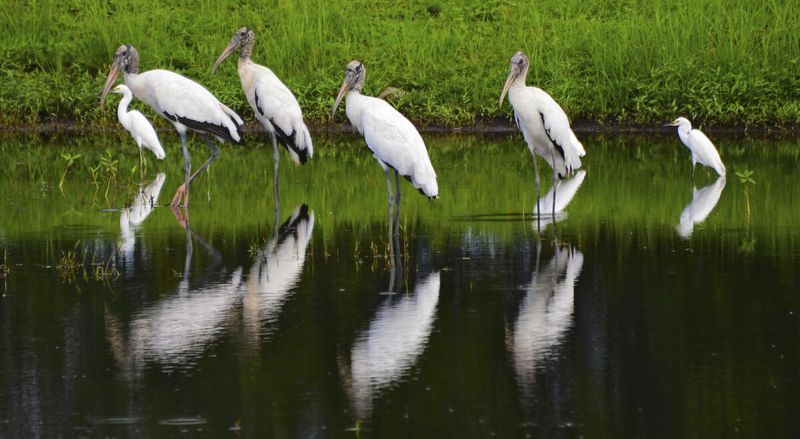
If a wood stork turns up near your home, the most likely explanation is food. These birds hunt for prey in shallow water, so a pond, wetland, swale, or drainage ditch in or near your property is a plausible draw.
Look past the fence line and across the street before you decide the bird came for your yard itself.
That said, nobody can read the mind of one bird. A sighting alone cannot tell you why that individual stopped.
It might be feeding, resting, or simply pausing on a longer trip, so treat the shallow-water idea as a good guess rather than a confirmed motive.
It also helps to know what is not supported. Nothing in the sources reviewed shows that a certain flower, a garden bed, or an ordinary dry lawn pulls wood storks in.
A bird standing on grass does not mean the grass supplied its meal.
The link to water comes from how the bird eats. According to Florida Fish and Wildlife Conservation Commission (FWC) answers about wood storks, the species feeds by moving its bill through water and snapping it shut on prey.
A U.S. Fish and Wildlife Service fact sheet likewise points to shallow standing water as the preferred feeding setting.
That feeding style is why a wet spot matters more than your landscaping.
How a wood stork finds prey
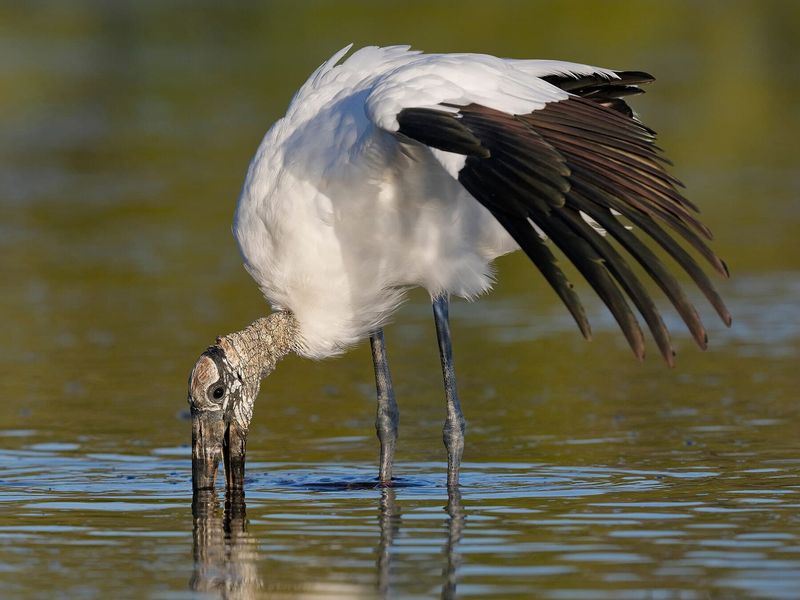
Wood storks hunt by feel instead of by sight. A stork wades slowly and sweeps a partly open bill through the water.
When the bill touches something alive, it snaps shut in a flash.
Fish make up most of the menu, according to the FWC wood stork FAQ. Other documented prey include frogs, crayfish, insects, and other small animals.
So fish are the main food, but a stork is not limited to them.
Depth matters because the bird has to reach prey with its bill while standing. The FWC species profile describes foraging wetlands as generally less than 10 to 12 inches deep.
The federal fact sheet says they prefer standing water up to about a foot deep. Think of those numbers as typical feeding conditions, not a rule every site must meet.
Here is a practical example. After a summer storm, a low corner of a lot may hold a few inches of water for days, and small fish or frogs can gather there.
To a stork, that puddle could look far more promising than the prettiest garden bed. Watching where the bird stands, and whether water is under its feet, tells you much more than the plants around it.
Drainage features can bring feeding close to home
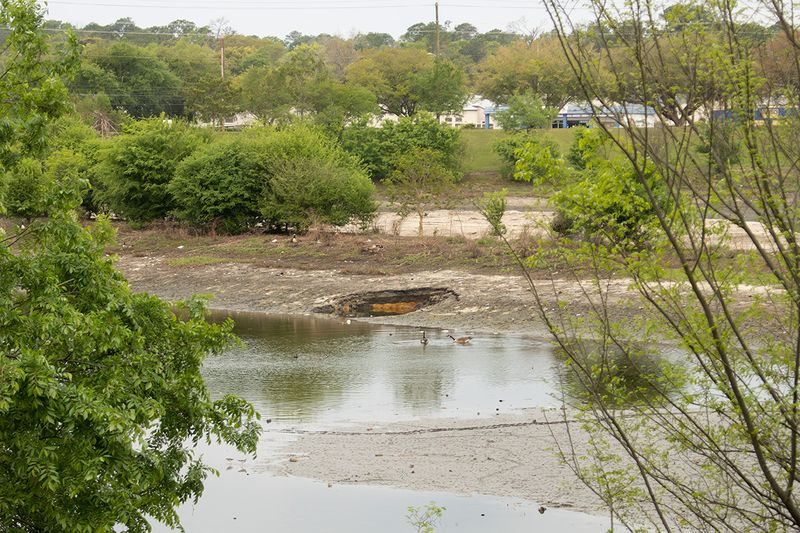
Florida neighborhoods are full of shallow water that people rarely think about. Retention ponds, roadside swales, and drainage ditches can hold small fish and frogs.
The U.S. Fish and Wildlife Service fact sheet notes that wood storks may feed in drainage ditches, which helps explain how foraging can happen close to houses.
Research from South Florida adds another layer. In a Scientific Reports study of urban wood storks, birds used urban resources, including human-provided food, when natural food was scarce.
Keep that finding in proportion. The study looked at urban nesting birds, so it tells us about those birds and not about why one stork visited your yard.
It is also not a reason to put out food.
The takeaway for a homeowner is simple. Take a look at the water near you, such as a ditch down the road, a pond behind the neighbor’s house, or a low spot that stays wet.
You do not need to change your yard or add anything to it. Noticing the water around you is often enough to make the visit make sense.
One sighting cannot reveal the bird’s purpose
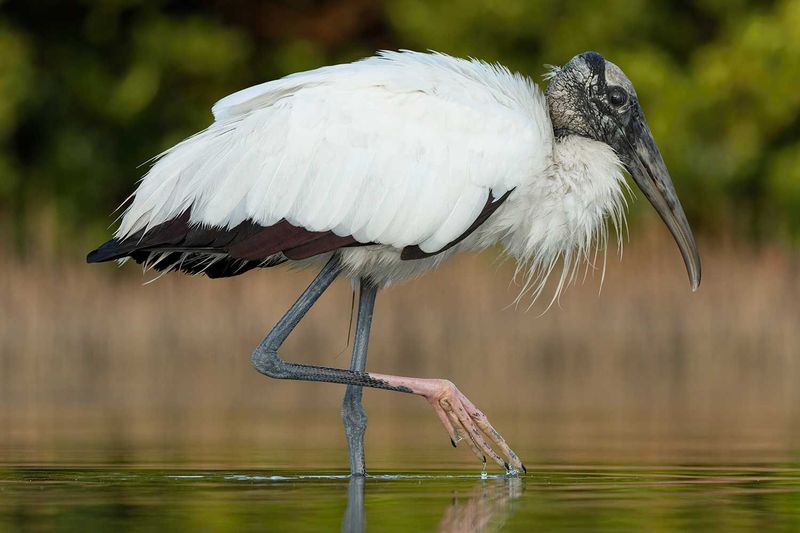
Picture two scenes. In one, a stork walks slowly through a few inches of water, bill swinging side to side.
In the other, a stork stands motionless on dry grass. The first looks like feeding, while the second tells you very little.
A standing bird could be resting, pausing, or watching its surroundings. If you see no water and no feeding motion, it is fair to say the purpose is unknown.
Clues worth noting include wet ground nearby, bill movement, and whether the bird stabs or snaps at the water.
A single visit also does not mean a nest is close. The FWC FAQ reports that in cited studies, wood storks regularly traveled 5 to 12 miles from nesting colonies to forage, with distance depending on water levels and prey.
That figure comes from those studies and does not describe every bird.
So your visitor may have come from far away, or from much closer. It may not be nesting anywhere near you.
The federal fact sheet ties feeding to shallow water, which is why wet ground is the first thing to check.
Give the visitor room and do not feed it
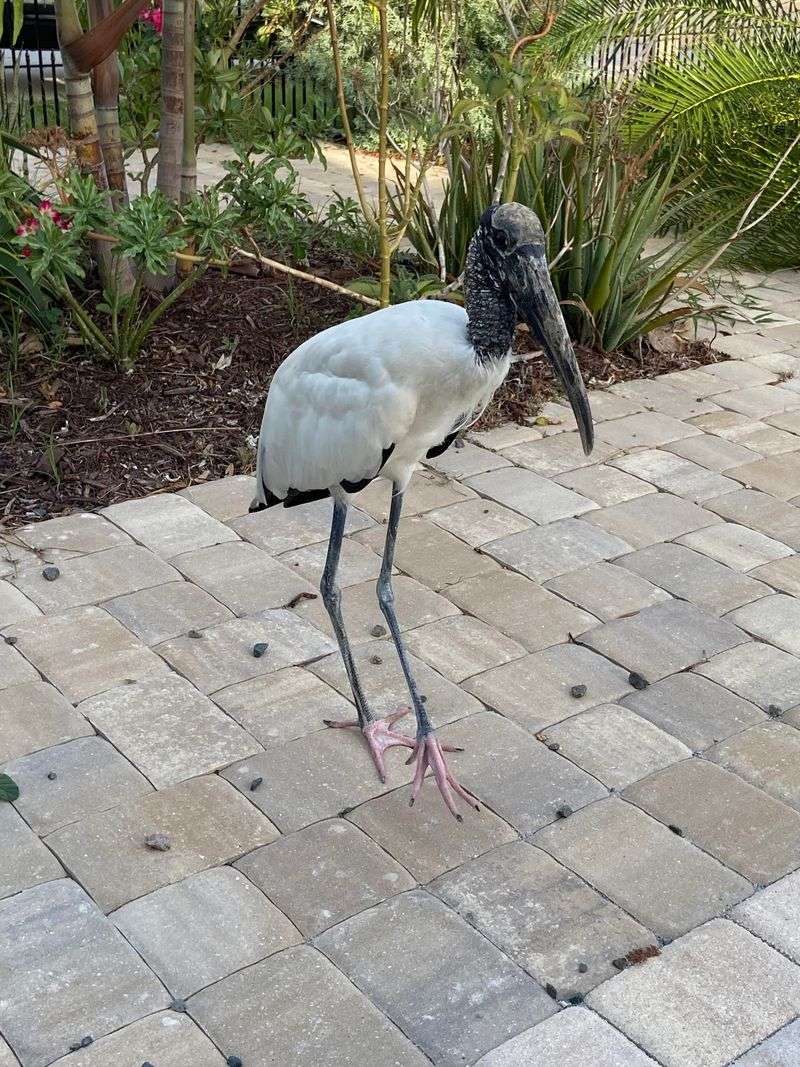
The best response is a quiet one. Watch from a window or a comfortable distance, keep pets indoors, and let the bird go when it is ready.
Walking toward it or trying to coax it closer only adds stress.
Do not offer food. The FWC wood stork FAQ warns that feeding can make storks used to people, lead to dependence or conflict, and supply food that lacks proper nutrition.
Scraps such as hot dogs or chicken wings are the kind of thing to avoid.
You may hear about a 100-yard distance. FWC gives that recommendation for watching a nesting colony, along with the use of binoculars, because approaching can disturb adults and put nests at risk.
It is not a required buffer around a lone bird in your yard.
For a single visitor, common sense works well. Stay calm, stay back, and keep dogs and children from rushing it.
Binoculars or a phone zoom let you enjoy the view without crowding a large wild bird.
The likely explanation is not a certainty
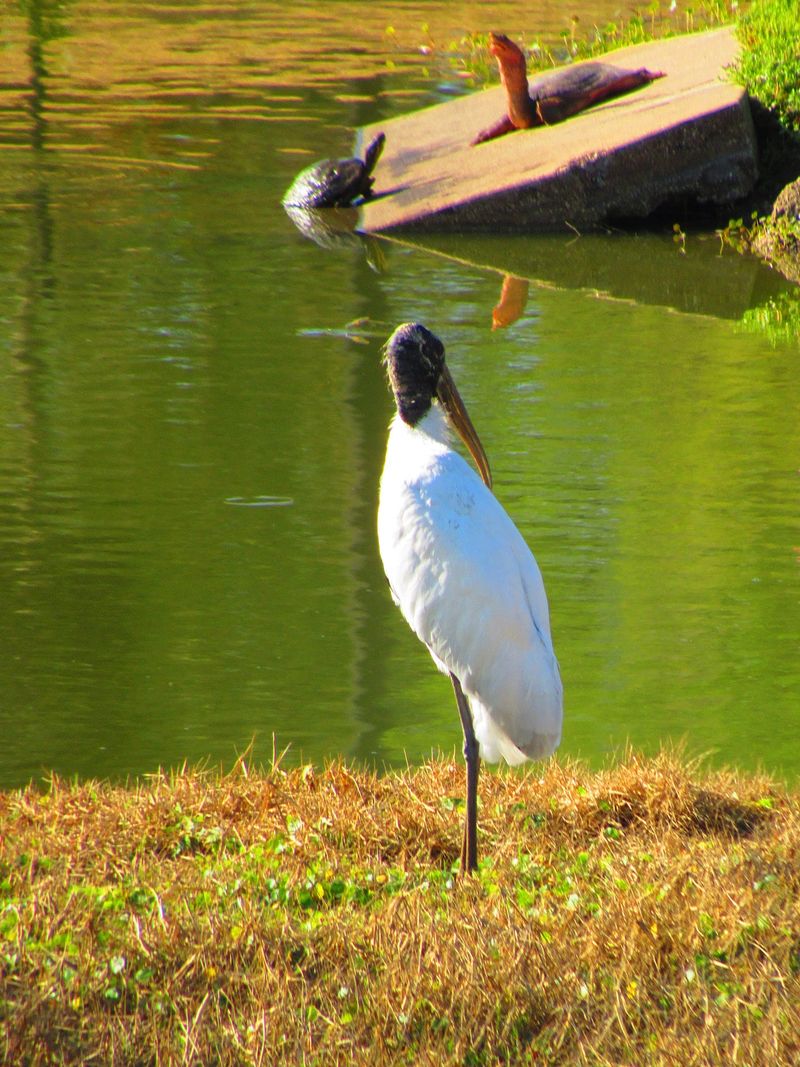
Nearby shallow water and the small animals living in it are the most likely reasons a wood stork shows up close to a Florida home. Still, one sighting cannot confirm the bird’s purpose, and it cannot point to any feature of your yard.
The FWC guidance and the federal fact sheet both fit that careful reading.
Watch quietly, keep your distance, and skip the snacks. Some mysteries are best left as mysteries, and a stork wading past your fence is a good one.