
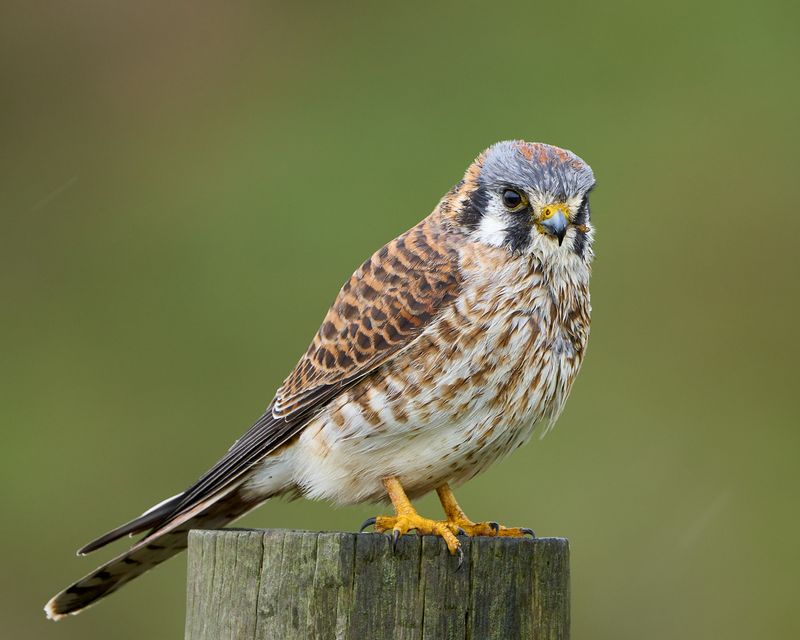
A small falcon sitting on a wire or a dead branch, watching the ground below, might be an American kestrel. These birds live across much of North America, including California, and many homeowners wonder if they can help them.
Some yards may offer a lookout and open ground that kestrels can use, but a perch is no guarantee of a visit. Here is what we know, what we do not, and how to make a smart, safe choice for your own space.
A small daytime hunter eats more than mice
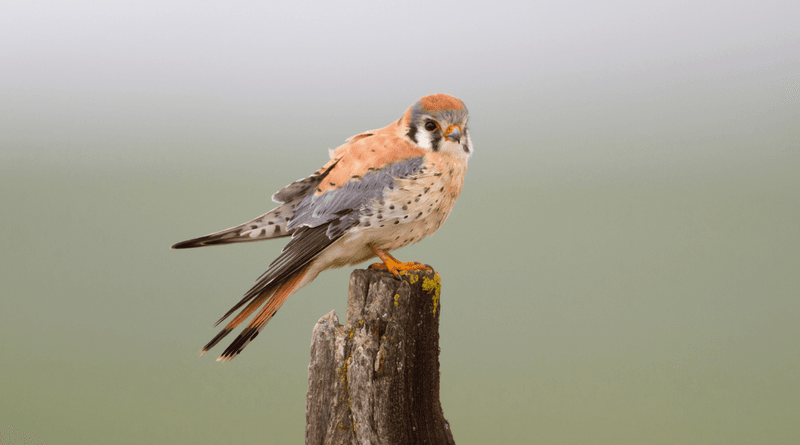
Songbird-sized but fierce, the American kestrel is North America’s smallest falcon, and it hunts in daylight. Many people picture it snatching mice, yet its menu is wider than that.
According to Cornell’s life history account, kestrels eat insects such as grasshoppers, along with small mammals, birds, and reptiles, depending on place and season.
California’s wildlife habitat account also lists insects and small mammals among their prey. That makes grasshoppers and mice possible meals.
It does not make them a dependable menu for any one yard.
This matters for how you think about a kestrel. A bird passing through may take a grasshopper one week, a lizard the next, and skip your property entirely the week after.
Local food supply, weather, and nearby open land all shape what it eats.
So think of a kestrel as a welcome part of a healthy local food web, not as a pest service you can order. If one does visit, enjoy it.
If your mouse or grasshopper problem needs solving, you will still need other tools, and the rest of this article explains where a perch fits and where it does not.
Open ground matters as much as a lookout
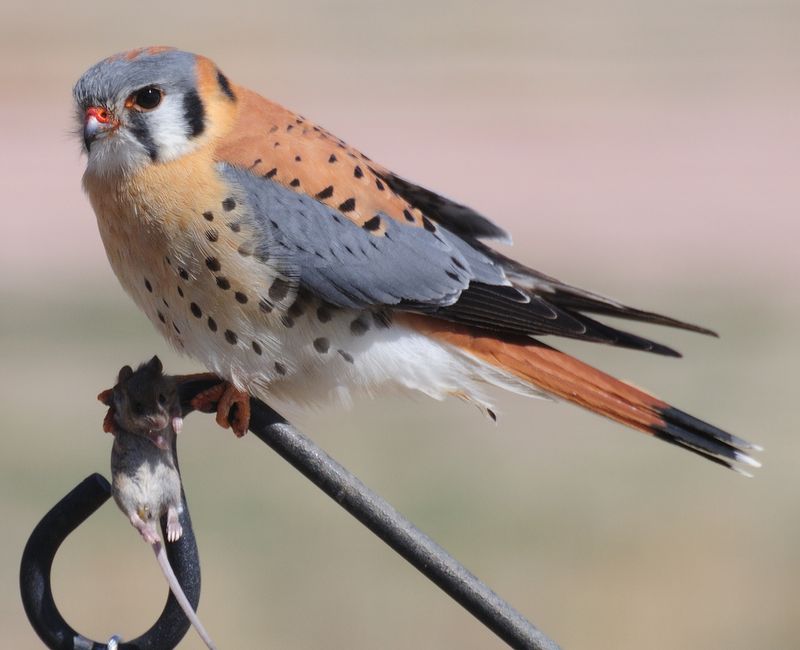
Picture where you usually spot kestrels: along open fields, pastures, roadsides, and edges where the ground is short and clear. That is not an accident.
California’s habitat account says kestrels use open habitats for foraging, and they are found as year-round residents and winter visitors in the state.
A second state account, Ecology of American Kestrel in California, describes preferred habitat as semi-open, with short vegetation, prey, hunting perches, and suitable nesting cavities during breeding. A perch is one piece of that puzzle, not the whole picture.
Now look at your own yard. A small lot packed with tall shrubs, dense trees, and tight walls may not give a kestrel a clear view of the ground.
A larger property bordering a field, a pasture, a vineyard edge, or a wide lawn has a better shot at offering the space these birds use.
A quick diagnostic: stand where a perch might go and scan the ground. Can you see a broad stretch of low vegetation or bare soil?
If everything below is thick brush or hardscape, a kestrel would struggle to spot prey. Not every yard can support kestrels, and that is no reflection on your gardening.
A perch may support hunting, but it cannot promise a visit
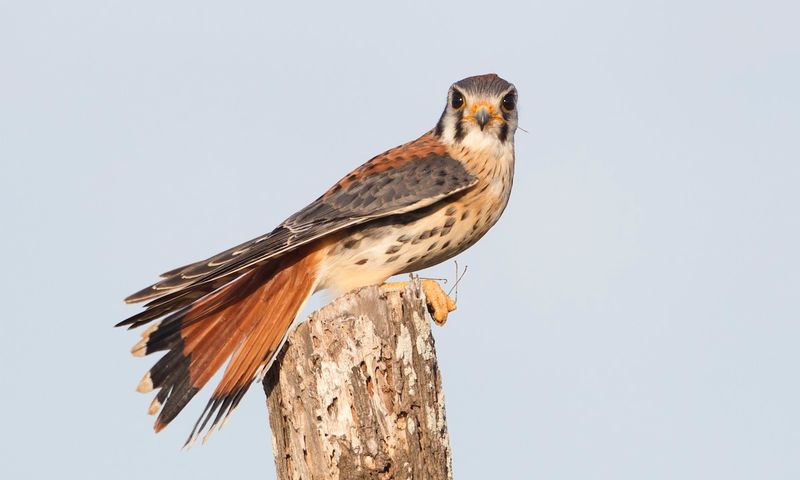
Kestrels hunt in two main ways. They sit on an elevated spot such as a wire, post, or snag and scan the ground, or they hover in place over open ground before dropping on prey, as described in Cornell’s life history account.
Researchers have tested whether installed perches get used. In a California Fish and Wildlife Journal study on a ranch, camera traps recorded raptors using artificial perches.
That shows kestrels can use a perch someone has put up.
The limits are important. The poles were 3 meters tall and were monitored for just 28 days in autumn, on a ranch rather than a residential lot.
Related work, Raptor Use of Artificial Perches in California Rangelands in Fall, covers the same kind of setting. Neither is a tested homeowner design, and neither shows a perch will bring kestrels to a yard or keep them there.
Treat the study’s pole height as a detail about that project, not a recipe. If you add a perch, choose something stable and safe for your site, in open space, and expect that it may sit empty.
Sometimes the best perch is one you already have, like a sturdy fence post with a clear view.
The pest-control evidence has important limits
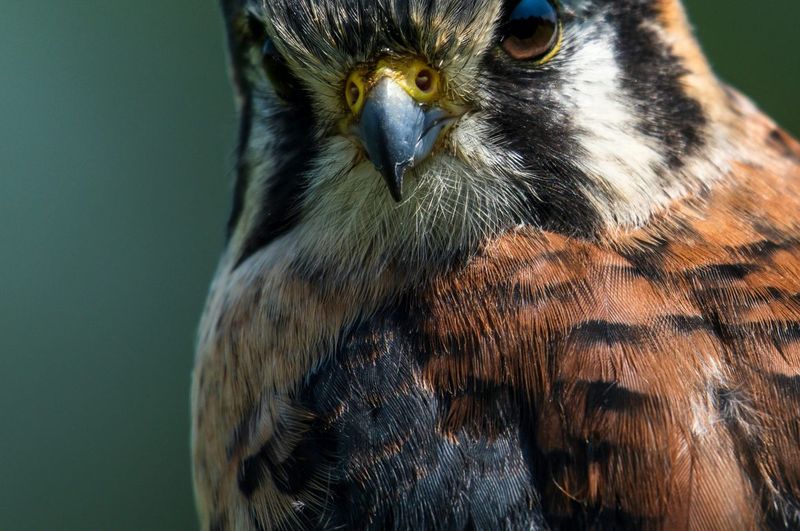
If you hope kestrels will handle your mice, the research offers a mixed picture. In the California perch study, researchers recorded no rodent predation during their limited autumn monitoring.
The kestrels they saw eating prey were taking invertebrates.
That does not mean kestrels never eat rodents. It means that in that short window, on that ranch, the perches were not linked to mouse catches.
A different study looked at cherry orchards. In research on kestrel nest boxes in cherry orchards, small-mammal abundance and activity were lower in summer at orchards with active kestrel boxes.
That difference did not carry over to winter, and the authors said more evidence was needed to judge whether kestrels reduce crop damage.
Put together, these studies show a possible link in one season in one crop setting, not dependable pest control. Orchards also differ a lot from home gardens.
A practical takeaway: if mice are getting into your garage or shed, deal with entry points, food, and shelter first. If grasshoppers are chewing your plants, use methods suited to them.
Think of any kestrel help as a bonus.
A hunting perch is not a nest box
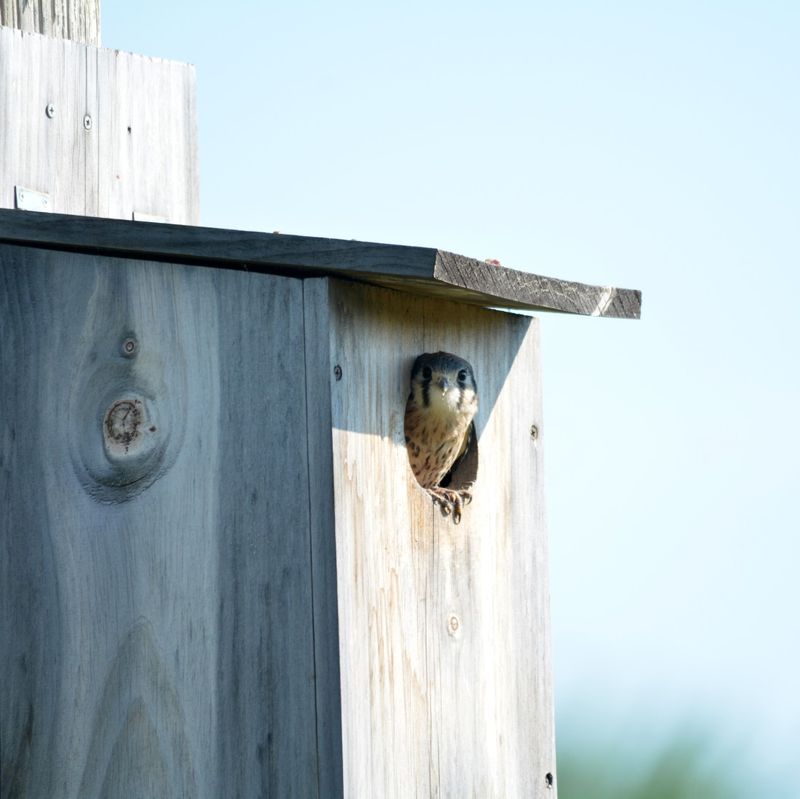
Hunting and nesting are two separate jobs. A kestrel uses a perch to watch for food, but it nests in a cavity, such as an old woodpecker hole or a natural hollow.
California’s account notes that kestrels do not build their own stick nests, so a perch alone offers no place to raise young.
For readers who want to support breeding birds, Cornell suggests that a nest box can attract a breeding pair. It recommends a predator guard and installing the box well before breeding season.
A box is a habitat choice, not a quick fix for pests.
One firm rule: leave birds and nests alone. American kestrels are on the federal list of species protected by the Migratory Bird Treaty Act, as shown in the 2023 Federal Register list.
Do not handle, capture, harm, or disturb a kestrel or an occupied nest.
For legal details, check the U.S. Fish and Wildlife Service’s Migratory Bird Treaty Act overview and its current guidance.
If you find an injured bird, contact a licensed wildlife rehabilitator rather than trying to care for it yourself.
Reduce chemical risks to kestrels and their prey
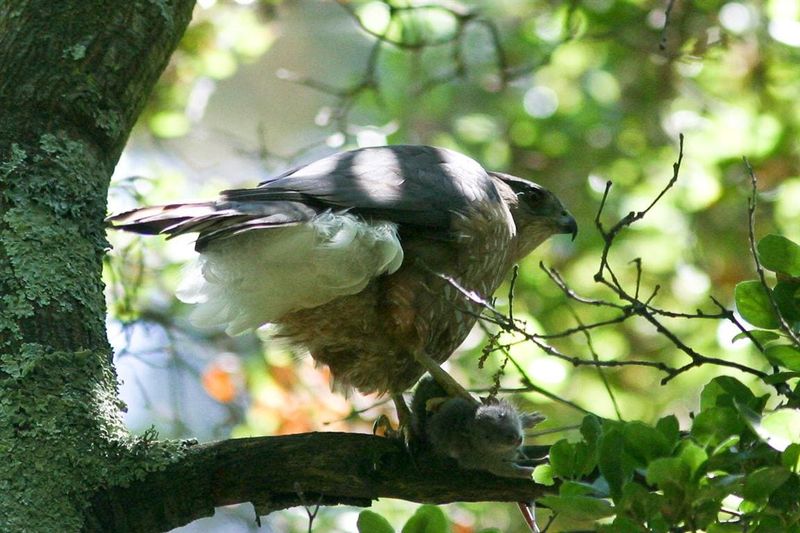
Anything that harms a kestrel’s food or the bird itself works against your wildlife goals. California’s species account, Ecology of American Kestrel in California, identifies pesticide exposure, anticoagulant rodenticides, and the loss of insect prey from broad-spectrum insecticides as concerns.
Here is how that plays out. A bird that eats a poisoned rodent can take in the poison too.
Broad-spectrum sprays can wipe out many insects at once, including the grasshoppers and beetles kestrels may eat.
This is wildlife-protection advice, not a trick to draw kestrels in or a cure for pests. Skipping poisons will not guarantee a visit, and it will not solve a mouse problem by itself.
Practical steps include sealing gaps and storing food securely before reaching for rodent bait. Spot-treat problems rather than spraying whole yards, and read labels carefully.
If you use a pest service, ask what products they apply and whether alternatives exist.
None of this requires perfection. Small changes in how and when you treat problems can lower risks for kestrels, owls, hawks, and the many insects that share your yard.
Choose habitat support, not a pest-control promise
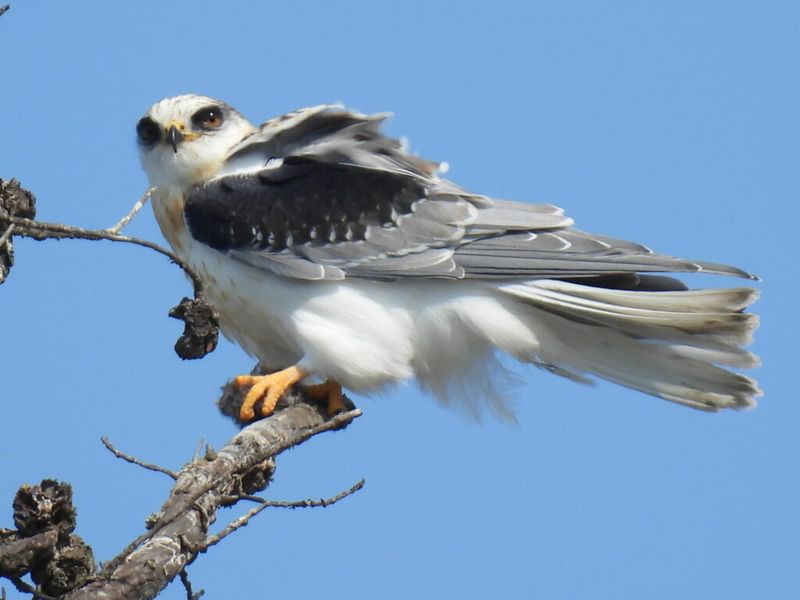
If your yard has open foraging space, keep an existing lookout only when it is safe, such as a sound fence post or a stable snag away from structures. Or consider a steady artificial perch, as in the California ranch study, without assuming it will draw a bird.
Visits, repeat use, prey choices, and mouse or grasshopper effects all remain uncertain, as the state’s habitat account makes clear by listing perches as only one need. A perch is a small, hopeful gesture; the sky decides the rest.