
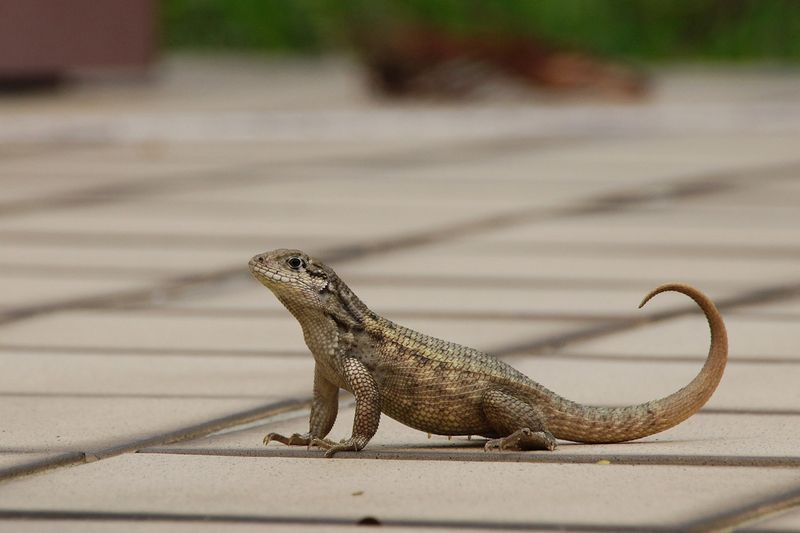
Maybe you used to see little brown lizards darting across your patio, and now a bigger lizard with a curled tail seems to own the spot. Curly-tailed lizards can eat other lizards and change where anoles hang out, so the worry makes sense.
But the research is more limited than the headlines suggest. Here is what scientists have actually found, and what you can do about it in your own yard.
Which lizards are on the patio?
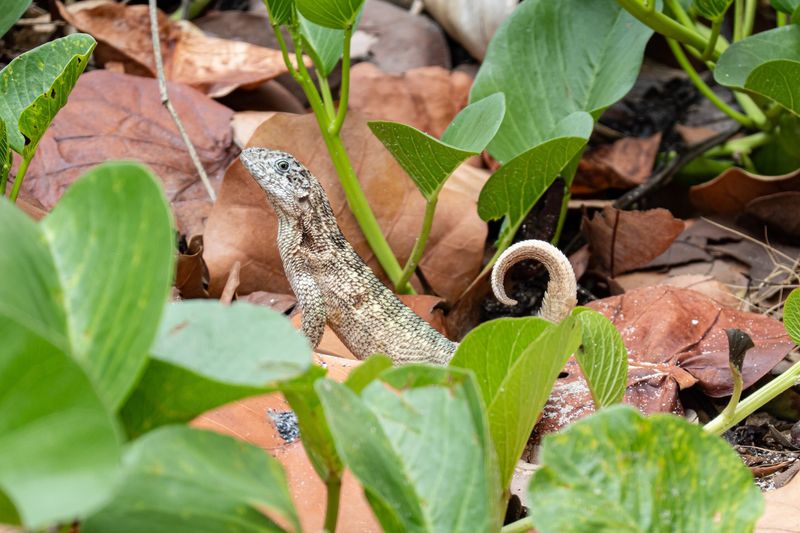
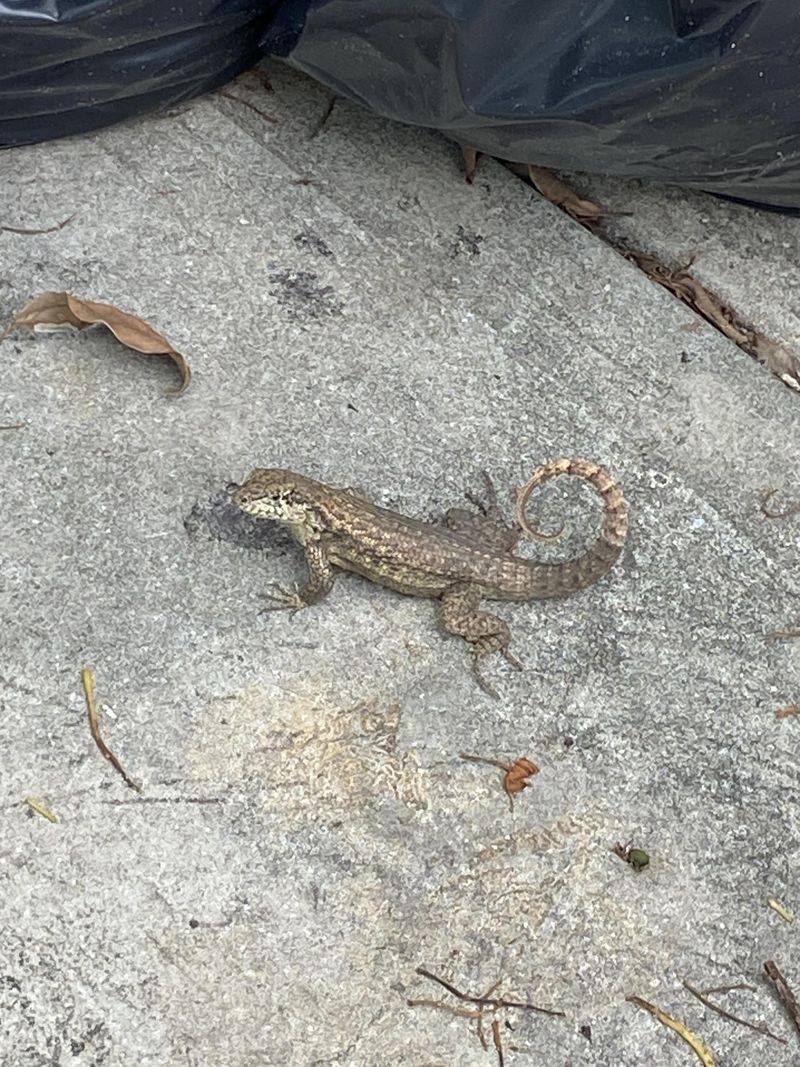
Start with the big one. The northern curly-tail, Leiocephalus carinatus, is gray to tan, roughly 7 to 10.5 inches long, and carries its tail curled up over its back, according to UF/IFAS’s identification guide.
That curl is the easiest clue to look for.
This lizard is not a Florida native. It comes from Caribbean islands, and people introduced it here.
Florida populations have been established for decades, with records running from Key West north to Jacksonville. So if you only spotted one this year, that does not mean the species just arrived in the state.
It may simply be new to your street or your eyes.
Now the word “anole,” which covers more than one species. The small brown lizards that dash around patios are usually brown anoles, and they are nonnative too.
Florida’s native species is the green anole, which can turn brownish but tends to stay higher in vegetation, as noted in UF/IFAS Gardening Solutions.
When someone says there are fewer anoles, ask which kind they mean. The answer changes the story.
Island experiments show how curly-tails can change anole behavior
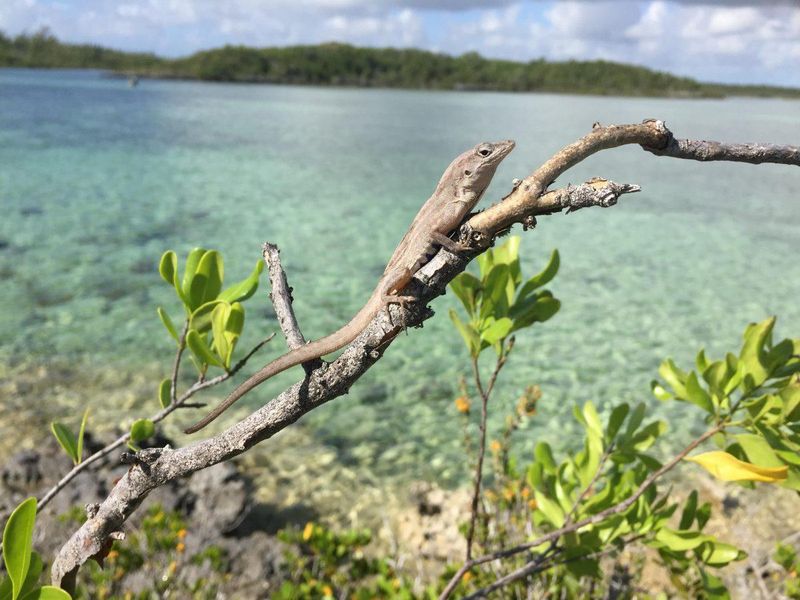
Some of the strongest evidence comes from tiny islands in the Bahamas, not from Florida patios. In field experiments, researchers compared islands with curly-tails to islands without them.
The study of predation on a common Anolis lizard found that brown anoles on islands with curly-tails used the ground less often and perched higher than anoles on predator-free islands.
That is a behavior change, and it makes sense. A lizard that stays off the ground is harder for a ground-dwelling predator to reach.
A separate whole-ecosystem experiment looked at the bigger picture. A 2019 Nature study reported that curly-tails affected how brown and green anoles interact, through predation risk and shifts in habitat use.
In other words, a predator on the ground can reshuffle who lives where in the shrubs and trees.
Keep the limits in mind. These experiments show possible mechanisms.
They are not counts of lizards on Florida patios, so they cannot tell you what is happening in your yard.
One more point keeps the picture fair. Curly-tails can eat anoles, but they eat a range of foods, including insects and, occasionally, other lizards.
A Florida Museum article about a curly-tail’s record-breaking digestive story is a reminder that these lizards have varied diets. Predation on anoles does not mean anoles are the main course.
What Florida studies do—and do not—show

Florida research points the same direction as the islands, but on a smaller scale. A study of city brown anole populations, available through the University of Rhode Island repository, linked living alongside curly-tailed predators with changes in the anoles’ foraging niche.
Put simply, anoles that shared space with curly-tails fed differently than those that did not.
That is a behavioral finding. It does not show that backyard counts are dropping.
Then there are older numbers. A 2004 Florida Field Naturalist report passed along local observations of 30 to 60 percent fewer brown anoles per transect at sites where curly-tails were active.
Those are localized, suggestive observations from particular places.
The same report also said the degree and cause of any outcompetition were unknown. So the figure cannot be stretched into a statewide estimate, and it is not proof of what is happening on patios today.
Taken together, these studies tell you curly-tails can matter to brown anoles in some settings. They do not tell you your neighbor’s patio, or yours, has lost its anoles because of them.
A patio sighting is not a population count
Your observation is real. If you see fewer small lizards than you used to, something about what you notice has changed.
The harder question is why.
Habits matter here. Curly-tails live mostly on the ground, while brown anoles use the ground and low vegetation.
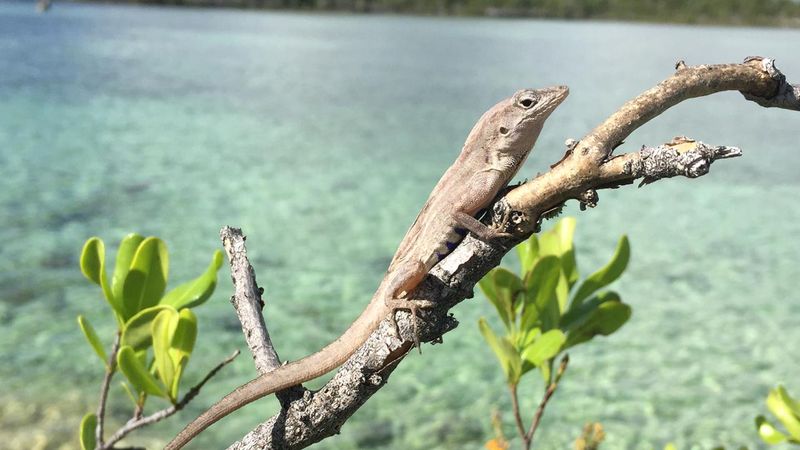
Where curly-tails are present, island research found that anoles shifted off the ground and perched higher.
Picture the practical result. An anole sitting on a branch six feet up is easy to miss from a patio chair.
The lizard may still be in your yard, just somewhere you are not looking.
Other things can also change what you see, including weather, season, time of day, a new fence, or removed shrubs. A quick check can help: look along trunks, eaves, and upper branches at different times before deciding anything has vanished.
So altered habitat use or visibility is one possible explanation. A patio observation alone cannot show that one species eliminated another, and it cannot pin down what changed your household’s sightings.
Create cover for native green anoles, without promising a fix
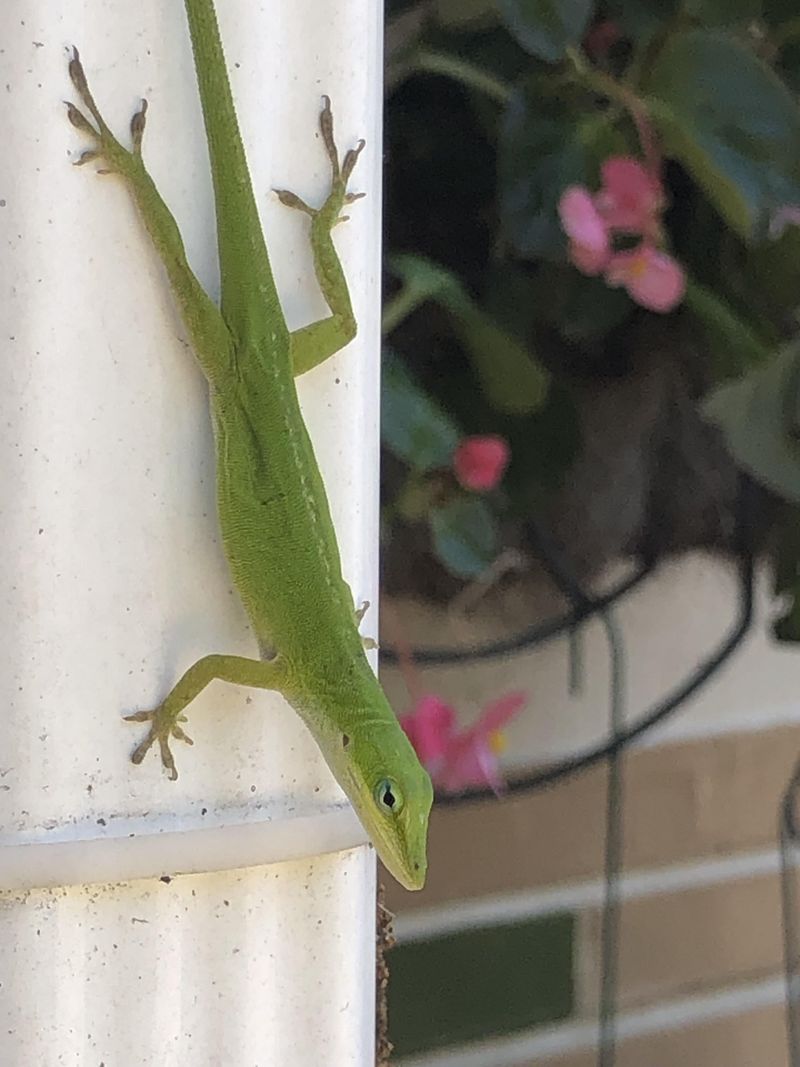
If you want to help Florida’s native green anole, UF/IFAS has simple advice. According to UF/IFAS Gardening Solutions, dense vegetation and trees or tall shrubs give green anoles cover and vertical habitat.
In a sandy Florida yard, that can mean grouping shrubs so their branches overlap, leaving some leafy layers instead of bare ground, and keeping a tree or tall shrub near the patio edge. Choose plants that suit your soil and sun, and favor Florida natives where you can.
Be clear about what this does and does not do. The guidance is aimed at native green anoles and how they cope with brown anoles.
It has not been shown to stop curly-tail predation, bring brown anoles back, or guarantee more lizards on your patio.
Think of it as good habitat design with a modest promise. Layered plantings also bring shade, insects, and shelter from storms, so the yard gains even if the lizard count stays the same.
Document a sighting safely
So, are curly-tails pushing brown anoles off Florida patios? They can prey on brown anoles and change how anoles behave, but research does not establish a statewide patio decline or explain what any one household sees.
If you want to document a lizard, take a clear photo from a distance and note the date and location. Then use the IveGot1 app or website, which is the route FWC lists for reporting lower-priority nonnative species, including small lizards.
Skip the chase. UF/IFAS warns that reptiles may bite or scratch if provoked, so do not catch or handle them casually.
A dated photo is a small piece of evidence, and enough of them help scientists see the bigger picture.