
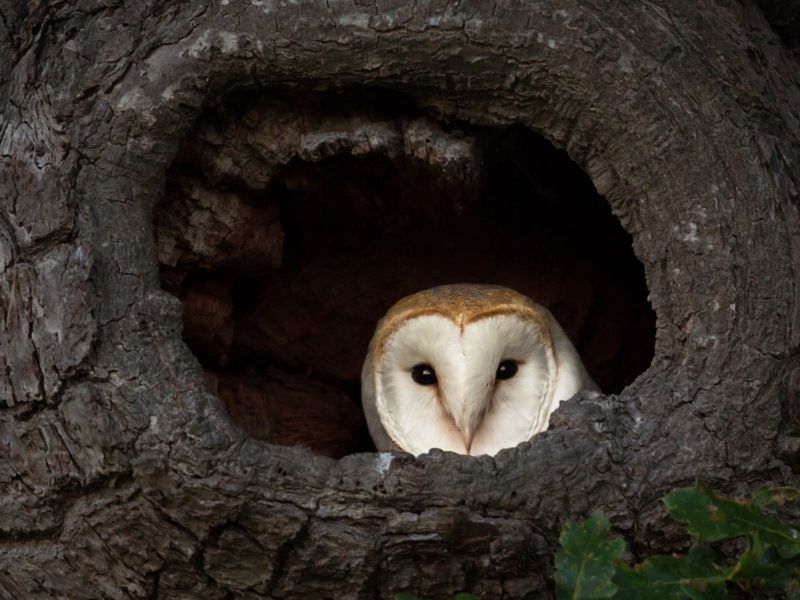
A pale, heart-faced bird slipping out of a tree hollow or box at dusk can stop a homeowner in their tracks. Barn owls raising young near your home tell a real story, but it is easy to read too much into it.
Here is what a nest can tell you about your yard and the land around it, and what it cannot. You will also learn how to protect the owls without accidentally harming them.
A nest signals a usable cavity and surrounding habitat
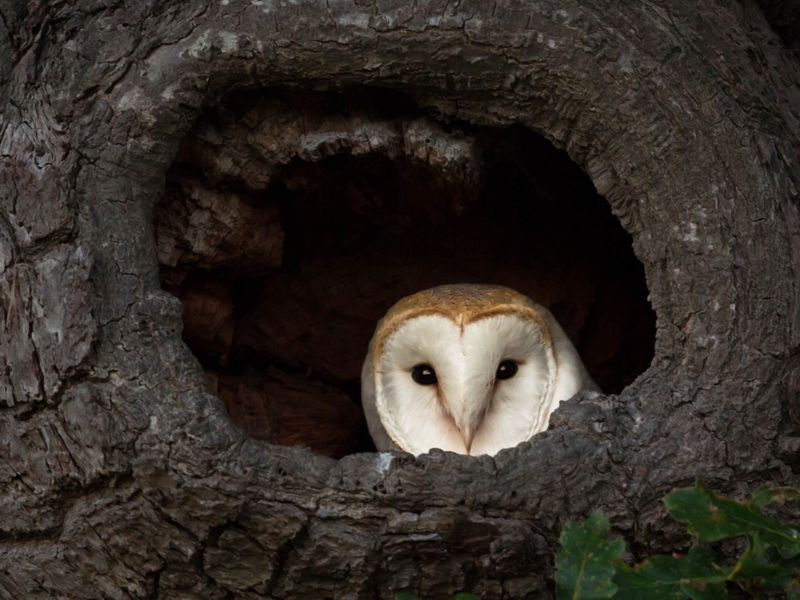
Barn owls are cavity nesters. According to Cornell Lab life history notes, they raise young in hollow trees, barns, and other protected spaces, and they do not build a nest of their own.
So when a pair is raising chicks near your home, the first clue is simple. Somewhere on or near the property, there is a hollow space that is dry, dark, and sheltered enough to work as a nursery.
That could be a palm trunk, a large tree cavity, a building gap, or a nest box.
The second clue lies outside the cavity. Owls do not hunt where they sleep.
As Audubon’s field guide describes, barn owls hunt over open ground such as fields, meadows, and edges of farmland. A nest suggests there is suitable hunting habitat reachable from that cavity, even if most of it lies beyond your fence line.
Think of the nest as two separate pieces: a place to raise young, and a place to find food. Your yard may provide the first piece, the surrounding landscape may provide the second, or your yard may help with both.
It also helps to keep this in proportion. A nesting pair is an interesting habitat clue.
It does not mean your yard is rare, unusually wildlife-friendly, or more valuable than the one next door. It means one usable cavity happened to be in a workable spot.
That is still worth noticing. A hollow that stays dry and quiet is not always easy to come by, and an owl family using it is a good reason to slow down and look at what your property is offering.
The prey clue extends beyond the property
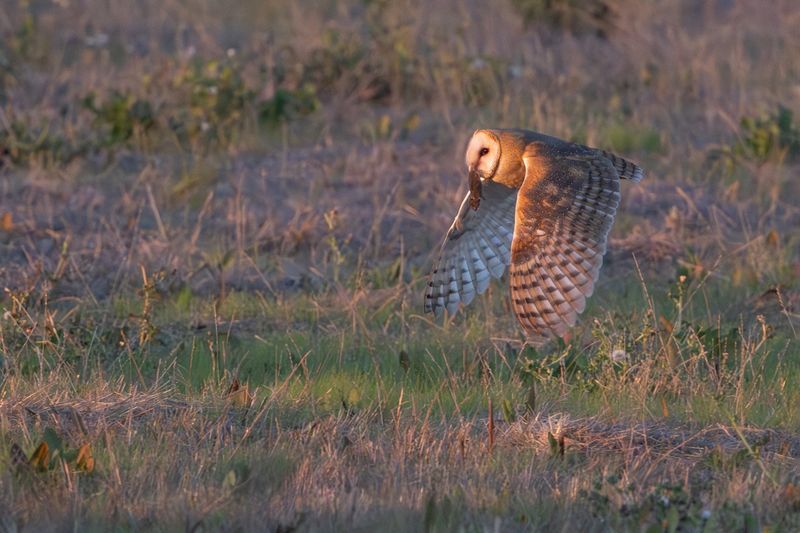
Mice, voles, gophers, and rats make up most of a barn owl’s menu. The Cornell Lab notes that what they eat depends on what is available locally.
That makes a nest a hint, not a measurement. It suggests small mammals live somewhere within the owls’ foraging area.
It cannot tell you which species they are, how many there are, or where they live.
Distance matters here. In California, a recent vineyard study cited tracking in which barn owls hunted as far as 2.86 km from their nest boxes.
That figure comes from that tracking work. It is not a typical or fixed range for every owl.
The practical point is that the prey might be in a nearby field, a vacant lot, a creek corridor, or a neighbor’s property. Your own yard might be part of the hunting route, or it might not be.
A useful comparison is a restaurant sign. A busy dining spot tells you food is available in the area, but not what is on the menu or which kitchen it came from.
If you want to learn more, watch at dusk from a respectful distance. You may see which direction the adults leave in and return from, which hints at where they hunt.
It will not tell you about rodents in your attic or garage, so check those separately and calmly.
Vineyard research does not promise pest control at home

Researchers have studied barn owls on California farms, and the results are interesting, but they come from vineyards, not backyards.
A 2022 Napa Valley study by Hansen and Johnson found that gopher activity declined during peak owl hunting on the vineyard with nest boxes. Mouse declines, however, could not be significantly attributed to the boxes.
A newer study across six Napa Valley vineyards found something different. Researchers reported reductions in above-ground rodent indicators, predominantly deer mice, under the owl-hunting pressures they observed.
The authors also noted that owls forage across the landscape and that good pest management may need several methods.
Put together, the lesson is that results depend on the setting and the prey. One study saw a gopher effect, another saw a deer mouse effect, and neither tested a typical suburban yard.
There is also a historical note. A 2016 review by Kross and Baldwin described how limited the California evidence was at that time.
Later vineyard work added more information, but it did not turn into a household guarantee.
So enjoy the owls for what they are. A nesting pair may eat rodents, and that is a natural benefit, but you should not count on them to handle mice or rats around your home.
If you have a pest problem, deal with it using methods that do not put the owls at risk.
Give an active nest space and seek help when needed
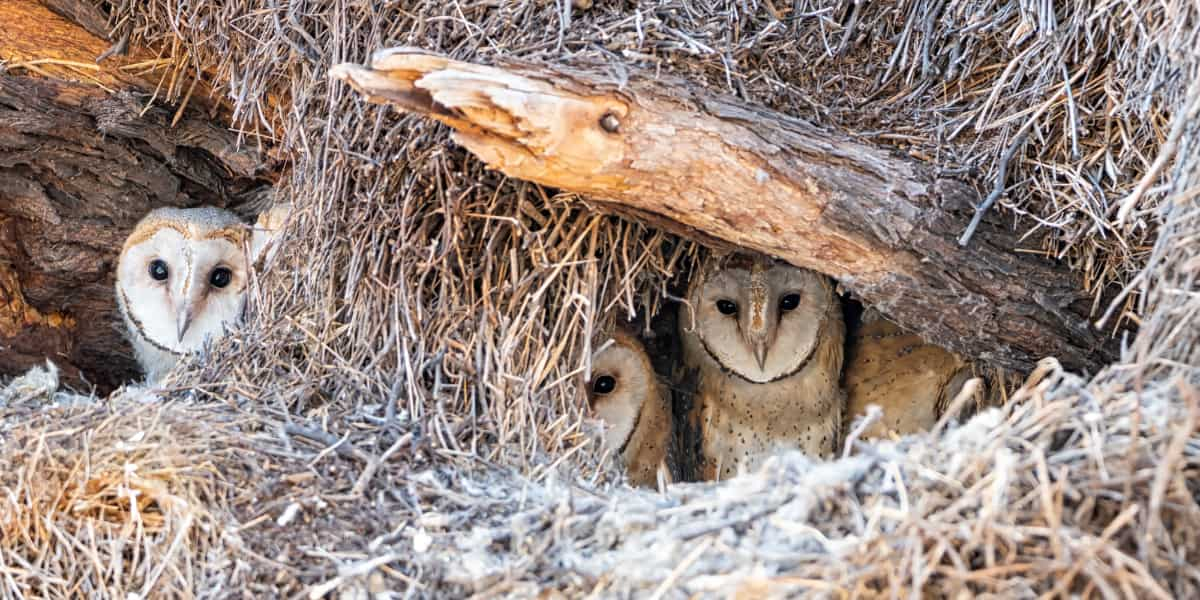
Once owls are raising young, the best thing you can do is back off. Keep people and pets away from the nest area, and watch from a distance.
Dogs and cats, in particular, should stay clear, and bright lights or noise near the cavity are best avoided.
Do not move, clean, disturb, or remove an occupied nest, even if it is in an inconvenient spot. The U.S.
Fish and Wildlife Service explains that nests with eggs, chicks, or dependent young must not be destroyed without authorization. Because cavity nests are hard to see into, it is safest to leave it alone.
If the nest is causing a real problem, such as a cavity in a part of the house you need to repair, contact the appropriate agency for guidance before you do anything. Waiting and asking is far better than guessing.
Sometimes a young owl is found on the ground or looks hurt. Do not pick it up, feed it, or try to care for it yourself.
Contact a permitted wildlife rehabilitator or a California Department of Fish and Wildlife regional office, which you can find through the state’s native wildlife rehabilitation page.
Take a photo from a distance and note the location. That information helps the experts decide what to do next.
Avoid rodent poison around owls
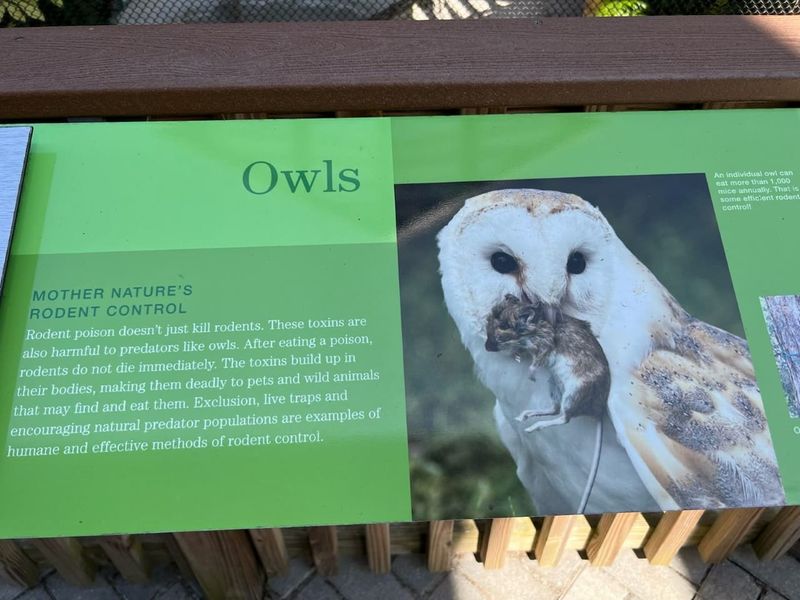
Poison is the one pest-control choice that can undo everything good about having owls nearby. A rodent that eats bait does not always die right away, and a predator that eats that rodent can take in the poison too.
This is called secondary poisoning.
The UC Agriculture and Natural Resources Green Bulletin warns that poisoned rodents can expose predators, and it identifies owls as being at high risk from certain second-generation anticoagulant rodenticides.
That does not mean every poisoned mouse will harm a particular owl. But there is no way to know which rodent an owl will catch, so the safest choice is to skip rodent poison in any yard where owls nest or hunt.
If you are seeing signs of rodents, start with the basics. Seal gaps around the house, store pet food and birdseed in sealed containers, and clear brush piles near structures.
Snap traps used inside a home or garage, where owls cannot reach them, are a more targeted option.
Also ask neighbors and any pest company you hire what products they use. Poison placed next door can still end up in prey that crosses into the owls’ hunting area.
Plan any future nest box carefully
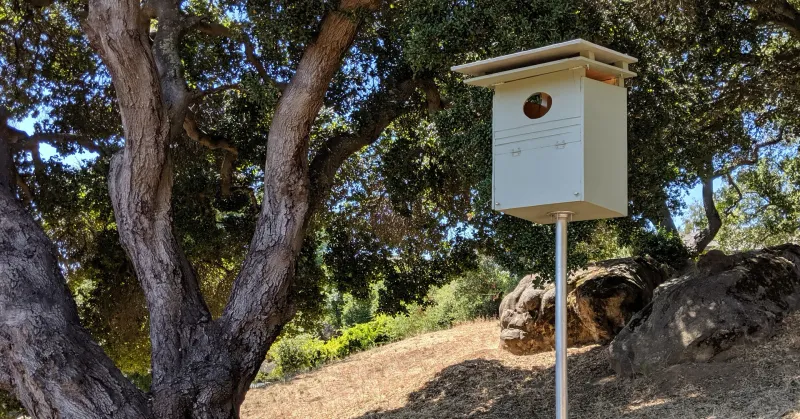
If you are thinking about a nest box, plan it before you build it. The California Department of Pesticide Regulation recommends a quiet, open spot with afternoon shade, a predator baffle, and a location away from major roads.
Maintenance needs care too. Make sure the box is unoccupied before you touch it, and never clean one that has owls in it.
Follow the guidance’s specified cleaning window, and wear the protective equipment it lists, including gloves and a mask.
Remember why a box works at all. Barn owls are cavity nesters, as the Cornell Lab describes, so a well-placed box simply offers one more nesting opportunity.
It does not guarantee owls will move in.
It also does not guarantee pest control. The vineyard results in the newer six-vineyard study were measured on farms, not home lots.
That brings us back to the nest outside your window. It means a usable cavity and access to hunting habitat nearby, nothing more and nothing less.
The owls are not a diagnosis of your yard, just a quiet reminder to share it carefully.