
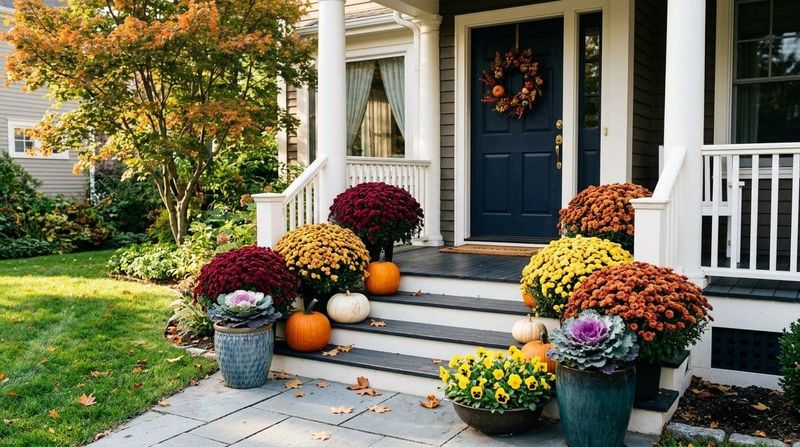
That pot of mums on your porch looks great now, but will it come back next year? Some store-bought mums are built for the garden, and others are meant to be enjoyed for a few weeks and tossed.
A quick look at the plant tag gives you a useful first clue before you dig. It will not promise anything, but it can save you time, money, and a little heartbreak.
Start with the plant tag, not the flowers
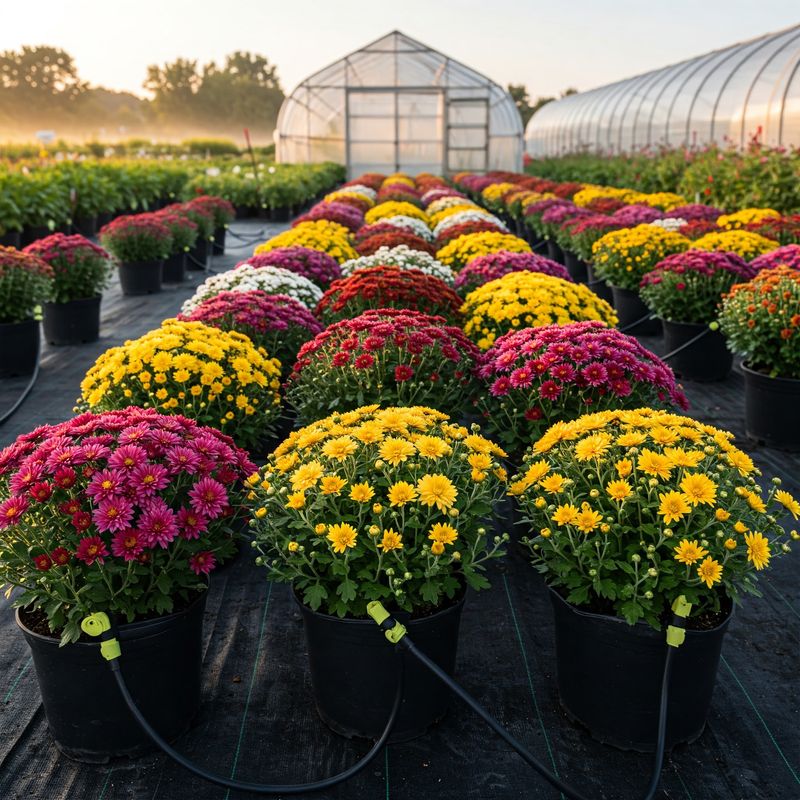
Turn the pot around and read the tag before you admire the blooms. You are looking for three things: the words garden mum or perennial, a cultivar name, and some hardiness information, such as a USDA zone range.
A tag with all three gives you far more to work with than a bare pot.
Why not judge by the flowers? Color, flower shape, and how many buds are open do not reliably tell you whether a mum will live through winter.
A showy plant can be a poor garden performer, and a plain one can be a keeper. NC State’s plant guide sorts mums by type and cultivar rather than by looks.
Treat the tag as a first screen. UF/IFAS advises shopping for garden mums instead of florist mums if you want plants for the landscape.
Planting time, soil, and winter weather still matter, so a good tag improves your odds without settling the question.
Garden mums and florist mums are different candidates
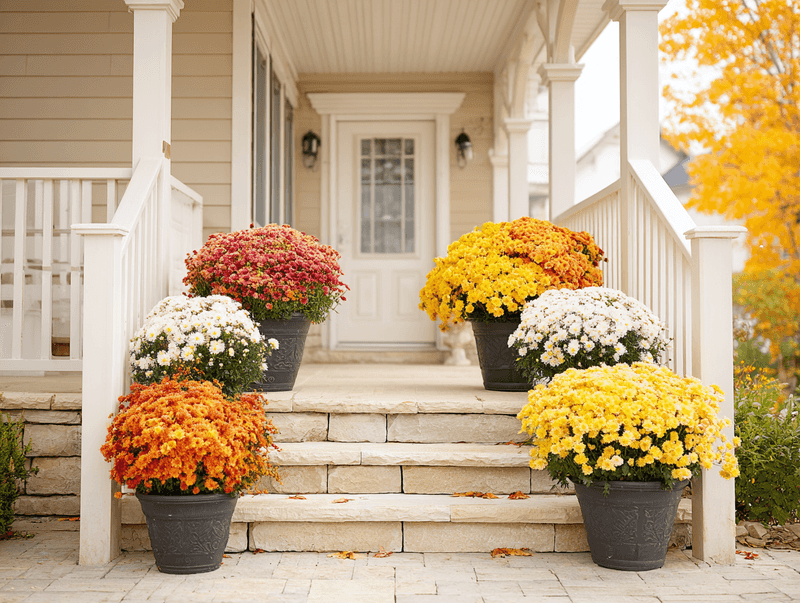
Florist mums are bred to look perfect in a pot for a few weeks, which is great for a porch display or a gift. Garden mums are selected to handle outdoor life and come back in suitable climates.
That makes garden types the better bet when you plan to put a plant in the ground. Iowa State Extension addresses this exact question for florist mums, and the short version is that outdoor success is far from certain.
Think of the label as a clue, not a promise. Virginia Tech notes that cultivars differ in cold tolerance and that growing conditions change the outcome, even for plants sold as garden mums.
Also skip the shortcut of assuming every compact fall mum is a florist type. Shape alone does not tell you which group a plant belongs to.
Use hardiness information as a guide, not a promise
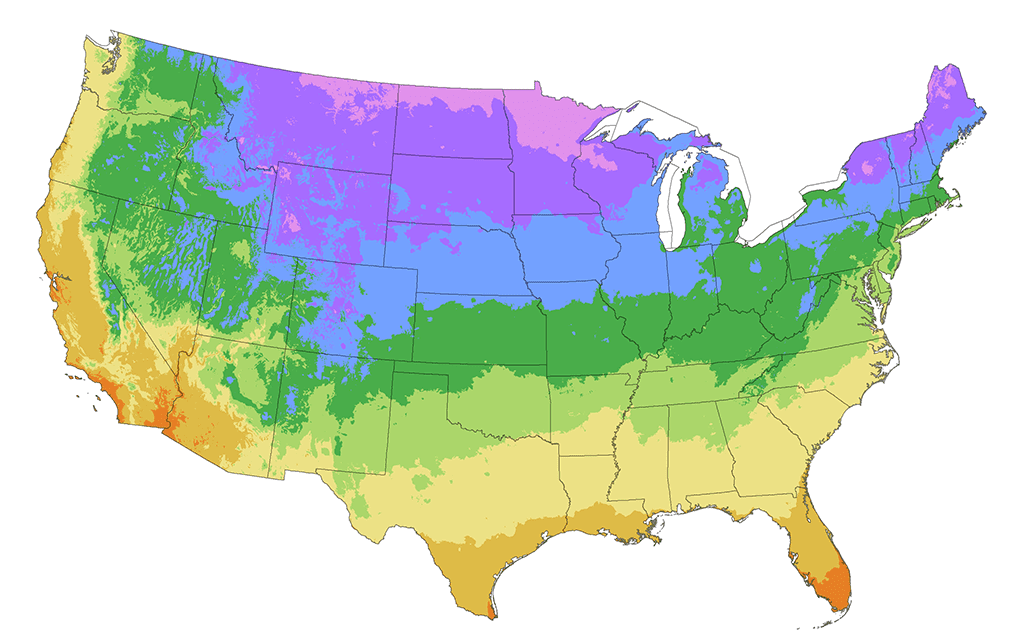
If the tag lists a hardiness zone range, compare it with your own zone. Look up your zone on the USDA map by ZIP code.
If your zone falls inside the range on the tag, that is a good sign. If it falls outside, think twice.
Keep the map’s limits in mind. The USDA explains that zones reflect average annual extreme minimum temperatures, so an unusually harsh freeze or a cold, wet corner of your yard can still cause trouble.
Cultivar matters too, and garden mums are often rated for zones 5 through 9 while individual varieties vary.
Florida gardeners should be extra careful. UF/IFAS’s gardening page encourages garden mums over florist mums, but its technical plant record is more cautious and lists the plant as not recommended in the warmest zones.
Because advice differs, a garden-mum label does not guarantee success statewide. Call your county Extension office or ask a knowledgeable local nursery.
Ask the nursery if the tag is missing
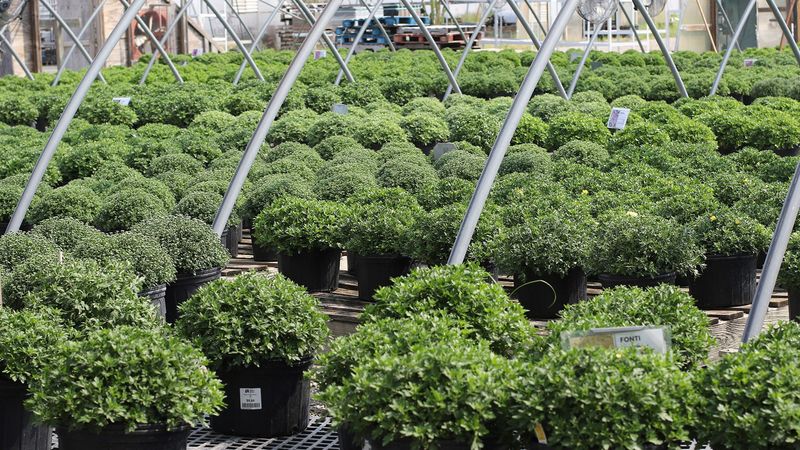
No tag? Plenty of mums arrive in bulk displays with nothing attached.
Ask the staff two simple questions: what is the cultivar, and do you recommend it as a perennial in this area? A knowledgeable nursery can usually answer both, and a blank stare tells you something too.
Do not guess based on where the plant was sold. Retail mums come from both garden and seasonal groups, and NC State describes compact types sold in supermarkets and big-box stores as one informal category, while also noting that some mums do not reliably return, especially in the Southeast.
A tidy, rounded shape is not proof of anything.
Texas readers have a handy script. Texas A&M AgriLife separates seasonal display mums from perennial landscape plants and suggests asking which type the nursery is selling.
If the answer is unclear, enjoy the plant in its pot.
Give the plant time and a suitable site

Spring is the best time to plant mums because roots get months to settle in before winter. A fall-bought plant has less runway, so get it into the ground promptly rather than leaving it in the pot for weeks.
Late planting does not give the same head start, which is one more reason survival is never certain.
Pick a spot with at least six hours of sun and soil that drains well, as Illinois Extension recommends. Soggy ground is a common mum killer, so skip low spots where water collects.
Potted mums also dry out fast, so check moisture often, and Texas guidance likewise stresses good drainage and careful watering.
Mulch is a cooler-winter tool. Where the ground freezes and thaws, shallow roots can be pushed upward and damaged, and mulch added as the soil begins to freeze may help.
In milder parts of the South, that step may not be needed.
Make the decision without expecting a guarantee
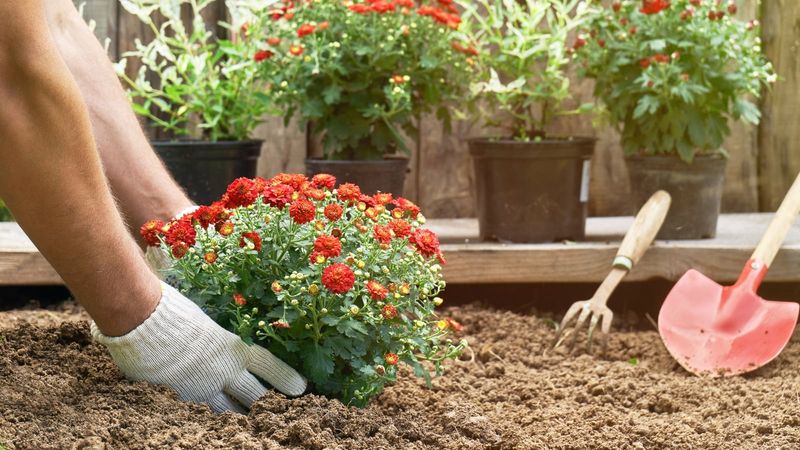
Here is a simple way to decide. Plant the mum if the tag or the nursery identifies a garden type that fits your area, and you can give it a sunny, well-drained spot soon.
If any of those pieces is missing, treat the plant as a seasonal display and enjoy it in its pot. When you are unsure, your county Extension office is a good place to ask.
Even a perfect checklist cannot promise a spring return. Virginia Tech’s guidance makes clear that cultivar and growing conditions both shape the result, and NC State notes that some mums fail to return in the Southeast.
A mum that comes back is a bonus. A mum that doesn’t was still a few weeks of fall color.