
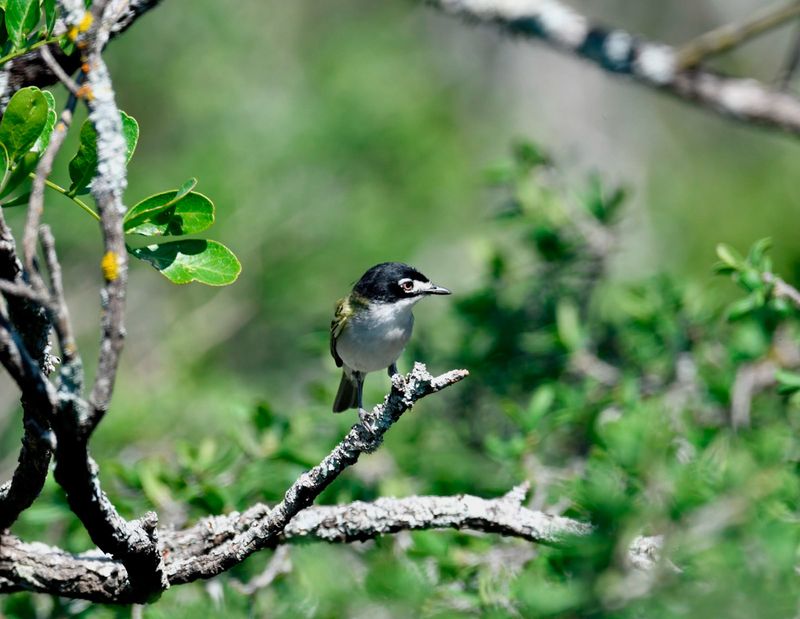
Each spring, a tiny black-and-white bird with a bold white eye ring comes back to patches of Texas shrubland to raise its young. The black-capped vireo is a bird Texans can be proud of, but its story is a bit bigger and pickier than the word scrub suggests.
It needs a particular mix of leafy cover and open ground. Here is what that looks like in the Hill Country and how landowners can help protect it.
The vireo’s Texas story reaches beyond Texas
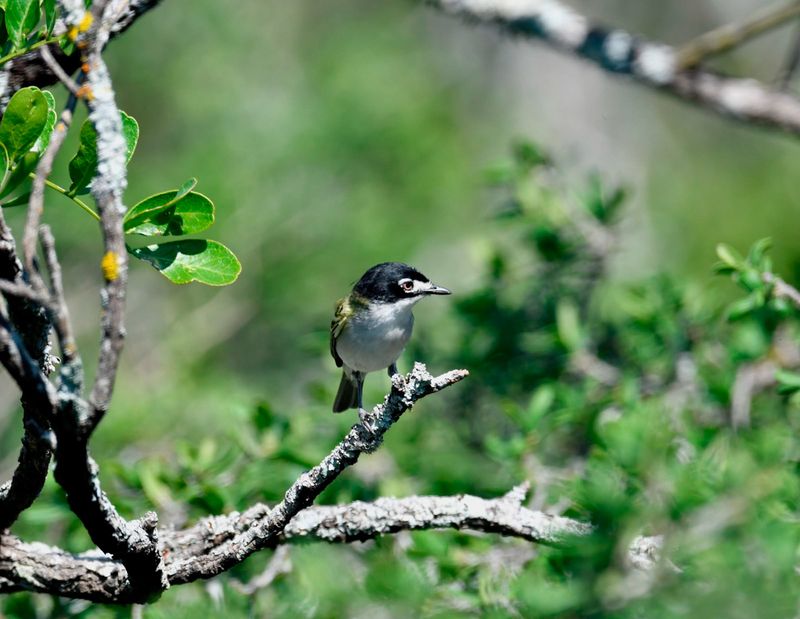
Texas gets plenty of the credit for this bird, and it deserves some. But the U.S.
Fish and Wildlife Service says the breeding range stretches through Texas and south-central Oklahoma into northern Mexico. So the bird does not nest only in Texas, and calling it a Texas-only species would be wrong.
When winter comes, the vireos leave the breeding grounds and spend the cold months in western Mexico. That means the birds you hope to see in spring have traveled a long way to reach Texas.
Their trip is part of a yearly cycle that depends on good habitat at both ends.
In Texas, the timing follows a rough calendar. Birds typically arrive from mid-March to mid-April, and the breeding season can run from early April to mid-July.
Those dates shift among records and sources, and they can vary with weather and location, so treat them as approximate windows rather than exact deadlines.
Texas is still important breeding country, and the Hill Country is part of that picture. A good way to feel proud of this bird is to understand it accurately.
It shares its range with Oklahoma and Mexico, and it is picky about where in Texas it settles. The next sections explain what it looks for.
What suitable scrub actually looks like
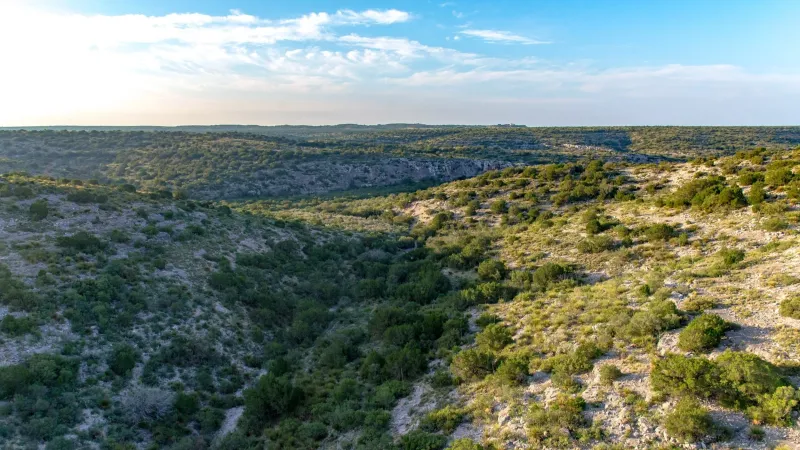
Picture a hillside where shrubs grow in uneven clumps instead of one solid wall. Between the clumps, you can see open ground and grass.
That patchwork is what black-capped vireos tend to want.
According to FWS species information, breeding habitat is generally shrubland or open woodland. It is mostly deciduous shrubs and trees with leafy cover reaching down to the ground, plus open areas around them.
The bird often nests low, so cover near the ground matters.
This is why the word scrub is too vague. A thick stand of tall cedar, a mowed lawn with a few ornamental bushes, and a patchy shrubland of oaks and sumac are all very different places.
Only the last one fits the pattern.
FWS also gives a habitat description of 35 percent or more woody cover, with 35 to 55 percent preferred. That number describes the structure of larger habitat areas.
It is not a formula for planting a small yard, and trying to hit a percentage on a suburban lot would miss the point.
A better habit is to walk your land and look at its shape. Do you see leafy shrubs close to the ground, broken up by openings?
That is a clue worth noticing, not a guarantee.
Hill Country geology helps shape where habitat fits
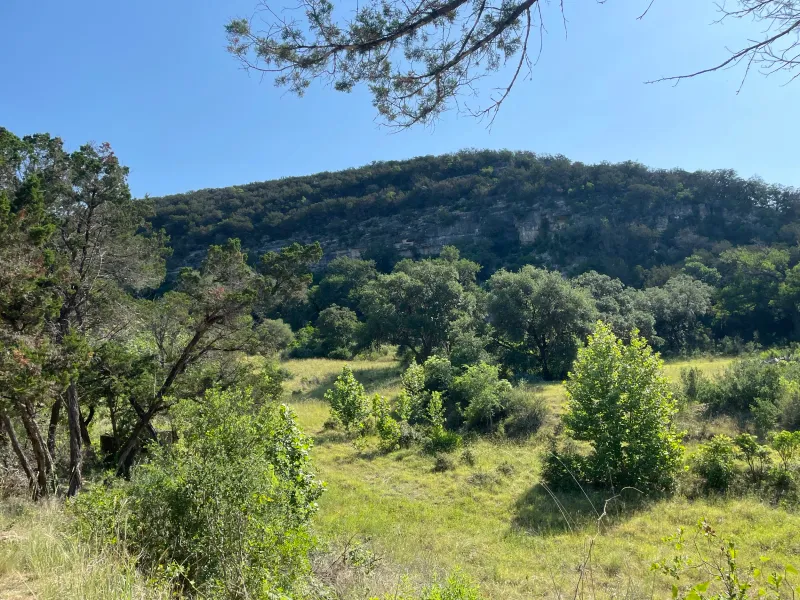
Ask a rancher near Fredericksburg why some hillsides grow dense shrub thickets and others do not, and the answer often starts with the ground. The Texas Breeding Bird Atlas account notes that the vireo is associated with Edwards or Fredericksburg limestone outcrops.
The same account points to a local mix of soils, climate, and fire history. Thin rocky soils, dry spells, and past fires all influence which plants grow and how thick they get.
Over time, that mix can produce the patchy shrubland the vireo likes.
Think of this as regional background, not a checklist for your property. It helps explain why suitable sites are place-specific.
Two neighboring properties can look alike from the road and still differ in the cover that matters to a nesting bird.
It also means that not every Hill Country yard can support breeding vireos. A small lot in town, or a place with deep irrigated lawn and no native woody cover, is unlikely to match the conditions described.
That is not a failure, just a fact of geography.
For landowners with rocky ground and native shrubs already in place, the geology offers a hint that the area may be worth a closer look. Local wildlife biologists can help you interpret what you have.
Protect existing cover without promising a vireo’s return
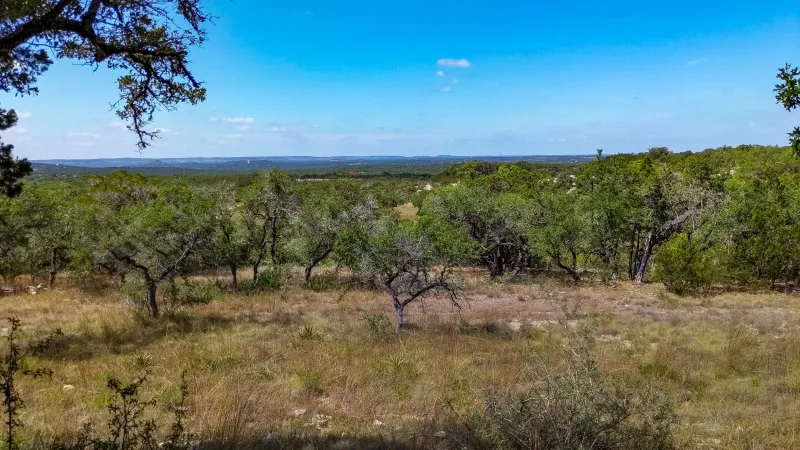
The most useful goal is modest and realistic: recognize good woody cover where it already exists, and keep it. Established patches of native shrubs took years to grow, and they cannot be replaced overnight.
Your property might also be one piece of a larger patch that extends across neighboring land.
Food is part of the story. FWS notes that vireos forage mainly for insects and spiders on vegetation, and nestlings are fed small insect larvae.
Leafy native plants that support insects are therefore part of the habitat, which is another reason to protect what is already growing.
So what can you do right now? Walk your land in spring and note where leafy shrubs grow low and in clumps.
Mark those areas in your mind or on a map before any clearing, mowing, or fence work begins.
Avoid the temptation to treat new shrubs as a quick fix. Planting alone will not attract breeding birds, and no plant list can promise a vireo.
Established cover and the surrounding landscape matter far more than a few new additions.
If you want to know whether your land might fit into a larger habitat area, ask your local Texas Parks and Wildlife biologist. They can tell you what is realistic for your property.
When should landowners work on brush?
Timing matters when brush work touches possible vireo habitat. Texas Parks and Wildlife management guidelines favor keeping desirable native shrubs, avoiding excessive browsing, and maintaining patchy cover.
For mechanical brush work, they recommend the nonbreeding period, September through February.
The same guidance calls for technical assistance before work in known occupied habitat. A biologist can help you plan so you do not remove the very cover you want to keep.
Keep the audience in mind. This guidance is aimed at rural landowners managing existing or potential habitat across acreage.
It is not a universal plan for a suburban yard, and small lots should not copy acreage-scale prescriptions.
Spring and summer call for extra care. Active migratory bird nests have legal protections, as FWS explains, so never disturb a nest or nesting birds.
Cowbirds sometimes lay eggs in other birds’ nests, but do not try to trap or kill them on your own. The TPWD cowbird program follows strict protocols.
Before any wildlife-control step, contact TPWD or FWS for advice.
Recovery changed federal status, not the need for habitat care
Good news arrived in 2018. FWS removed the species from the federal list, delisting the black-capped vireo effective May 16, 2018, after finding that threats had been reduced or managed.
That reflects real conservation progress by landowners, agencies, and partners.
Monitoring has continued since. In a December 2024 monitoring report, FWS said monitored populations remained strong overall.
The report also noted that residual threats and habitat management still matter.
That scope is worth keeping in mind. The finding covers the populations that were monitored, and it does not say every site is thriving.
Delisting also does not mean the habitat can take care of itself.
For Hill Country landowners, the takeaway is practical. Protecting suitable established habitat and managing it carefully can help.
But one yard cannot promise that vireos will appear or return.
Still, a hillside of leafy shrubs and open gaps is worth keeping for its own sake, and a vireo song in April is a bonus.