
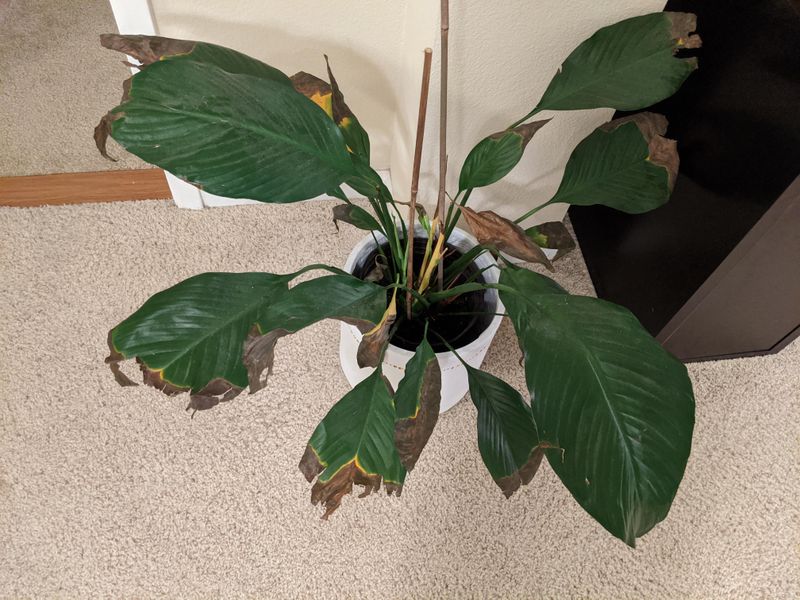
Brown, crispy tips on a peace lily can make a healthy plant look like it is struggling. Water is one of the first things many growers suspect, and sometimes it really does play a part.
But the same symptom can come from several different problems, so guessing can leave the plant worse off. Here is how to check the clues, adjust your watering, and test one change at a time.
Fluoride in water can burn peace lily tips
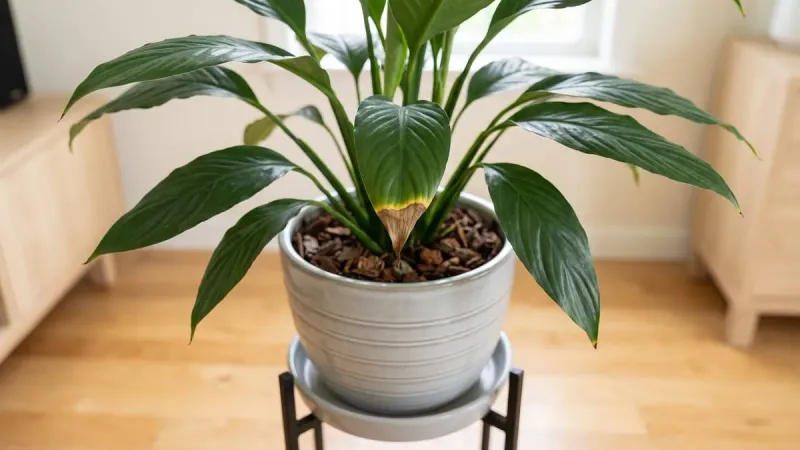
Peace lilies are known to be sensitive to fluoride. Missouri Extension lists fluoride-related tip burn as a problem in Spathiphyllum, and Illinois Extension says peace lilies can be susceptible to fluoride and fertilizer-salt buildup.
That makes water quality a believable suspect when the tips keep browning.
Believable does not mean proven, though. Ordinary tap water is generally fine for most houseplants, and fluoride levels differ from place to place.
Your plant may be reacting to something else entirely, so water should be one clue on your checklist rather than the automatic answer.
If the browning is persistent and the other conditions look reasonable, a different water source is a fair experiment. Treat it as a test, not a guaranteed fix.
Leaves that have already browned will not turn green again, so the real answer shows up in the new leaves that follow.
What else can make the tips turn brown?
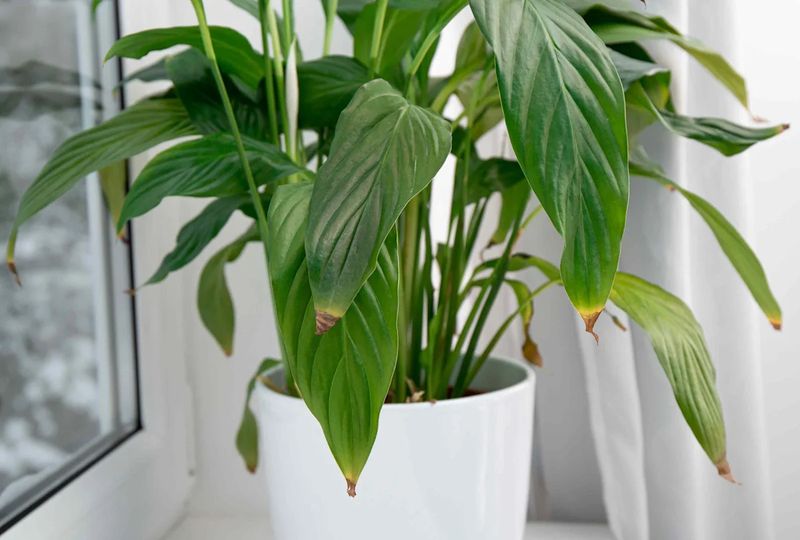
Brown tips are a vague symptom, and many problems produce them. UC IPM lists overfertilizing, salt buildup, soil that is too wet or too dry, fluoride and other toxicities, and low humidity among the possible causes.
Direct sun can also scorch leaf edges.
Start by looking at the plant’s surroundings. Is it sitting in a hot window or near a heating vent?
Does the pot drain freely? Have you been feeding it often?
Is the soil bone dry between waterings, or damp for days?
Resist the urge to change everything at once. If you move the plant, repot it, switch the water, and change the fertilizer in one week, you will never know which step helped.
Write down what you find, pick the most likely culprit, and adjust that first.
Check the potting mix before you water
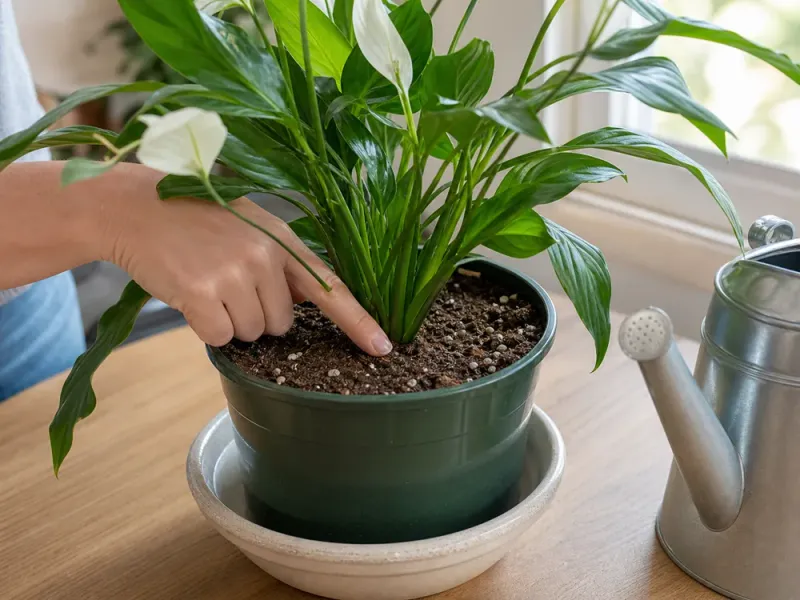
Your fingers are a better guide than the calendar. Poke a finger an inch or two into the mix.
North Carolina Extension describes peace lilies as liking evenly moist soil, so the goal is moist but never soggy.
When the top feels slightly dry, water thoroughly until extra runs out of the drainage holes. Then let the pot drain and empty any saucer so the roots are not left standing in water.
Constant sogginess can lead to root rot, which causes problems of its own.
Do not wait for a dramatic wilt, either. SDSU Extension notes that drooping can come from too little water or from overwatering damage to the roots.
Aim for slight drying between drinks, not a long dry spell.
Could a different water source help?
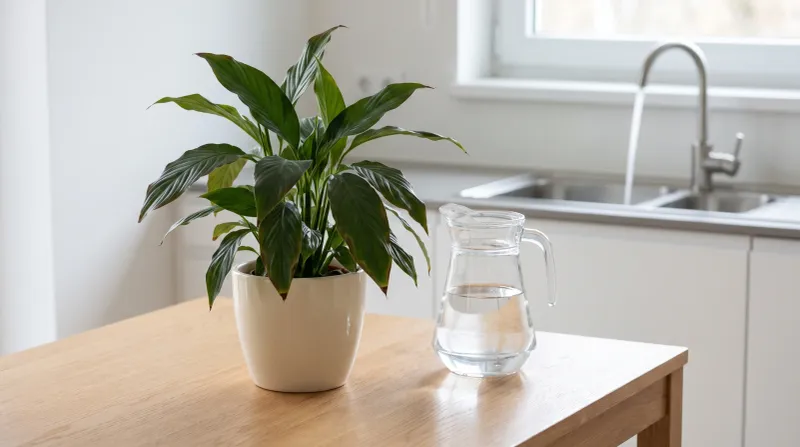
If you suspect water quality, try rainwater or distilled water for a few weeks and watch the new leaves. Illinois Extension points to fluoride as a concern for peace lilies, so this is a practical test, not a promised cure.
Old brown tips will stay brown.
Softened water deserves extra caution. Maryland Extension says it contains more dissolved minerals and should be avoided for houseplants, and UF/IFAS links salts from softened water to leaf-edge burn.
That is different from ordinary tap water, which is generally suitable for most plants.
Distilled water has a catch. Virginia Tech cautions that it lacks dissolved nutrients, so long-term use may contribute to nutrient deficiency.
Also, letting tap water sit overnight only lets chlorine escape. It does not remove fluoride or salts.
A white crust may point to salt buildup
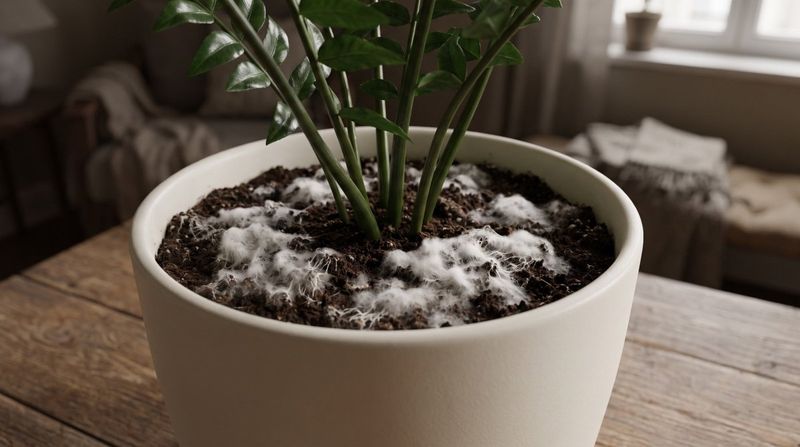
Look at the soil surface and the rim of the pot. A white crust there can be a clue that salts are building up, though it is not proof.
Fertilizer and softened water are two possible sources.
If you suspect buildup, flushing may help. Maryland Extension recommends running clear water through the mix and letting it drain fully.
UF/IFAS also describes flushing salts, while warning against leaving roots waterlogged.
To do it, set the pot in a sink, pour water slowly through the mix, and let it drip until it stops. Empty the saucer afterward.
Keep this step for suspected salt buildup only. It will not fix brown tips caused by sun, dry air, or root trouble.
Let new growth guide your next step
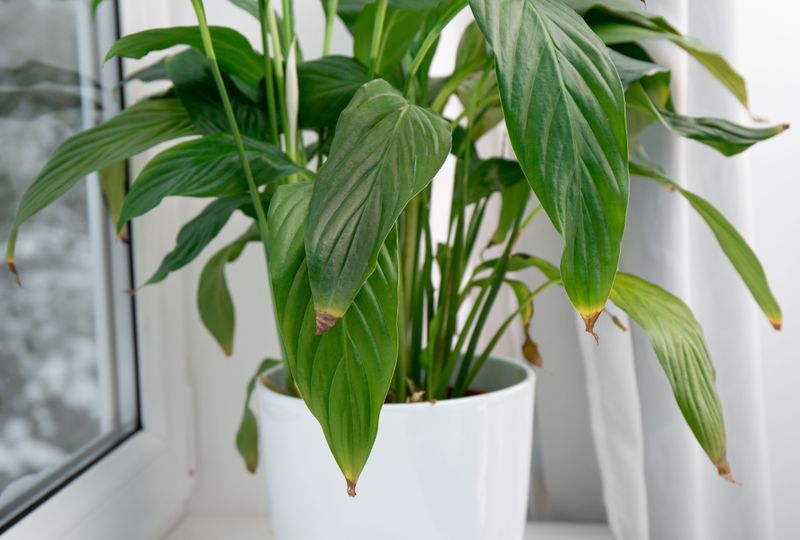
Go back over the basics: moisture of the mix, drainage, light, humidity, and feeding. Pick the one change that fits what you found, and give it a few weeks.
UC IPM advice is to rule out several causes before settling on one.
New leaves tell the story. If they emerge with clean green tips, your adjustment may be helping.
If browning returns, move on to the next suspect. You can trim the brown edges with clean scissors if they bother you, since the damaged tissue will not heal.
If you used distilled water, remember Virginia Tech’s note about missing nutrients. A peace lily rewards patience, and the newest leaf is always the honest one.