 Complete Gardening
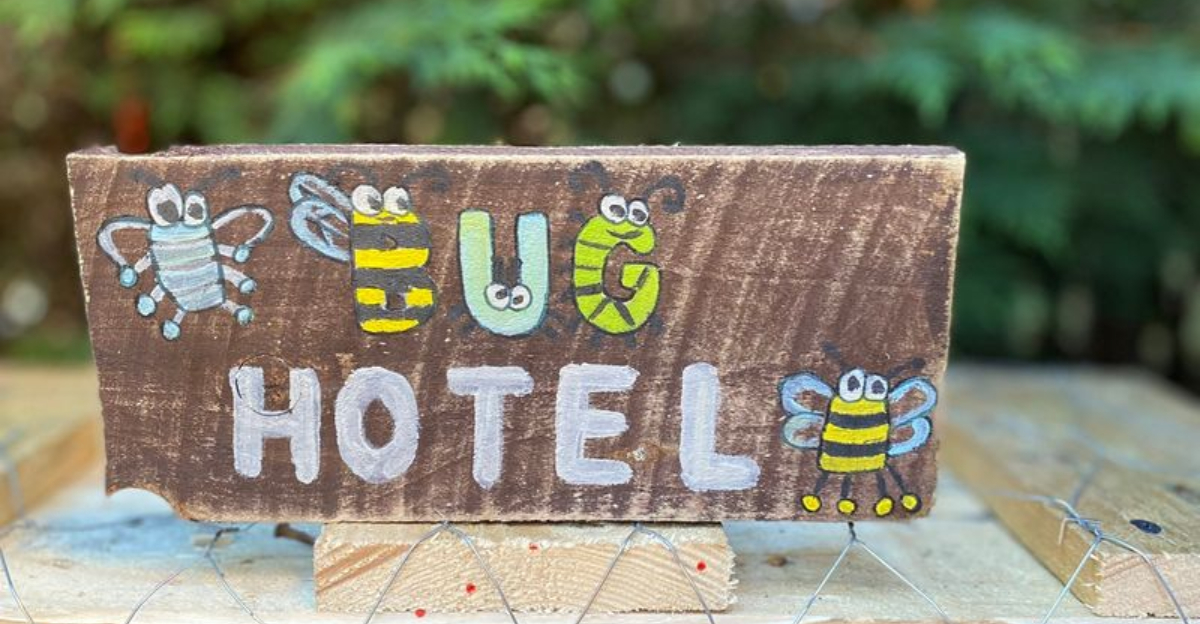
Building a bug hotel is a delightful way to invite biodiversity into your garden. By providing a safe haven for various insects, you can enhance your garden’s ecosystem and observe the fascinating world of bugs up close. Follow these steps to create a welcoming retreat that will attract beneficial bugs, support pollination, and aid in pest control. Whether you’re a seasoned gardener or a curious beginner, crafting a bug hotel is an enjoyable project that combines creativity with environmental stewardship.
1. Choose the Perfect Spot
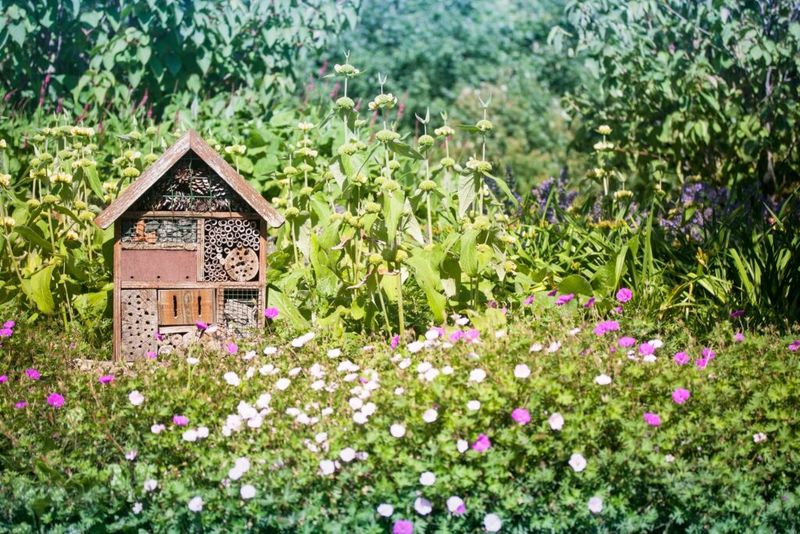
Before you start assembling your bug hotel, find a sunny, sheltered location in your garden. Bugs prefer warmth and protection from the elements, so a spot near diverse plant life is ideal. Consider the hotel’s accessibility for both you and the insects.
Avoid areas prone to flooding or heavy winds. Placing your hotel near flowering plants will also ensure a steady food source for its residents. This thoughtful consideration creates a thriving environment. Remember, the chosen location can greatly influence the variety of guests your hotel will welcome.
2. Gather Natural Materials
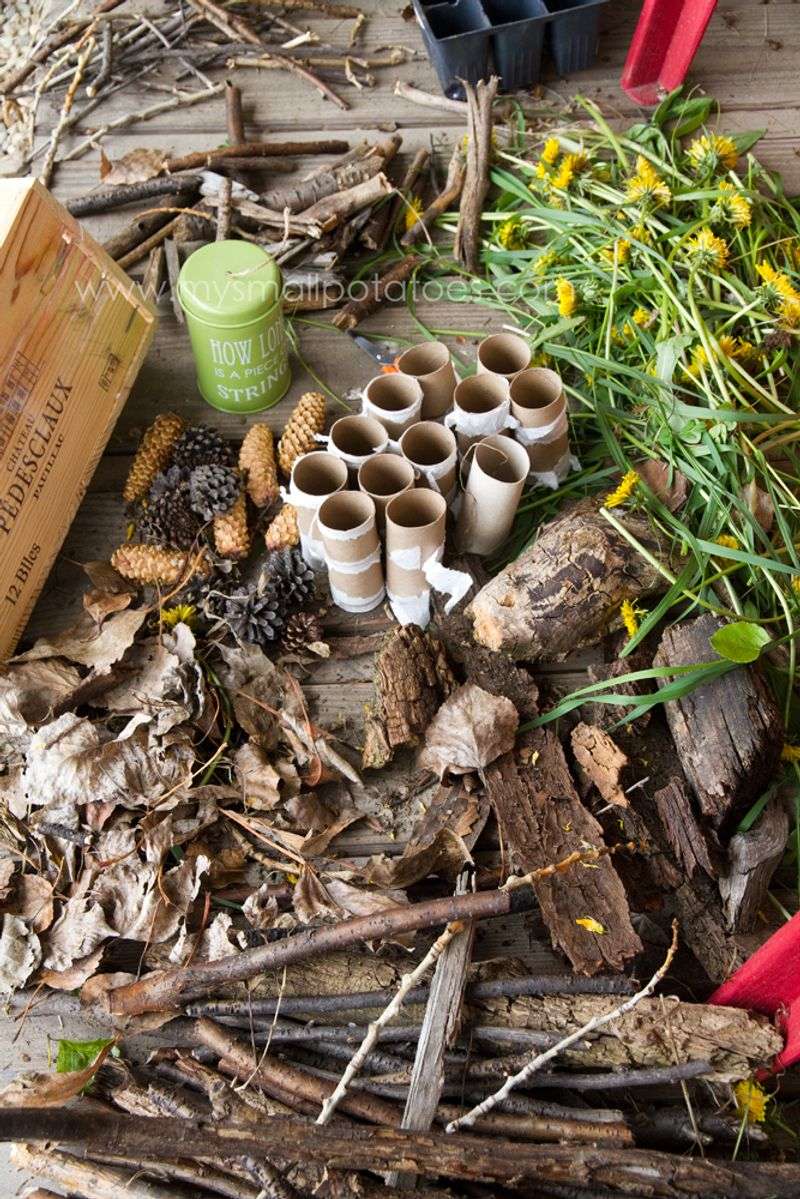
A bug hotel should mimic natural habitats. Start by collecting materials like twigs, dry leaves, pine cones, and hollow bamboo sticks. These materials provide shelter and breeding grounds for insects.
Each material attracts different types of bugs, so diversity is key. Incorporate bark and stones to create nooks and crannies. This array of textures and spaces caters to various insect needs. As you gather, think about how each piece will contribute to your hotel’s appeal. Remember, the more varied the materials, the richer the insect diversity.
3. Construct the Framework
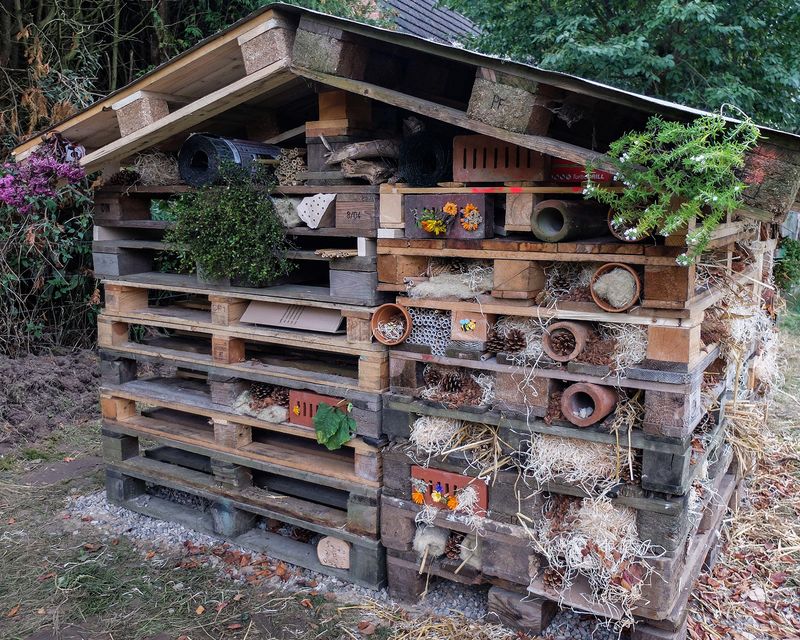
Building the framework is like laying the foundation of a home. Use wooden pallets or a simple wooden box as the basic structure. This provides stability and multiple levels for different insects.
Ensure the framework is sturdy and secure. Stack the pallets creatively, leaving spaces to fill with the natural materials. This structure not only supports various species but also adds visual interest to your garden. As you construct, consider the balance between aesthetic and functionality. Your bug hotel should be as inviting as it is practical.
4. Layer and Fill
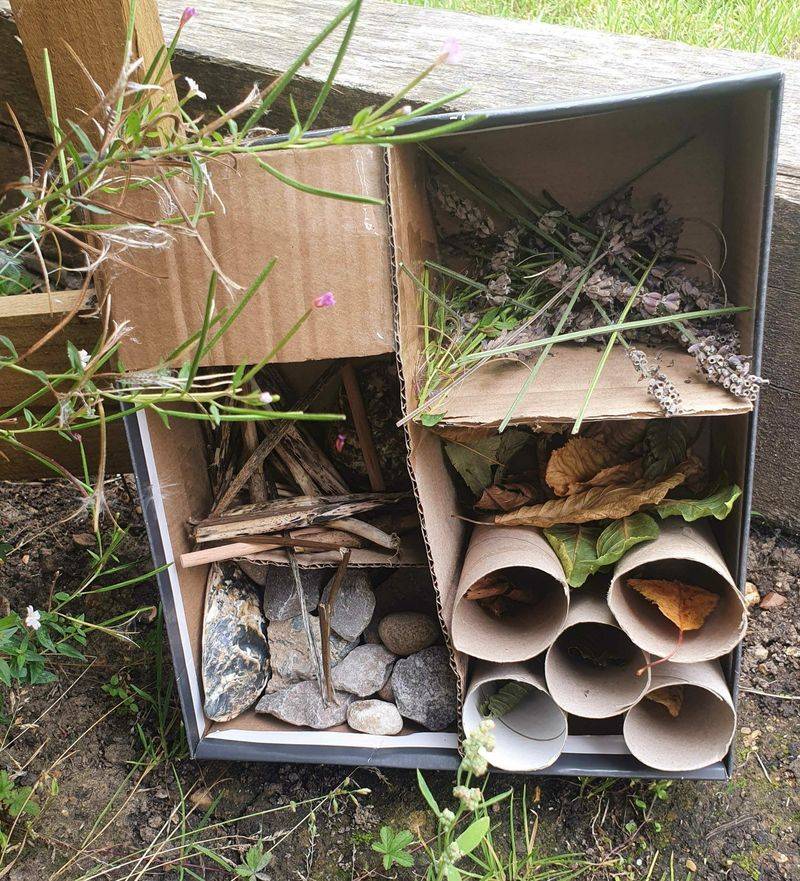
Once the framework is ready, begin layering materials into each section. Start with larger items like logs and bricks at the bottom for stability. Gradually add smaller materials like straw and hollow stems.
Layering creates microhabitats within the hotel. This diversity encourages a wide range of insects to visit. Fill each compartment to ensure it’s snug but accessible. As you fill, think of it as arranging a cozy retreat. This intricate layering process is crucial for attracting beneficial bugs.
5. Add Finishing Touches
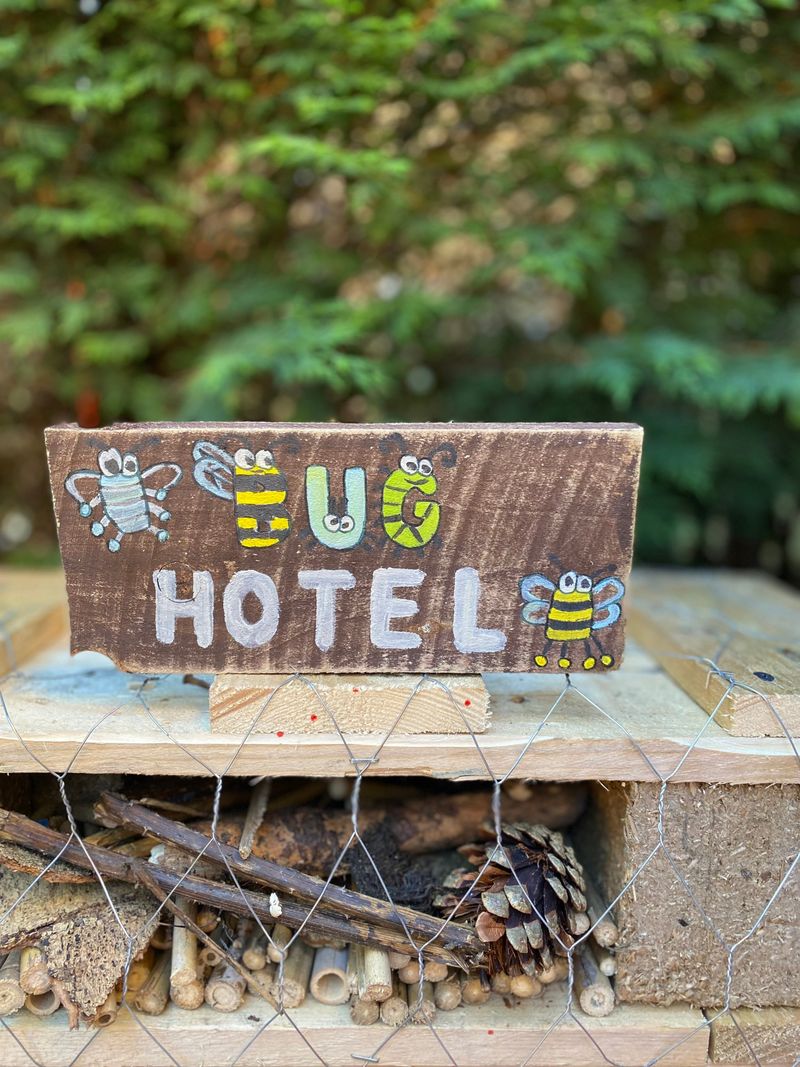
Personalize your bug hotel with creative touches. Add a wooden sign, label it ‘Bug Hotel’, or decorate with small stones and plants around the base. These finishing touches not only enhance its appearance but also blend it with the garden.
Ensure everything is secure and weatherproof. This final step adds charm and character to your creation, inviting curious insects to explore. Consider adding a small roof to protect against rain. These elements make your bug hotel a delightful fixture in the garden.
6. Incorporate Bamboo Rods
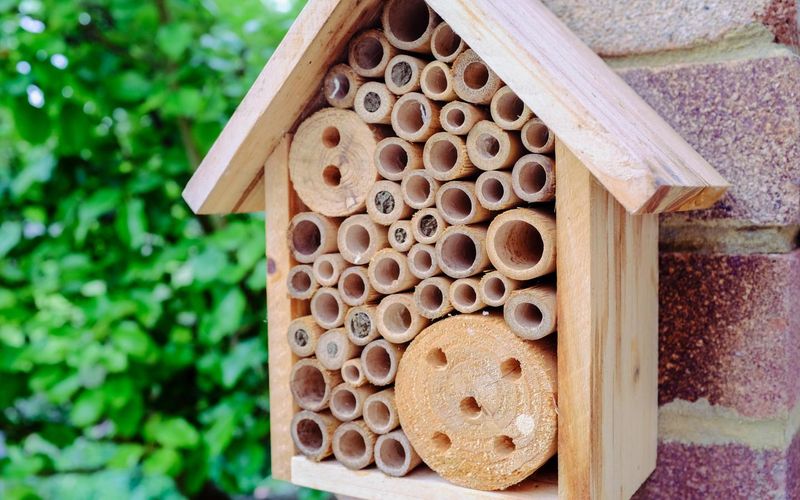
Imagine a bustling city of insects. Bamboo rods are the skyscrapers of your bug hotel. Their hollow structure makes them ideal nesting places for solitary bees, a crucial pollinator.
Arrange them tightly within the framework to attract these industrious visitors. The natural texture of bamboo also provides grip for insects climbing or landing.
Symbolizing sustainability, bamboo’s rapid growth and renewability make it an eco-friendly choice. As bees buzz in and out, they perform the vital task of pollination, enhancing your garden’s productivity.
7. Use Pine Cones
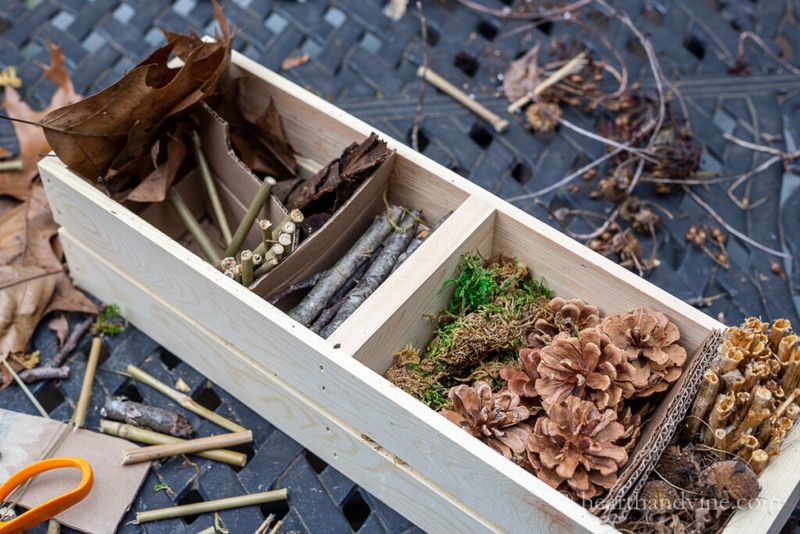
Pine cones offer a warm welcome to ladybugs and beetles. Their layered scales provide both shelter and hiding spots for these beneficial insects.
Nestle pine cones snugly into compartments. Their rough texture is comforting to insects seeking refuge from predators or harsh weather.
Historically, pine cones have symbolized fertility and renewal. Insects attracted to them often help control aphid populations, protecting your plants naturally. This natural pest control method reduces the need for chemical interventions.
8. Add Straw Bundles
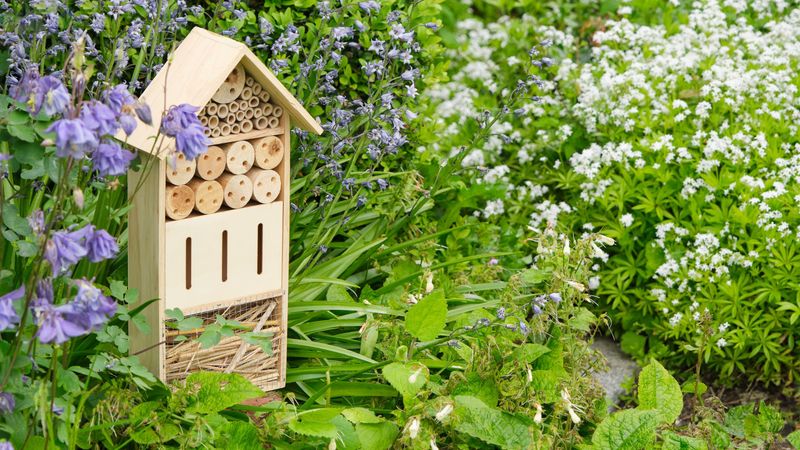
Straw bundles are the cozy quilts of your bug hotel. Soft yet sturdy, they provide an inviting habitat for spiders and lacewings.
Stack the straw loosely, allowing room for insects to navigate. Its airy composition ensures a dry environment, crucial for overwintering.
Once used as bedding for livestock, straw now serves as a sanctuary for garden helpers. Lacewings, known for their delicate wings, feast on aphids, keeping your plants healthy. This natural balance enhances the ecosystem around your garden.
9. Create Leaf Litter Pockets
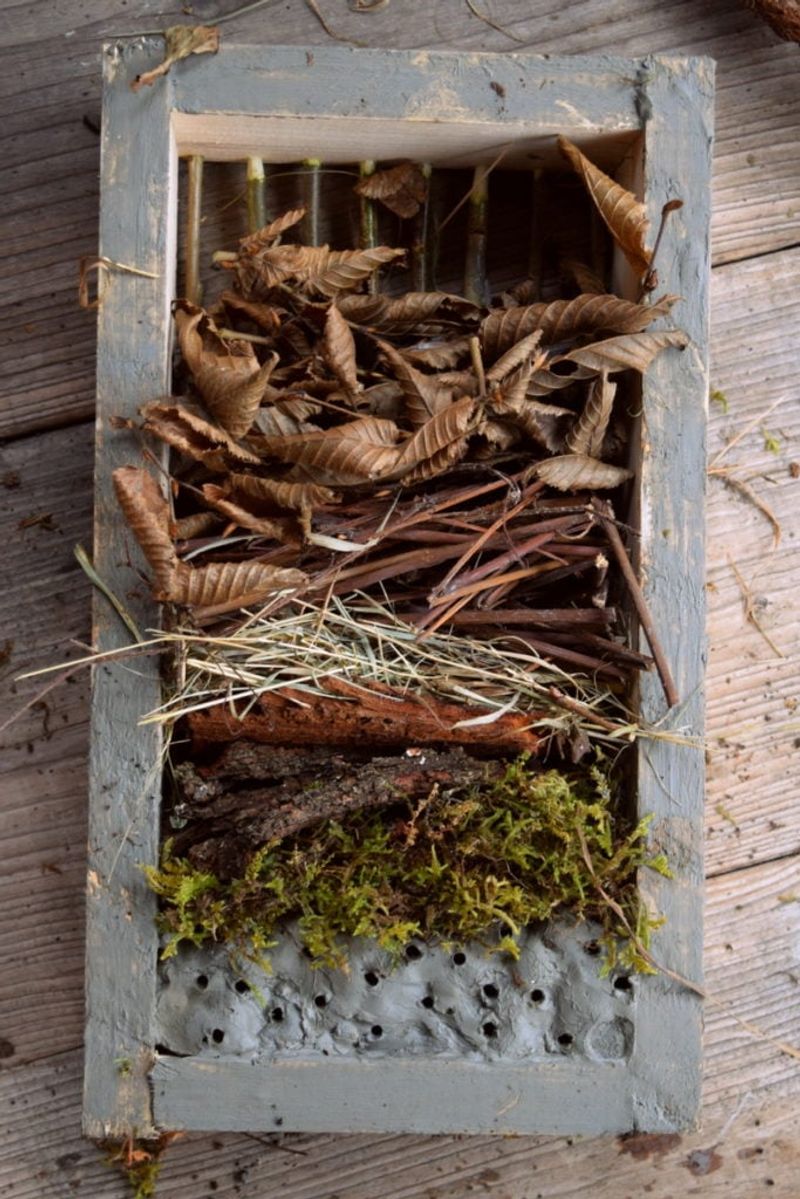
Leaf litter pockets mimic the forest floor, a haven for various insects. They offer a blend of textures and decomposing material for beetles and woodlice.
Place them in shaded areas of the hotel to maintain moisture. As insects burrow, they aid in decomposition, enriching garden soil.
Leaves, nature’s blanket, insulate insects against cold. This eco-friendly feature supports nutrient cycling, contributing to the soil’s fertility. A thriving bug hotel mirrors the balance and diversity found in natural habitats.
10. Integrate Clay Pots
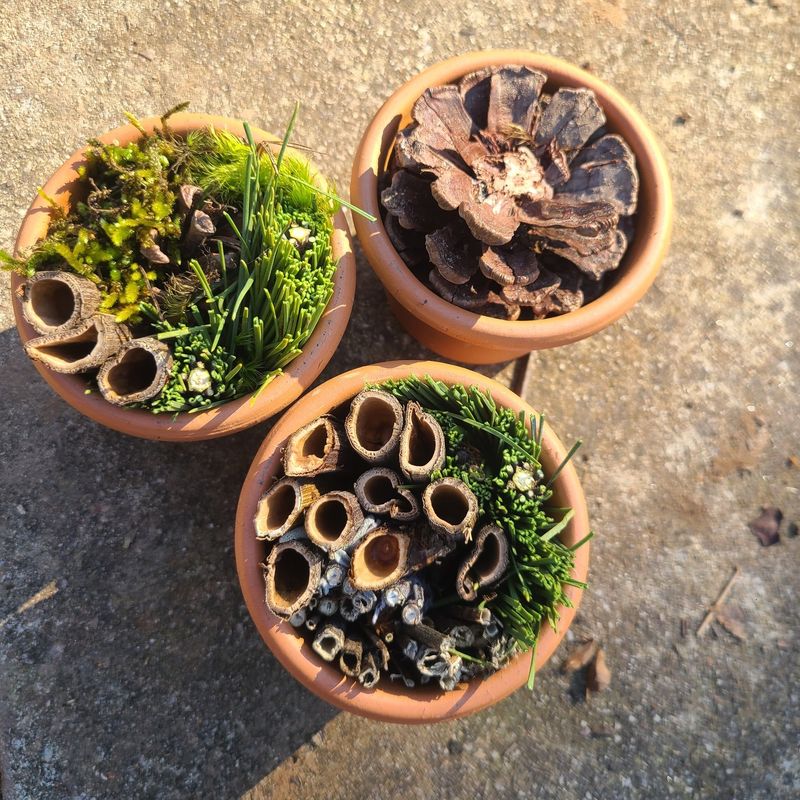
Clay pots introduce charm and functionality to your bug hotel. Their cool, dark interiors are ideal for hibernating toads and frogs.
Position them at the bottom, partially buried, to offer stability. The porous nature of clay helps regulate humidity, essential for amphibian guests.
Amphibians help control insect populations, thus maintaining ecological harmony. These resilient creatures are pivotal in reducing garden pests without chemicals. Their presence in your bug hotel celebrates biodiversity.
11. Incorporate Logs
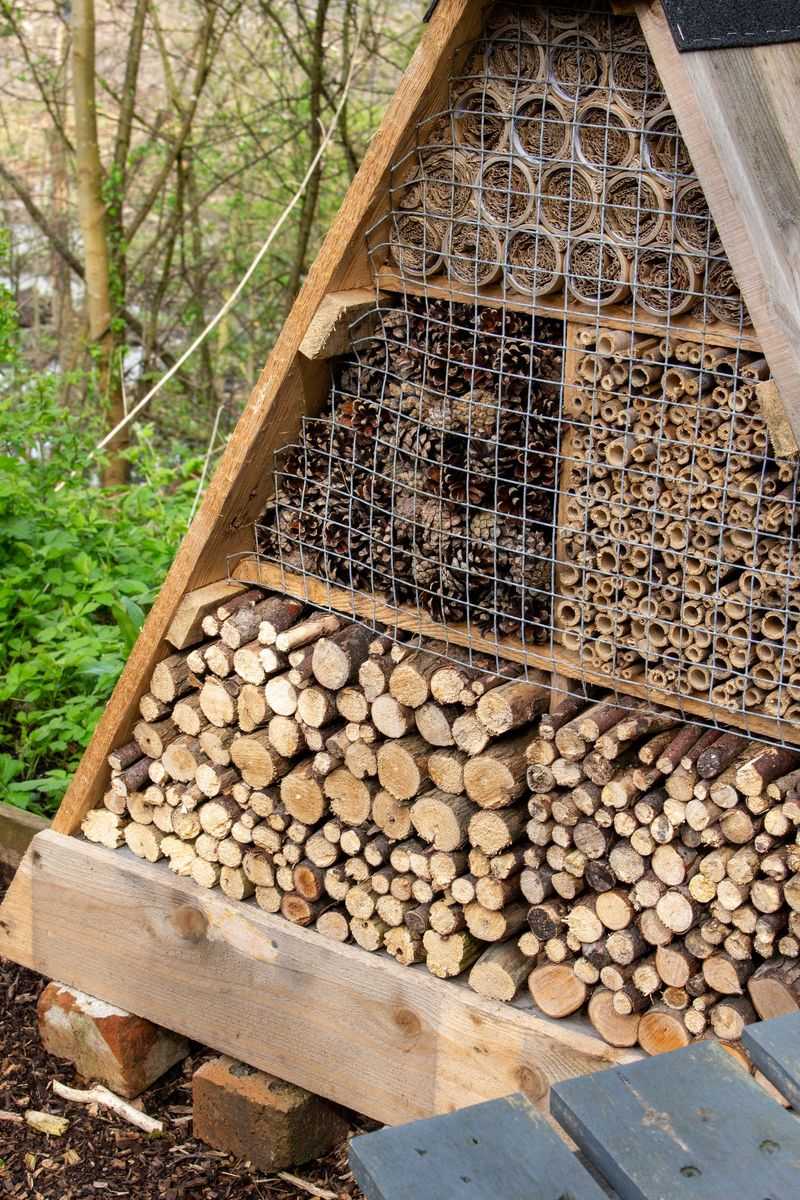
Logs provide a rustic aesthetic and essential habitat features for wood-boring insects. Drill holes in them to accommodate solitary bees and beetles.
Their decaying wood offers nutrients, fostering a micro-ecosystem. Logs have been used historically as natural habitats for insects and fungi.
This addition supports the lifecycle of insects crucial for pollination and decomposition. They exemplify the interconnectedness of life, reminding us of nature’s cycles and the importance of habitat preservation.
12. Add Twigs and Sticks
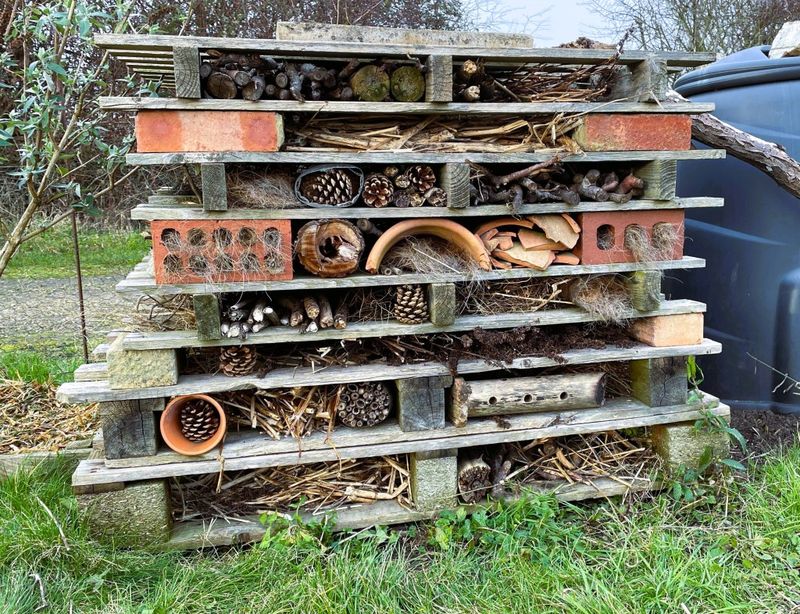
Twigs and sticks form the intricate framework for your bug hotel’s guests. They create a labyrinth of spaces for ants, beetles, and spiders.
Arrange them in various directions, simulating a natural forest underbrush. This complex structure offers protection and nesting opportunities.
Throughout history, sticks have been tools of construction and protection in nature. Their inclusion in your bug hotel continues this legacy, supporting biodiversity and encouraging insect exploration.
13. Incorporate Cork Pieces
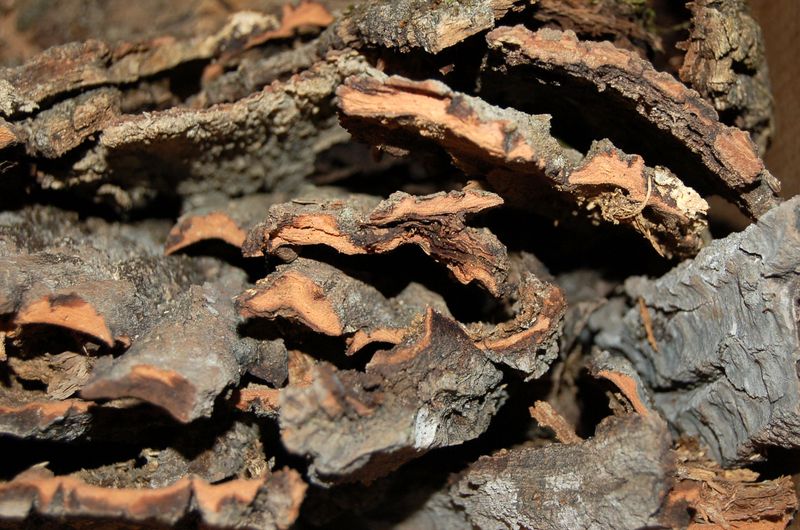
Cork pieces add an insulating layer to your bug hotel. Their lightweight and breathable nature makes them ideal for small insects and larvae.
Place them in sheltered sections to protect against harsh weather. Cork’s resilience and sustainability echo through its use in eco-friendly projects.
This material invites insects that require a stable environment to thrive. Cork’s natural properties help maintain a balanced micro-climate within your bug hotel, promoting a diverse insect population.
14. Position Charcoal Pieces

Charcoal pieces bring a unique element to your bug hotel. Known for their purifying properties, they create a clean environment for insects.
Scatter them strategically, providing a refuge for insects during rainy seasons. Charcoal’s ability to absorb moisture helps control humidity.
Historically used for filtration, charcoal’s modern application in bug hotels showcases its versatility. This feature supports healthy insect habitats, reducing fungal growth and enhancing the overall well-being of your garden visitors.
15. Implement Sea Shells
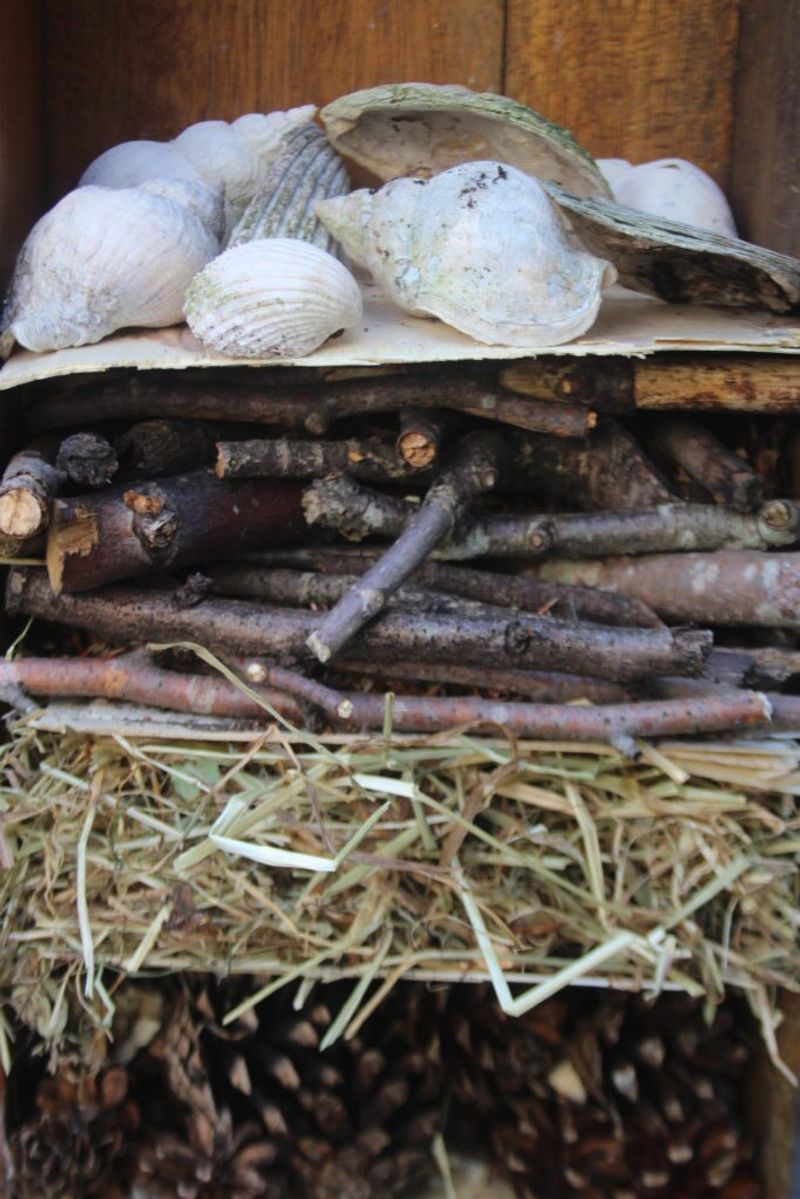
Sea shells add a coastal flair to your bug hotel. Their hard exterior provides shelter for small insects seeking refuge.
Arrange them creatively to mimic tidal pools, offering a unique aesthetic appeal. Sea shells are a natural symbol of protection and resilience.
Insects attracted to this environment help maintain garden balance by preying on pests. This integration of marine elements highlights the diversity of natural materials available for creating supportive habitats. It’s a reminder of the interconnectedness of ecosystems, land and sea.