
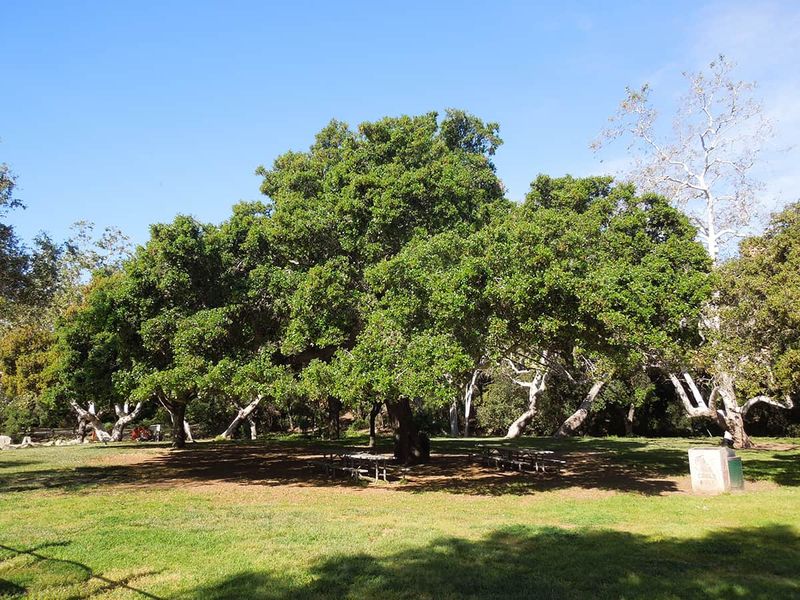
A tree that may shade your yard for generations has to start somewhere, and for many California homes that start is a small oak in a nursery pot. Coast live oak is a native evergreen that can grow into a big, welcoming canopy where the site suits it.
Our wet winters and dry summers make fall a smart time to plant, but the tree still needs the right spot and good care. Here is how to decide if it fits and how to give it a solid beginning.
Plant for the long term, not a five-year forecast
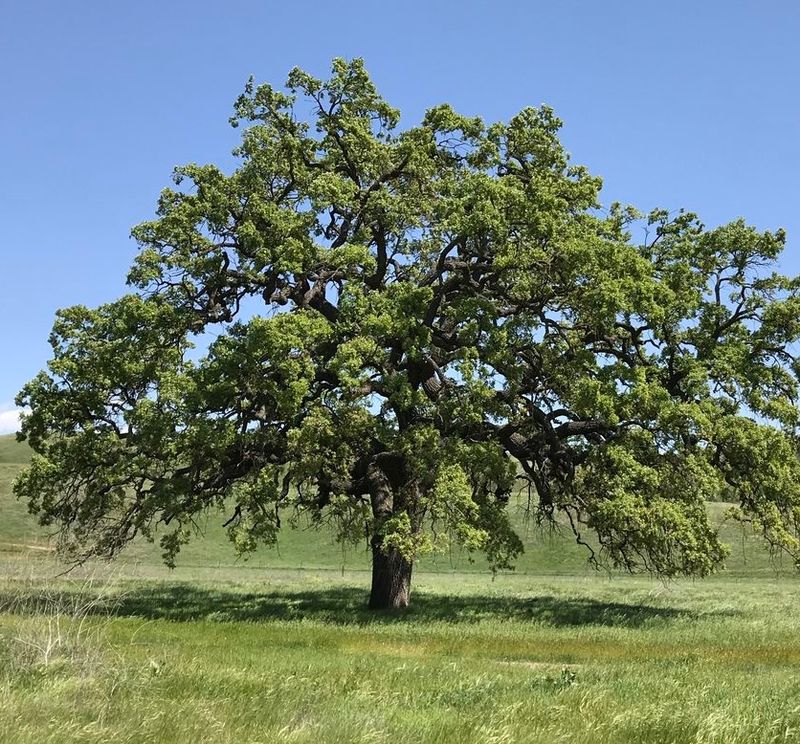
Planting an oak is a gift to the future, and it helps to set your expectations at the start. Nobody can honestly tell you how much shade a backyard coast live oak will give in five years.
Growth depends on the soil, the water, the climate, and the care the tree gets.
Some numbers sound slow. UC ANR describes coast live oak as relatively slow-growing in woodland settings, with maturity to tree size taking 60 to 80 years under good conditions.
That figure comes from woodlands, not from a watered, tended yard, so it is not a forecast for your tree.
Other findings point the opposite way. A USDA Forest Service study reported rapid growth for coast live and valley oaks at its study site.
Again, that is one site, not a promise.
The practical takeaway is simple. Plant for the decades, enjoy each season of growth as it comes, and judge success by a healthy, well-rooted young tree rather than by a shade deadline.
Which California oak fits your yard?
Coast live oak (Quercus agrifolia) is a plausible pick if you want a broad evergreen canopy in coastal or central-to-southern California. According to UC ANR’s oak species guide, it is commonly 20 to 40 feet tall, sometimes reaching 80 feet, and is found on valley floors and slopes that are not too dry.
Whether it suits your yard depends on local conditions.
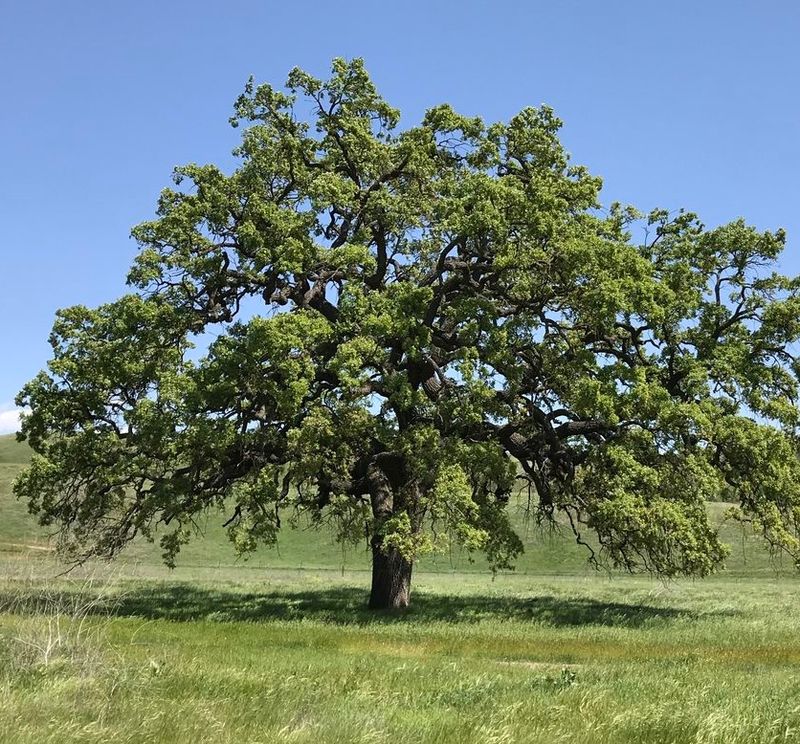
Valley oak (Quercus lobata) is a different tree. It is deciduous, can reach 40 to 120 feet, and prefers fertile, well-drained bottomland soils, streambeds, and lower foothills.
Picture bare branches in winter and a far larger spread at maturity, and you can see why the two are not interchangeable.
Other native oaks have their own needs too, so choosing by name or by a pretty canopy photo is a shaky method. Start with your own soil, space, and microclimate, then pick the species that matches.
Seed source matters as well. UC Cooperative Extension in Ventura County notes that oak species, and even local populations, differ in what they need.
Where possible, ask your nursery for stock grown from acorns collected near your area.
Make room for the mature tree before you buy
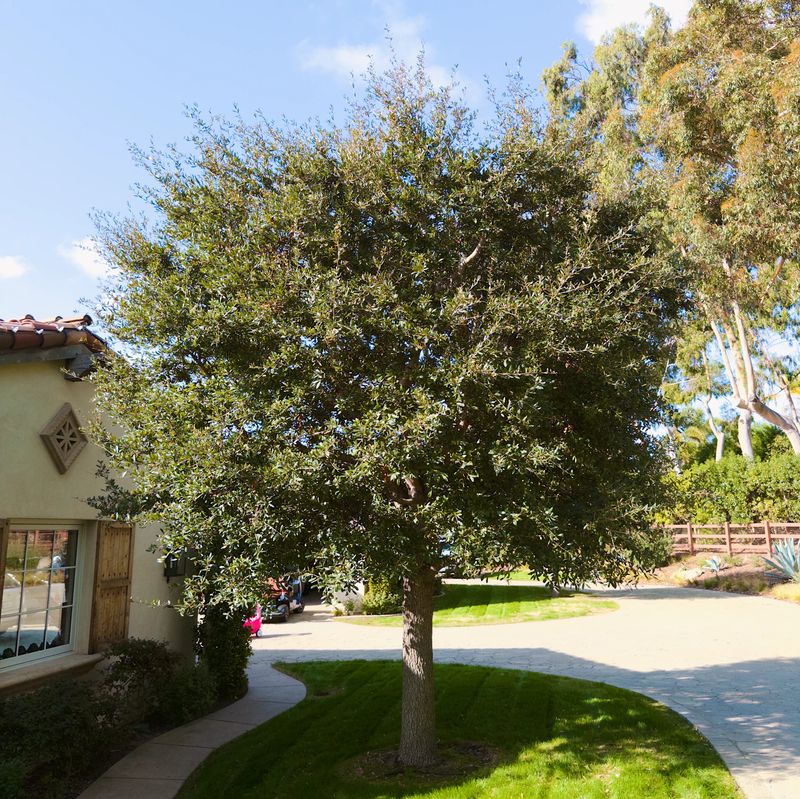
Before you pick up a pot, walk your yard and picture the tree decades from now. Coast live oak is commonly 20 to 40 feet tall and can reach 80 feet, according to UC ANR.
Look up for power lines and eaves, and look sideways for walls, pools, and neighbors’ fences.
Drainage deserves a close look. Dig a test hole, fill it with water, and see whether it empties in a reasonable time.
Spots that stay soggy are poor choices for an oak, while a gentle slope with well-drained soil often works better.
Think about the root zone as part of the site, too. Areas with heavy foot traffic, parked cars, or planned construction and trenching can compact or disturb roots.
UC Cooperative Extension in Ventura County offers guidance on living with oaks that is worth reading before you commit to a spot.
If you live in a fire-prone area, check your local defensible-space requirements before choosing a location. CAL FIRE’s defensible space page explains that rules vary by location and that stricter local standards may apply.
Your local fire authority can tell you how far trees should sit from structures.
Why fall can help a new oak get started
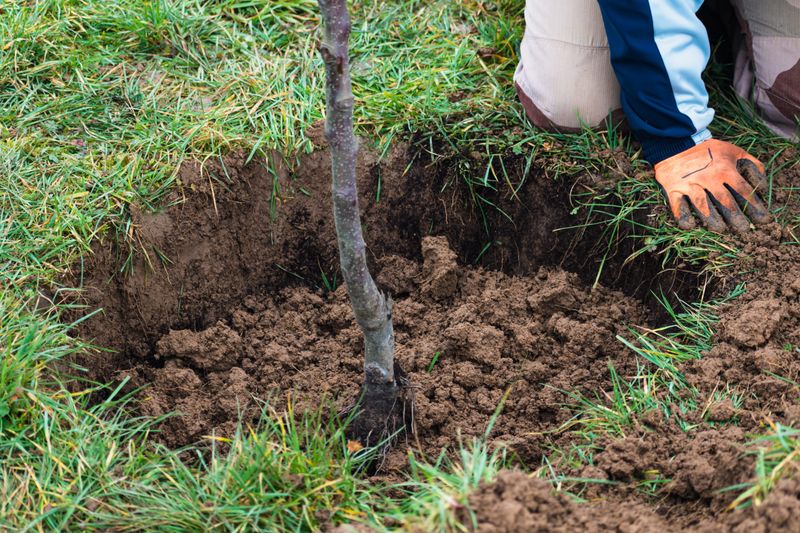
California’s pattern is cool, wet winters followed by long, dry summers. A tree planted in fall has months of mild weather and possible rain before the first hot spell arrives.
That is why UC guidance recommends fall planting so new plants can benefit from winter rain.
Think of rain as a helper, not a replacement for your attention. A wet winter can reduce how much supplemental water your tree needs, but it does not guarantee the root ball stays moist.
Nursery soil can drain differently from the surrounding ground, and a light shower may not reach the roots.
That is the point made in UC’s drought and water conservation Q&A: new plantings need monitoring even when rain is in the forecast.
Try a simple habit. After a storm, push a trowel or screwdriver into the root ball and nearby soil to see whether it is damp.
Timing gives you an edge, but site fit, planting depth, and follow-up care still decide whether the tree settles in.
Set the root flare at or just above grade
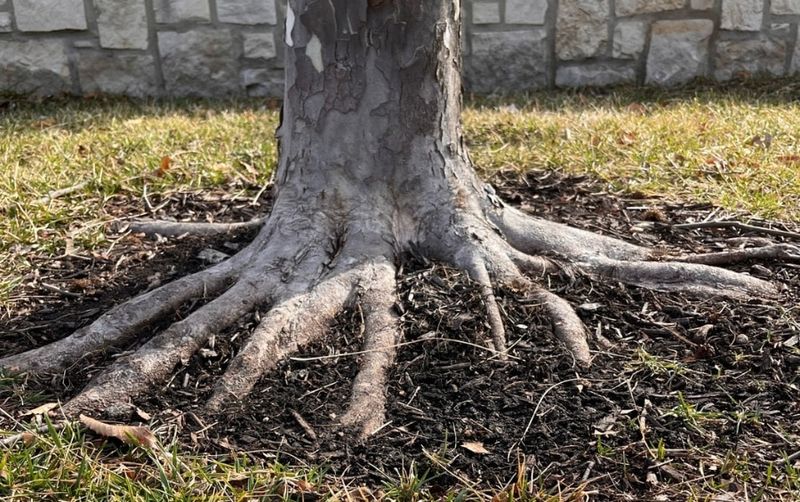
Planting depth is the step that most often goes wrong, and it is easy to get right. Dig the hole no deeper than the root ball and make it noticeably wider.
A wide hole lets roots spread into loosened soil, while a shallow one keeps the tree from sinking.
Find the root flare, the spot where the trunk widens as it meets the roots. UC ANR’s tree planting guide advises keeping the flare visible at or slightly above soil grade.
Nursery soil often piles up over the flare, so brush it away to find the true top of the roots.
Set the tree on firm, undisturbed soil at the bottom of the hole so it cannot settle deeper over time. Check that the trunk stands straight, then backfill with the soil you dug out and firm it gently.
Water thoroughly right away to settle the soil and wet the root ball. UC Marin Master Gardeners also stress checking the root ball and soil afterward rather than assuming rain will do the job.
Winter rain is not an establishment plan
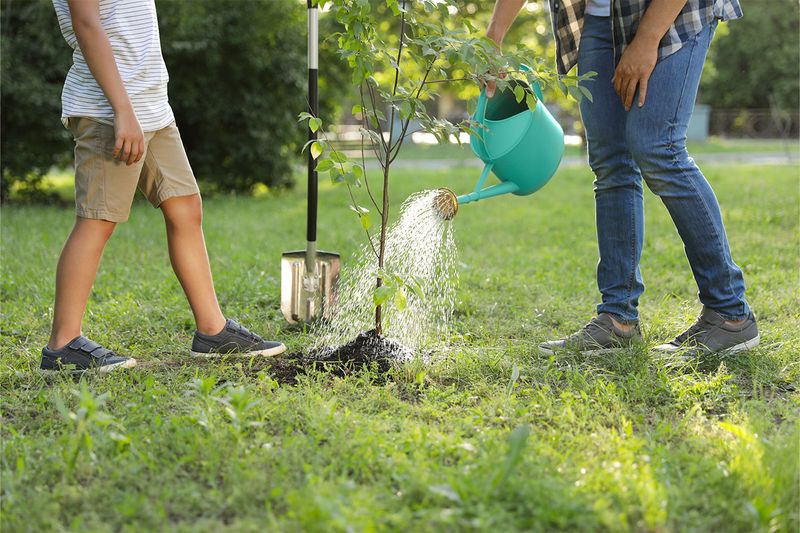
A wet January can lull anyone into forgetting the hose. Newly planted oaks may need regular irrigation while they establish, which UC ANR describes as roughly two to three years.
Rain helps, but a dry spell in the rainy season can leave young roots short of water.
Check before you water. Probe the root ball and the soil around it a few inches down.
If both feel dry, give a slow, deep soaking. If they are damp, wait and check again in a few days.
Place water away from the trunk, in a ring or basin around the planting area, rather than right against the bark. Constant moisture at the base invites trouble.
A new tree’s needs differ from those of an established oak. Frequent summer irrigation that keeps soil warm and wet can promote root or crown rot in established urban oaks.
So the aim is not to never water or to water on a rigid schedule, but to water when monitoring shows the tree needs it, then taper off as it matures.
Protect the oak’s root zone as it grows
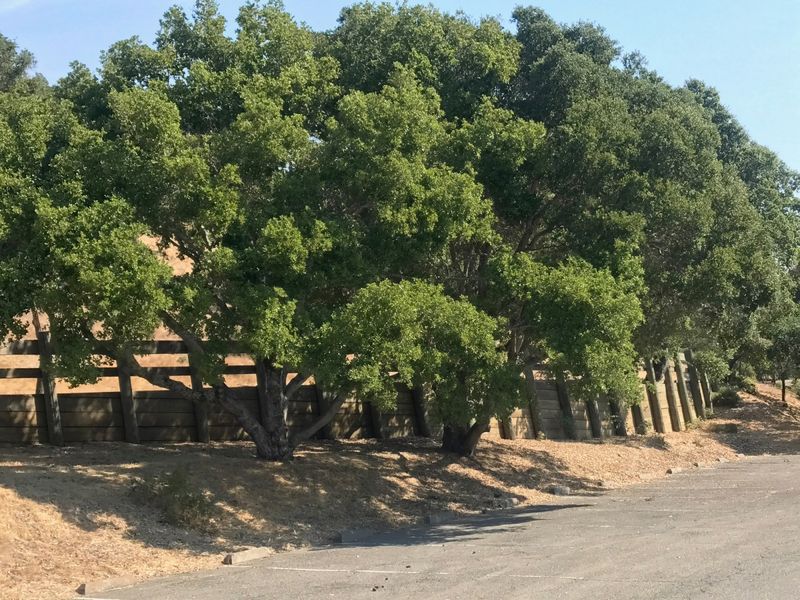
Years after planting, the best thing you can do for your oak is mostly to leave its roots alone. Most of the roots spread wide and fairly shallow, so digging, trenching, and driving over them can do real damage.
Keep heavy equipment, parking, and storage off the ground beneath the canopy.
Drainage matters here too. Avoid grading changes or soil piled over the roots that could trap water.
UC ANR’s oak landscape guidance recommends keeping mulch off the trunk and avoiding plants that need regular summer water near a mature oak.
For example, a lawn or a bed of thirsty perennials tucked up to the trunk can keep the crown wet all summer. Swap in plants that thrive on little summer water, and keep them back from the trunk.
If you want companions, UC Master Gardeners in Sonoma County offer guidance on planting under oaks. A thin layer of mulch pulled a few inches back from the bark helps hold moisture without smothering the trunk base.
The benefits can extend beyond shade
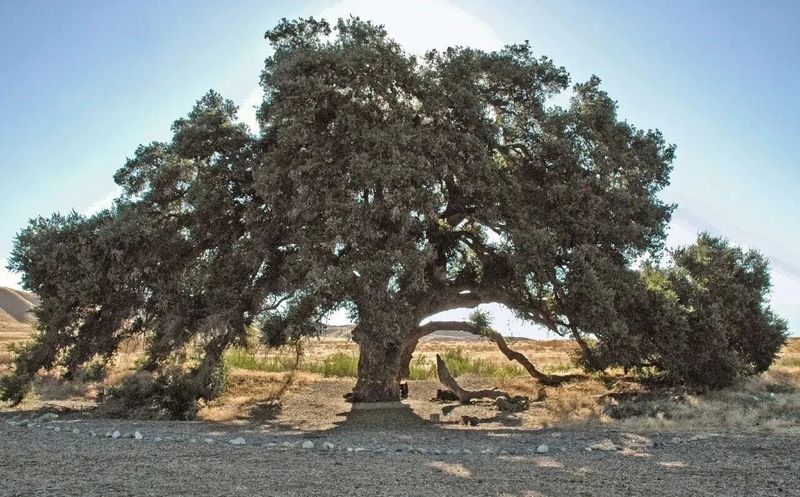
Oaks do more than cast shade. California oaks produce acorns and offer cover that many animals use, and UC ANR describes wildlife associations for oak woodland habitat.
It also cautions that habitat lists are no substitute for local surveys, so which visitors show up depends on your species and region.
That honesty is useful. One tree will not bring every bird or mammal to every yard, but a native oak can become part of a larger neighborhood habitat over time.
The practical path is clear. Confirm that coast live oak fits your site, plant in the fall window if it suits your area, and stay with the tree through establishment.
A seedling is a small thing to carry home, yet it can outlast the house it stands beside.