
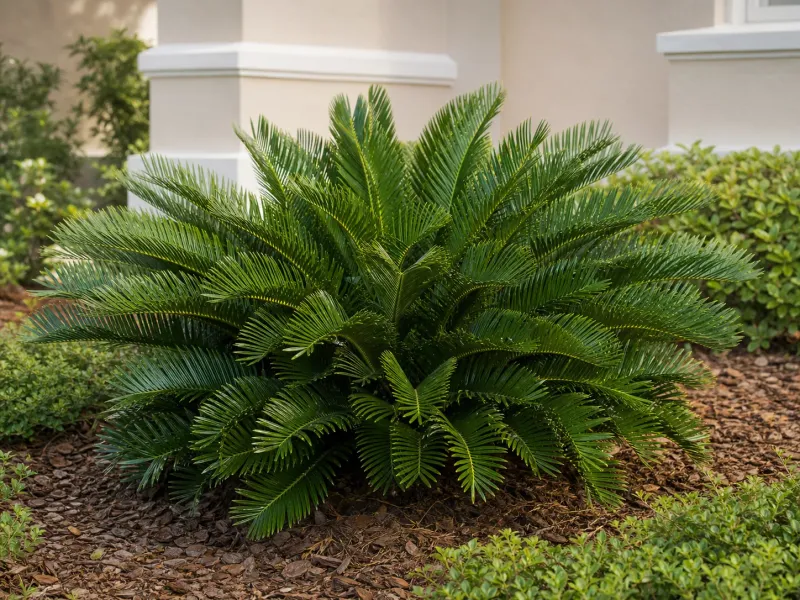
Plenty of Florida yards have a shady corner where nothing quite looks finished. Coontie is a Florida native that forms a tidy, evergreen clump and handles sandy soil well.
It also happens to be the only native food plant for the Atala butterfly’s caterpillars. Before you buy one, it helps to know how slowly it grows, what its caterpillar visitors can do, and why it needs a safe spot.
Coontie can suit a shady, well-drained bed
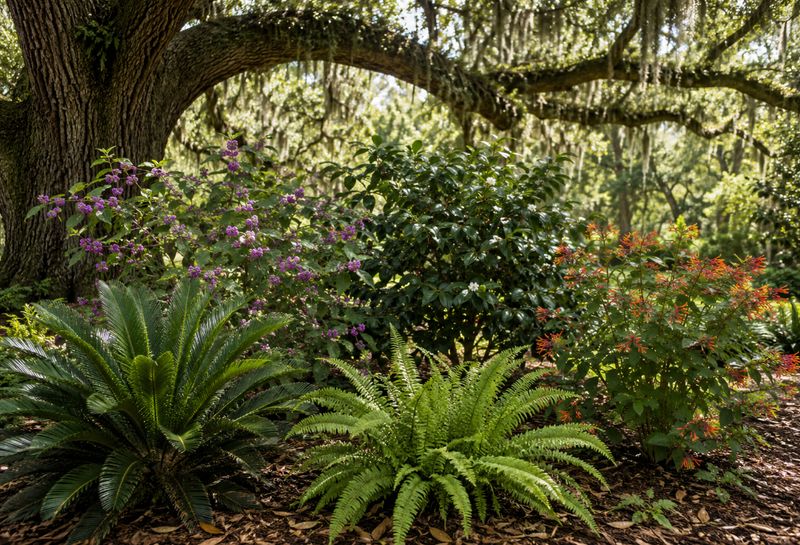
Coontie (Zamia integrifolia) is a Florida-native cycad with stiff, glossy, evergreen fronds that grow in a compact, clumping shape. It looks a bit like a small palm or fern, but it is neither.
That tidy form makes it a good fit for beds where you want steady green year-round.
For a shady spot, partial shade is the best match. UF/IFAS Florida-Friendly Landscaping lists a wider light range, from full shade to full sun, but partial shade is named as optimal.
That does not mean every dark, damp corner will work. A bed under a tall oak canopy with some filtered light is a better bet than a deeply shaded, soggy side yard.
Drainage matters as much as light. The UF/IFAS coontie publication specifies well-drained soil, and many Florida yards with sandy ground meet that need naturally.
If water pools in the spot after summer storms, choose another plant or another location.
Names can differ from one reference to another. UF/IFAS materials also use Zamia floridanaZamia pumila and , so you may see coontie sold under those labels.
This article sticks with Zamia integrifolia.
Finally, set your expectations early. Coontie grows slowly, so it works as a gradual addition to a bed rather than a quick way to cover bare ground.
Think of it as an anchor plant that gets better over several seasons.
Plan for a slow-growing clump
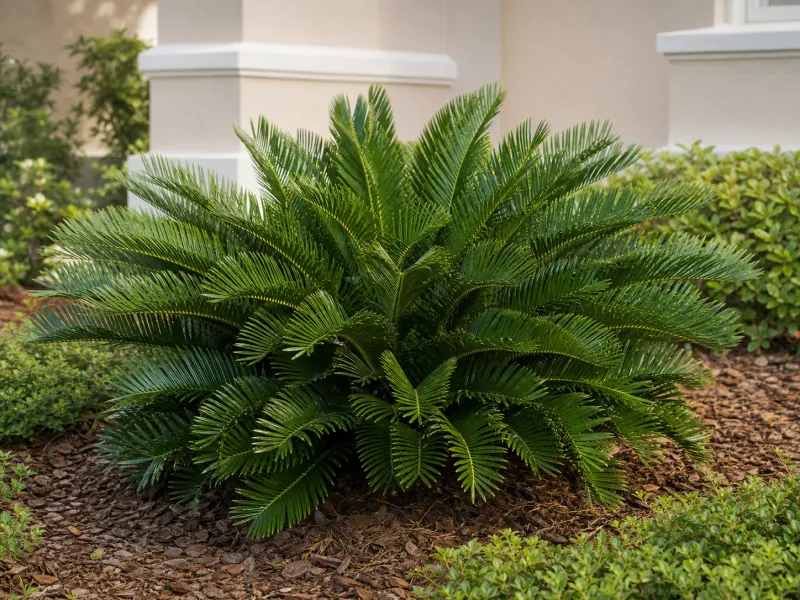
Patience is the main requirement here. UF/IFAS describes coontie as slow-growing, and a small nursery pot will not fill a corner in one season.
If you want fast coverage, this is not that plant.
Plan around the mature size instead. UF/IFAS lists a spread of about 3 to 5 feet and a spacing range of 36 to 60 inches.
A single plant can eventually take up a good share of a modest bed, so measure the space before you buy.
Those wide spacing numbers mean young plants will look sparse at first. Imagine a 3-gallon plant sitting in a big circle of mulch.
That is normal, and crowding plants to hide the gaps will cause problems later when the clumps expand into each other.
You can fill the early gaps with a few short-term choices. A layer of mulch keeps the bed looking finished while coontie matures.
Low annuals or small, easy perennials can also share the space for a while, as long as they do not shade the coontie crown or hold moisture against it.
Coontie is also a low, mounding plant rather than a spreading groundcover. It builds a clump, not a mat.
That makes it best for a focal point, a bed corner, or a repeating accent along a shady edge.
Choose drainage and water for establishment
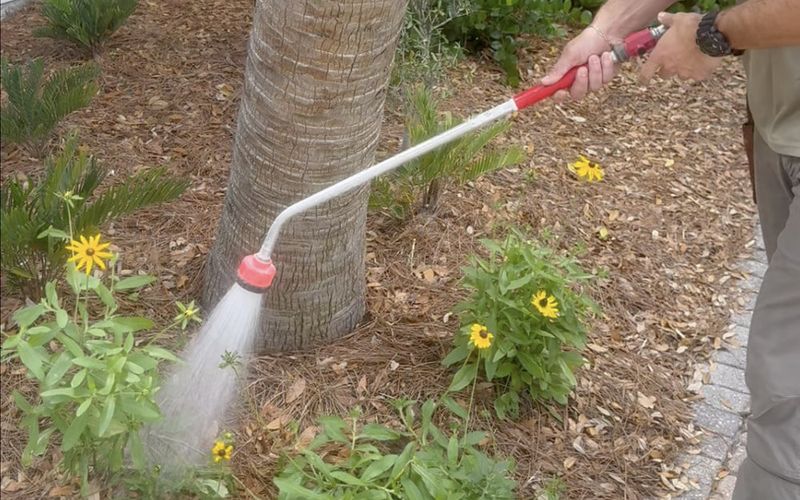
Start with a simple site test. Dig a hole about a foot deep, fill it with water, and see how fast it drains.
If it empties in a reasonable time, you probably have the drainage coontie wants.
UF/IFAS notes that coontie tolerates different soil textures, including sand, which is good news for many Florida yards. The condition it does not forgive is persistently wet ground.
Low spots, areas near downspouts, and beds that stay soggy after rain are poor choices.
Once the plant is in the ground, the first months matter. UF/IFAS advises adequate water after transplanting, so plan on regular watering while the roots settle in.
Check the soil with your finger and water when the top couple of inches feel dry, rather than on a fixed schedule.
Drought tolerance is a separate trait. It describes how an established plant handles dry spells, not how a fresh transplant will behave.
A new coontie that gets skipped during a hot, dry stretch can struggle even though mature plants cope well.
A few inches of mulch helps hold moisture around young plants. Keep it pulled back slightly from the base of the stems so the crown does not stay damp.
Atala caterpillars can defoliate coontie
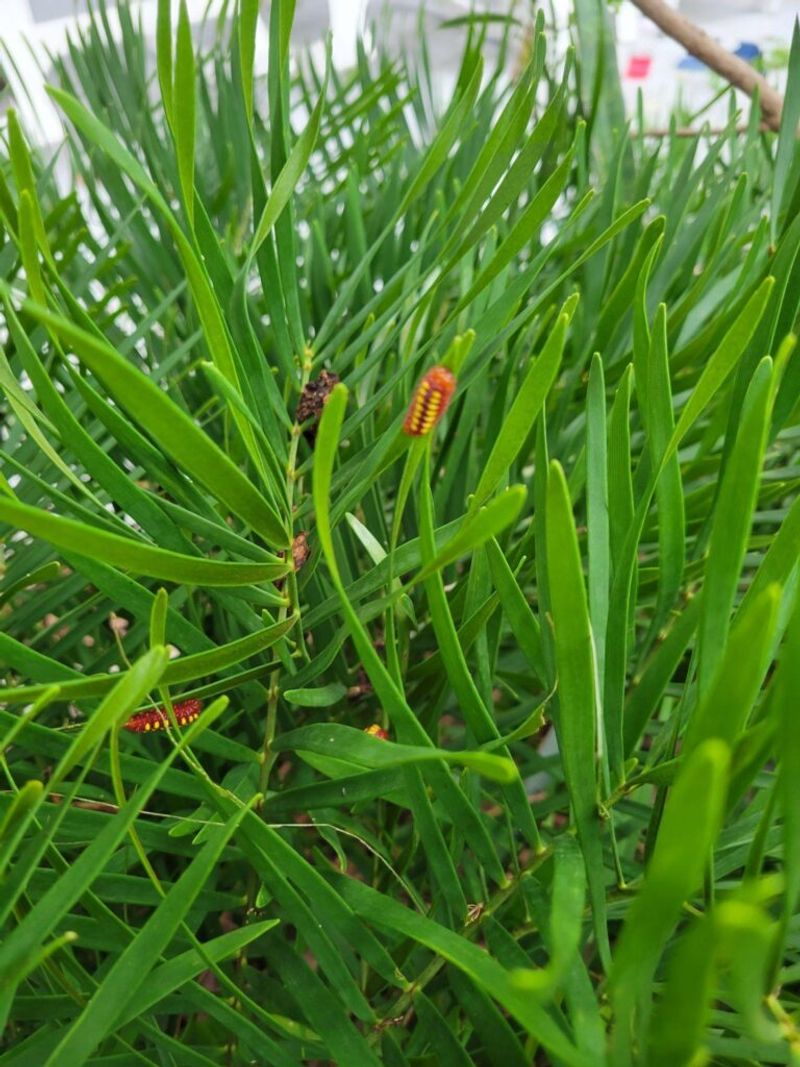
Coontie matters to wildlife because it is the Atala butterfly’s only native larval host plant. Female Atalas lay eggs on the new fronds, and the bright red and yellow caterpillars feed there.
Where the butterfly lives, the plant is the nursery.
That comes with a tradeoff. UF/IFAS explains that caterpillars can eat foliage rapidly and may completely defoliate a mature plant.
A coontie that looked full and glossy one week can look stripped a short time later.
The good news is that recovery is the usual outcome. UF/IFAS says healthy, established plants typically recover within a growing season.
Fresh fronds will push out again, though the plant may look ragged in the meantime.
So ask yourself how you feel about visible chewing. If the coontie sits beside a front walkway where you want flawless foliage, ragged fronds may bother you.
A side bed, a back corner, or a spot you view from a window may be easier to live with.
It also helps to know what you are looking at. Small, colorful caterpillars on chewed fronds are likely Atalas, not a pest to spray.
Using insecticides on or near the plant would harm the very insects it can support.
A coontie planting does not guarantee Atala sightings
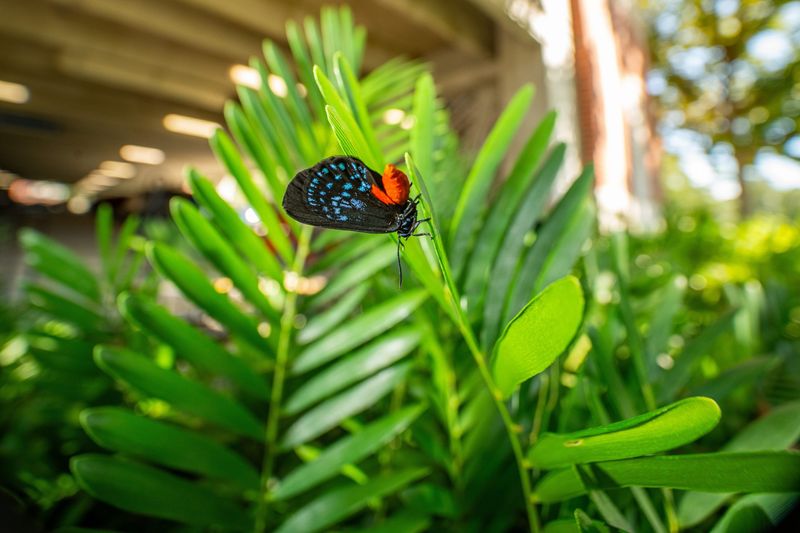
The direct answer is that coontie can feed Atala larvae only where the butterfly actually occurs. Planting one does not create butterflies.
It simply offers food if a female happens to find it.
The Atala is rare and limited in distribution. UF/IFAS places its natural Florida range in southeastern Florida, and colonies that have appeared elsewhere have been short-lived.
A yard far from that region should not count on a visit.
The Florida Museum of Natural History’s Atala page gives more background on the species and its link to coontie. It is a useful read if you want to know what the adults and caterpillars look like before you go looking.
Notice that rare is not the same as endangered. The sources used here describe the butterfly as rare or localized, so avoid calling it endangered when you talk about it with neighbors.
A practical approach is to plant coontie for its own merits: an evergreen native that handles sandy, well-drained shade. If Atalas show up in your area, treat it as a bonus.
If they never do, you still have a sturdy plant that fits Florida conditions.
Check toxicity before planting near children or pets

Safety belongs in the planting decision. UF/IFAS lists coontie among common poisonous landscape plants in Florida, and all parts of it are poisonous.
The seeds are the most toxic part.
Pets are at risk too. The ASPCA lists coontie palm as toxic to dogs, cats, and horses.
Walk your yard and look at where the plant would sit. Can a toddler reach it from the patio?
Does a dog dig or chew in that bed? Mature plants produce seed cones, and those seeds are the part most worth keeping out of reach.
If children or pets use the area freely, consider a different spot, such as a fenced bed or a corner they do not visit. Another option is to choose a nontoxic plant instead.
Do not try to eat or prepare any part of coontie, and call a poison control center or a veterinarian right away if you suspect someone has eaten some.
Decide whether coontie fits your corner
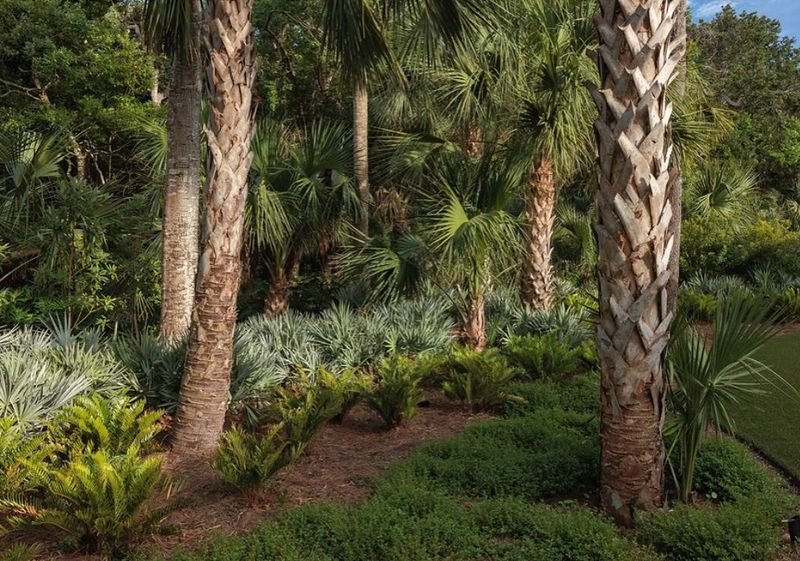
Coontie fits when your corner has partial shade and soil that drains well. It also fits when you can accept slow growth, occasional caterpillar chewing, and a plant that is poisonous if eaten.
If any of those points is a deal breaker, such as a soggy site or toddlers who roam the bed, look elsewhere. If they all sound manageable, a single plant is an easy way to test it.
Its wildlife value depends on whether Atalas live nearby.
Some plants earn their place by arriving slowly and staying put.