
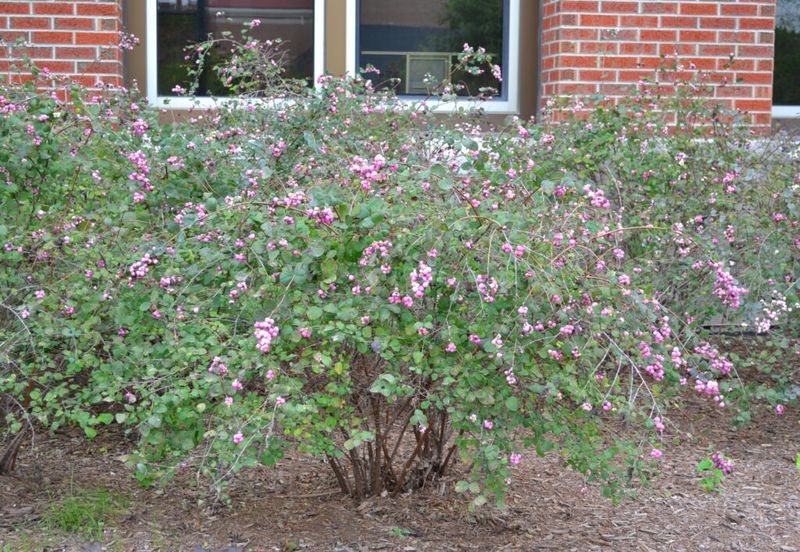
Winter can leave Central Texas yards looking bare and quiet. Coralberry, a native shrub with clusters of small pinkish red to red-purple berries, may add food and color when most plants have gone dormant.
It will not work under every tree, and no plant can promise birds or berries until spring. Here is how to tell whether it fits your yard and how to plant it without harming your trees.
Is coralberry a fit for your Central Texas understory?
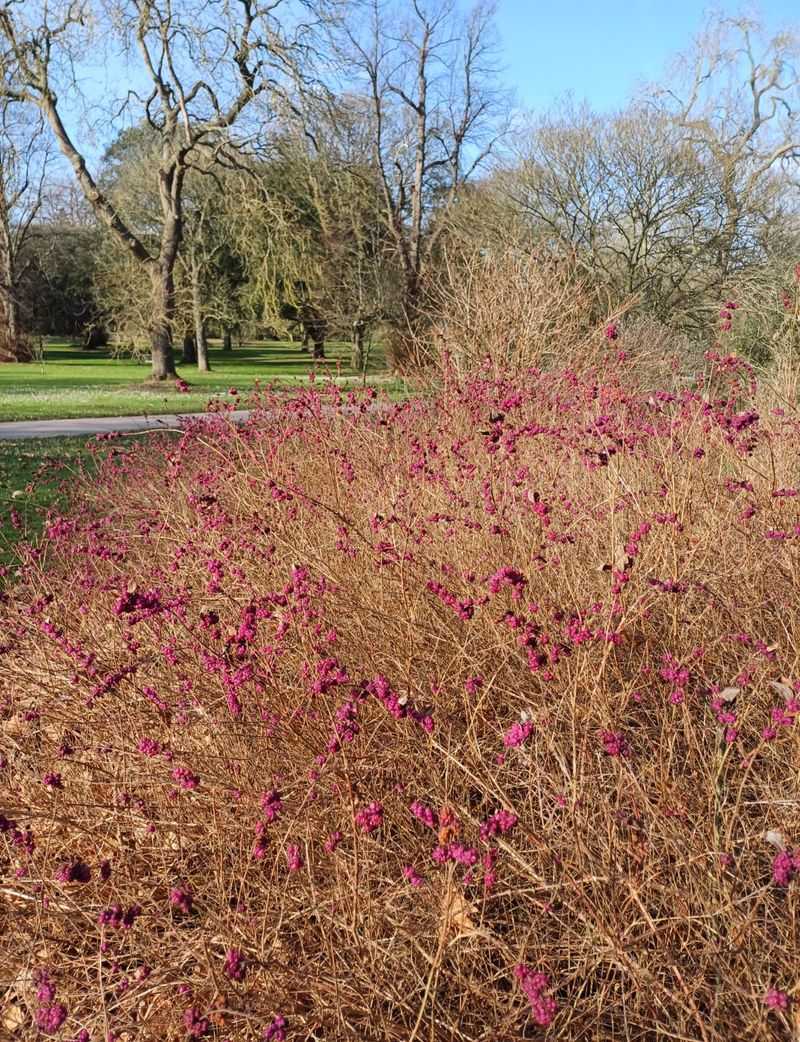
Coralberry, known scientifically as Symphoricarpos orbiculatus, is a native shrub, but native does not mean it belongs everywhere. The Native Plant Society of Texas lists it in several Texas ecoregions, including the Edwards Plateau and the Texas Blackland Prairies.
That is a good sign for parts of Central Texas, but it is a regional match, not a promise for every lot.
Light is the first thing to check. Austin’s plant guide describes coralberry as a shrub for sun or part shade.
A regional Earth-Kind plant selection guide casts a wider net, listing full sun to mostly shade.
Notice that none of those ranges say deep shade is ideal. A spot under a thick live oak canopy where almost no sunlight reaches the ground may give you a leggy plant with few berries.
A spot where light filters through in the morning or afternoon is a safer bet.
Spend a sunny day watching the area you have in mind. Note how many hours of direct light it gets, whether the soil stays soggy or bone dry, and how crowded it is with roots.
Those observations tell you more than the word shady ever will.
Plant carefully around established tree roots
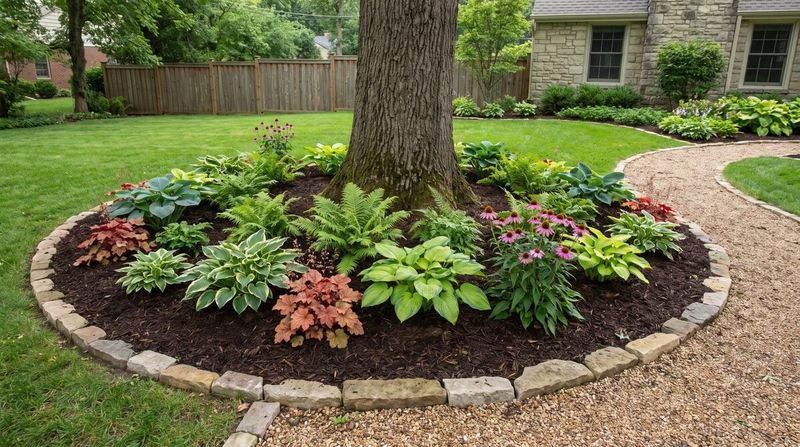
Established trees depend on roots near the surface, so the planting spot matters. Pick a place where you can dig a small hole without cutting through major roots.
If your shovel hits a thick root, move over a few inches and try again rather than chopping it.
Keep the soil level where it is. Extension guidance on planting under trees warns against piling extra soil over the root zone, since that can stress the tree.
Dig only as large a hole as the shrub’s root ball needs.
Mulch helps both plants, with limits. Texas A&M Forest Service recommends a layer 2 to 3 inches deep that does not touch the trunk.
Pull it back so a bare ring of soil surrounds the base of the tree.
A new coralberry needs help getting started. Water it as needed while it establishes, especially if the site is dry, which many spots beneath thirsty trees are.
Check the soil with a finger a few inches down before you water again.
Make room for a spreading shrub
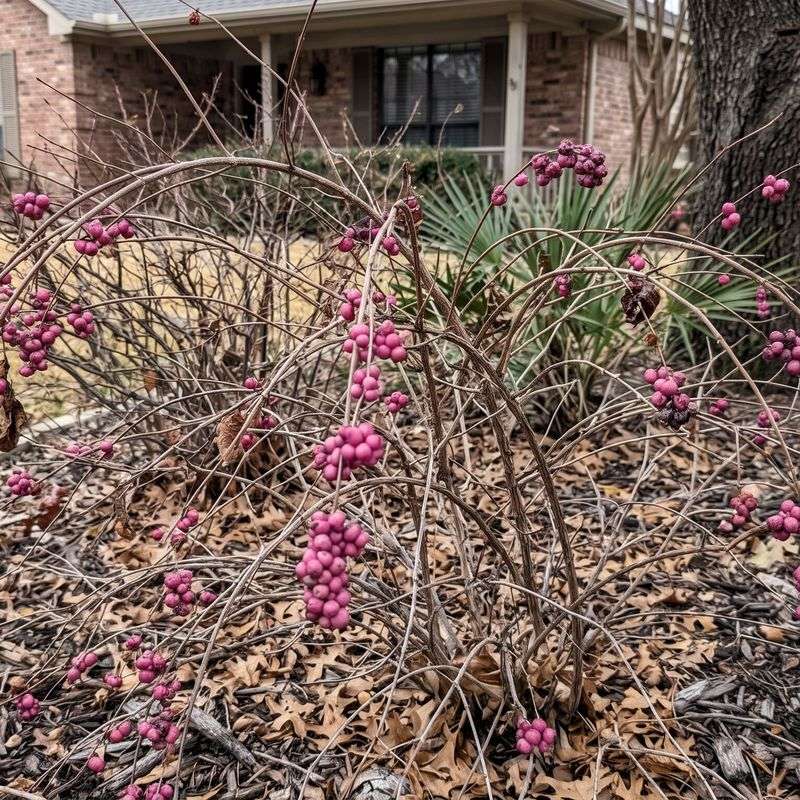
Few shrubs are as relaxed about boundaries as coralberry. Austin’s guide notes that its stems root to form colonies and recommends controlling runners as needed.
In other words, one plant can turn into a patch.
The same guide lists a mature height of 2 to 3 feet and a spread of about 3 feet. Texas native plant sources also describe a low, deciduous shrub with stems that root where they touch the ground.
Expect a loose, spreading thicket rather than a neat, fixed mound.
That habit can be a bonus on a bare slope or a corner you want filled in. It can also be a headache beside a tidy bed or a walkway.
Leave generous space around it and plan to pull or cut runners that wander where you do not want them.
Because it loses its leaves in winter, it will not give you year-round green cover. What it offers is dense, spreading structure and, with luck, fruit.
If you like crisp edges and compact plants, another shrub may suit you better.
Berry color and timing vary
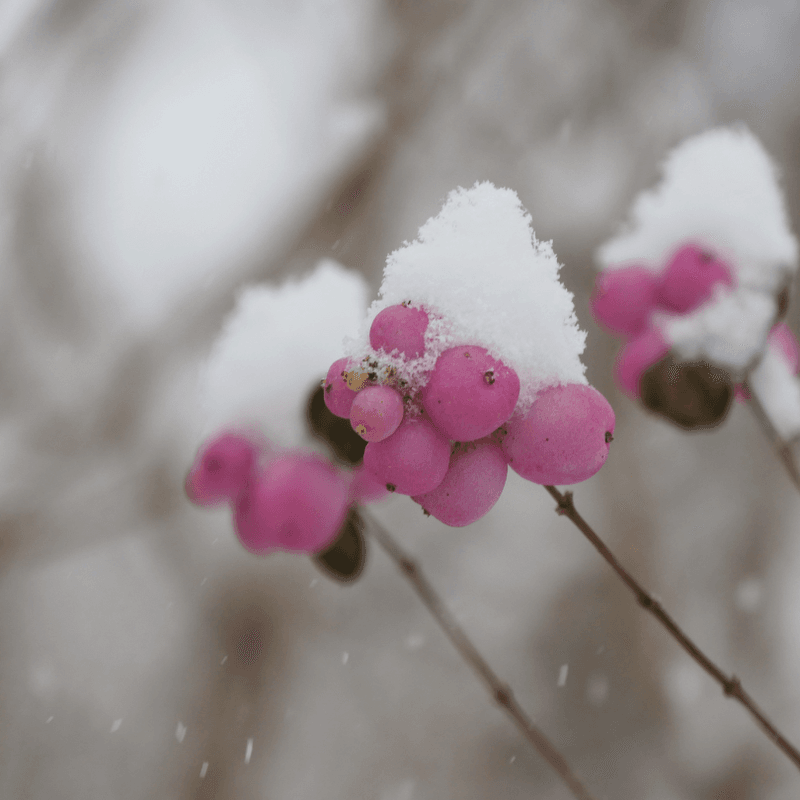
Forget the idea of vivid purple berries. The Missouri Department of Conservation describes the small fruits as pinkish red or coral red, and Texas sources add red-purple.
Color can shift from plant to plant and from the start of the season to the end.
Berries ripen in fall. A U.S.
Forest Service bird-plant guide gives the fruiting period as September to December or longer. The Missouri source says they commonly last through most of winter and may be eaten more in harsh conditions.
Timing gets more interesting in the Forest Service’s Woody Plant Seed Manual, which says fruit can persist until the following spring, except where it is eaten. So spring is possible, but hungry wildlife, local weather, and plant health can all shorten the display.
One safety note: berries are for birds, not people. North Carolina State Extension flags the fruit as poisonous, and Missouri reports nausea and vomiting in sufficient quantities.
Keep kids and pets from snacking on them.
Robins are documented fruit consumers
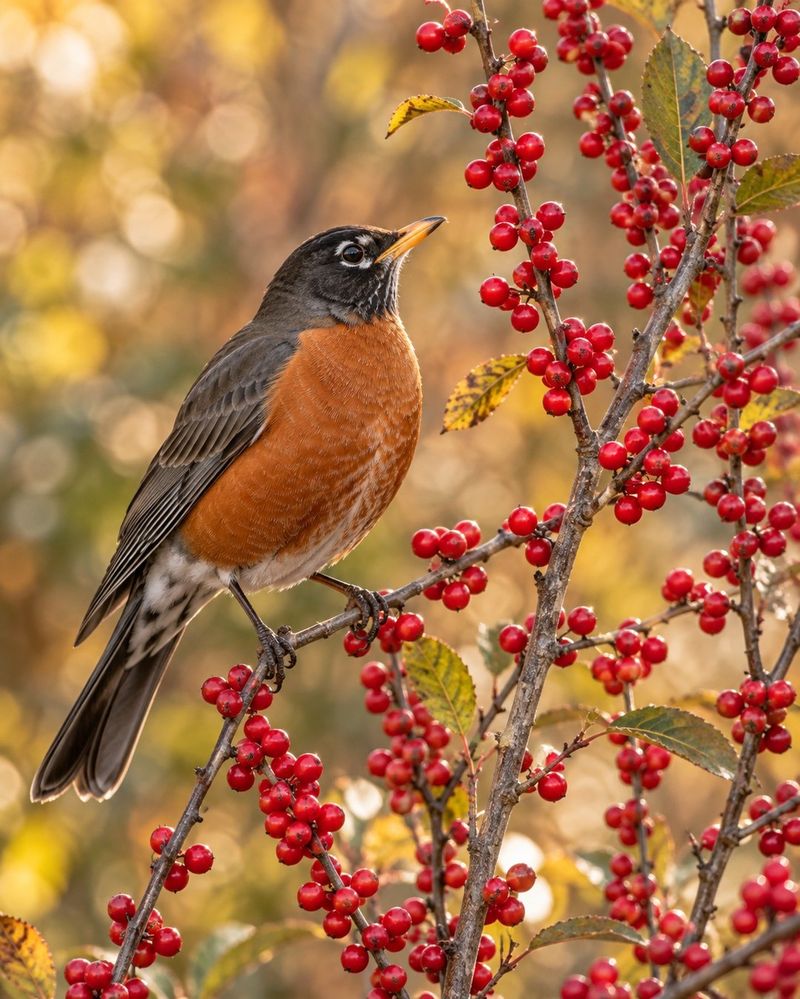
Here is what the evidence supports. The Forest Service’s guide to plants for attracting birds lists the American robin as a bird that eats coralberry fruit.
Other listed fruit eaters include thrashers, thrushes, waxwings, cardinals, and finches.
Mockingbirds are a trickier case. Audubon lists mockingbirds and thrashers among the bird families coralberry is thought to attract.
That broad statement is not the same as direct proof that northern mockingbirds eat the fruit, and the Forest Service list does not name them.
So the honest picture is modest but real. A coralberry patch gives robins and some other birds a documented food source.
It does not guarantee a parade of visitors, and your yard’s neighbors, cats, and nearby food all play a part.
If you want to see who comes, watch from a window on cold mornings and keep a simple list. Over a season or two you will learn which birds actually use your shrubs.
Treat coralberry as a possible winter-food planting
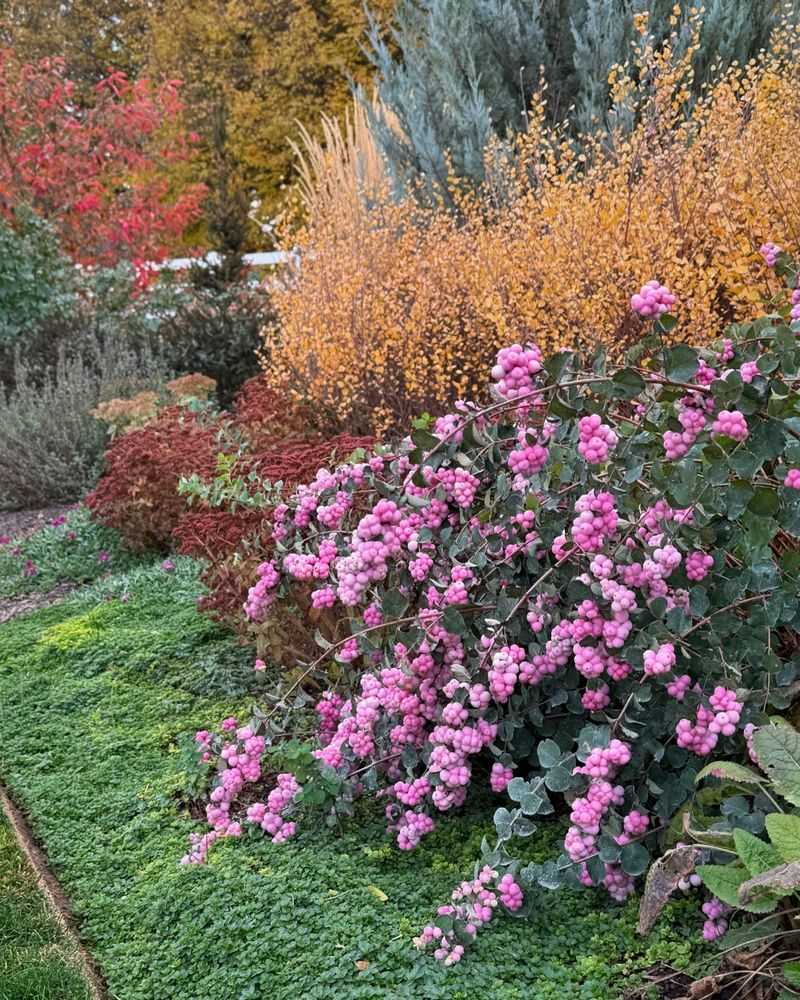
Coralberry earns its spot where the light is workable, the roots allow a small hole, and a spreading thicket is welcome. Austin’s guide is a handy checklist for light and size.
Lingering fruit, as the Woody Plant Seed Manual suggests, is a bonus you may or may not see in March.
Plant it for the chance of winter food, and let the birds decide the rest.